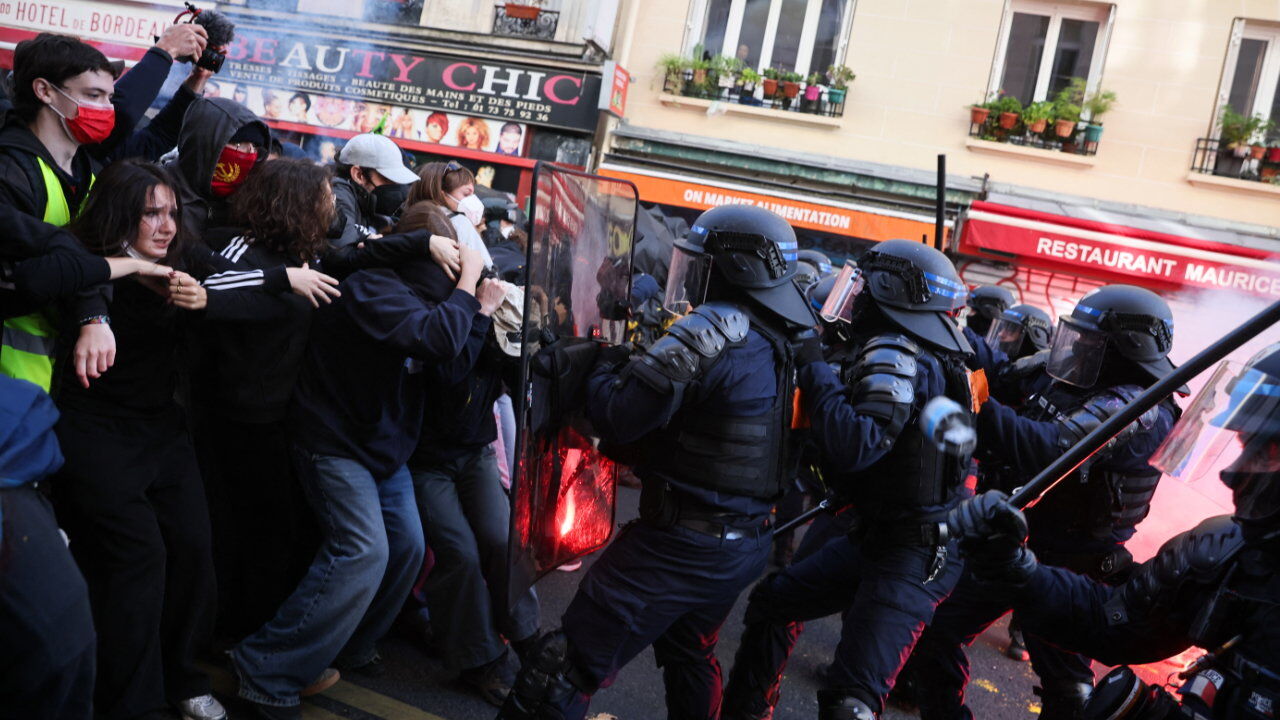
法国历史长期以来充满动荡与反抗。夏尔·戴高乐1958年建立的共和国在十年后爆发了1968年五月的学生抗议;次年,这位将军辞职。2018至2019年,埃马纽埃尔·马克龙面对了“黄背心”持续数月的大规模暴力示威;总统派出装甲车碾过首都的鹅卵石街道以恢复秩序。然而,10月17日法国各地市政建筑被纵火、城市遭抢劫的末日般场景在某些方面更为糟糕:它们可能使国家陷入更深的分裂,并在明年春季总统选举中让选民在两种极端之间做出选择。
FRENCH HISTORY has long been marked by upheaval and revolt. The republic established by Charles de Gaulle in 1958 erupted a decade later in the student protests of May ‘68; the following year the general resigned. Emmanuel Macron faced months of widespread and violent demonstrations by gilets jaunes (yellow jackets) in 2018-19; the president sent armoured vehicles rolling over the cobblestones of the capital to restore order. Yet the apocalyptic scenes of torched civic buildings and looting in cities across France on October 17th were in some ways worse: they could lead the country into even greater division, and hand voters at next spring’s presidential election a choice between two extremes.
即便对于一个饱经街头暴乱的国家而言,周末发生的事件也令人震惊。利摩日19世纪市政厅的钟楼和屋顶在被纵火后坍塌。蒙面的“破坏者”(casseurs)闯入马赛市政厅,推倒了法国官方象征“玛丽安娜”的大理石半身像。在波尔多,戴帽子的青少年抢劫者砸碎路易威登等商店的玻璃窗,抢走手袋、运动鞋和其他物品。
Even for a country hardened by street insurrection, the events at the weekend were shocking. The clock tower and roof of the 19th-century town hall in Limoges collapsed after it was set alight. Masked casseurs, or hooligans, broke into the town hall in Marseille and toppled a marble bust of Marianne, the country’s official symbol. In Bordeaux hooded teenage looters smashed the glass windows at Louis Vuitton and other shops, grabbing handbags, trainers and other stash.
一名少年把偷来的商品放在塑料购物篮里晃荡,仿佛刚从超市购物归来;其他人则从鞋盒里扯出耐克运动鞋拔腿就跑。黑色浓烟滚滚升上天空。防暴警察发起冲锋。仅周六一天,全国就有超过2000人被捕。“今晚我们所有人都感到愤怒和羞耻,”马克龙在电视讲话中宣称。
One youngster swung his stolen merchandise inside a plastic shopping basket as if strolling back from the supermarket; others ripped Nike trainers from their boxes and ran. Plumes of black smoke billowed into the air. Riot police charged. Across the country over 2,000 people were arrested on Saturday alone. “This evening we are all feeling anger, and shame,” declared Mr Macron in a televised address.
对于那五十万参与这场为期一天的抗议活动的人来说,局势的失控同样令人沮丧——无论是对于抗议者本身,还是对于在电视屏幕前观看这一切的观众来说都是如此。波尔多大学20岁的学生保罗琳抱怨道:“那些故意破坏公共设施的人正在损害我们运动的声誉。”她表示自己走上街头,是为了抗议“一切不公”,包括拥挤的教室、高昂的汽油价格以及警方的暴力镇压行为;总统马克龙也在她的抗议清单上。
For some of the half-million people who took part in the one-day protests, the descent into chaos was as dismaying as it was to those watching on screens. “The casseurs are discrediting our movement,” complained Pauline, a 20-year-old student at the University of Bordeaux, who said she was on the streets to demonstrate against “everything”, listing grievances from overcrowded lecture halls and high petrol prices to police repression. The president also featured on her list.
“Macron, t’es mort”(马克龙,你死吧)——这样的涂鸦出现在被破坏的公交候车亭上,旁边还写着“ACAB”(“所有警察都是混蛋”)以及“1789”(法国大革命的年份)。自9月中旬以来,这些抗议学生一直与警方发生冲突,他们的愤怒和破坏行为主要针对的是他们自己就读的学校。这一次,暴徒们将矛头指向了那些为他们提供慷慨福利制度、一流公共交通服务以及世界最高生活质量的政府机构。
“Macron, t’es mort” (Macron, you’re dead) read graffiti near a smashed-up bus shelter, next to “ACAB”, or “all cops are bastards” and “1789” (the year of the French revolution). Protesting pupils, who have clashed with the police since mid-September, focused their anger and destruction on their own schools. This time rioters turned on the emblems of the state that provides them with a generous welfare system, first-rate public transport and one of the world’s highest qualities of life.
虽然部分抢劫和破坏行为可能是出于机会主义动机,但许多参与者都戴着兜帽、滑雪护目镜和口罩,显然他们是故意挑起事端的,并且似乎是有组织地这么做的,目的是为了削弱人们对政府和警方的信任。民粹主义左翼政党“不服从的法国”(Unsubmissive France, LFI)的领导人让-吕克·梅朗雄否认与这些暴力事件有任何关联,反而将责任归咎于警方。
Some of the looting and vandalism may have been opportunistic. Yet many of those who turned up fully hooded, wearing ski goggles and face masks, were clearly out to pick a fight, and seemed organised to do so, in order to undermine confidence in the government and the police. Jean-Luc Mélenchon, leader of the populist-left Unsubmissive France (LFI), denies responsibility for this, and blames the police for the disorder.
然而,政府很清楚是谁在煽动这些闹事者:他们指责LFI利用抗议活动谋取政治利益,企图让法国陷入无法治理的混乱状态。中立派总理塞巴斯蒂安·莱科努警告称,极左翼势力正在将这种暴力行为视为总统选举前的“热身活动”。
The government, however, has no doubt about who is encouraging the troublemakers: LFI, which it accuses of “exploiting” the protests for political ends and seeking to make France ungovernable. Sébastien Lecornu, the centrist prime minister, warned that the extreme left is using the violence as a “warm-up round” for the presidential election.
此次骚乱的背景是明年大选所引发的社会紧张情绪。执政近十年的中间派总统马克龙受宪法限制无法连任。许多参与抗议的学生甚至没有经历过其他政治领袖执政时期的生活。整个国家渴望变革,但对于未来的走向却存在严重分歧。
The context for the riots is the underlying tension linked to next year’s election. After nearly a decade in office, the centrist Mr Macron is barred by the constitution from running again. Many of the protesting students have no memory of life under a different political leader. The country wants change, but is deeply divided about what should come next.
一方面,参加巴黎游行的梅朗雄支持者将这些相对和平的抗议活动视为对自己领袖力量的展示——梅朗雄作为左翼民粹派候选人正在竞选总统。另一方面,右翼民粹派候选人玛丽娜·勒庞的支持者则认为这些抗议活动恰恰证明梅朗雄不适合担任总统,也说明马克龙无力掌控国家局势。目前中间派正努力物色能接替马克龙的合适人选,但民调显示,明年4月和5月举行的两轮总统选举中,最终对决的很可能就是梅朗雄与勒庞。若果真如此,勒庞几乎肯定能胜出。
e side, supporters of Mr Mélenchon, who joined the demo in Paris, look at the more peaceful protests and see a muscular show of strength for their champion, who is running for president on the populist left. Yet supporters of Marine Le Pen, who is standing on the populist right, regard the protests as evidence that Mr Mélenchon is unfit for office and that Mr Macron cannot control the country. As the centre struggles to find a compelling candidate to succeed the president, polls suggest that the finalists at the two-round election next April and May could well be Mr Mélenchon and Ms Le Pen. If so, she would be almost certain to win.
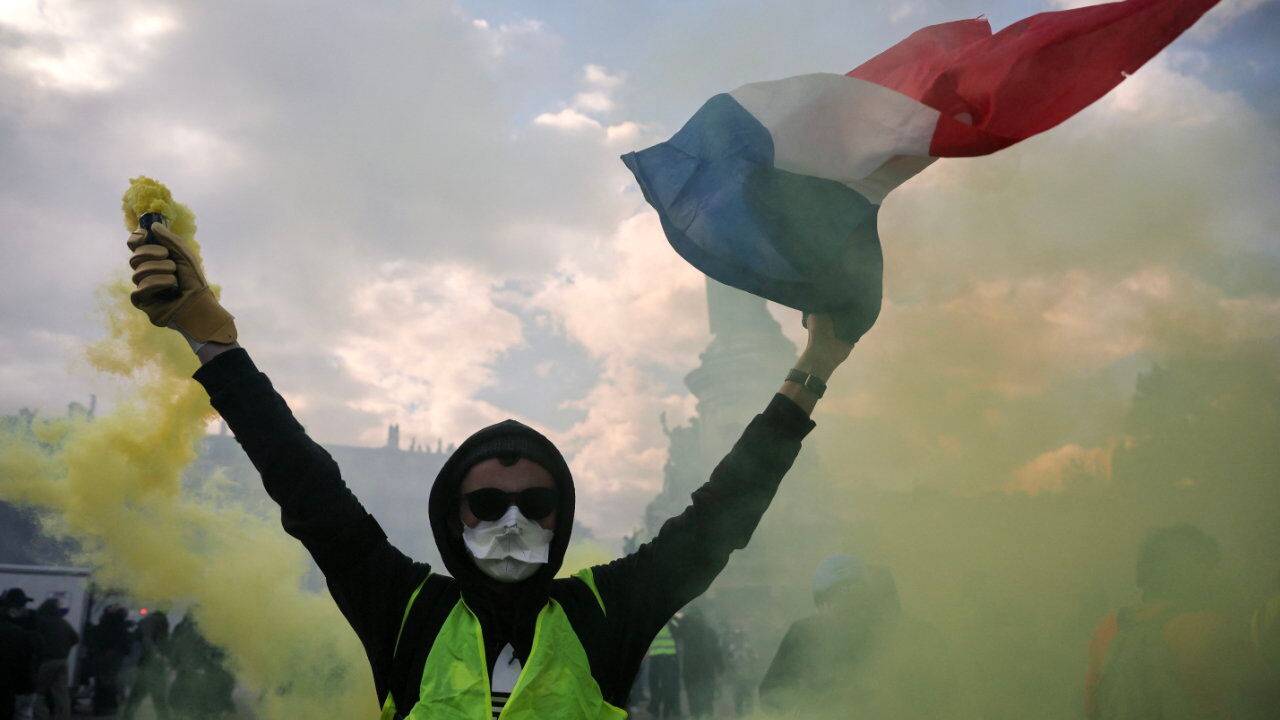
未来六个月乃至更长时间内,公众舆论的两极分化以及街头政治的愈演愈烈似乎已成定局。倘若2027年选民们把总统之位交到过去一年始终在民调中领先的勒庞手中,极有可能引发左翼阵营的新一轮抗议浪潮。总统选举之后还将举行引发争议的议会选举。此外,与“黄背心”运动时期不同,当时马克龙尚有财政空间通过拨款来平息事态;如今法国的公共财政状况堪忧,债券市场也动荡不安。
It looks probable that the polarisation of public debate and the politicisation of the street will intensify over the next six months—and probably beyond. Were voters in 2027 to hand the keys to the Elysée Palace to Ms Le Pen, the favorite in the polls for more than the past year, it could prompt a new round of protests on the left. Divisive legislative elections are due after the presidential vote. Moreover, in contrast to the gilets jaunes protests, when Mr Macron had the fiscal space to write cheques to help calm things down, France’s public finances are in a dire state, and the bond markets are jittery.
预计今年法国财政赤字将占GDP的5.4%,这一比例在欧元区名列前茅。目前法国的借贷成本已高于意大利和希腊,今年用于偿还债务的支出甚至将超过教育和国防领域的开支。
The government’s budget deficit is expected to be 5.4% of GDP this year, one of the highest in the euro zone. France is now paying more to borrow than Italy or Greece, and this year will spend more on servicing its debt than on either education or defence.
市场的谨慎与街头的愤怒交织在一起,形成了有毒的混合物。更糟的是,随着注意力转向治安,法国更不太可能进行其迫切需要的政治对话:关于它能负担得起什么样的福利制度,以及如何产生维持该制度所需的财富。相反,领先的政客们承诺降低退休年龄,从而让自己失去了在公共支出最大单项上未来节省的机会。
Wariness in the markets and anger on the streets make for a toxic mix. Worse, as attention turns to law and order, France is even less likely to have the political conversation it badly needs: about what sort of welfare system it can afford and how to generate the wealth needed to sustain it. Instead, the leading politicians vow to lower the retirement age, thus depriving themselves of future savings on the single biggest item of public spending.
唯一承认养老金年龄必须上调的主要候选人——中间派的爱德华·菲利普——在民调中已陷入停滞。他和梅朗雄在第一轮投票中旗鼓相当,支持率约为15%至16%,远远落后于勒庞的32%,这是一项新民调显示的结果。
The main candidate who acknowledges that the pension age must rise—the centrist Edouard Philippe—has stalled in the polls. He and Mr Mélenchon are neck-and-neck in first-round voting on about 15-16%, far behind Ms Le Pen on 32%, according to a new poll.
周六没有走上街头、并且知道需要做什么的法国也存在。这个沉默的群体在骚乱后的第二天,再次出现在深秋阳光下的露台咖啡馆里;波尔多的一名服务员将这场暴力描述为“令人震惊”。但极端势力擅长淹没这一声音。除非中间派能找到一种有说服力的方式,讲述一个更负责任的故事——关于公共财政和街头秩序的必要性——否则选民最终将毫无选择。■
There is a France that was not on the streets on Saturday, and knows what needs to be done. This silent constituency was out again in the terrace cafes in the late-autumn sunshine the day after the riots; one waiter in Bordeaux described the violence as “scandalous”. But the extremes are masterful at drowning out that voice. Unless the centre can find a persuasive way to tell a more responsible story, about the need for order in the public finances and on the streets, voters will end up with no choice at all.■