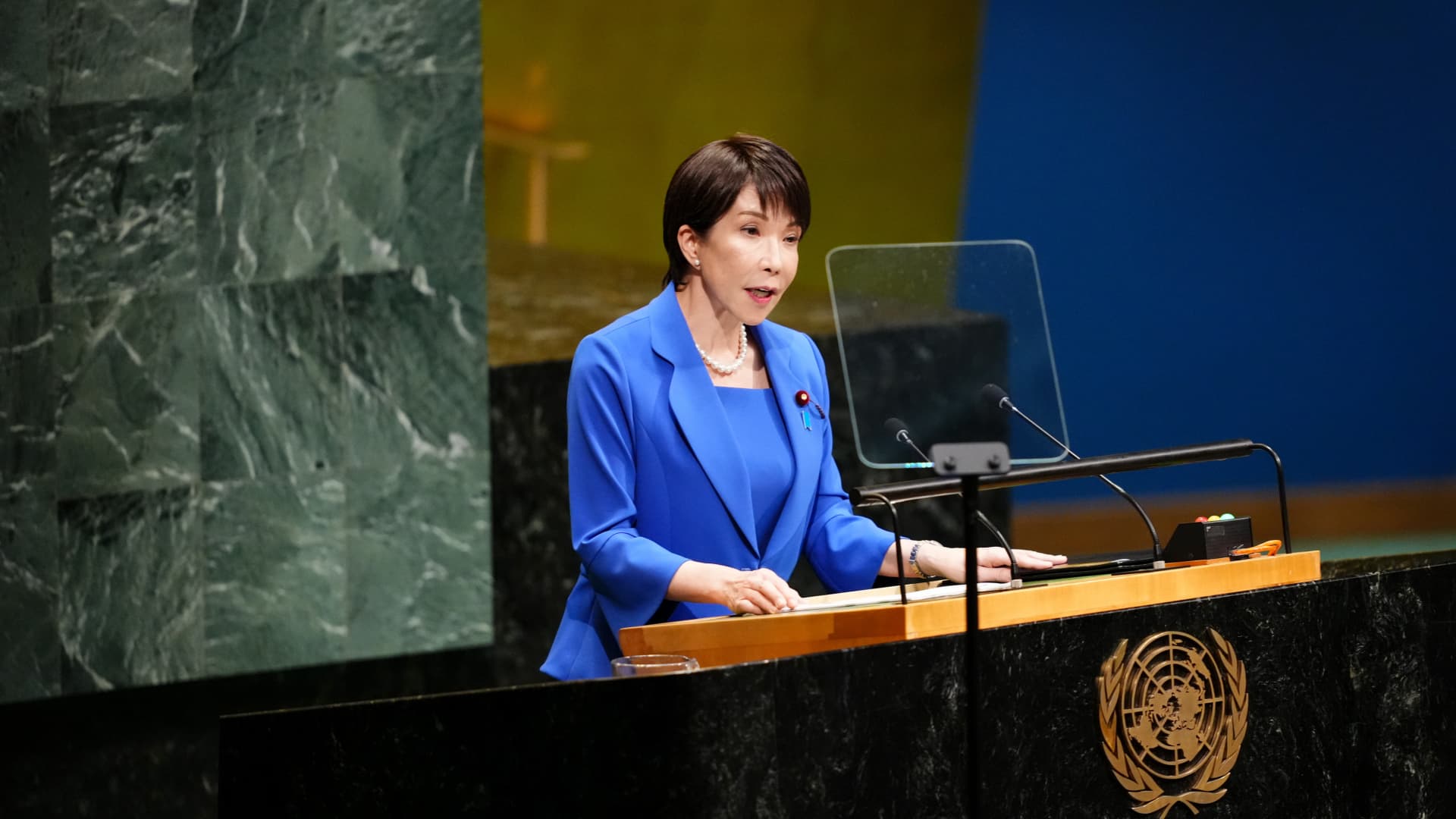
日本首相高市早苗驳斥了她既要对日元疲软负责,又要推动国内利率上升的批评。
Japan's Prime Minister Sanae Takaichi has rejected criticism that she was on one hand responsible for a weak yen and on the other for pushing up interest rates in the country.
在议会发言时,高市早苗表示:“我一直被反复指责‘高市早苗的弱日元’和‘高市早苗的高利率’,但我明确予以否认。”这是路透社根据她的日文发言所作的翻译。
Speaking in parliament, Takaichi said; "I have been repeatedly criticized for 'Takaichi's weak yen' and 'Takaichi's high interest rates,' but I clearly deny that," according to a Reuters translation of her remarks in Japanese.
她是在回应反对党议员滨野芳文的提问时作出上述表态的,滨野芳文询问了关于编制该国第二份补充预算的问题。
She was responding to a question from an opposition party lawmaker Yoshifumi Hamano, who asked about the compilation of a second supplementary budget for the country.
高市早苗还表示,她的政府将通过打造强劲经济来提升人们对日元的信心。
Takaichi also said that her administration will increase confidence in the yen by building a strong economy.
在她的领导下,日本国债收益率已升至数十年来的高点,而日元则跌至1986年以来的最低水平,这促使东京乃至华盛顿介入外汇市场以支撑货币。
Under her administration, yields on Japanese government bonds have risen to multi-decade highs, while the yen weakened to its lowest since 1986, prompting Tokyo and even Washington to step into the forex market to support the currency.
今年1月,高市早苗据称曾表示,疲软的日元为出口产业带来了机遇,并可作为抵御美国关税的缓冲,尽管她随后很快澄清称,她对日元的走势并无特定偏好。
In January, Takaichi had reportedly said that a weak yen presented an opportunity for export industries and acted as a buffer against U.S. tariffs, though she quickly clarified that she held no specific preference for the currency's direction.
日本的出口部分受益于日元贬值,因为疲软的货币使出口更具竞争力。
Japan's exports have been partly boosted by yen's depreciation, as a weak currency makes exports more competitive.
在债券市场方面,高市早苗表示:“我们打算适当控制政府债券发行规模。”此时,随着日本央行提升政策利率并继续推进货币政策正常化,收益率一直在上升。
For bond markets, Takaichi said that "We intend to appropriately control the amount of government bond issuance," at a time when yields have been rising as Japan's central bank raises its policy rate and continues to normalize its monetary policy.
今年早些时候,高市早苗曾宣布削减国家食品税的计划,并提前公布了今年的补充预算,这引发了日本可能需要发行更多债券以维持政府支出的猜测。
Earlier this year, Takaichi had announced a plan to cut the country's food tax and unveiled a supplementary budget earlier this year, raising the possibility that Japan might need to issue more bonds to sustain its government spending.
高市早苗表示,根据彭博社的报道,2026年日历年的国债总发行量将保持不变,与原始预算计划一致,尽管专家对此持怀疑态度。
Takaichi has said that the total bond issuance for calendar year 2026 would remain unchanged from the original budget plan, according to Bloomberg, although experts were skeptical.
Monex Group 专家董事 Jesper Koll 在今年四月补充预算公布时曾对 CNBC 表示:“债券市场有很多特点,但它绝不会愚蠢。你不可能在不增加债务的情况下增加支出。”
Jesper Koll, expert director at Monex Group told CNBC back in April — when the supplementary budget was announced — that "Bond markets are a lot of things, but they're not stupid. You cannot increase spending without increasing debt."