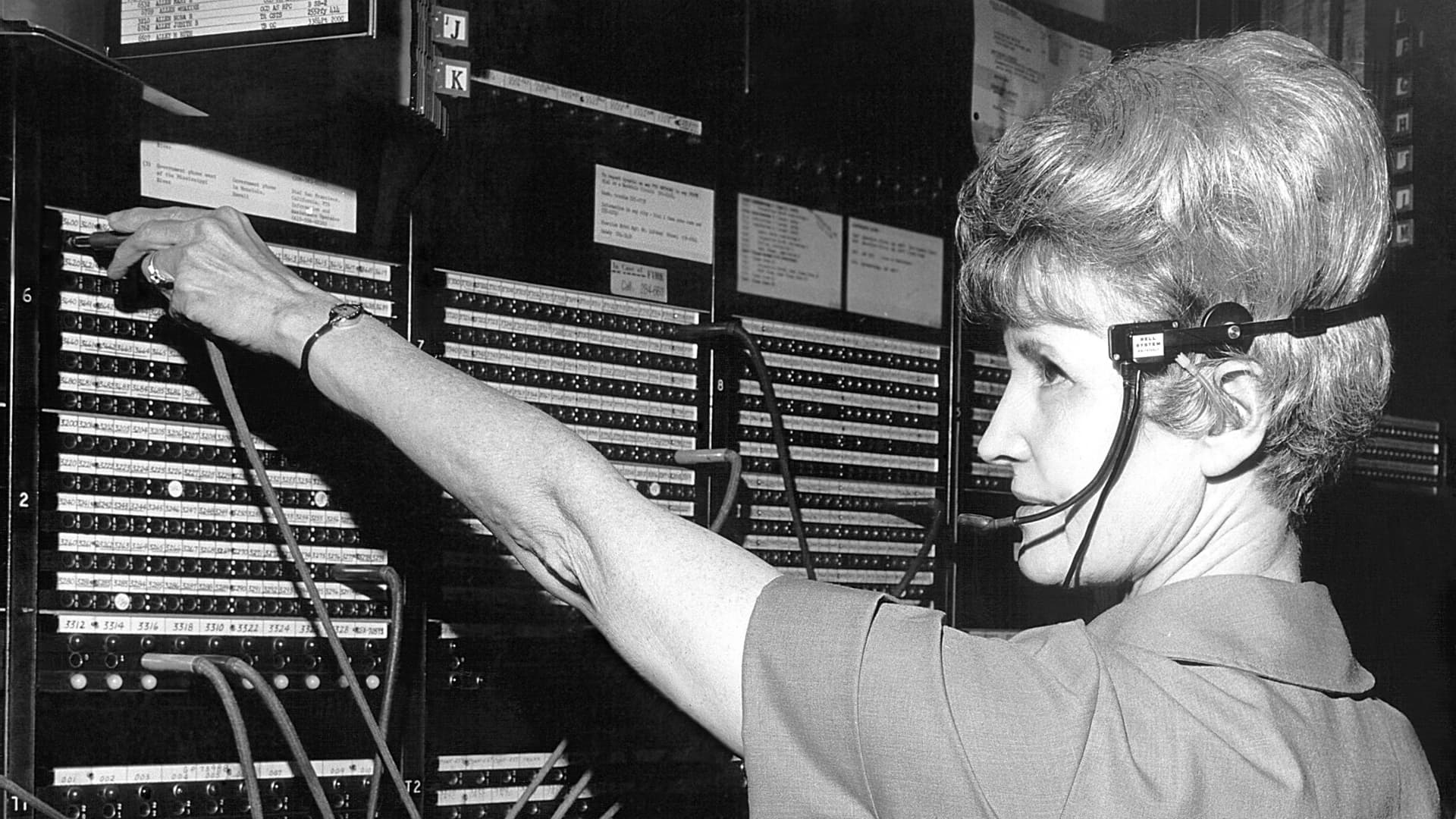
在Siri、Alexa或ChatGPT出现数十年前,信息世界的中心是一个真实的人,几乎总是一位女性。她如此重要,以至于没有她,大多数远距离通信根本无法进行。
Decades before Siri or Alexa or ChatGPT, there was a real person, almost always a woman, at the center of the information world. She was so vital, most long-distance communication could not happen without her.
她是电话交换机操作员,曾经是美国20岁以下白人出生女性中人数最多的职业之一。如今,这份工作已经不存在了。
She was the telephone switch operator, and at one time she was part of the single largest occupation for white, U.S.-born women under age 20. Today, that job doesn't exist.
世界正努力弄清楚人工智能的黎明对社会、文化和经济意味着什么。许多普通美国人只是在想,这对他们的工作意味着什么。
The world is struggling to figure out what the dawn of artificial intelligence means for society, culture and the economy. A lot of ordinary Americans are just wondering what it means for their jobs.
技术进步的历史——从自动电话交换机到洗衣机和个人电脑的引入——可以提供一些指导。而这些指导表明,女性很可能是受人工智能影响最大的群体之一。
The history of technological progress — from automated telephone switches to the introduction of the washing machine and the personal computer — can offer some guidance. And that guidance suggests women are likely to be among the most affected by AI.
“人工智能聚焦于常规任务、数字和寻找模式,而这些类型的工作正是许多女性所从事的文职和行政工作,”妇女政策研究所高级研究员Ariane Hegewisch说。“目前,90%的秘书和文职工作者仍然是女性。”新研究也支持这一观点。国际劳工组织3月份得出结论:在高收入国家,近十分之一的女性从事着面临人工智能最高风险的职业。
"AI is focused on routine tasks and numbers and finding patterns, and those types of jobs are the clerical, administrative jobs that a lot of women hold,'' said Ariane Hegewisch, a senior research fellow at the Institute for Women's Policy Research. "It's still 90% of secretaries and clerical workers who are women." New research backs this up. The International Labour Organization in March concluded that nearly one in 10 women in high-income countries works in occupations at the highest risk from AI.
让操作员岗位变得过时的发明20世纪40年代,美国近95%的电话操作员是女性。当时,这份工作对女性来说报酬相对较好,而且相当复杂:需要数月的培训才能应对高峰时段每小时可能到达的几百通电话。操作员被要求既快速又精准——还要彬彬有礼。
The invention that made operators obsolete In the 1940s, nearly 95% of America's telephone operators were female. It was a relatively well-paying job for women at the time, and a complicated one: It took months of training to be able to handle the several hundred calls an hour that could come in at peak times. Operators were expected to be speedy, precise — and polite.
当AT&T引入自动电话交换机时,这些女性受到了严重冲击。这是历史上规模最大的自动化投资之一——与当今正在进行的巨额人工智能投资形成了紧密类比——并造成了美国曾经历过的最大的技术冲击之一。
These women were hit hard when AT&T introduced the automated telephone switch. It was one of the largest automation investments in history — a close analog to the massive AI investment now underway — and created one of the biggest technological shocks the nation had ever seen.
在自动交换机普及的数十年里,大约有7.5万名话务员岗位消失。
In the decades after the automatic switch was popularized, an estimated 75,000 operator jobs vanished.
波士顿大学经济学家詹姆斯·费根鲍姆和杜克大学福夸商学院经济学家丹尼尔·P·格罗斯研究了当时的普查和工资单数据,并跟踪了AT&T在全国范围内推广交换机投资过程中当地的就业趋势。
Economists James Feigenbaum from Boston University and Daniel P. Gross from Duke University's Fuqua School of Business studied census and paycheck data from the time and followed local employment trends along the path of AT&T's rolling investment in switches across the nation.
他们在2020年写道:“这一冲击对现有话务员的影响是使许多人失去了工作和职业。”他们发现,许多话务员最终转而从事收入较低的工作,或者完全退出了劳动力市场。
"The effect of this shock on incumbent operators was to dispossess many of their jobs and careers," they wrote in 2020 Many switchboard operators wound up in lower-paying jobs — or dropped out of the workforce entirely, they found.
经济学家大卫·奥托表示,这一结果反映了许多工人已经处于其最高且报酬最高的职业的现实。当工作消失时,下一步往往是向下发展。
Economist David Autor says this outcome reflects the reality that many workers are already in their highest and best-paying occupation. When the job goes away, the next step is often down.
他说:“大多数人不会经常换工作。他们早早就做出了职业选择,并坚持下去。”如果这些职业,如果这种工作的价值……突然过时,变得技术上过时,他们通常会做一些不那么好的事情。”但费根鲍姆和格罗斯还发现,下一代女性的情况更好。
"Most people are not changing careers very often. They make their career decisions early, and they stick with those careers," he said. "If those careers, if the value of that work … suddenly goes out of fashion, becomes technologically obsolete, they're going to, in general, do something not as good." But Feigenbaum and Gross also discovered that the next generation of women fared better.
他们写道:“未来的劳动者在其他领域找到了工作,常常从事质量相当的工作。”因为年轻工人“对不断变化的劳动力市场更具适应性……对未来一代可获得机会的焦虑被证明在某种程度上是错误的。”换句话说:一种工作消失了,但随着时间的推移,其他同样好的工作也出现了。“解放的引擎”到20世纪50年代,另一项技术创新将出现并对女性产生深远影响:洗衣机。
"Future workers found work in other fields, often taking up similar-quality jobs," they wrote, as the younger workers were "more adaptive to an evolving labor market … Anxiety over the opportunities available to future generations proved to be somewhat misplaced." In other words: One type of job went away, but other work emerged over time that was just as good. 'Engines of liberation' By the 1950s, another technological innovation would come along and have a profound effect on women: the washing machine. Dubbed "
被称为“在宾夕法尼亚大学经济学家杰里米·格林伍德及其他人的一篇开创性论文中,洗衣机和其他家电大幅减少了女性在无偿家务上的时间。这意味着时间可以被重新分配到家庭外的有薪工作,尽管女性对家庭的责任仍然存在。
" in a seminal paper on the topic by University of Pennsylvania economist Jeremy Greenwood and others, washing machines and other appliances dramatically reduced the time women spent on unpaid housework. That meant time could be reallocated to a paycheck outside the home, even as women's responsibility for the home remained.
从1950年到1980年,随着性别规范的变化,美国就业女性人数增加了超过2500万。她们的劳动力参与率——即女性人口中参与劳动力的比例——从34%上升至52%。与此同时,又有1600万男性找到了工作,尽管男性劳动力参与率下降了5个百分点。
From 1950 to 1980, as gender norms changed, the number of employed women in the U.S. grew by more than 25 million. Their participation rate, or share of the female population in the labor force, grew to 52% from 34%. At the same time, 16 million more men found work, though the male participation rate dropped by 5 percentage points.
分析:为何2万亿美元的赤字和5%的国债收益率正成为美国最大的经济挑战经济学家:高PPI显示美联储的工作尚未完成高通胀如何成为美国的“生活常态”9月份批发价格年增6.3%,为2022年以来最大涨幅当今AI热潮的关键问题在于:经济为何突然能够为这些女性提供就业?如果AI创造了一个庞大的可用劳动力池,经济能否将他们安置到岗位上?
Analysis: Why a $2 trillion deficit and 5% Treasury yields are becoming America’s biggest economic challenge Economists: Hot PPI shows Fed’s work is not done How high inflation became a ‘fact of life’ in the U.S. Wholesale prices jumped 6.3% annually in September, biggest gain since 2022 The relevant question for the AI boom today: How did the economy suddenly find jobs for these women? If AI creates a vast new pool of available workers, can the economy put them to work?
首先,女性进入劳动力市场意味着曾经在家庭中完成的任务需求转移到了有偿经济,例如托儿和食品准备服务。其次,随着国家财富的增加,女性在服务经济中获得了更多就业机会——零售、餐饮、休闲与酒店业,甚至一些专业服务。第三,随着美国企业的发展,他们需要更多人来处理文书工作——从工资单到客户账户的一切事务。
First, the very entry of women into the workforce meant demand for tasks once done at home moved into the paid economy, services like childcare and food preparation. Second, as the nation grew wealthier, other employment opportunities for women emerged in the service economy — in retail, restaurants, leisure and hospitality, and even some professional services And third, as American businesses grew, they needed more people to handle the paperwork — everything from payroll to customer accounts.
经济和企业的变化部分与女性进入劳动力市场有关,但也部分归因于美国经济的繁荣以及企业为适应对更多办公室工作人员的需求而进行的改变——这其中也带有一定的偶然性。
Changes to the economy and businesses were partly related to the entry of women into the workforce, but it was also partly random luck that the U.S. was booming and businesses were changing to need more office workers.
“在1940年至1980年期间,美国经济中出现了大量新工作岗位,而这些岗位主要集中在办公室和文书工作领域,这些工作对拥有高中学历的人来说是可及的,”奥托尔说。个人电脑的兴起影响职场女性的下一次重大变革是个人电脑的出现。
"Between 1940 and 1980, there was a ton of new work created in the U.S. economy, and it was in office and clerical work that was accessible to people with a high school education,'' Autor said. The rise of the PC The next big revolution affecting women in the workplace was the personal computer.
在个人电脑普及之前,女性是办公室基础设施的中坚力量。根据1980年美国人口普查,近470万美国人从事秘书、速记员和打字员的工作,其中超过98%是女性。
Before PCs arrived on the scene, women were the backbone of office infrastructure. According to the 1980 U.S. census, nearly 4.7 million Americans worked as secretaries, stenographers and typists. More than 98% were women.
1981年IBM推出个人电脑,随后仅两年后微软Word面世,一些中间人员——在这种情况下,也就是中间女性——变得多余。个人电脑并未消除写作、归档或编辑工作,而是将这些任务的很大一部分从专职文书工作者转移到了办公室的其他人员身上——高管们可以自己打字撰写报告、预订差旅并打印文件。
When IBM introduced the personal computer in 1981, followed by the advent of Microsoft Word just two years later, some of the middlemen, or in this case, middlewomen, became obsolete. It didn't eliminate writing, filing or editing. It simply shifted a big chunk of those tasks from dedicated clerical workers to others in the office — executives could type their own reports, book their own travel and print their own papers.
但个人电脑并非对职场女性全然不利。研究表明,在个人电脑时代初期,女性使用工作电脑的比例已经高于男性。个人电脑为她们带来了新工具:电子表格、数据库和通用计算能力。虽然许多岗位被取代,但许多女性适应了变化,并找到了利用新兴技术使自己对雇主不可或缺的新方式。
But the PC wasn't entirely bad news for women in the workforce. Studies show women were already more likely than men to be using a computer at work at the dawn of the PC era. The PC put new tools at their fingertips: spreadsheets and databases and general computing power. While many roles were eliminated, many women adapted and found new ways to use the emerging technology to make themselves indispensable to their employers.
这可能也是人工智能的潜在结果。在某些情况下,人工智能会消除某些任务,但不会取消整个岗位,而是提升工人完成仅有人类能够完成的剩余增值工作的时间和能力。
That's a potential outcome for AI. In some cases, it will eliminate tasks but not entire jobs, enhancing the time and ability of a worker to do the remaining value-added jobs that only humans can do.
马库斯·迪伦德尔和伊丽莎·福赛斯的一篇2022年论文发现,当公司采用软件来处理办公和行政工作时,该行业的就业人数下降了1%,但大学毕业生的工资上涨了3%。
A 2022 paper by Marcus Dillender and Eliza Forsythe found that when companies adopted software to do office and administrative work, it resulted in a 1% decline in employment in the sector but a 3% increase in wages for college graduates.
越来越多的女性获得了大学学历和高级学位,并担任管理职务,这在其他技术冲击经济、提供一定自动化防护时并不常见。但这种情况可能不会持续太久:人工智能的一个承诺是,它将提升人类所从事工作的价值链。
Many more women have earned college and advanced degrees, and hold managerial jobs, than when other technologies ripped through the economy, offering some potential protection from automation. But maybe not for long: One of the promises of AI is that it will move up the value chain of the jobs performed by humans.
无论这项新技术目前具备何种能力,其前景仍不明确,因为正如Hegewisch所说,带有一丝不祥的意味:“人工智能能够学习。”
Whatever capabilities the new technology may have now, the outlook is unclear because, Hegewisch says, somewhat ominously, "AI can learn."