在本财政年度上半年,日本投资者购入的本国国债规模升至17年来的最高水平。部分分析人士指出,这一趋势反映出养老基金正在试图重新调整投资组合。
Japanese investors’ purchases of domestic government bonds climbed to the highest in 17 years in the fiscal first half, a move that some analysts said reflected an attempt by pension funds to rebalance their portfolios.
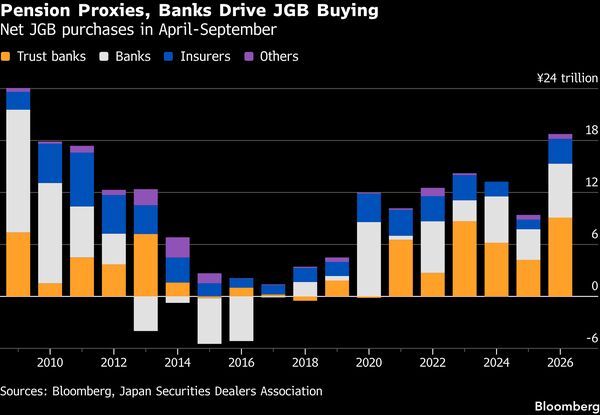
根据日本证券业协会周二发布的、由彭博社整理的数据,截至9月30日的六个月内,国债净购入额共计达18.8万亿日元(约合1190亿美元)。其中,常被视作养老基金代表的信托银行贡献了近一半的购买量,其余三分之一则来自各商业银行。
Net purchases totaled ¥18.8 trillion yen ($119 billion) in the six months ended Sept. 30, according to data released by the Japan Securities Dealers Association on Tuesday that was compiled by Bloomberg. Trust banks, which are often regarded as proxies for pension funds, accounted for almost half of the buying, while a third came from banks.
三菱日联摩根士丹利证券驻东京的高级固定收益策略师鹤田圭辅分析称,信托银行的购债行为很可能是“公共养老基金进行资产再平衡的结果”。他指出:“上半年股市整体表现强劲,日元汇率也持续走低,这些因素促使投资者将资金从股票转向债券,无论是国内还是海外市场。日本的公共养老基金均有既定的股票与债券配置比例,一旦各类资产价格发生波动,它们便会调整持仓以维持这一比例。”
Trust banks’ bond purchases were likely driven by a “rebalancing by public pension funds,” said Keisuke Tsuruta, a senior fixed-income strategist at Mitsubishi UFJ Morgan Stanley Securities Co. in Tokyo. “Equity markets were generally strong in the first half, while the yen was also weakening, creating conditions that encouraged allocation shifts from equities into bonds both domestically and overseas.”Japan’s public pension funds have a set allocation for stocks and bonds. When there are price changes in these asset classes, the funds will rejig their holdings to maintain the allocation.
周二,20年期国债的发行吸引了创纪录的认购需求,这进一步印证了市场对本国国债的旺盛需求。
A sale of 20-year government bonds on Tuesday saw the strongest demand on record, adding to signs of robust appetite for domestic debt.
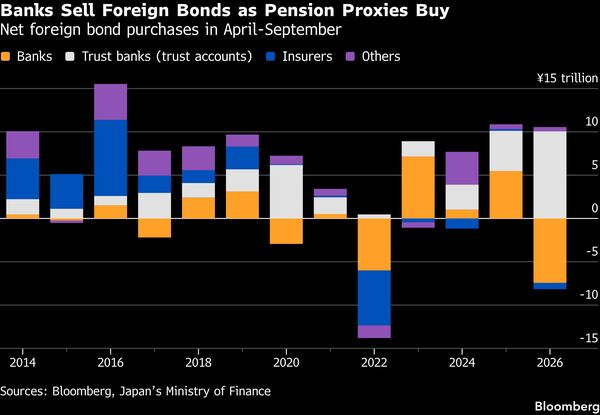
此外,日本财务省发布的数据显示,本财政年度上半年,信托银行的信托账户共购入10.1万亿日元的外国债券;而商业银行则抛售了7.4万亿日元的外国债券,这一数值至少自2014年以来便处于最高水平。
Separately, data from the Ministry of Finance showed trust banks’ trust accounts bought ¥10.1 trillion of foreign bonds in the fiscal first half, while banks offloaded ¥7.4 trillion of such securities, the most since at least 2014.
鹤田解释道:“由于油价上涨预计会推高债券收益率,市场普遍认为美国国债与欧洲债券价格将承压,因此商业银行纷纷抛售此类资产。”至于日元债券方面,商业银行购入本国国债的意愿相对谨慎,原因在于“它们仍需通过债券投资获取一定的利差收益以弥补存款成本。”
“With higher oil prices expected to push up yields, the thinking was simply that US Treasuries and European bonds would suffer, so banks sold them,” Tsuruta. said. On the yen side, banks bought JGBs rather reluctantly because “they still needed to earn some carry against their deposit base.”