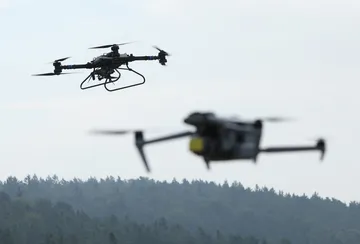
忽视近期战争的教训可能是致命的,过度吸取这些教训同样可能是致命的。以乌克兰战争和中东战争为例。这两场冲突都表明,无人机正在改变战争形态,五角大楼正在为未来的战争调整其能力。但得出无人机正在让其他武器变得无关紧要的结论是错误的。这些冲突中一个不太受重视的教训是,现代战斗需要廉价自主系统与更复杂能力的结合。一个全球超级大国将需要一个均衡的武库,才能在未来的战争中取胜。
Ignoring the lessons of recent wars can be deadly. Overlearning them can be fatal, too. Consider the wars in Ukraine and the Middle East. Both have shown that drones are transforming warfare, and the Pentagon is adjusting its capabilities for the future fight. But it’s a mistake to conclude that drones are making other weapons irrelevant. A less-appreciated lesson of these conflicts is that modern combat demands a mix of cheap, autonomous systems and more sophisticated capabilities. A global superpower will need a balanced arsenal to prevail in the wars to come.
历史对从战场得出错误结论提出了警示。第一次世界大战前,许多欧洲战略家忽视了来自美国内战、日俄战争及其他冲突的证据——即工业时代的战争将是消耗性和磨损性的。他们对西线的僵局和屠杀感到震惊。但随后,西方民主国家的许多观察家过度吸取了那场冲突的教训,导致他们在装甲、空中力量和通信的进步释放出德军的闪电战时,于第二次世界大战中措手不及。
History offers a warning about drawing the wrong conclusions from the battlefield. Before World War I, many European strategists ignored evidence — from the US Civil War, the Russo-Japanese War and other conflicts — that industrial-age warfare would be grinding and attritional. They were stunned by the stalemate and slaughter of the Western front. But then, too many observers in the Western democracies overlearned the lessons of that conflict, leaving them flat-footed as advances in armor, airpower and communications unleashed the German blitzkrieg in World War II.
乌克兰和中东的当前冲突不是世界大战,但它们冲击了全球经济,改变了重要地区。它们还开启了一个无人机变得无处不在的时代。
The current conflicts in Ukraine and the Middle East aren’t world wars, but they have jolted the global economy and transformed important regions. They’ve also inaugurated an era in which drones have become ubiquitous.
在乌克兰,双方都在以百万计的数量使用无人机。无人系统实现了对前线的无处不在的监视;它们是乌克兰和俄罗斯用于重创彼此经济的战略打击行动的主力。与此同时,伊朗利用自杀式无人机袭击波斯湾地区的民用油轮和美军基地。美国国防部则通过使用根据伊朗设计反向工程出的“神风”无人机,扭转了局面。随着无人机任务种类的扩展,作战经济学正在发生变化:大量成本低至每架几万美元的无人系统可被用来使大型舰只瘫痪、破坏重要基地,或以其他方式造成不对称代价。
In Ukraine, both sides are using drones by the millions. Uncrewed systems have enabled pervasive surveillance over the front lines; they are mainstays of strategic strike campaigns that Ukraine and Russia have used to batter each other’s economies. Iran, meanwhile, has employed suicide drones to target civilian tankers and US bases in the Persian Gulf region. The Pentagon has flipped the script by using kamikaze drones reverse-engineered from Iranian designs. And as the array of drone missions expands, the economics of combat shift: Plentiful, uncrewed systems that cost as little as tens of thousands of dollars each can be used to disable large ships, damage vital bases, or otherwise inflict an asymmetric price.
这些变化并未逃过美国战略家的眼睛。拜登政府启动了“复制者计划”,旨在部署空中和海上无人机,以应对与中国可能发生的冲突。特朗普政府承诺实现“无人机主导地位”,并创建新的自主作战司令部。美军正在与开创了无人机战争的乌克兰部队进行演习。处于前线的美国伙伴和盟友,如台湾和波罗的海国家,正将无人机和反无人机系统视为自卫的关键工具。
These changes aren’t lost on US strategists. The Biden administration launched the Replicator Initiative, meant to field aerial and naval drones for a potential clash with China. The Trump administration has committed to achieving “drone dominance” and creating a new Autonomous Warfare Command. The US Army is exercising with Ukrainian units that have pioneered drone warfare. Frontline US partners and allies, such as Taiwan and the Baltic states, are emphasizing drones and counter-drone systems as vital tools of self-defense.
一些分析人士认为,五角大楼应全力押注无人机革命。前谷歌首席执行官埃里克·施密特曾辩称,坦克现在“毫无用处”,陆军应该“买架无人机代替”。退役将军大卫·彼得雷乌斯主张,无人机蜂群将使许多现有能力过时。以无为核心重新设计美军的想法颇具诱惑力:它似乎承诺以更低成本获得更强能力。但对近期冲突的更审慆评估表明,这将是一个错误。
Some analysts believe the Pentagon should go all-in on the drone revolution. Former Google CEO Eric Schmidt has argued that tanks are now “useless” and the Army should “buy a drone instead.”Retired general David Petraeus contends that drone swarms will render many existing capabilities obsolete. The idea of redesigning the US military around drones is seductive: It seems to promise greater capability at lower cost. But a more careful appraisal of recent conflicts indicates that this would be a mistake.
是的,俄罗斯曾利用无人机饱和乌克兰防空系统,但造成最大破坏的是将无人机与威力更大的高端武器——即弹道导弹——配合使用。
Yes, the Russians have used drones to saturate Ukrainian air defenses, but they have done the greatest damage by pairing drones with higher-end weapons — namely, ballistic missiles — that pack a greater punch.
在伊朗战争的初期阶段,美国和以色列利用无人机压制伊朗防空系统,同时配合巡航导弹及其他远程打击能力——所有行动都在精准情报的同步指挥下进行——猛击伊朗领导人及其他目标。
In the opening stages of the Iran War, America and Israel used drones to overwhelm Iranian air defenses, while employing cruise missiles and other long-range strike capabilities — all synchronized with exquisite intelligence — to pummel Iranian leaders and other targets.
与伊朗的战争也证实了顶级力量投送平台的价值,例如去年6月重创德黑兰核计划的B-2轰炸机和F-35攻击机。此外,近期冲突表明,拥有足够数量的先进防御系统至关重要,如“萨德”(THAAD)和“爱国者”(Patriot)系统,以及SM-3和SM-6导弹。这些能力绝非过时;它们帮助华盛顿拦截了伊朗约90%的导弹。问题在于,五角大楼根本没有足够数量的此类系统来保护全球各地的美军部队和盟友。
War with Iran has also confirmed the value of top-dollar power-projection platforms, such as the B-2 bombers and F-35 attack aircraft that devastated Tehran’s nuclear program last June. Not least, recent conflicts demonstrate how essential it is to have adequate numbers of advanced defensive systems, such as THAAD and Patriot, as well as SM-3 and SM-6 missiles. These capabilities are hardly obsolete; they have helped Washington shoot down perhaps 90% of Iranian missiles. The problem is that the Pentagon just doesn’t have nearly enough of them to shield US forces and friends around the world.
美国需要的不仅仅是廉价、不对称的能力,以履行全球承诺并击败意志坚定的对手。只需设想一下未来在西太平洋与中国交战的可能轮廓即可。
The US needs more than cheap, asymmetric capabilities to meet its global commitments and defeat determined adversaries. Just consider the likely contours of a future fight against China in the Western Pacific.
作为“地狱景观”(Hellscape)概念的一部分,美军正准备利用空中、海面和水下无人机蜂群来阻挠中国对台进攻。台北设想利用大量无人机消耗中国军力。
As part of its “Hellscape” concept, the US military is preparing to use swarms of aerial, sea and subsea drones to stymie a Chinese assault on Taiwan. Taipei envisions using large numbers of drones to thin out Chinese forces.
但如果没有深厚的远程打击能力储备,能够从数百英里外及时打击中国舰船或防空雷达等高价值目标,华盛顿就无法击败中国。如果没有充足的防空反导能力来保护其在西太平洋的舰艇和基地,华盛顿就无法持续作战。为了遏制大国对手的侵略,华盛顿将需要自主系统和更高端的精确武器——并且需要大规模生产这两者。
But Washington can’t defeat China without deep stocks of long-range strike capabilities that can promptly hit high-value targets, such as Chinese ships or air defense radars, from hundreds of miles away. It can’t stay in the fight without copious air and missile defense capabilities to protect its ships and bases in the Western Pacific. To check aggression by a great-power rival, Washington will need autonomous systems and higher-end precision weapons — and it will need to produce both at scale.
有一些积极迹象。五角大楼已将其无人机主导计划与框架协议相结合——这些协议尚待国会拨款——以大幅扩大巡航导弹、反导拦截弹和其他先进能力的产量。国防部长皮特·赫格塞斯正确地指出,美国既需要“闪电”,也需要“持续的风雨”。国会持续为美国重整军备的这两个方面提供资金至关重要。无人机革命已至,但美国将需要多种能力组合,以应对未来危险的岁月。
There are promising signs. The Pentagon has paired its drone dominance program with framework agreements — yet to be funded by Congress — to dramatically expand production of cruise missiles, missile defense interceptors and other advanced capabilities. Defense Secretary Pete Hegseth has rightly said that the US needs “bolts of lightning” as well as “steady wind and rain.”It’s essential that Congress consistently fund both aspects of American rearmament. The drone revolution is upon us, but America will need a mix of capabilities to navigate the dangerous years ahead.