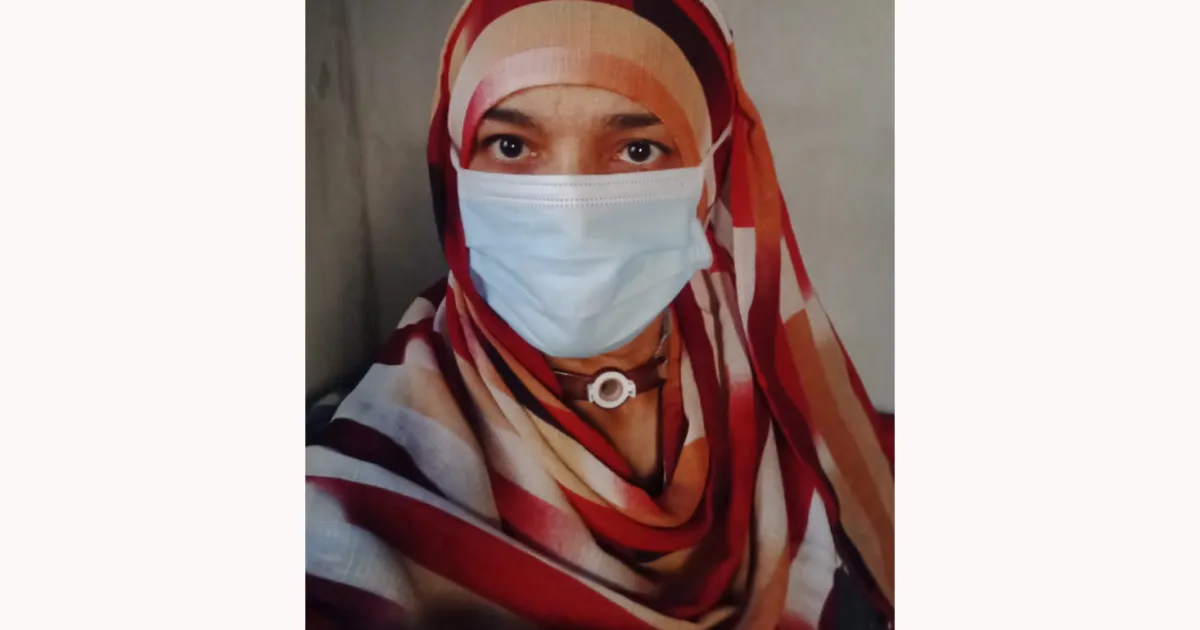
也门胡塞武装控制的首都萨那,50岁的裁缝拉贾·吉尔桑因气道受阻,几乎无法说话或呼吸。
Rajaa Ghirsan, a 50-year-old seamstress from Sanaa, Yemen’s Houthi-controlled capital, can barely speak or breathe due to obstructions in her airway.
她的声带麻痹和喉部严重并发症,使她不得不依靠一个固定在颈部的装置维持气流、防止窒息。该装置每两个月需更换一次,每次花费100美元。
Her vocal cord paralysis and severe complications in her larynx have left her dependent on a device fitted around her neck to keep air flowing and stave off suffocation. The device has to be replaced every two months and costs $100 each time.
自2006年以来,她已在埃及和印度接受了六次手术,试图恢复正常呼吸,但如今仍需赴国外接受另一项复杂手术以打开气道。也门因冲突而衰弱的医疗体系缺乏所需的基础设施和专科护理,她不得不出国就医。
She has undergone six operations in Egypt and India since 2006 in an attempt to try to help her breathe normally, but she now needs another complex operation abroad to open her airway. As Yemen’s conflict-weakened health system lacks the infrastructure and specialist care required, she will need to head overseas for treatment.
在萨那的高级医疗委员会登记后——该机构负责安排赴国外就医——她花了七年时间试图争取一个每周一班飞往安曼的航班座位,也门患者在那里接受治疗。
After registering with the Higher Medical Committee in Sanaa, the body responsible for arranging medical treatment abroad, she spent seven years trying to secure a seat on a once-weekly flight to Amman, where Yemeni patients have been treated.
但反复的关闭和空袭让该航班遥不可及,她也负担不起经陆路前往亚丁机场的漫长旅程,那是她离境的唯一替代选择。
But repeated closures and air attacks have kept that flight out of reach, and she cannot afford the long overland journey to Aden airport, which is her only alternative out of the country.
“装置帮她稍微呼吸,但多年来耗尽了她的精力,夺走了她的安宁,”吉尔桑28岁的女儿努兰·萨拉维说,她在抚养两个孩子的同时,过去十年一直照顾母亲。“她在等待做最后一次手术、摆脱装置的那一刻,或者等待死亡。”
“The device helps her breathe a little, but it has worn her out and taken away her rest for years,” says Nouran al-Salawi, 28, Ghirsan’s daughter, who has cared for her mother for the past decade while raising two children of her own. “She is waiting for the moment she can have the last operation and be free of it, or she is waiting for death instead.”
吉尔桑是众多依靠萨那国际机场出国就医的也门人之一。该机场是数百万生活在北部胡塞控制区民众的主要空中联络通道,但自2016年8月沙特领导的打击胡塞武装的联盟将其对商业航班关闭以来,机场已多次停航。
Ghirsan is among the many Yemenis who depend on Sanaa International Airport to get the medical care they need abroad. The airport is the main air link for millions living under Houthi control in the north, but it has been repeatedly shut since the Saudi-led coalition fighting the Houthis closed it to commercial traffic in August 2016.
联合国斡旋的停火协议于2022年5月允许有限数量的航班恢复,但2025年以色列的空袭损坏了机场并摧毁了飞机。7月,由沙特支持的也门政府军打击了其唯一可用的跑道,以防止一架载有胡塞代表团的伊朗飞机降落。
A United Nations-brokered truce allowed a limited number of flights to resume in May 2022, but Israeli air attacks in 2025 damaged the airport and destroyed aircraft. In July, Yemeni government forces backed by Saudi Arabia struck its only working runway to prevent an Iranian plane with a Houthi delegation from landing.
截至目前,首都没有定期航班起飞,而作为国际公认政府所在地、也是北部患者主要替代选择的亚丁,也遭到了袭击。
As of today, no regular flights leave the capital, while Aden, the seat of the internationally recognised government and the main alternative for patients in the north, has also come under attack.
胡塞控制的萨那卫生部发言人阿尼斯·阿斯巴希(Anis al-Asbahi)告诉半岛电视台,过去十年中萨那机场反复关闭,影响了约40万名患者,其中包括25万名需要在国外接受治疗的患者。航班中断还影响了超过12.5万名面临药物短缺的癌症患者。
Anis al-Asbahi, spokesperson for the Houthi-run Ministry of Health in Sanaa, told Al Jazeera that repeated closures of Sanaa airport over the past decade have affected about 400,000 patients, including 250,000 who need treatment abroad. The flight disruptions have also affected more than 125,000 people with cancer who face shortages of medicine.
“这导致超过1600种药物短缺,包括12种被禁止进入该国的抗癌药物,”他说。“此外,超过4万名地中海贫血和溶血性贫血患者面临铁螯合药物及其治疗所需静脉输液短缺。”据胡塞战俘事务委员会主席阿卜杜勒·卡德尔·穆尔塔达(Abdul-Qader al-Murtada)发表的一份声明,也门胡塞武装单方面释放了159名效忠沙特支持的也门政府的战俘。[Yahya Arhab/EPA] 用金钱和生命付出代价 政府与胡塞武装之间的战斗在过去几个月重新点燃,导致援助和人员流动受到新的限制。
“It has led to shortages of more than 1,600 types of medicine, including 12 cancer drugs that are barred from entering the country,” he said. “Additionally, more than 40,000 patients with thalassemia and haemolytic anaemia face shortages of iron chelation drugs and the intravenous solutions needed for their treatment.”Yemen’s Houthis have unilaterally released 159 war prisoners loyal to the Saudi-backed government of Yemen, according to a statement by the head of the Houthi Prisoner Affairs Committee, Abdul-Qader al-Murtada [Yahya Arhab/EPA] Paying with money and lives Fighting between government and Houthi forces has reignited in recent months, leading to new restrictions on the movement of aid and people. This month, UN envoy Hans Grundberg told the Security Council that the country had slid back into full-scale war.
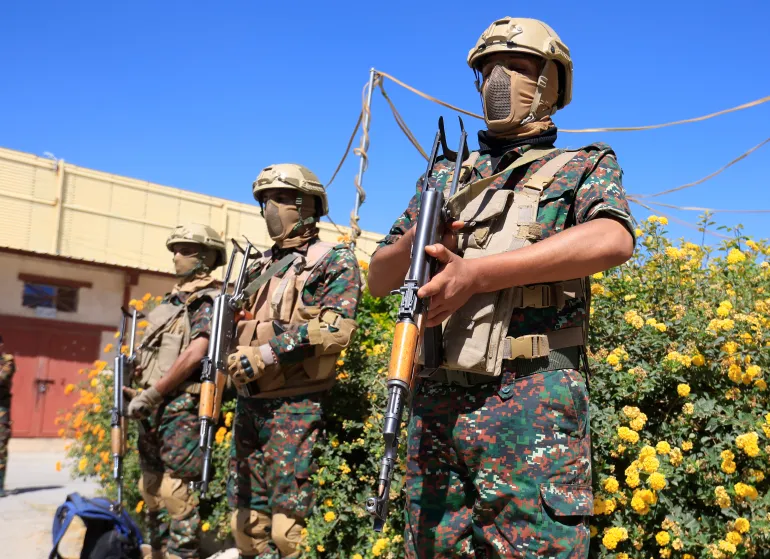
本月,联合国特使汉斯·格伦德贝格(Hans Grundberg)向安理会表示,该国已滑回全面战争。亚丁机场本月已两次遭到袭击,最近一次是在10月16日,当时两枚导弹落在距离一架准备飞往开罗的也门航空客机约500米(550码)的地方。
Aden’s airport has been hit twice this month most recently on October 16, when two missiles landed about 500 metres (550 yards) from a Yemenia plane preparing to take off for Cairo. With Sanaa airport out of operation, Aden’s under attack, and unrest this year in Seiyun, a city in the eastern province of Hadramout that hosts another airport, patients in northern Yemen have limited options.
随着萨那机场停运、亚丁遭受袭击,以及今年东部哈德拉毛省城市塞云(该地也有一座机场)发生动荡,也门北部患者的选择十分有限。
Mohammed Shajara, 30, tried to reach Tehran for treatment for his paraplegic five-year-old daughter in June.
30岁的穆罕默德·沙贾拉于6月试图前往德黑兰,为患有截瘫的5岁女儿寻求治疗。但7月政府封锁了往返萨那的伊朗航班,导致他滞留德黑兰,最终未能接受治疗便返回。亚丁是他的下一个选择,但从萨那出发的旅程约需14小时,且须穿越前线双方设置的数十个检查站。鉴于机场屡遭袭击,他目前暂缓出行。
But he was left stranded in Tehran when the government blocked Iranian flights to and from Sanaa in July, so they returned without treatment. Aden was his next option, but the journey from Sanaa takes about 14 hours and involves crossing dozens of checkpoints on both sides of the front lines. With the airport coming under repeated attack, he is holding off for now. Abdulkarim Abdullah, 60, had kidney failure and relied on weekly dialysis in Sanaa.
60岁的阿卜杜勒卡里姆·阿卜杜拉患有肾衰竭,依靠在萨那每周进行透析维持生命。长期治疗拖垮了家庭财务,因此他们一直在寻找能根治病情的方法。阿卜杜勒卡里姆原定从萨那飞往安曼接受治疗,但随后飞往约旦的航班暂停,让他无法离开首都。塞云机场同样停运,家人只得转向亚丁。
The regular treatment has strained his family’s finances, so they have looked for a treatment to fix the problem. Abdulkarim had been due to fly from Sanaa to Amman for this, but the subsequent suspension of flights to Jordan left him with no way out of the capital. With Seiyun airport also out of service, the family turned to Aden. To get there, Abdulkarim’s brother, Mohammed Abdullah, had to pay about $2,300 to cover the journey and prepare for the flight.
为了前往亚丁,阿卜杜勒卡里姆的弟弟穆罕默德·阿卜杜拉不得不支付约2300美元,用于支付路费和航班准备费用。
“Hiring a car from Sanaa to Aden cost $200, a hotel stay before the flight $500, security clearances for the two brothers $400, and plane tickets $1,200,” Mohammed says.
穆罕默德说:“从萨那包车去亚丁花费200美元,航班前住酒店500美元,两兄弟的安全许可400美元,机票1200美元。”为筹集这笔钱,他变卖了哥哥妻子的金饰,又卖掉了自己的汽车。
To raise the money, he sold his brother’s wife’s gold, and then his own car. “Despite all of our efforts, my brother never made it to the airport. He died on the road to Aden in January,” Mohammed says.
穆罕默德说:“尽管我们竭尽全力,哥哥始终没能到达机场。他于1月在前往亚丁的途中去世。”
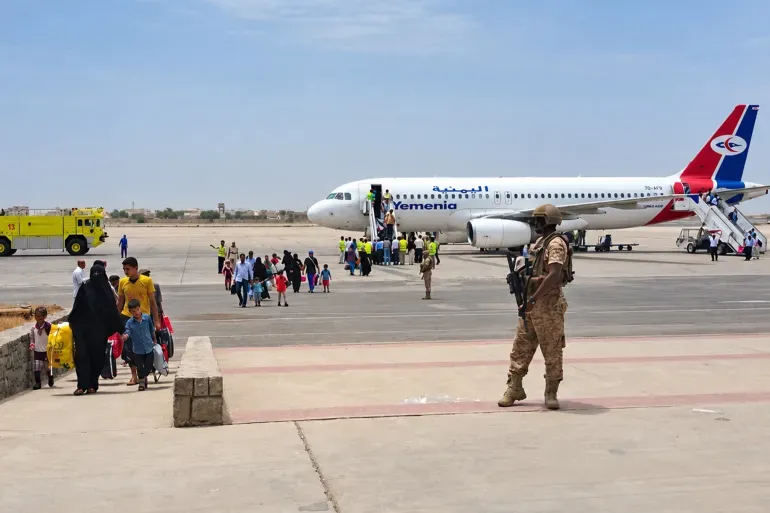
Aden International Airport is one of the primary air travel hubs in areas controlled by Yemen’s internationally recognised government [Al Jazeera] Trapped by the war Fouad al-Haddad, director of al-Jumhuri Hospital in the southwestern city of Taiz, said other patients have died waiting to receive treatment abroad or due to domestic travel restrictions.
位于西南部城市泰兹的朱姆胡里医院院长福阿德·哈达德表示,其他患者也因等待赴国外治疗或受国内旅行限制而去世。
“[The] closure of main roads around Taiz has forced travellers onto longer detours through mountain bends and rugged terrain, journeys that take more time and effort and that many patients are too sick to endure, on top of the security risks along routes close to the fighting,” he said.
“通往泰兹的主要道路关闭,迫使旅客不得不绕道行经蜿蜒的山路和崎岖地形,行程耗时更长、更加劳累,许多病人病情太重无法承受,再加上靠近战区路线的安全风险,”他说。
Nearly 147,000 people were displaced across Yemen in September, more than 80,000 of them to Taiz, according to government figures.
根据政府数据,9月份全也门有近14.7万人流离失所,其中8万多人流向泰兹。泰兹收容了大部分因国内其他地区战斗而近期流离失所的也门人。
Taiz is hosting most of the Yemenis recently displaced by fighting elsewhere in the country. Nadia al-Rashidi, head of the Hayat Jadida (New Life) organisation, a local NGO in Hadramout, said flights from al-Rayyan airport in Mukalla to Aden, and from there to Cairo, now run only once a week.
哈德拉毛当地非政府组织“新生命”负责人娜迪亚·拉希迪表示,从穆卡拉的赖扬机场飞往亚丁,再从那里飞往开罗的航班目前每周仅有一班。邻省马赫拉的盖达机场也已关闭,而赖扬和塞尤恩机场自1月份与南方过渡委员会(STC)有关的武装力量被赶出南方以来,仅部分恢复运营。
Al-Ghaydah airport, in neighbouring al-Mahra, is also closed, while both al-Rayyan and Seiyun have only partly resumed operations since forces linked to the Southern Transitional Council (STC) were pushed out of the south in January. Travellers flying to Egypt and Jordan also need security clearances.
拉希迪说,前往埃及和约旦的旅客还需要安全许可。通过常规流程办理大约需要半个月,花费200美元可加急办理。
This can take about half a month to issue through the regular process and cost $200 to fast-track, al-Rashidi said. No side spared Aref al-Hawshabi, director general of the National Centre for Health Education and Media at the Health Ministry in Aden, said 1,170 patients from government-held governorates have submitted medical files to travel abroad for treatment under the ministry’s free grants programme.
阿登卫生部国家健康教育与媒体中心总监阿里夫·哈瓦沙比表示,政府控制省份的1170名患者已根据卫生部的免费赠款计划提交病历申请出国治疗。他说:“实际需求远高于此,因为许多患者根本无法提交病历。”
“The real need is far higher, because many patients are unable to submit their files at all,” he said. The conditions that most often require treatment abroad include cancers and blood diseases; bone marrow, liver, and kidney transplants; cochlear implants and corneal transplants; heart disease; scoliosis; and congenital malformations of the reproductive system.
最常需要出国治疗的病症包括癌症和血液疾病;骨髓、肝脏和肾脏移植;人工耳蜗植入和角膜移植;心脏病;脊柱侧弯;以及生殖系统先天畸形。
Flight disruptions and airport closures delay these patients and put them at serious risk, al-Hawshabi adds, particularly those with fixed appointments at hospitals abroad.
哈瓦沙比补充说,航班中断和机场关闭导致这些患者延误就医,使他们面临严重风险,尤其是那些在国外医院有固定预约的患者。
“Some who manage to leave then struggle to get home, staying abroad longer than planned on money they do not have, while others face problems entering India and Jordan even after clearing the obstacles at home.”
“部分设法离境的人随后难以返乡,被迫在原本没有的资金上延长在国外的停留时间,而另一些人即便在国内清除了障碍,在进入印度和约旦时仍面临问题。”9月,政府卫生部长卡西姆·布海贝赫警告称,如果资金持续缩减,一些地区可能完全失去医疗服务。他表示,也门有1930万人需要卫生援助,而应对计划仅获得了所需资金的17%,透析和癌症治疗属于风险最大的服务项目之一。目前,该国双方均无医疗撤离计划。
In September, the government’s health minister, Qasim Buhaibeh, warned that some areas could lose health services entirely if funding continues to fall. He said 19.3 million people in Yemen need health assistance while the response has received only 17 percent of the funding it requires, and that dialysis and cancer treatment are among the services most at risk. There is currently no medical evacuation programme in either part of the country. Doctors in hospitals across Yemen are seeing the impact of these travel restrictions, and the race against time for patients to receive treatment.
也门各地医院的医生正目睹这些旅行限制的影响,以及患者争分夺秒接受治疗的现状。
“I see the price that Yemenis pay every day in the wards,” said Fouad al-Haddad from the al-Jumhuri Hospital.
“我每天都在病房里看到也门人付出的代价,”来自朱姆胡里医院的福阿德·哈达德说。“我们现在面对的是被疾病掏空的躯体,以及无法推迟的医疗需求。”本报道由Egab合作制作。
“What we have now are bodies exhausted by disease and medical needs that cannot be postponed.”This story is produced in collaboration with Egab