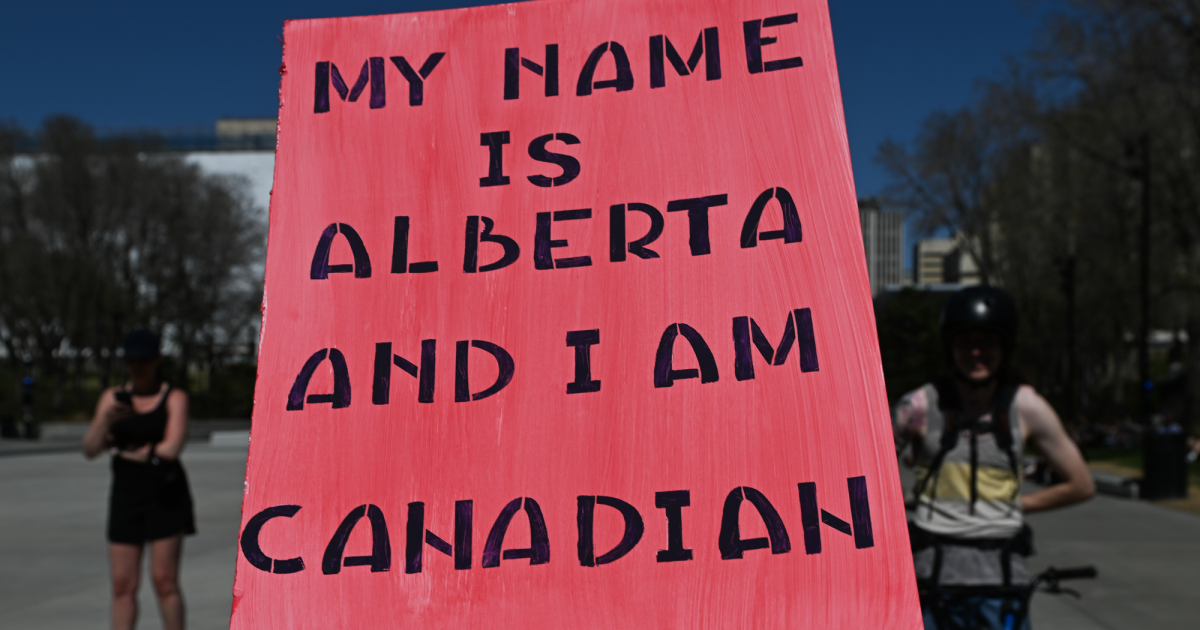
在周一举行的公投中,阿尔伯塔省以压倒性多数票反对独立方案,这严重打击了那些试图将该富裕的西部省份从加拿大分离出去的右翼势力。
Alberta resoundingly voted against a path to independence in a referendum on Monday, in a blow to the right-wing campaign to separate the wealthy western province from Canada.
阿尔伯塔省的独立运动得到了边境两侧受“MAGA”(“让美国再次伟大”)思潮影响的基督教民族主义者的支持;然而,在唐纳德·特朗普总统威胁要入侵并征服加拿大的背景下,这一运动面临着更加艰巨的挑战。
Albertan independence had drawn support from MAGA-influenced movements Christian nationalists on both sides of the border but faced an especially uphill battle in the face of President Donald Trump’s threats to invade and subjugate Canada.
阿尔伯塔省省长丹妮尔·史密斯在分离主义者的支持下上台执政后,于今年5月将独立议题纳入了省级选举的投票清单。虽然她最初倾向于支持反对独立的立场,但包括总理马克·卡尼在内的联邦政府领导人纷纷站出来捍卫加拿大的统一。
The province’s leader, Danielle Smith, who came to power with the backing of separatists, added the question to provincial ballots in May after a petition for independence collected over 200,000 verified signatures. She tentatively supported a no vote, but federal leaders from across the political spectrum including Prime Minister Mark Carney rallied to defend a united Canada.
初步结果显示,该省的保守派选民普遍支持其他一些投票议题(例如限制移民以及将更多联邦政府的权力下放给省级政府)。不过,由于约四分之三的选民明确反对独立提案,他们坚决选择继续留在加拿大境内。
Partial results show that voters in the staunchly conservative province likely approved a number of other ballot questions, lending support to restrictions on immigration and putting more of the federal government’s powers in provincial hands. But with about three-quarters of voters opposing the headline-grabbing question, they were firm on remaining part of Canada.
特朗普曾多次威胁要入侵加拿大并将其并入美国(最近一次是在上周三亚利桑那州的集会上)。他对加拿大商品征收的高额关税(这些关税未经国会批准,似乎完全是出于个人意愿)对两国经济造成了严重威胁——毕竟阿尔伯塔省的经济与美国紧密相连。
Trump has threatened to invade Canada and annex it as the “51st state,” most recently at a rally last Wednesday in Arizona. His steep tariffs on trade with the country, implemented without congressional authorization and seemingly by personal whim pose stark dangers to an economy deeply entwined with that of the United States.
这一威胁引发了广泛的反对浪潮,从抵制美国产的“威士忌”到卡尼政府改用更具“英式风格”的官方名称(如将某些地名从“Albetta”改为“Alberta”)。不过,阿尔伯塔省与联邦政府之间的矛盾其实早在特朗普政府上台之前就已存在,这些矛盾也与当前的文化冲突密切相关。
That has set off a wave of backlash, from boycotts of American “whisky” to Carney’s shift towards spellings with a more British “flavour But frictions between oil-rich Alberta and the federal government predate the Trump administration and current culture wars.
阿尔伯塔省是加拿大的保守派大本营,但自由党已执掌联邦政府十余年。西部省份部分民众长期认为,加拿大由人口更稠密的东部主导,并对将资金转移至较不富裕省份的财政政策心怀不满。在总理贾斯汀·特鲁多领导下,气候政策转向化石燃料之外,而阿尔伯塔省经济建立在化石燃料之上,这加剧了不满情绪。
Alberta is Canada’s conservative heartland, but the Liberal Party has run the federal government for over a decade. Some in western provinces have long felt that Canada is dominated by the country’s more populous east, and have been aggrieved at fiscal policies that shift money towards less wealthy provinces. Under Prime Minister Justin Trudeau, climate policies shifting away from fossil fuels that Alberta’s economy is built on increased the discontent.
在阿尔伯塔省人口主要聚居的卡尔加里和埃德蒙顿,“反对”票以巨大优势领先。随着大部分结果出炉,该选项在几乎所有农村地区也以较小优势获胜。
The “no” vote ran up massive margins in Calgary and Edmonton, where most of Alberta’s people live. With most results reported it also won by smaller margins in nearly all rural areas.
即使多数人投了“赞成”票,通往独立的道路依然漫长且前景未卜。此次投票实质上是关于未来某个日期是否举行真正的独立公投,而加拿大最高法院已裁定,省份若想分离,必须与联邦政府谈判。
Even if a majority had voted yes, the route to independence would have been long and dubious. The vote was actually about whether to a true independence referendum at a future date, and the Supreme Court of Canada has ruled that provinces cannot secede without negotiating with the federal government.
在该国另一端,加拿大第二大省魁北克近期为分离主义者带来了好坏参半的结果。
On the other side of the country, Canada’s second-largest province delivered a more mixed result for separatists recently.
两周前,在魁北克省选中,一个主张独立的政党距离过半数席位仅一步之遥。魁北克因保护其以法语为主的文化问题与联邦政府多有冲突。
Two weeks ago, a pro-independence party fell just short of a majority in provincial elections in Quebec, which has clashed with the federal government over protections for its majority French-speaking culture.
(魁北克分离主义者的联邦领袖曾讽刺称,阿尔伯塔在独立前需要“拥有自己的文化”,并调侃道,“我不确定石油和天然气算不算。”)魁北克党在竞选期间承诺举行第三次独立公投,但附带条件:特朗普仍在任期间不举行。民调显示,仅约30%的魁北克人支持独立,而卡尼领导的自由党在去年联邦大选中在魁北克取得压倒性胜利。
(The federal leader of Quebec’s separatists has suggested that Alberta needs “a culture of their own” before gaining independence, cheekily adding, “I am not certain that oil and gas qualifies.”) The Parti Québécois pledged during its campaign to hold a third independence referendum, but with a caveat: not while Trump is still in office. But polling shows only about 30 percent of people in Quebec favoring independence, and Carney’s Liberal Party won a decisive victory there in last year’s federal election.
本月,加拿大最具独立精神的两个省份给出了相似的裁决:它们希望赋予身边的政府更多权力,但并不寻求独立——尤其是在它们的南方邻国(或 neighbour)正威胁要摧毁它们现有的国家之际。
This month, Canada’s two most independent-minded provinces have delivered similar verdicts: they want governments close to home empowered, but they don’t want independence—especially not while their southern neighbor (or neighbour) is threatening to destroy their current country.