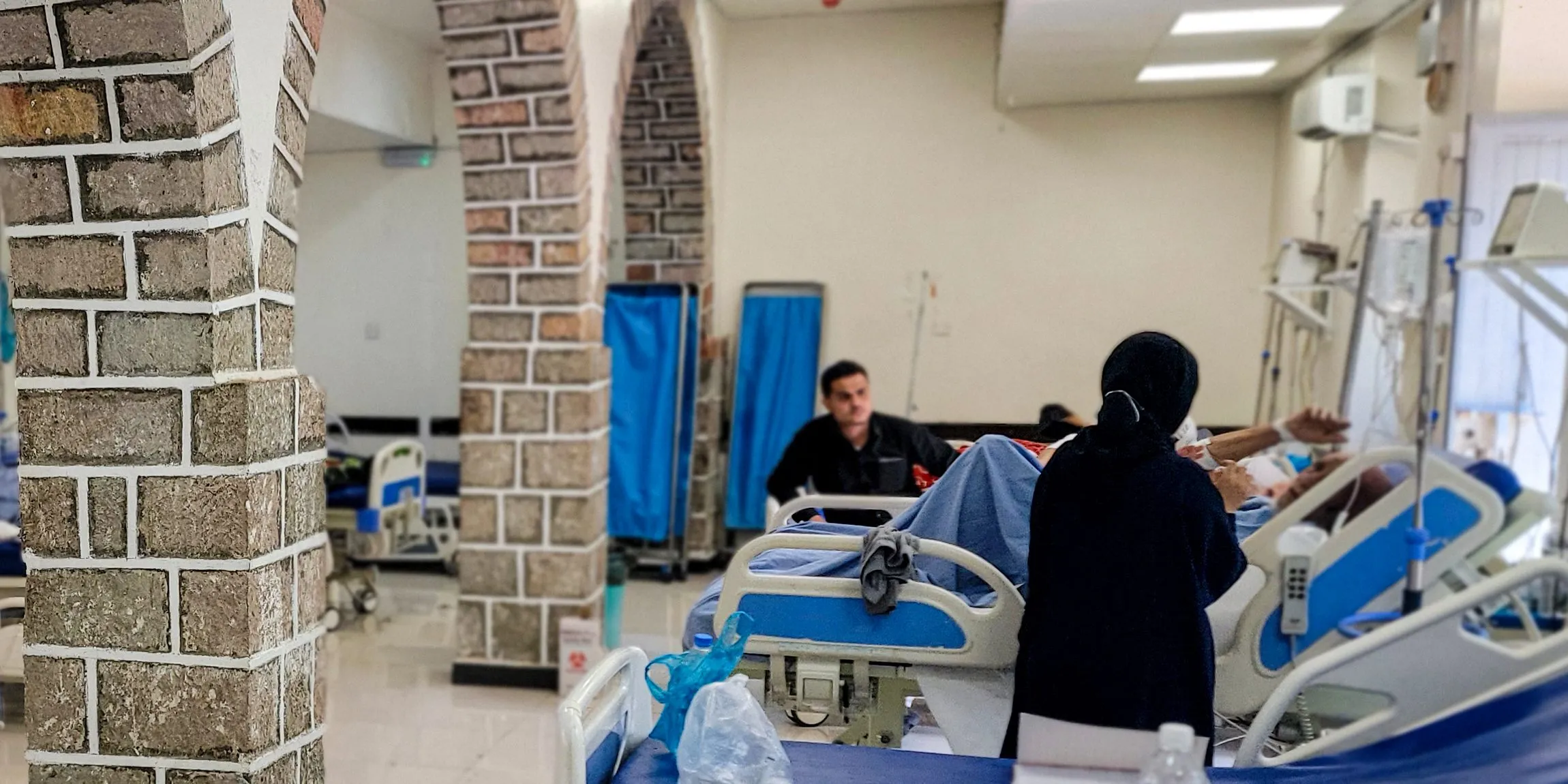
也门萨那——在也门被围困的西南部省份泰兹的塞卢瓦区,阿卜杜拉在家中卧床已逾两周,身体机能逐渐衰竭。这位58岁的患者患肾衰竭已两年,医生规定他每周透析两次。
SANA’A, Yemen — For more than two weeks, Abdullah laid at home in al-Silw district, in Yemen’s besieged southwestern governorate of Taiz, as his body slowly failed. The 58-year-old had lived with kidney failure for two years, and his doctor had prescribed dialysis twice a week.
然而自围困开始以来,战火阻隔了艾伊西与维持其生命的泰兹市透析中心。艾伊西不愿让家人冒生命危险送他前往中心。
Since the siege, however, the fighting stood between al-Eissi and the dialysis center in Taiz city that kept him alive. Al-Eissi wouldn’t let his family risk their lives to take him to the center.
“父亲的病情急剧恶化,”其子穆阿兹(38岁)说。“战斗加剧,我们无法将他转移至泰兹。”约一周前,艾伊西在家中病床上离世。
“My father’s condition deteriorated badly,” said his son, Muadh, 38. “We couldn’t move him to Taiz because the fighting had intensified.”About a week ago, al-Eissi died at home in his bed.
“看到母亲为丈夫痛哭,我感到无能为力,”穆阿兹说。“如果父亲能按时接受透析,悲剧本可避免。”据泰兹朱姆胡里医院肾脏透析中心主任伊萨姆·马尤布医生称,自泰兹围困开始以来,因无法前往治疗,已有至少10名透析患者死亡。医生警告,后续死亡病例还会增加。
“When I saw my mother weeping for her husband, I felt helpless,” Muadh said. “It might have been avoided if my father had reached his dialysis sessions on time.”Abdullah is one of at least 10 dialysis patients who have died since the siege on Taiz began because they could not reach treatment, according to Dr. Issam Mahyoub, director of the kidney dialysis center at al-Jumhuri Hospital in Taiz. Doctors warn that many more could follow.
“泰兹约60%的肾衰竭患者因无法到达透析中心而面临死亡风险,”该院院长福阿德·哈达德医生说。“每个数字背后都是一个鲜活的生命和一个生活在焦虑中的家庭,他们在等待一个可能永远不会到来的继续治疗的机会。”这些肾衰竭死亡病例是更广泛地区战争造成的伤亡之一,这场战争由以色列和美国二月份对伊朗发动的无端袭击引发。
“About 60 percent of kidney failure patients in Taiz face the risk of death because they cannot reach the dialysis center,” said Dr. Fouad al-Haddad, the hospital’s director. “Behind every number is a human being and a family living in anxiety, waiting for a chance to continue treatment that may never come.”The kidney-failure deaths are part of the toll of a wider regional war set off by an unprovoked February attack against Iran by Israel and the United States.
据估计,战争期间已有1万人或更多人丧生,包括整个地区的军人和平民。据世界卫生组织称,自地区战争今夏在也门重燃以来,至少800人丧生,数千人受伤,数万人流离失所。
Estimates hold that 10,000 or more people have died during the war, including both military and civilian deaths across the region. Since the regional war reignited in Yemen this summer, according to the World Health Organization, at least 800 people have been killed, with thousands wounded and tens of thousands displaced.
“台兹透析患者的困境,展示了围绕威慑、能源安全和地区影响力的地缘政治博弈,是如何转化为交通受阻、医疗中断和本可避免的死亡的,”国际政策中心高级非常驻研究员西纳·图西说。“也门民众已经忍受了十多年毁灭性战争,悲剧在于,这场更广泛的地区冲突现在正威胁要将其再次推向另一场人道主义灾难。”
“The plight of dialysis patients in Taiz illustrates how geopolitical struggles over deterrence, energy security, and regional leverage translate into blocked transit, disrupted medical care, and preventable deaths,” said Sina Toossi, a senior non-resident fellow at the Center for International Policy. “Yemen’s population has already endured more than a decade of devastating war, and the tragedy is that this wider regional conflict is now threatening to plunge it back into another humanitarian catastrophe.”
也门于三月卷入战争,当时与伊朗结盟的安萨鲁拉武装团体(更广为人知的是胡塞武装)开始向以色列发射导弹,以报复其对伊朗的袭击。胡塞武装在长达二十年的叛乱中控制了也门的各个部分,包括首都萨那,随着对阿拉伯半岛周边航运通道的袭击,他们在伊朗战争中的地位日益突出。
Yemen entered the war in March, when the Iran-aligned Ansarallah armed group, more commonly known as the Houthis, began firing missiles into Israel in retaliation for its attacks on Iran. The Houthis, who gained control of various portions of Yemen during a two-decade-long insurgency, including the capital of Sana’a, saw their prominence in the Iran war grow with attacks against shipping channels surrounding the Arabian Peninsula.
也门内战本身一直是一场长期酝酿的冲突,伊朗战争的爆发给胡塞武装与其对手(包括沙特阿拉伯)于2022年签署的停火协议带来了压力,该协议于今年七月被打破,当时胡塞武装袭击了一座沙特地区机场。整个八月,胡塞武装在各条战线上对国际公认、沙特支持的也门政府发动了导弹、无人机和地面袭击。
The Yemeni civil war itself had been a long-simmering conflict when the Iran war broke out, straining a 2022 truce signed by the Houthis and their rivals, including Saudi Arabia, which was broken this July when the Houthis attacked a regional Saudi airport. Throughout August, the Houthis launched missile, drone, and ground attacks across the front lines against the internationally recognized, Saudi-backed Yemeni government.
九月,胡塞武装夺取了也门海岸的战略区域,并实施海上封锁,切断了曼德海峡,同时向沙特阿拉伯腹地发射导弹。
In September, the Houthis seized strategic areas on Yemen’s coast and imposed a naval blockade that cut off the Bab al-Mandeb Strait, while firing missiles deeper into Saudi Arabia.
十月初,沙特领导的联盟支持的也门政府军发起了一项行动,旨在夺回海岸并推进至萨那。
In early October, Yemeni government forces backed by the Saudi-led coalition launched an operation aimed at retaking the coast and pushing into Sana’a.
随着他们向内陆推进以巩固沿海战果,胡塞武装部队向塔伊兹周边的高地发起进攻,塔伊兹是一个战略位置重要的城市,由政府控制。在短时间内,叛军切断了连接塔伊兹与亚丁的主要山路,亚丁也是由政府控制的另一座城市。
As they moved inland to consolidate their coastal gains, Houthi forces pushed into the highlands around Taiz, a strategically located city controlled by the government. In short order, the insurgents severed the main mountain road linking Taiz to Aden, another city also controlled by the government.
封锁困住了60多万居民,并导致食品和燃料价格飙升。联合国世界粮食计划署警告称,塔伊兹的小麦和面粉库存即将耗尽。
The blockade trapped more than 600,000 residents and sent food and fuel prices soaring. The U.N. World Food Program warned that Taiz’s wheat and flour stocks are close to running out.
“我们已确认有死亡病例和严重受影响病例,”总部设在日内瓦、监测也门暴力冲突的国际组织“权利与自由SAM组织”负责人陶菲克·胡迈迪说,他表示,塔伊兹附近道路上的战斗已切断了进入该市的医疗物资。“那些正在死亡和受苦的人,是伊朗战争的受害者之一,这场战争驱使胡塞武装向塔伊兹和曼德海峡扩张。”
“We have confirmed cases of death and cases of severe impact,” said Tawfiq al-Humaidi, head of the SAM Organization for Rights and Liberties, a Geneva-based international body monitoring violence in Yemen, who said fighting on roads near Taiz has cut off medical supplies from the city. “Those who are dying and suffering are among the victims of the Iranian war, which drove the Houthis to expand toward Taiz and Bab al-Mandeb.”
10月14日,也门政府正式向联合国安理会请愿,要求立即采取实际行动解除“窒息式围困”。对阿尔-艾西这样的家庭来说,任何行动都为时已晚。
On October 14, the Yemeni government formally petitioned the U.N. Security Council for immediate, practical intervention to lift the “suffocating siege.”Any action would be too late for families like the al-Eissis.
塔伊兹是也门的文化之都及第三大城市。那里的医疗设施服务于广大地理区域。阿尔-朱姆胡里医院院长阿尔-哈达德表示,患者来自全省各地。
Taiz is Yemen’s cultural capital and its third-largest city. Healthcare facilities there serve a huge geographical area. Al-Haddad, the head of the al-Jumhuri Hospital, said patients hail from across the governorate.
“他们来自西海岸、阿尔-马瓦西特、杰贝勒·哈巴希、阿尔-沙马亚泰因、萨马、阿尔-西尔瓦、阿尔-米斯拉赫和阿尔-马阿费尔地区,”他说,“路途遥远,崎岖的道路和安全局势使得旅途的艰辛成倍增加。”肾脏透析中心有270名登记在册的患者。
“They come from the West Coast, al-Mawasit, Jabal Habashi, al-Shamayatayn, Sama, al-Silw, al-Misrakh, and al-Maafer areas,” he said, “where distances are long and the hardship of travel is multiplied by rough roads and security conditions.”The kidney dialysis center has 270 registered patients.
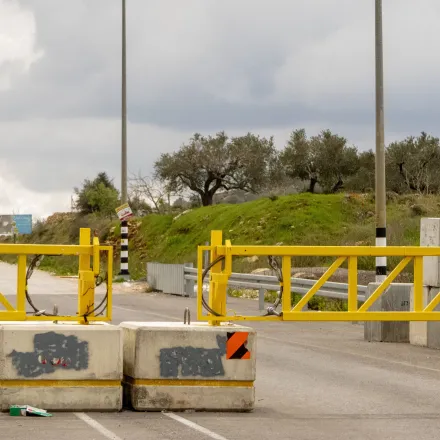
“那还不包括那些无法到达我们这里的城外患者,”透析中心负责人马哈尤布说。“来自米斯拉赫、阿格鲁德、沙马亚泰因、胡贾里亚、图尔巴和哈巴希山一带的患者过去常来这里。现在由于战斗和进入城市的行动限制,到这里变得极其困难。”
“That doesn’t count the patients from outside the city who haven’t been able to reach us,” said Mahyoub, the head of the dialysis center. “Patients from al-Misrakh, al-Aqroud, al-Shamayatayn, al-Hujariya, al-Turba, and Jabal Habashi localities used to come to us. Now getting here has become extremely difficult, with the fighting and the restrictions on movement into the city.”
33岁的阿赫拉姆·阿里·阿卜杜从哈巴希山的村庄步行约30公里来到中心,途中要经过崎岖道路和枪炮声不断的区域。对于一名肾衰竭患者来说,这段路程风险极大,耗时5到9小时。透析治疗后,她还要原路返回,翻山越岭回到三个孩子身边。有些日子路途太过危险,阿卜杜只能在城里等上几个小时。
Ahlam Ali Abdo, 33, walks about 30 kilometers from her village in Jabal Habashi to reach the center, crossing rough roads and areas where gunfire and shelling ring out. The walk, extremely risky for a kidney failure patient, takes between 5 to 9 hours. After treatment, she faces the same distance back, uphill, to her three children. Some days the road is too dangerous, and Abdo waits for hours in the city.
“我不停地因疼痛、精疲力竭和担心再也见不到孩子而哭泣。我的处境悲惨,”她说。
“I cry constantly of pain and exhaustion and worry that I wouldn’t be able to see my children again. My condition is miserable,” she said.
丈夫留在家里照看孩子。她说,带任何一个孩子同行都会让全家陷入危险。
Her husband stays home with the children. Bringing any of them with her, she said, would put the whole family in danger.
马哈尤布的中心曾试图为她在城里找住处,但未成功。周五,另一名透析患者收留了她,生怕她在路上丧命。到达中心并不意味着就能得到治疗。
Mahyoub’s center tried and failed to find her housing in the city. Yesterday, on Friday, another dialysis patient took her in, for fear she would be killed on the road. Reaching the center doesn’t guarantee treatment.
“运行发电机所需的柴油短缺,迫使我们将透析时长从4小时缩减至2小时,”马哈尤布说。来自亚丁卫生部的物资“不再定期到达,剩余库存已近耗尽”。“透析是这些患者的生命线,”他说。
“The shortage of diesel needed to run the generators forced us to cut dialysis sessions from 4 hours to 2,” said Mahyoub. Supplies from the Ministry of Health in Aden “no longer arrive regularly, and the remaining stock is nearly gone.”“Dialysis is a lifeline for these patients,” he said.
医院院长哈达德谈到透析中心医生时说:“他们肩负挽救患者的重任,但可用手段并不总是足够。”亚丁公共卫生与人口办公室已发出警告,因持续围困和物资运输受阻,泰兹即将面临一场健康与人道主义灾难。
Haddad, the hospital director, said of the dialysis center doctors: “They are expected to save patients, but the means available are not always enough.”The Office of Public Health and Population in Aden has warned of an imminent health and humanitarian catastrophe in Taiz caused by the continuing siege and the obstruction of supplies.
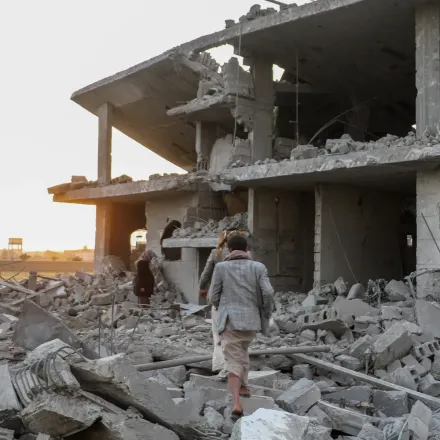
在一份声明中,它说:“该市的医疗机构中的药品、解决方案、医疗用品和燃料即将用完,这威胁到急诊服务、手术、重症监护、透析和新生儿孵箱。” 对于已无法到达泰兹中心的患者,阿德纳是备选方案,无论是治疗还是利用其机场出国。然而,泰兹—阿德纳道路据患者和马休布称已无法使用,绕行路线穿过山地弯道和崎岖地形,增加数小时行程和运输成本,部分路段通过活跃的交战区。危机已超出泰兹范围。
In a statement, it said “medicines, solutions, medical supplies and fuel in the city’s health facilities were close to running out. That threatens emergency services, surgery, intensive care, dialysis and neonatal incubators.”For patients who can no longer reach Taiz’s center, Aden is the fallback, whether for treatment or for its airport to travel abroad. The Taiz–Aden road, however, is unusable, according to patients and Mahyoub. The detours wind through mountain bends and rough terrain, add hours and transport costs, and in places run through active clashes. The crisis extends beyond Taiz.
萨那卫生部发言人阿尼·阿尔-阿斯巴希表示,“在胡塞控制的省份,超过8000名尿毒症患者因透析机器和透析药物无法进入而受苦。他归咎于封锁和萨那机场的关闭。”
Dr. Anis al-Asbahi, spokesperson for the Health Ministry in Sana’a, said that “more than 8,000 kidney failure patients in Houthi-controlled governorates are suffering because hemodialysis machines and dialysis medicines can’t get in.”
“肾衰竭不知政治障碍,”马休布说。“患者不能等待争端解决或环境改变后才接受治疗。” 对于穆阿德·艾伊西来说,他的父亲因肾衰竭去世,问题更为简单。
He blamed the blockade and the closure of Sana’a airport. “Kidney failure knows no political barriers,” Mahyoub said. “Patients cannot wait for disputes to be settled or for circumstances to change before they get treatment.”
“武装分子在人口稠密区使用重武器,如何能忽视战斗对患者——包括需要药物和治疗的儿童、妇女和老年人?”他问道,“像我父亲这样的人,因什么而丧生?”
For Muadh al-Eissi, whose father died from kidney failure, the question is simpler. “How can the parties using heavy weapons in populated areas ignore what the fighting does to patients,” he asked, “to the children, women and elderly people who need medicine and treatment? People, like my father, are losing their lives for what?”