德国投资者信心自4月以来首次下降,凸显该国经济从多年低迷中复苏的坎坷历程。
German investor confidence dropped for the first time since April, highlighting the economy’s bumpy recovery from a multiyear malaise.
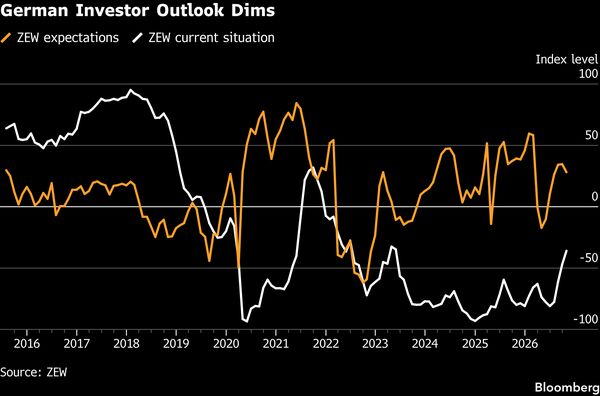
ZEW经济研究所的预期指数10月降至28.1,低于上月的34.7,也低于彭博调查的中位预估值30。衡量当前经济状况的指标改善幅度远超预期,但仍处于低迷水平,为-35.9。
An expectations index by the ZEW institute decreased to 28.1 in October from 34.7 the previous month. That’s below the median estimate of 30 in a Bloomberg survey. A measure of current conditions improved much more than expected but remained subdued at -35.9.
ZEW主席阿希姆·瓦姆巴赫周二在声明中表示:“德国经济正缓慢摆脱停滞,但复苏尚不可持续。由于能源价格高企,私人消费和投资依然疲软。这给实际收入带来压力,推高生产成本,并使通胀在更长时间内维持高位。”得益于巨额基础设施和国防开支,欧洲最大经济体在中东冲突面前表现出意想不到的韧性。尽管冲突导致能源成本上升,德国联邦银行表示德国目前显然已踏上复苏之路。
“The German economy is slowly emerging from stagnation, but the recovery is not self-sustaining,” ZEW President Achim Wambach said Tuesday in a statement. “Private consumption and investment remain weak because of high energy prices. They put real incomes under pressure, increase production costs and keep inflation higher for longer.”Buoyed by vast infrastructure and defense spending, Europe’s largest economy has proven unexpectedly resilient to the conflict in the Middle East. Despite the rising energy costs the fighting has caused, the Bundesbank says Germany is now clearly on a path to recovery.
在2026年上半年增长出人意料地强劲之后,政府将全年增长预期上调至1.3%,较此前预测翻倍多,这对陷入困境的总理弗里德里希·默茨而言是个好消息。
Following surprisingly strong growth in the first half of 2026, the government has raised its full-year projection to 1.3%, more than double the previous forecast and good news for the country’s struggling chancellor, Friedrich Merz.
预计2027年经济将扩张1.1%。但债券市场动荡、石油和天然气价格居高不下等逆风依然存在。此外,极端政党近期在州选举中获胜,引发担忧,默茨政府可能会削弱促增长改革。
For 2027, expansion is seen at 1.1%. But headwinds like bond-market turmoil and elevated oil and natural gas prices remain. In addition, recent state-election wins for extremist parties have raised concern that Merz’s government could water down pro-growth reforms.