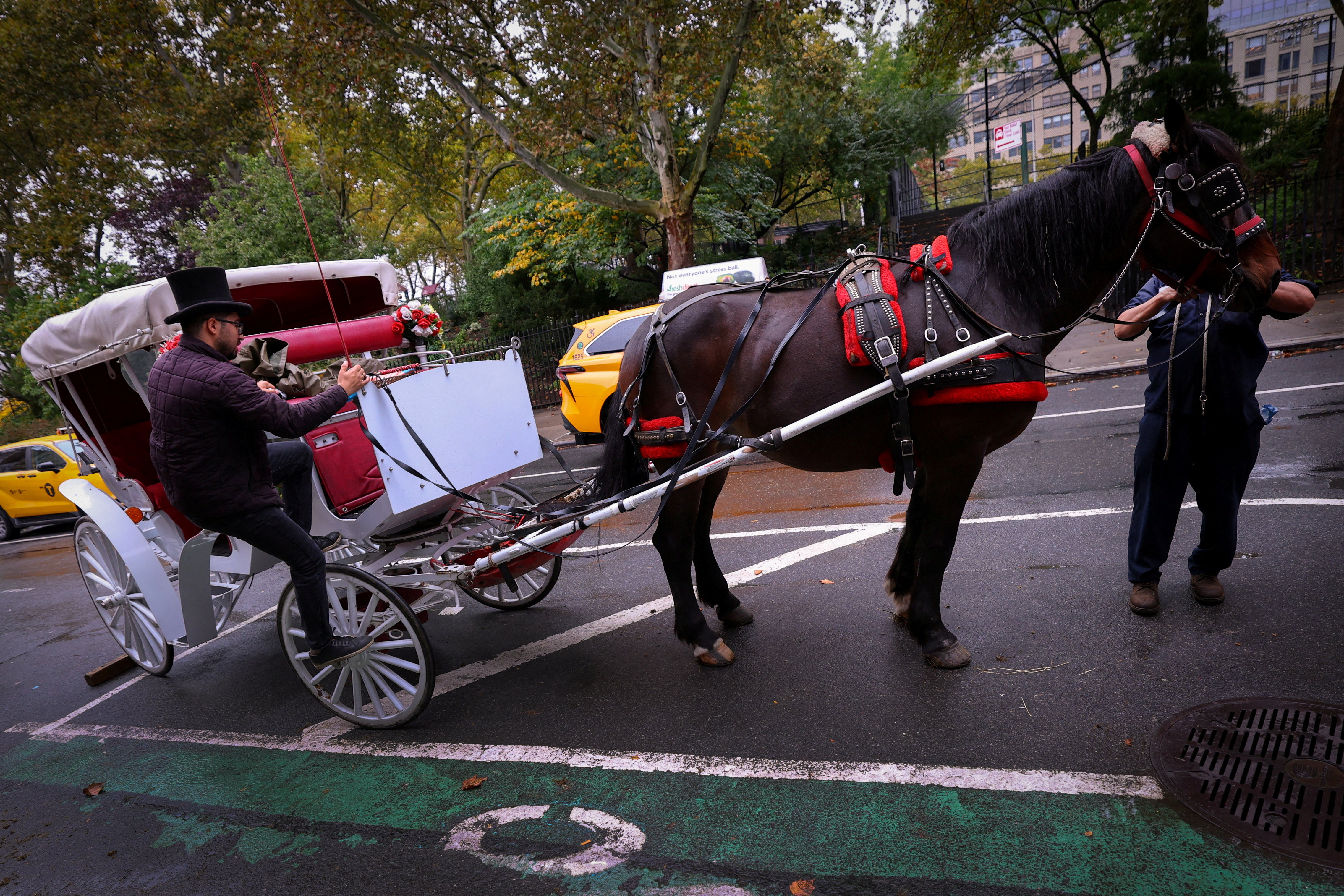
对于旁观者来说,由头戴黑色礼帽的车夫驾车、搭载乘客穿梭于中央公园及附近曼哈顿街道的马车,看起来就像是另一个时代的遗迹。它们很快可能就会成为历史。
To observers, the horse-drawn carriages driven by coachmen in black top hats, ferrying passengers through Central Park and nearby Manhattan streets, can seem like relics from another time. They soon may be.
自19世纪以来,马车就一直在中央公园内行驶,但近年来它们一直受到动物权利活动人士的谴责,活动人士称这些马匹遭受了不人道且不安全的待遇。
The carriages have rolled through Central Park since the 1800s but more recently have been condemned by animal rights activists, who say the horses are subjected to inhumane and unsafe conditions.
周四,纽约市议员将对一项旨在自2028年6月1日起禁止马车的法案进行投票。
On Thursday, New York City lawmakers are set to vote on a bill that would ban the carriages beginning June 1, 2028.
尽管过去十年里关闭该行业的尝试都以失败告终,但市议会多数成员已共同发起目前的这项法案,并得到了市长佐兰·马姆达尼(Zohran Mamdani)的支持。
While attempts over the last decade to shut down the industry have failed, a majority of City Council members have co-sponsored the current bill, which has the support of Mayor Zohran Mamdani.
*他本月早些时候表示:“马匹行业即将走到尽头。”自19世纪为骑马设计了一条6英里长的环形路以来,马车就一直穿梭于中央公园。到20世纪中叶,纽约市将马车运营执照限制在68个。马车获准在公园内以及与汽车同行的城市街道上运营。
"The horse industry is coming to an end," he said earlier this month. Carriages have traversed Central Park since a 6-mile loop was designed for horse rides in the 1800s. By the mid-20th century, the city had limited horse-drawn carriage licenses to 68. Carriages were allowed to operate in the park and on city streets alongside cars.
45岁的遛狗人安杰莉卡·韦加(Angelica Vega)说:“这些马车在我们所有人到来之前就已经在这里了。走在公园里却看不到它们,这会让人难过。”她在中央公园已经去了20年,经常一天去三次。支持拟议禁令的呼声在今年夏天印度18岁游客罗曼奇·马哈扬(Romanch Mahajan)死亡事件发生后高涨。6月17日,车夫离开去为马哈扬的家人拍照,马受惊狂奔,马哈扬被甩出马车后身亡。
"These carriages have been here before any of us have been here," said Angelica Vega, a 45-year-old dog walker who has been coming to Central Park for 20 years, often three times a day. "It's going to be sad to walk in the park and not see them." Support for the proposed ban grew after the death this summer of Romanch Mahajan, an 18-year-old tourist from India. Mahajan was thrown from a carriage and died on June 17 when the horse bolted after the driver stepped away to take a picture of Mahajan's family.
马哈扬的家属向市政府提起了5000万美元的索赔通知,并表达了对禁令的支持。
Mahajan's family filed a $50 million notice of claim against the city government and expressed support for the ban.
代表马哈扬一家的利卡斯律师事务所(Liakas Law)的律师萨加尔·查达(Sagar Chadha)在声明中表示:“我们欢迎这项最终将在纽约市禁止马车的投票,这样就不会再有人类或马匹遭受降临在马哈扬家族身上的可怕悲剧。”
"We welcome the vote that will finally ban horse carriages in New York City so that no other human being or horse has to suffer the terrible tragedy that has befallen the Mahajan family," Sagar Chadha of Liakas Law, counsel for the Mahajan family, said in a statement.
该禁令预计将导致数百人失业,包括车夫、马车主和马厩工人,并引发了人们对马匹未来的担忧。
The ban is expected to put hundreds of people out of work, including carriage owners, drivers and stable workers, and raises questions about the future of their horses.
52岁的艾哈迈德·比利奇(Ahmet Bilici)在土耳其的一个农场长大,2003年移民美国后不久成为了一名车夫。他后来成为了一名企业主。他说,提供每次20分钟、收费超过70美元的载客服务,车夫的年收入可以达到六位数,如果车夫拥有自己的企业,这一收入还可以翻番。
Ahmet Bilici, 52, grew up on a farm in Turkey and became a carriage driver in 2003, shortly after immigrating to the US. He later became a business owner. A driver can earn a six-figure annual income giving rides that cost more than $70 for 20 minutes, and that income can double if the driver owns the business, he said. "I have a license issued by the city.
比利奇在自己的马车旁等待顾客时说:“我有市政府颁发执照。如果我没有做错任何事,你怎么能来攻击我的生意呢?”
If I'm not doing anything wrong, how can you come and attack my business?" Bilici said as he waited for customers beside his carriage.
该法案要求市政府在4月前制定一项转型计划,并考虑实施一项计划,对马车运营者的业务进行补偿,并协助妥善安置他们的马匹。根据该提议,这些马匹不得被屠宰。
The bill requires the city to develop a transition plan by April and to consider a program to compensate carriage operators for their businesses and help with the disposition of their horses. Under the proposal, the horses could not be slaughtered.
由于马车执照(也称为徽章)限制在68个且不在公开市场上出售,它们通常在家族内部代代相传,价值可达数十万美元。交通工会谴责了这项拟议的法案。
Because carriage licenses, also known as medallions, are limited to 68 and are not sold on an open market, they are often passed down within families and can be worth hundreds of thousands of dollars. The Transport Workers Union denounced the proposed bill.
马车主兼工会店长克里斯蒂娜·汉森(Christina Hansen)对路透社表示:“中央公园的马匹具有标志性意义。我们这座城市的一部分,就像自由女神像和帝国大厦一样。”
"The horses in Central Park are iconic. We are as much a part of the city as the Statue of Liberty and the Empire State Building," Christina Hansen, a carriage owner and union shop steward, told Reuters.
她在位于曼哈顿哈德逊河附近的马厩发表了上述讲话,大多数马车马在不工作或不在农场享受强制性的每年五周带薪假期时,都会在那里度过时间。
She spoke at the stables near the Hudson River in Manhattan, where most carriage horses spend their time when they are not working or taking mandatory five-week annual vacations at farms.
加州居民丹·帕迪拉(Dan Padilla)和妻子在首次访问纽约时预订了一次马车之旅,认为这可能是他们乘坐马车的最后机会。
California residents Dan Padilla and his wife booked a carriage ride during their first visit to New York, thinking it might be their last chance to take one. "I'm concerned.
帕迪拉说:“我很担心。这是你想到中央公园时会想到的事情之一。”
It's one of the things you think about when you think about Central Park," Padilla said.
本周正骑着电动自行车穿过公园的律师罗恩·谢希特曼(Ron Shechtman)表示,虽然他为失去一项长期传统感到惋惜,但他不会怀念绕开马粪的日子。
Lawyer Ron Shechtman, riding an electric bike through the park this week, said that while he regrets the loss of a longstanding tradition, he would not miss navigating around horse manure.
尽管每匹马都配备了市规中定义的“捕粪装置”的袋子,但谢希特曼表示,这些装置并非万无一失。谢希特曼说:“我只能告诉你,它们有时才管用。”
Although each horse is equipped with a bag defined in city regulations as a "manure-catching device," Shechtman said the devices are hardly foolproof. "They only work sometimes, I can tell you that," Shechtman said.
34岁的布鲁克林酒店业工作者萨奇·斯托耶尔(Sage Stoyer)说:“就我个人而言,看到这些马匹让我感到难过。我知道马车曾经是很正常的事情,现在我们有了很多不同的替代方案,它们能给我们提供同样体验,同时又不会利用动物。”
"It makes me sad to see the horses, personally," said Sage Stoyer, a 34-year-old hospitality worker who lives in Brooklyn. "I know a horse-drawn carriage was a normal thing, and now we have so many different alternatives that give us the same kind of experience without taking advantage of animals."