
没人愿意给技术团队一张空白支票。然而,在早期拥抱人工智能的热潮中,许多首席财务官却被要求这样做。在经历了一次又一次意外账单之后,找到控制成本的方法已成为当务之急。
No one ever wants to give a technology team a blank check. Yet for many chief financial officers, that’s exactly what they were asked to do in the early rush to embrace AI. Now, after one-too-many surprise bills, finding a way to control costs has become an imperative.
这是银行业中一个潜伏的问题,银行的技术预算已经面临来自多方面需求的压力,这些需求涵盖从旧系统IT现代化到网络安全等各个领域。银行将很大一部分生产力提升的希望寄托在代理式人工智能上,这种人工智能可以自主处理复杂任务,但由于每个任务消耗的算力难以预测,因此本质上很难进行预算。
It’s a simmering issue in banks, where technology budgets are already under pressure from competing demands ranging from legacy IT modernization to cybersecurity. Some of the greatest hopes for productivity improvements are pinned on agentic AI, which can tackle complex tasks autonomously, but are inherently difficult to budget for as the amount of computing power each task consumes can be unpredictable.
“我实际上认为组织内没有人能很好地掌握它——如果我要做XYZ,我的成本会是多少,”贝恩公司合伙人兼金融服务高级分析全球负责人巴维·梅塔说。“随着人工智能向更复杂的推理和代理式工作流程发展,给定任务所需的代币数量可能会有显著差异。这使得在银行扩大人工智能规模时,将成本与业务价值放在一起理解变得越来越重要,”他补充道。
“I actually don’t think anybody in the organization has a good handle on it — if I am going to do XYZ, what is going to be my cost,” said Bhavi Mehta, a partner at Bain & Co. and its global lead for advanced analytics in financial services. “As AI moves toward more sophisticated reasoning and agentic workflows, the tokens required for a given task can vary significantly. That makes understanding cost alongside business value increasingly important as banks scale AI,” he added.
根据人工智能基准公司Evident的最新报告,在其追踪的50家最大全球银行中,只有12家公开将预计或已实现的回报归因于其人工智能采用。然而,很少有首席执行官不谈论人工智能的潜在好处。在从花旗集团到高盛集团等多家美国银行的第三季度财报电话会议上,都提到了对该技术的不断增加的投资,但只有少数高管对其人工智能支出或所产生的财务收益有精确的数字。
Only 12 of the 50 largest global banks tracked by AI benchmarking firm Evident have publicly attributed projected or realized returns to their adoption of AI, according to its latest report. Yet it’s a rare CEO who doesn’t talk up the potential benefits. Rising investment in the technology came up during third-quarter earnings calls at several US banks from Citigroup Inc. to Goldman Sachs Group Inc., but only a few executives had precise figures for their AI expenditures or the financial benefits they are generating.
因此,随着行业从实验阶段转向部署阶段,彭博新闻采访了十多名工程师、高管和顾问,了解他们的经验和策略。
So as the industry moves from the experimentation to the deployment stage, Bloomberg News spoke with more than a dozen engineers, executives and advisers about their experiences and strategies.
虽然“代币最大化”——工程师尽可能多地使用人工智能的做法——已臭名昭著,但这并不总是导致代币用量激增的原因。
While tokenmaxxing — the practice of engineers using AI as much as possible — has become notorious — that’s not always the cause of token usage blowout.

德意志银行股份公司(Deutsche Bank AG)的监控系统发现个别员工消耗异常大量代币时,许多员工实际上是在做有用的工作,该行技术、数据和创新首席战略官克里斯托夫·拉本森夫纳(Christoph Rabenseifner)表示。该行没有切断他们的使用,而是将这种使用引导到更有成效的方向。拉本森夫纳补充说,该行还在一个较小的、专门训练的模型上测试了一项任务,而不是使用大型前沿模型,成本降低了好几倍。
When Deutsche Bank AG’s monitoring flagged individual employees consuming unusually large volumes of tokens, many turned out to be doing useful work, said Christoph Rabenseifner, the bank’s chief strategy officer for technology, data and innovation. Instead of cutting them off, the bank steered that usage in a more productive direction. It also tested one task on a smaller, specially trained model instead of a large frontier model, cutting costs several times over, Rabenseifner added.
桑坦德银行股份公司(Banco Santander SA)只在需要检查应用程序是否达到其质量标准时才运行大型前沿模型,然后将经过验证的工作负载转移到更轻量、更便宜的模型上。该行首席人工智能官伊格纳西奥·伯纳尔(Ignacio Bernal)表示,这种方法使每笔贷款审批流程的执行成本从约5欧元(5.61美元)降至0.03欧元。
Banco Santander SA runs large frontier models only to check whether an application meets its quality bar, then shifts proven workloads to lighter, cheaper ones. The approach helped cut execution costs from about €5 ($5.61) to €0.03 per loan approval process, said Ignacio Bernal, the bank’s chief artificial intelligence officer.

伯纳尔表示:“当你将人工智能从试点项目推广到全球银行的生产环境时,推理成本就不再是零头,而成为真正的运营成本项目。”他指出,有些流程一年要运行数百万次,显著推高了计算费用。
“When you move AI from pilots to production across a global bank, inference cost stops being a rounding error and becomes a real operational cost line,” Bernal said, noting some processes run millions of times a year, driving up computing expenses significantly.
加拿大帝国商业银行(Canadian Imperial Bank of Commerce)发现,其最强大的模型,包括Anthropic PBC的Opus,每名员工每月可能高达3000加元(2130美元),在成千上万名员工中,这笔账单会迅速累积。作为成本控制措施,该行将访问权限限制在几百名员工,同时将其最新的内置工作空间CAI 2.0(仍在测试中)限制在250名用户,每人每月可花费4加元至250加元。
Canadian Imperial Bank of Commerce has found that its most powerful models, including Anthropic PBC's Opus, can cost C$3,000 ($2,130) per employee a month, a bill that could add up quickly across thousands of workers. As a cost-control measure, the bank restricted access to a few hundred employees, while capping its latest in-built workspace CAI 2.0, still in testing, at 250 users who can each spend between C$4 and C$250 a month.
CIBC首席数据和人工智能官杰米·塔蒂斯(Jaime Tatis)在7月的一场采访中表示:“它太强大了,不能让5万人不受控制地使用它。”
“It’s too powerful to have 50,000 people just using it without control,” Jaime Tatis, CIBC Chief Data and Artificial Intelligence Officer, said in a July interview.
代理式人工智能正成为推动成本上升的主要因素。据Evident称,大型银行在2026年第一季度宣布了19个代理式人工智能应用案例,而上一季度为8个。第二季度,这一数字减半——并非因为银行对代理式人工智能失去兴趣,而是因为企业要求它们承担更复杂的工作。例如,富国银行(Wells Fargo & Co.)希望代理式人工智能在跨工作流部署之前,先掌握抵押贷款流程中的1100个步骤,Evident报告称。
Agentic AI is emerging as a primary driver of rising costs. Big banks announced19 agentic AI use cases in the first quarter of 2026, up from eight the previous quarter, according to Evident. In the second quarter, the number halved – not because banks are cooling on agents, but because the firms are asking them to take on more complex work. Wells Fargo & Co., for instance, wants agentic AI to master 1,100 steps in the mortgage process before deploying it across workflows, the Evident report said.
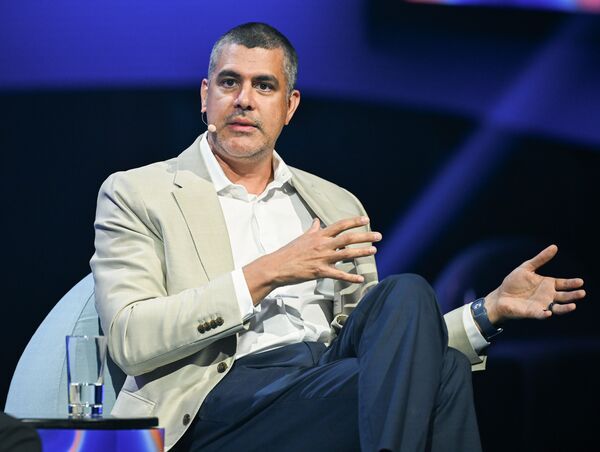
与传统人工智能工具不同,代理式系统能够自主执行复杂的多步骤任务,包括分析财务报表、追踪借款人、核实文件和检测洗钱活动。这种处理需要大量计算资源,转化为更高的令牌消耗,进而推高月度成本。
Unlike conventional AI tools, agentic systems autonomously execute complex, multistep tasks, which include analyzing financial statements, tracking borrowers, verifying documents and detecting money laundering activity. This processing demands significant computational resources, translating into heavier token consumption, and in turn, drives up monthly costs.
在一家亚洲贷款机构,一些团队在第一周就耗尽了令牌配额,之后该银行决定汇集令牌,并构建一个在提示到达模型之前对其进行精简的代理,一位不愿就内部事务透露身份的高级数据主管表示。
At one Asian lender after some teams burned through their allocation of tokens in the first week, the bank decided to pool tokens and build an agent that trims prompts before they reach a model, according to a senior data executive who asked not to be identified talking about internal matters.
成本问题已将中国模型纳入讨论。摩根大通私人银行(JPMorgan Private Bank)一份7月份的报告指出,北京Z.AI的GLM模型在性能上与3月份可用的最佳模型相当,而成本比当时最昂贵的前沿模型低80%以上。
The cost question has brought Chinese models into the conversation. A July JPMorgan Private Bank note said a GLM model from Beijing’s Z.AI performed on par with the best model available in March at more than 80% less than the priciest frontier model at the time.
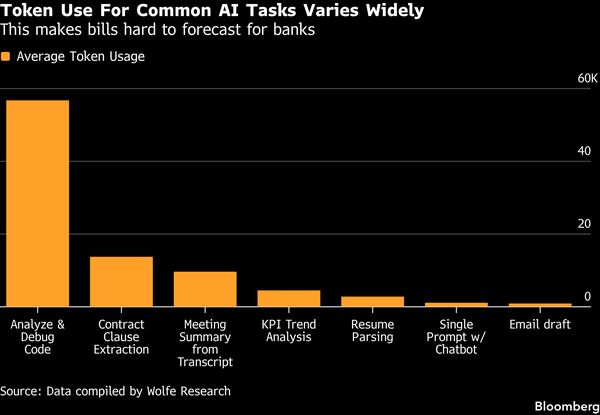
新加坡最大的贷款机构正在尝试各种模型。大华银行(United Overseas Bank Ltd.)的中立人工智能框架对中国供应商开放,而星展银行(DBS Group Holdings Ltd.)表示,无论供应商是美国还是中国的,它都不过度依赖任何单一供应商。
Singapore’s biggest lenders are experimenting with a variety of models. United Overseas Bank Ltd.’s neutral AI framework is open to Chinese providers, and DBS Group Holdings Ltd. says it is not overly reliant on any one provider, whether it is US or Chinese ones.
监管机构已提出一些担忧。加拿大银行业监管机构最近要求员工起草贷款机构使用前沿AI模型的最低标准,包括安全方面的标准;美国联邦储备委员会负责监管的副主席米歇尔·鲍曼(Michelle Bowman)已警告银行加强系统,以抵御AI驱动的威胁。
Regulators have flagged some concerns. Canada’s banking watchdog recently asked staff to draft minimum standards for how lenders use frontier AI models, including on security, while the US Federal Reserve Vice Chair for Supervision Michelle Bowman has warned banks to shore up their systems against AI-driven threats.
这使得未经充分验证的模型——尤其是外国模型——更难向董事会证明其合理性。风险主管还担心,AI智能体一旦部署,可能会在银行自身系统内表现出不可预测的行为,这一担忧在最近几个月愈发受到重视。
That makes less-vetted models, particularly foreign ones, harder to justify to boards. Risk chiefs also worry that AI agents, once deployed, can behave unpredictably inside a bank's own systems, a concern that has gained traction in recent months.
据彭博新闻社8月报道,澳洲国民银行(National Australia Bank Ltd.)在考虑美国构建的AI模型的替代方案(包括中国模型)时,援引了安全和治理方面的担忧。
National Australia Bank Ltd. cited security and governance concerns when considering alternatives to US-built AI models, including Chinese ones, Bloomberg News reported in August.
根据Tokenomics基金会执行董事J.R. Storment的说法,在十多年前早期涌向云服务的浪潮中,银行花了至少五年时间才控制住随使用量上升的成本,并将其纳入专门的预算科目。他补充道,现在不同的是,财务主管在采用AI后的6到18个月内就对成本激增做出反应,这使得很难为高端AI模型确定最终价格标签。
During the early rush to cloud services more than a decade ago, banks took at least five years to control costs that rose with usage and bring them under a dedicated budget line, according to J.R. Storment, executive director of the Tokenomics Foundation. What’s different now is that financial chiefs are reacting to AI cost spikes within 6 to 18 months of adoption, making it difficult to put a final price tag on premium AI models, he added.
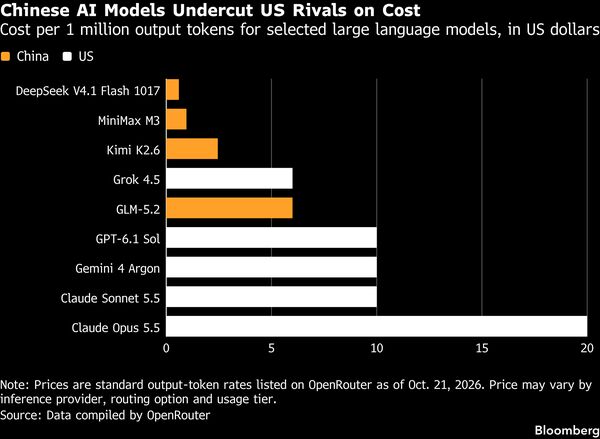
曾任巴克莱银行(Barclays Plc)印度业务首席财务官的Nitin Madan对这种压力记忆犹新。他说,当他询问技术部门的同事计划部署哪些AI模型以及成本几何时,被告知此类问题“让大家都很不舒服”。
Nitin Madan, formerly CFO at Barclays Plc’s India operations, remembers the pressure well. When he asked his colleagues on the technology side which AI models they planned to deploy and what they would cost, he was told such questions were “making everybody uncomfortable,” Madan said.
随着新的人工智能工具和升级产品接连推出,Madan表示,行业的人工智能支出无法像大多数软件成本那样分摊到数年,因此会立即侵蚀利润。他补充说,没有人能有把握地说,当前的人工智能模型三年后是否还会被使用。在摩根大通公司,一些员工“在代币上的支出超过其薪水”,但当时该公司尚未限制人工智能使用,该行支付部门首席数据和分析官扎卡里·安德森在六月对《塞马弗》表示。
As new AI tools and upgrades hit the market in rapid succession, Madan said AI spending across the industry can’t be spread over several years the way most software costs are, so it hits profits right away. No one can say with confidence whether today’s models will still be in use three years from now, he added. At JPMorgan Chase & Co., some employees were “spending more on tokens than their salary” and yet the company wasn’t rationing AI usage at that time, Zachery Anderson, chief data and analytics officer for the bank’s payments division, told Semafor in June.
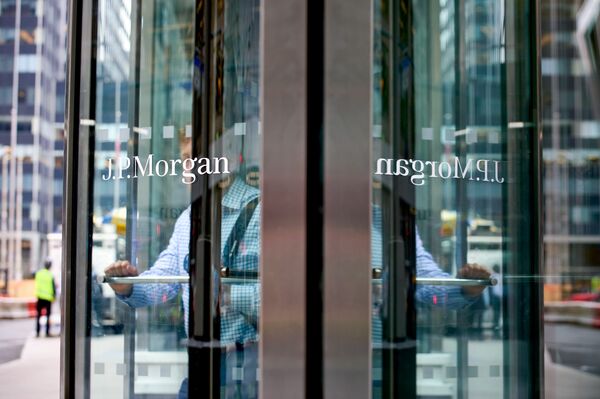
摩根大通此后已对某些工程师使用Anthropic的Claude Code设定每月2000美元的支出上限,《商业内幕》本月报道称。该行首席财务官杰里米·巴纳姆本月在该行的财报电话会议上表示,其年度人工智能支出约为7亿美元,但由于该技术现在已遍及整个银行,确切数字难以确定。
JPMorgan has since set monthly spending limits of $2,000 on Anthropic’s Claude Code for certain engineers, Business Insider reported this month. The bank’s CFO Jeremy Barnum said on the lender’s earnings call this month that its annual AI expense was about $700 million, though a precise figure is hard to pin down because the technology is now spread across the entire bank.
在许多其他银行,领导层也已从将人工智能支出视为几乎无限,转变为寻找控制支出的方法。
At many other banks, leadership has also shifted from treating AI spending as virtually limitless to finding ways to contain it.
一家欧洲大型银行的资深机器学习工程师 Alex(化名)在今年 2 月被要求限制其团队的 AI 支出。导火索是该团队在构建一个先进聊天机器人并将其部署到数千个工作流后,累积了一张 8 万欧元的账单。尽管这笔金额对一家大型银行来说并不算惊人,但它向财务主管发出了信号:如果不加控制,成本可能会像滚雪球一样膨胀到数百万欧元。
Alex, a senior machine-learning engineer, at a large European bank was asked to cap his team’s AI spending in February this year. The trigger was an €80,000 bill the team had piled up after building an advanced chatbot and deploying it across thousands of workflows. The sum, though hardly outrageous for a large bank, signaled to the finance chief that it might snowball into millions if left unchecked.
对于 Alex 来说——他要求不透露全名以免影响职业前景——问题的焦点迅速从聊天机器人是否好用,转移到了银行能否负担得起大规模运行它。为削减成本,他重新设计了聊天机器人,使其缓存常见问题的答案,并在用户再次提问时直接调用。较简单的请求则转给开源模型处理。只有那些消耗大量 token、需要深度检索的提示词,才会发送给 ChatGPT 或 Claude 等平台的付费高级模型。这一举措将 AI 账单降低了约三分之一。
For Alex, who asked not to be identified by his full name to avoid professional repercussions, the question quickly shifted from whether the chatbot worked to whether the bank could afford to run it at scale. To cut costs, he reworked the chatbot so it cached answers to frequently asked questions and resurfaced them whenever a user asked again. Simpler requests went to open-source models. Only token-intensive prompts, the ones requiring deeper searches, went to premium models from platforms like ChatGPT or Claude. That brought the AI bill down by roughly a third.
一些银行则更早地着手解决成本预测问题。法国巴黎银行(BNP Paribas SA)在计算出运行成本后,才会批准每一个 AI 项目。该行集团首席数据官 Hugues Even 表示,集团内部平台会设定 token 价格,乘以预期使用量,得出总成本,再将其与该工具预期带来的价值进行权衡。巴黎银行主要依靠自有芯片满足算力需求,这些芯片作为多年期投资采购,并辅以云服务商补充。
Some banks are tackling the forecasting problem earlier. French lender BNP Paribas SA approves every AI project after its running cost is calculated. The group’s internal platform sets a token price, multiplies it by expected volumes and weighs the total against the value the tool should deliver, said Hugues Even, the bank’s group chief data officer. BNP covers most of its computing needs with its own chips, bought as multiyear investments, and supplements them with cloud providers.
该行将 AI 监管职责分散在多个委员会中,分别由技术、风险、财务和人力资源负责人牵头,外加一个由首席执行官领导的集团 AI 委员会。“每个委员会都分担一部分责任,”Even 说。他补充道,财务主管控制着 AI 在集团范围内部署的成本。
BNP spreads oversight of AI across committees chaired by the heads of technology, risk, finance and human resources, plus a group AI committee led by the chief executive officer. “Each one is taking his share of the cake,” Even said. The finance chief controls the cost of deploying AI across the group, he added.
许多贷款机构正在应对变革的速度,因为更新、更昂贵的模型在上一轮整合完成前就已到来。为了帮助它们衡量并控制潜在的成本激增,一个小型产业正在兴起。
Many lenders are contending with the speed of change, as newer and pricier models arrive before the last integration is complete. And to help them measure and rein in the potential cost surges, a cottage industry is emerging.

帮助公司追踪和控制 Token 支出的 Ramp 表示,使用其工具的企业中有三分之一发现,可以在不牺牲质量的前提下,从成本更高的前沿模型转向更便宜的模型。
Ramp, which helps companies track and control token spending, says one in three businesses using its tool found out where they could shift from costlier frontier models to cheaper ones without compromising quality.
与银行家合作的 AI 初创公司 Rogo Technologies Inc. 表示,它汇集各客户的需求,以便与 AI 实验室谈判折扣,并允许银行将 Token 预算精确到个人用户。
Rogo Technologies Inc., an AI startup that works with bankers, says it pools demand across clients to negotiate discounts with AI labs and lets banks set token budgets down to individual users.
成员包括摩根大通、纽约梅隆银行、毕马威会计师事务所和 Google Cloud 的 Tokenomics 基金会已成立,旨在制定追踪 AI 成本的共享行业标准,而这些成本往往不透明。该基金会寻求衡量公司投入后的回报。
Tokenomics Foundation, whose members include JPMorgan, Bank of New York Mellon Corp., KPMG LLP, and Google Cloud, has been created to set shared industry standards for tracking AI costs, which are often opaque. It seeks to measure what companies get back in return.
获取权限也已成为招聘问题。前首席财务官 Madan 表示,在该亚洲贷款机构,开发人员候选人在面试时会询问他们的 Token 预算,就像询问薪资一样。工程师会询问他们将获得哪些模型以及适用什么限制。
Access has become a hiring issue, too. At the Asian lender, developer candidates ask in job interviews about their token budget alongside their salary. Engineers ask which models they will get and what limits apply, Madan the former CFO said.
曾领导渣打银行 AI 赋能工作、现任埃森哲东南亚高级 AI 负责人 David Hardoon 认为,每个大型组织都需要一位拥有实权的首席 AI 负责人。
David Hardoon, who led AI enablement at Standard Chartered Plc and is now head of advanced AI for Southeast Asia at Accenture Plc, argues every large organization needs a chief AI officer with real authority.
虽然已有多家银行设立了这一职位,但鲜有银行赋予其足够权力,以在不拖慢创新的前提下,对预测和部署施加纪律约束。Hardoon 表示,首席 AI 负责人可以负责这一问题,但前提是拥有在整个组织范围内行动的权力。
While several banks already have one, few have given the role enough power to impose discipline on forecasting and deployment without slowing innovation. A chief AI officer could own that question but only with the authority to act across the whole organization, Hardoon said.
目前,在 AI 淘金热期间密切关注成本核算可能引发内部张力,尤其是当银行高管觉得无法承担在采用方面落后的风险时。
For now, keeping a tab on the cost equation during the AI gold rush can cause internal tensions, especially when bank executives feel they cannot risk falling behind on adoption.
Faros AI首席执行官Vitaly Gordon表示,业界的思维是:“如果我们不做,竞争对手就会做。”Faros AI是一家软件公司,帮助银行和科技公司将AI支出与成果挂钩。
The thinking is: “If we’re not doing it, our competitors are doing it,” said Vitaly Gordon, CEO of Faros AI, a software firm that helps banks and tech companies tie AI spending to results.
他表示,这种遍布全行业的军备竞赛心态正转化为现金消耗,导致一种局面:“在大多数情况下,只是首席财务官收到账单后大发雷霆。”
This arms race mentality across the industry is translating into cash burn and causing a situation where he said “in most cases, it’s just a CFO getting a bill and screaming.”