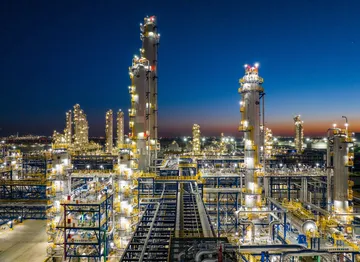
中国已在美国与伊朗的战争压缩石油流动的背景下,燃尽了多年过度生产所积累的大量石化产能过剩,这为各类工业原料的价格走高奠定了基础。
China has burned through much of a petrochemicals glut built up by years of overproduction as the US-Iran war chokes oil flows, setting the stage for higher prices for an array of industrial materials.
据摩根大通和商品数据提供商ICIS称,最为紧张的是所谓的芳烃链及其下游产品,包括用于汽车轮胎和电气绝缘的橡胶、树脂、塑料瓶以及各种油漆和涂料。
The squeeze is most acute in the so-called aromatics chain and the downstream products made from these chemicals, according to JPMorgan Chase & Co. and commodities data provider ICIS. That includes rubber for car tires and electrical insulation, resins, and plastic bottles, as well as various paints and coatings.
波斯湾的能源出口近期可能已有所恢复,但伊朗原油因美国封锁已完全断供,尽管一些中国民营生产商仍偏好伊朗原油。该地区的石脑油——一种化工原料——出口仍受限制,而北京则优先保障汽油和柴油的产量,迫使炼油厂动用战争前积累的石化库存。
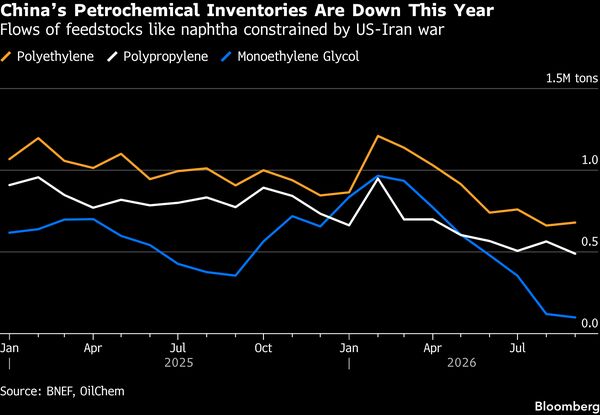
Energy exports from the Persian Gulf may have recovered in recent months, but Iranian crude, favored by some Chinese private producers, has completely dried up due to the US blockade. Exports of naphtha, a chemicals feedstock, from the region remain constrained, while Beijing has prioritized gasoline and diesel output, forcing refiners to draw on petrochemical stockpiles accumulated before the war.
摩根大通亚洲能源与化工研究主管Parsley Ong表示:“目前库存水平基本已接近底部。”她说,中国市场的紧张已经影响到消费者,导致“多数产品出现通胀”。
“Right now, inventory levels are basically near the bottom,” said Parsley Ong, head of Asia energy and chemicals research at JPMorgan. The tightness in Chinese markets has already affected consumers with “inflation happening across most products,” she said.
价格上涨已传导至中国的工业生产者价格指数(PPI),该指数衡量批发层面的通胀,已从二月份的负值上升至九月份的5%,超出预期。这些价格上涨也在向外输出,因为中国是全球石化及其下游产品的重要供应国。
The price rises have fed through into China’s producer price index, which tracks inflation at the wholesale level, and has gone from below zero in February to a faster-than-expected 5% in September. These price gains are also being exported, given the country’s role as a major supplier of petrochemicals and downstream products to global markets.
不同于出于战略目的积累的中国庞大原油储备,石化库存的规模是多年产能过剩和过度生产的意外后果,炼油企业向化工深度延伸所致。荣盛石化和恒力石化是中国最大的几家生产商之一。
Unlike China’s vast crude reserves that were amassed for strategic reasons, the scale of the country’s petrochemicals inventories was an unintended consequence of years of overcapacity and overproduction as refiners expanded deeper into chemicals. Rongsheng Petrochemical Co. and Hengli Petrochemical Co. are some of China’s biggest producers.
当美伊战争扰乱能源供应时,此前的供应过剩无意间成了缓冲。高盛集团本月在一份报告中表示,2025年积累的终端化工品库存如今约有95%已被消耗。总体而言,按历史标准衡量库存仍处于高位,但该银行表示,从较长期来看,这种去库存不可持续,因为中国希望维持缓冲以应对未来的供应冲击。
The glut became an inadvertent cushion when the US-Iran war disrupted energy supply. Around 95% of the end-use chemical inventories built up in 2025 have now been depleted, Goldman Sachs Group Inc. said in a note this month. Overall, stockpiles remain high by historical standards, but the bank said the de-stocking is unsustainable over the longer term as China seeks to maintain buffers against future supply shocks.
石化产品主要分为两大类碳氢化合物:芳烃——用于生产苯、甲苯和对二甲苯——以及烯烃,如乙烯和丙烯,这些材料常用于包装、涂料和塑料管道。
Petrochemicals are split into two main types of hydrocarbons: Aromatics — used to produce benzene, toluene and paraxylene — and olefins such as ethylene and propylene, materials that are commonly used in packaging, coatings and plastic piping.
ICIS高级分析师珍妮·易表示,在中国各地,芳烃类产品的港口库存均处于多年低位。她说,亚洲对甲苯用于汽油调和的强劲需求也在将供应从石化产品中分流出去。
Across China, port inventories of the aromatics grades are all at multiyear lows, said ICIS senior analyst Jenny Yi. Robust Asian demand for toluene in gasoline blending is also diverting supply away from petrochemicals, she said.
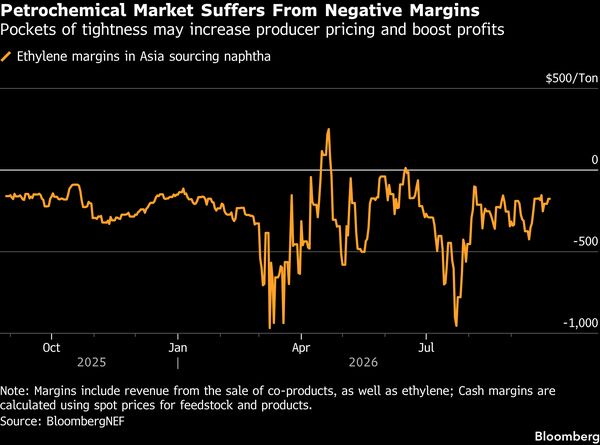
随着库存减少,新增生产变得更加重要。早在战争之前,产能过剩就已将部分石化产品的利润率压低至零以下。如今原油和原料成本的飙升正给生产商带来更大压力。
As the stockpiles shrink, fresh production becomes more important. Overcapacity had already pushed margins for some petrochemicals below zero before the war. The surge in oil and feedstock costs is now putting more pressure on producers.
摩根大通的Ong表示,生产商要在第四季度提高产量,下游价格需要上涨到足以恢复利润率的水平。她说,石化产品买家“只能接受更高的价格”,并补充说她并不预计会出现大幅上涨。
For producers to increase output in the fourth quarter, downstream prices need to rise enough to restore margins, said JPMorgan’s Ong. Petrochemical buyers are “just going to have to accept a higher price,” she said, adding that she doesn’t expect a sharp rally.
不过,鉴于中国该行业仍受产能过剩困扰,价格上涨可能不会持续。ICIS预计,随着工厂结束检修恢复生产,到今年年底中国裂解装置开工率将从10月的79%回升至81%。然而,这仍远低于战前的88%。
The higher prices may not last though, given that China is still saddled with overcapacity in the sector. ICIS sees China’s cracker operating rate recovering to 81% by the end of the year from 79% in October as plants return from maintenance. That’s well below 88% before the war, however.
产能过剩仍在加剧。彭博新能源财经预测,全球聚乙烯(世界上最常见的塑料之一)新增制造产能中,将有近2100万吨正在生产或正在提升产量,这是创纪录的增长。这留下了一个不同寻常的组合——库存枯竭而基础产能充足。
The overcapacity is still increasing. BloombergNEF is forecasting that almost 21 million tons of new global manufacturing capacity for polyethylene — one of the world’s most common plastics — will be producing or ramping up, a record increase. That leaves an unusual combination — depleted inventories and abundant underlying capacity.
“更高的原料价格在传导至供应链后,正给中国消费者带来短期通胀压力,”ICIS首席分析师李绍文(Salmon Aidan Lee)表示。“但这与基本面背道而驰,那些面临产能过剩的产品最终将回到供过于求的状态。”
“Higher feedstock prices, when passed through the supply chain, are leading to short-term inflationary pressures on Chinese consumers,” said Salmon Aidan Lee, principal at ICIS. “This goes against fundamentals though, and those products facing overcapacity will eventually return to that oversupplied state.”