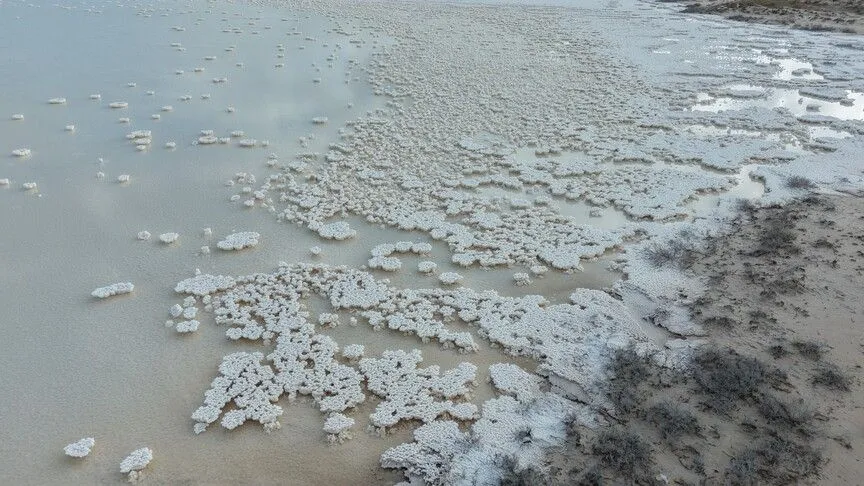
一项国际研究发现,气候变化和过度用水威胁着栖息着200种在世界自然保护联盟(IUCN)红色名录中被列为受威胁或近危物种的盐湖。
An international study has found that climate change and excessive water use threaten salt lakes that are home to 200 species classified as threatened or near threatened on the International Union for Conservation of Nature (IUCN) Red List.
该研究题为《被忽视的盐湖保护价值》,于9月发表在《自然·通讯》杂志上,由来自世界各地的26名科学家共同撰写。该研究考察了全球85个盐湖中的受威胁物种和生态系统服务。研究人员关注的是长期平均盐度超过每升1克的湖泊。
The study, titled The Overlooked Conservation Values of Saline Lakes, was published in the journal Nature Communications in September and co-authored by 26 scientists from around the world. The study examined threatened species and ecosystem services in 85 salt lakes worldwide. The researchers focused on lakes with a long-term average salinity exceeding 1 gram per liter.
该研究发现,这些湖泊占全球湖泊水体总量的45%以上,占全球湖泊总表面积的23%。
The study found that these lakes account for more than 45% of the global volume of lake water and 23% of the total surface area of lakes worldwide.
研究人员评估了27个苏打湖、40个内陆硫酸盐和氯化物湖泊以及18个海洋起源的沿海湖泊。所研究湖泊的盐度范围从每升1克到375克不等。
The researchers assessed 27 soda lakes, 40 inland sulfate and chloride lakes, and 18 coastal lakes of marine origin. The salinity levels of the lakes studied ranged from 1 gram to 375 grams per liter.
根据该研究,IUCN红色名录中被列为受威胁或近危的200种物种与所考察的85个盐湖相关联。鸟类占这些物种的53%,名单中还包括鱼类、哺乳动物、爬行动物、两栖动物和无脊椎动物。
According to the study, 200 species classified as threatened or near threatened on the IUCN Red List are associated with the 85 salt lakes examined. Birds account for 53% of these species, while the list also includes fish, mammals, reptiles, amphibians and invertebrates.
气候变化构成最大威胁 向安纳多卢通讯社(Anadolu)发表讲话时,伊斯坦布尔技术大学地微生物学与生物地球化学实验室负责人、参与该国际研究的团队成员努尔古尔·巴尔奇(Nurgul Balci)表示,该研究最重要的发现之一是,盐湖和碱性湖泊的生物多样性和生态价值远高于此前的假设。
Climate change poses greatest threat Speaking to Anadolu, Nurgul Balci, head of the Geomicrobiology and Biogeochemistry Laboratory at Istanbul Technical University and a member of the team that conducted the international study, said one of the study’s most important findings was that saline and alkaline lakes have significantly greater biodiversity and ecological value than previously assumed.
巴尔奇指出,这些湖泊并非仅仅是栖息着少数能够耐受高盐度生物的水体。相反,它们支持着从微生物和无脊椎动物到鱼类和鸟类的广泛食物网。它们还作为迁徙鸟类的觅食、休息和繁殖场所。
Balci noted that these lakes are not merely bodies of water inhabited by a limited number of organisms capable of tolerating high salinity. Instead, they support extensive food webs ranging from microorganisms and invertebrates to fish and birds. They also serve as feeding, resting and breeding grounds, particularly for migratory birds.
巴尔奇强调,盐湖是全球最容易受到气候变化影响的水生生态系统之一,其主要脆弱性原因在于它们位于封闭的流域内。她指出:“这些盐湖的水位取决于进入流域的水量与蒸发量之间的微妙平衡。降水量减少、气温升高、蒸发量增加,以及农业、工业或居民生活对地表水和地下水的过度利用,都可能迅速破坏这种平衡。”
Stressing that salt lakes are among the world's most vulnerable aquatic ecosystems to climate change, Balci said one of the main reasons for their vulnerability is their location in closed drainage basins. “Water levels in these lakes depend on an extremely delicate balance between the water entering the basin and evaporation. Reduced precipitation, rising temperatures and increased evaporation, as well as excessive use of surface water and groundwater for agriculture, industry or settlements, can rapidly disrupt this balance,” she added.