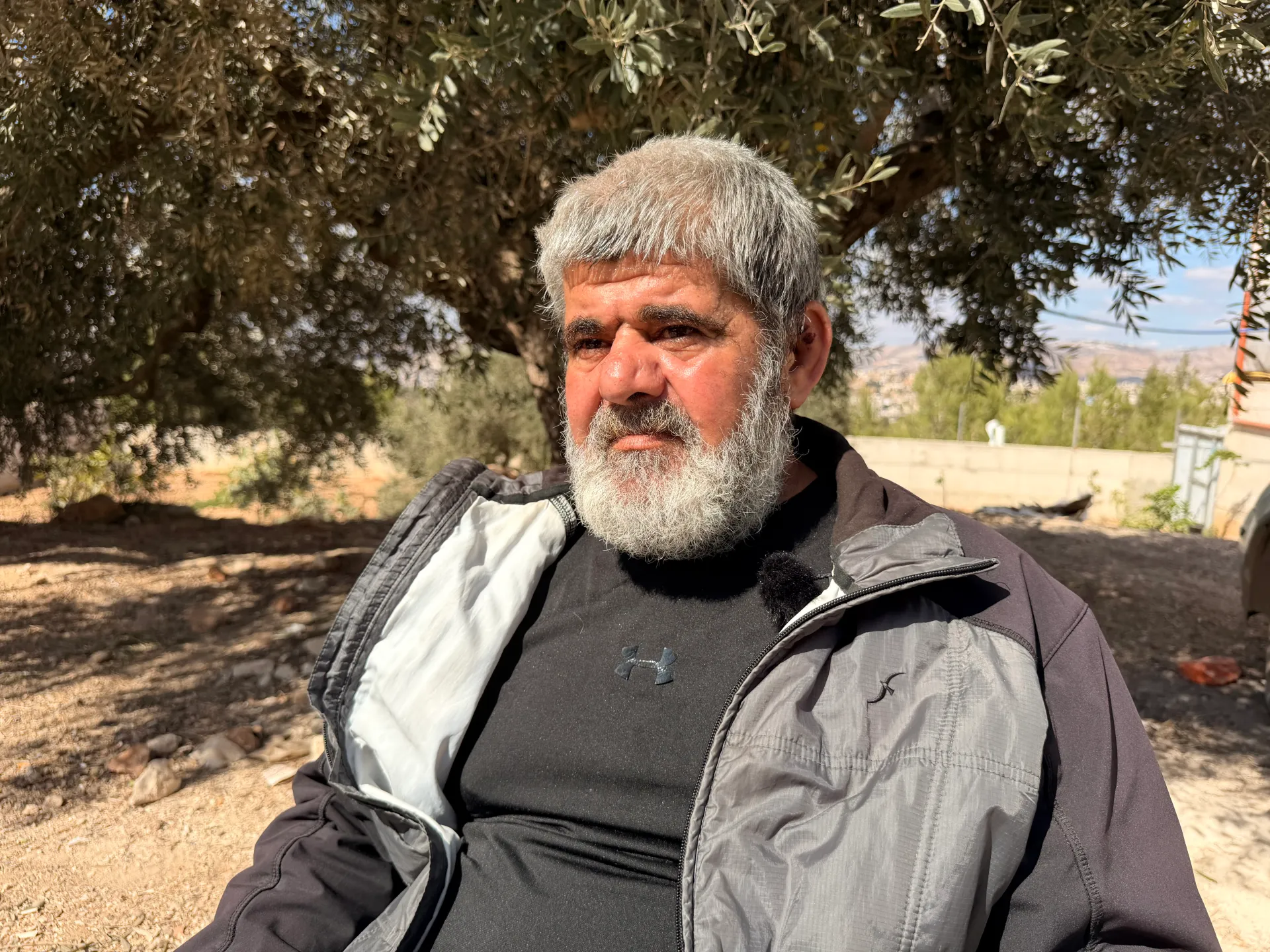
橄榄收获季节传统上是巴勒斯坦家庭聚在一起,在橄榄园里采摘橄榄、并在明火旁做饭的时候。然而,当穆萨·巴尼·沙姆萨(Musa Bani Shamsa)和他的17岁儿子(儿子要求匿名)来到位于纳布卢斯东南部贝伊塔(Beita)的橄榄园时,那里却空无一人。
– Olive harvest season is traditionally a time when Palestinian families gather in their groves, pick olives and cook over open fires. But when Musa Bani Shamsa and his 17-year-old son, who requested anonymity, arrived at his land in Beita, southeast of Nablus, the groves were empty. On the morning of October 14 after they arrived, a group of masked Israeli men surrounded them.
10月14日上午,他们抵达后不久,一群戴着面具的以色列人包围了他们。这些人携带了手枪、刀具、棍棒和锤子,沙姆萨告诉半岛电视台(Al Jazeera):“他们只露出了眼睛。”
They carried pistols, knives, pipes, sticks and a hammer, Shamsa told Al Jazeera. Only their eyes were visible. “At one point, I would take the beating for my son, and at another, my son would take the beating for me,” he said.
“有时候是我替儿子挨打,有时候则是儿子替我挨打;我担心他们会杀了他……这种事已经发生过很多次了。”沙姆萨撩起上衣,展示着自己身上尚未愈合的淤伤和刺伤。殴打持续了至少20分钟,直到他和儿子双双倒在地上。沙姆萨当时正在流血,失去了意识。“他们以为我们死了,所以才离开了我们。”他说。
“I was afraid they would kill him, kill him dead, because this has happened a lot.”He lifted his shirt to show his bruises and stab wounds that were still healing. The beating lasted at least 20 minutes until he and his son were left lying on the ground. Shamsa was bleeding and lost consciousness. “They thought we were dead, so they left us,” he said.
沙姆萨表示,袭击者来自邻近山丘上的一个以色列定居点。袭击发生三天后,他的儿子仍因受到惊吓而无法说话。
Shamsa said his attackers came from an Israeli outpost on the adjacent hill. Three days after the assault, his son was still unable to speak from the shock.
在被占领的西岸地区,定居者的暴力行为正在急剧增加。自9月1日以来,联合国人道主义事务协调办公室记录了200多起针对巴勒斯坦农民的袭击事件——这一数字超过了去年整个收获季节发生的类似袭击事件的总数。
Settler violence across the occupied West Bank is rising sharply. Since September 1, the United Nations Office for the Coordination of Humanitarian Affairs recorded more than 200 attacks on Palestinian farmers, more than the total number of similar assaults for the entire season last year.
“随着殴打、纵火和牲畜盗窃事件的不断增加,人们真的感到非常恐惧,”沙姆萨说。尽管心怀恐惧,但他仍拒绝放弃自己的土地。
With more beatings, arson attacks livestock theft,“people are afraid,” Shamsa said, “in every sense of the word.”He shares that fear but refuses to abandon his land.
为了应对这些威胁,农民们改变了他们的日常习惯:他们开始更早地开始采摘橄榄(通常在清晨5点),用石头封锁道路以阻挡定居者的接近,并轮流在屋顶上用望远镜监视情况。每当定居者靠近时,整个家庭都会立即逃离现场;有些农民则会在夜间借助手机灯光继续采摘橄榄。
Farmers have adapted their routines. Harvesting begins earlier, at 5am. People block roads with stones to slow approaching settlers and take turns picking olives and keeping watch from rooftops with binoculars. When settlers approach, families flee. Some return at night to harvest by phone light.
但这些预防措施几乎起不到任何保护作用。在附近的村庄里,沙姆萨(Shamsa)说,定居者们会等到农民们完成采摘工作后,才会偷走他们的庄稼和工具。
But these precautions offer little protection. In nearby villages, Shamsa said, settlers wait until farmers have finished picking before stealing their harvest and equipment.
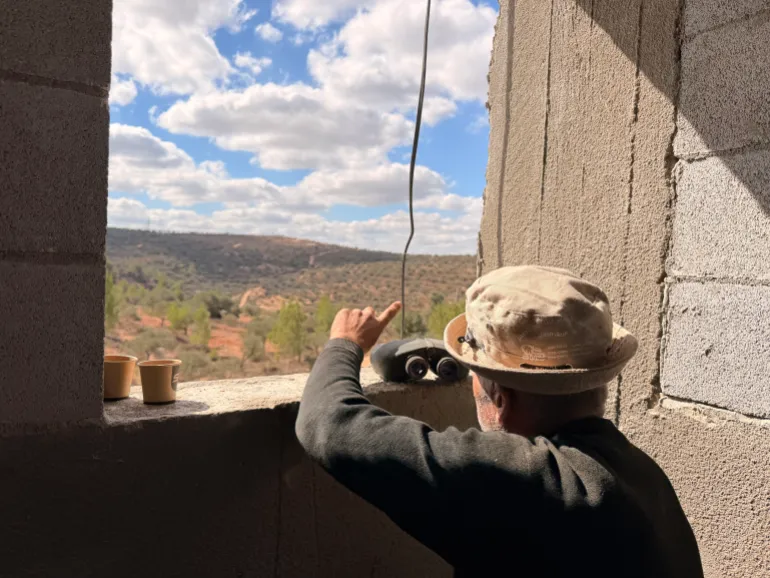
“他们来抢走我们的橄榄,还会毁坏我们放在橄榄树下的垫子,”他说,“每次我们稍微让步一点,他们就会得寸进尺、要求更多。他们根本不想让我们获得安全保障。”一位来自贝伊塔(Beita)的居民正通过双筒望远镜监视着对面山丘上的以色列前哨基地。在橄榄收获季节,每个家庭都会派人保持警惕,以防定居者发动攻击。
“They come and take their olives and beat them, and they also take the mats they place under the olive trees,” he said. “Every time we give up a little, they take a little more. They do not want to give us safety.”A Beita resident monitors an Israeli outpost on the opposite hill through binoculars.
[莱拉·瓦拉/半岛电视台(Leila Warah/Al Jazeera)]以色列定居点扩张的核心就是这些前哨基地;这些基地最初往往只有一面旗帜、一个帐篷或一个用于圈养牲畜的围栏,设立在巴勒斯坦人的土地上。随着时间的推移,它们会逐渐扩张,控制周围的农田和放牧区。
During the olive harvest, families keep someone on lookout in case settlers attack [Leila Warah/Al Jazeera] How an outpost takes root At the centre of Israeli settlement expansion are outposts, which often begin with little more than a flag, a tent or a livestock pen on Palestinian land. Established near Palestinian villages, they can expand to control surrounding fields and grazing areas.
地图学家、边境与定居点问题专家哈利勒·塔法吉(Khalil Tafakji)从自家门廊指着那座山上飘扬的以色列国旗说:“这些前哨基地其实就是‘主要定居点’的延伸。”
From his porch, Khalil Tafakji, a cartographer and an expert on borders and settlements, pointed to a hill where Israeli flags flew above Palestinian homes. He described outposts as “the offspring of the mother settlements”.
塔法吉告诉半岛电视台:“这些前哨基地位于现有的以色列定居点之间,它们的存在有助于将这些定居点连接起来,从而让以色列以最少的居民数量控制尽可能大的土地。”
Positioned between existing Israeli settlements, they help link them and extend Israeli control “over the largest possible area of land with the smallest number of residents”, Tafakji told Al Jazeera.
根据国际法,以色列在占领的西岸地区建立的所有定居点都是非法的;根据以色列自身的法律,这些前哨基地在获得政府正式批准之前同样属于非法建筑。然而,许多前哨基地在获得正式批准之前就已经得到了政府的各种形式支持。
Under international law, all Israeli settlements in the occupied West Bank are illegal. Outposts are also illegal under Israeli law until approved by the government, yet many receive state support even before formal recognition.
“政府在各个方面都在支持这些定居者——无论是经济上、道德上、政治上还是军事上,”塔法吉说道。
“The state is behind the settlers, supporting them financially, morally, politically, militarily and in every detail,” Tafakji said.
2024年,定居者建立了62个新前哨站,获得7500万谢克尔(约合2000万美元)的政府资助。据以色列非政府组织“和平现在”称,政府总共向前哨站和农场拨付了至少1亿谢克尔(约合3000万美元),用于购置安保设备和基础设施,包括道路、车辆、无人机、摄像头和电动门。政府还会对前哨站进行追认合法化。
In 2024, settlers established 62 new outposts, backed by 75 million shekels ($20m) in government funding. In total, the government has channelled at least 100 million shekels ($30m) to outposts and farms for security equipment and infrastructure, including roads, vehicles, drones, cameras and electric gates, according to Peace Now, an Israeli NGO. The government also retroactively legalises outposts.
3月,以色列安全内阁批准了34个新定居点,其中包括10个已有的前哨站。以色列媒体报道称,该决定规定在最终规划批准之前先提供水电基础设施。
In March, Israel’s security cabinet approved 34 new settlements including 10 existing outposts. Israeli media reported that the decision provides for water and electricity infrastructure before final planning approval.
在贝塔,类似的模式正在上演。以色列于2024年将最早于2013年建立的埃维亚塔尔前哨站批准为定居点。居民称,此后,其周边又出现了三个较小的前哨站。
In Beita, a similar pattern is unfolding. Israel authorised the Evyatar outpost, first established in 2013, as a settlement in 2024. Since then, residents said, three smaller outposts have emerged around it.
贝塔居民拉比·沙拉法住在村庄边缘,他说,定居者最初会从村庄附近的电线获取电力,直到基础设施正式延伸到他们那里。
Rabee al-Sharafa, a Beita resident living on the edge of the village, said settlers at first draw power from lines near the village before infrastructure is formally extended to them.
“如果村庄附近有电线,他们可能会直接偷电,没问题,”他说。“如果切断他们的电源,他们也没问题。电力公司会过来,把电线延伸到他们那里。”随着前哨站数量增加,用暴力和武力驱逐巴勒斯坦家庭离开土地的威胁也随之上升。“他们奉行的是一种缓慢投降的政策,”沙拉法谈到定居者时说。
“If there is a power line close to the village, they may simply steal from it, no problem,” he said. “If it is cut off from them, they have no problem. The electricity company comes and extends it to them.”As the number of outposts rises, so too do the threats of violence and force to remove Palestinian families from their land. “The policy they follow is a policy of slow surrender,” al-Sharafa said of the settlers.
他说,3月,10名蒙面男子手持棍棒、砍刀和斧头袭击了一户人家,并威胁说,如果他们不离开就杀死家人。该家庭逃走了。另一户人家在6月被迫搬空,自10月初以来,定居者又盯上了第三户人家,切断了其电力和供水。“我们把它比作一串散开的祈祷珠,”沙拉法说。
In March, 10 masked men armed with sticks, machetes and axes attacked a family and threatened to kill its members if they did not leave, he said. The family fled. Another home was emptied in June, and since early October, settlers have targeted a third, cutting off its electricity and water. “We compare it to a string of prayer beads that comes apart,” al-Sharafa said.
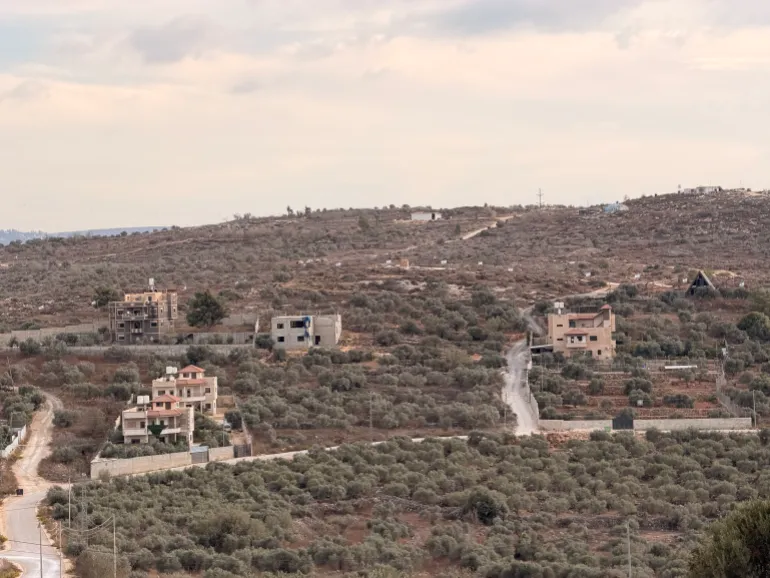
在被占领的约旦河西岸贝塔镇边缘,巴勒斯坦人的房屋上悬挂着以色列国旗,附近的定居点前哨正在侵占该镇[莱拉·瓦拉/半岛电视台]没有保护,也无处申诉巴勒斯坦人表示,他们无处求助。以色列军队保护定居者,而巴勒斯坦人很少能通过法律体系获得救济。
Israeli flags fly from Palestinian homes on the edge of Beita in the occupied West Bank as nearby outposts encroach on the town [Leila Warah/Al Jazeera] No protection, no recourse Palestinians said they have nowhere to turn The Israeli army protects the settlers, and Palestinians are rarely able to get recourse through the legal system .
沙拉法说,当居民试图保卫自己的家园时,定居者“会立刻把军队叫来对付你”。“有时候军队知道发生了袭击,却不想介入,直到袭击结束。”半岛电视台已联系以色列军方寻求置评,但尚未收到回应。法律也被用来夺取土地本身。
When residents try to defend their homes, settlers “immediately bring the army against you”, al-Sharafa said. “Sometimes the army knows there is an attack but does not want to intervene until the attack is over.”Al Jazeera has reached out to the Israeli military for comment but has yet to receive a response. The law is also used to take the land itself.
以色列援引奥斯曼、英国和约旦法律的拼凑体系,再加上自己的军事命令,来夺取巴勒斯坦领土。根据一项奥斯曼时代的法律,闲置数年未耕种的土地可被国家主张所有权。以色列利用这一条款宣布某些地区为“国有土地”,塔法克吉说,许多定居点就是在这些土地上建立的。其他土地则通过军事命令被夺取,或以“公共用途”为名被征用。
Israel draws on a patchwork of Ottoman, British and Jordanian laws alongside its own military orders to seize Palestinian territory. Under an Ottoman-era law, land left uncultivated for several years can be claimed by the state. Israel uses this provision to declare areas “state land”, where Tafakji said many settlements have been established. Other land is seized through military orders or expropriated for “public purposes”.
“他们没收我们的土地,是为了建立另一个国家并把我们驱逐出去。这是一个连根拔起和取而代之的过程,”塔法克吉说。
“They are confiscating our lands in order to establish another state and expel us. This is a process of uprooting and replacement,” Tafakji said.
拥有正式地契的巴勒斯坦人偶尔能在以色列法院胜诉。但即便如此,“军事长官还是会来,把它变成军事区,”塔法克吉说。
Palestinians with formal title deeds have occasionally won in Israeli courts. But even then, “the military governor comes and turns it into a military zone,” Tafakji said.
在贝塔,沙姆萨担心,如果暴力迫使农民放弃他们的橄榄园,以色列最终可能将这些土地据为国家财产。
In Beita, Shamsa fears that if violence forces farmers to abandon their olive groves, Israel could eventually claim them as state property.
他曾在自己的土地上搭了一顶帐篷,大约六年时间用来与朋友和家人共度时光,但定居者拆毁了它。
He kept a tent on his land for about six years to enjoy time with friends and family, but settlers demolished it.
“如果我放弃[这片土地]几年,他们就可以砍掉树木,并以此声称土地属于国家,”他说。
“If I abandon [the land] for a few years, they could cut down the trees and use that to say the land belongs to the state,” he said.
与此同时,刑事投诉很少有结果。以色列人权组织Yesh Din监测的2005年至2023年针对定居者暴力的警方调查中,94%未被起诉就结案了。“我们该向谁投诉?向压迫你的人投诉吗?”沙姆萨问道。
Meanwhile, criminal complaints rarely lead anywhere. Of the police investigations into settler violence monitored by the Israeli rights group Yesh Din from 2005 to 2023, 94 percent were closed without an indictment“Who are we supposed to complain to? Complain to the one oppressing you?”Shamsa asked.