从菲律宾南部的巴拉巴克岛到日本北部的北海道,美国陆军士兵一直在使用新型远程武器加紧训练。这些训练活动是在第一岛链(即菲律宾至日本之间的海域)进行的,美军与盟友共同参与了这些规模日益扩大、复杂性不断增加的军事演习。
From Balabac in the southern Philippines to Hokkaido in northern Japan, U.S. Army soldiers have stepped up their training with new long-range weapons along the first island chain, working with allies in exercises that have grown larger and more complex over the past half-decade.
摆脱了冷战时期的种种限制后,美国陆军一直在升级现有的导弹和火箭炮系统,并研发新的远程武器。这些投资主要是为了应对中国不断增长的导弹库规模及其日益先进的军事能力——美国军方担心,在发生冲突时,中国的导弹可能会阻碍美军进入西太平洋地区。与美国和菲律宾加强军事合作的趋势反映了两国对中方军事实力的共同担忧。
Freed from Cold War-era constraints, the U.S. Army has been upgrading its existing missiles and rocket artillery and developing new, longer-range systems. Those investments are largely in response to the growing size and sophistication of China’s missile arsenal, which the U.S. military worries could deny its forces access to the Western Pacific during a conflict. The intensification of training with the Philippines and Japan reflects a shared concern about China’s military capabilities.
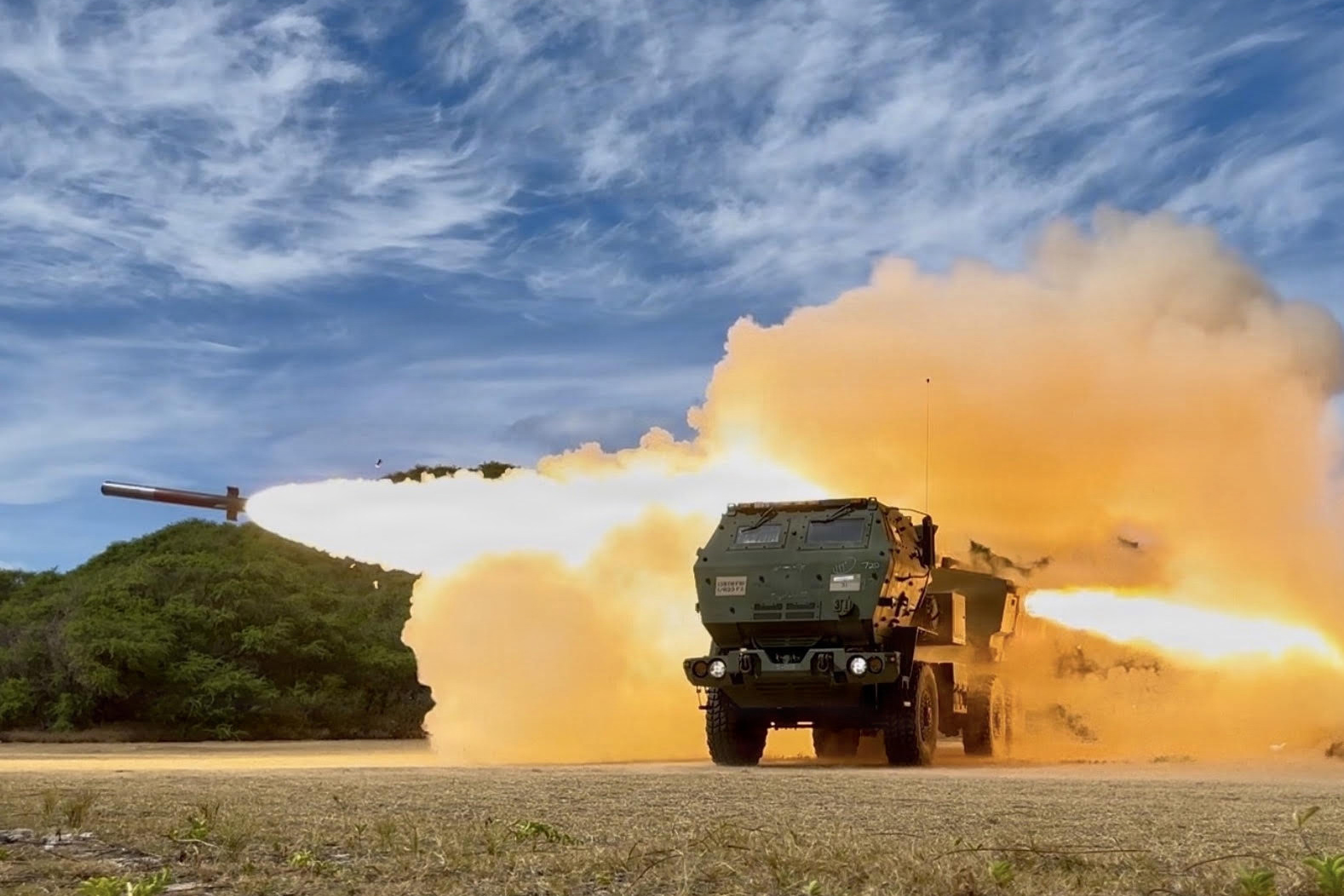
在第一岛链地区,美军特别重视远程打击能力的建设;这体现在多次大规模军事演习中,尤其是那些首次使用新型远程武器(如“高机动性火箭炮系统”HIMARS)的演习上。HIMARS能够使用射程达数十英里的制导火箭或射程达数百英里的弹道导弹执行对陆地或海上的打击任务。
The emphasis on long-range fires in the first island chain is visible in the extended deployments and first-of-their-kind drills involving those weapons, especially the High Mobility Artillery Rocket System. HIMARS can conduct land-attack and maritime-strike missions using guided rockets with ranges of a few dozen miles or ballistic missiles with ranges of a few hundred miles.
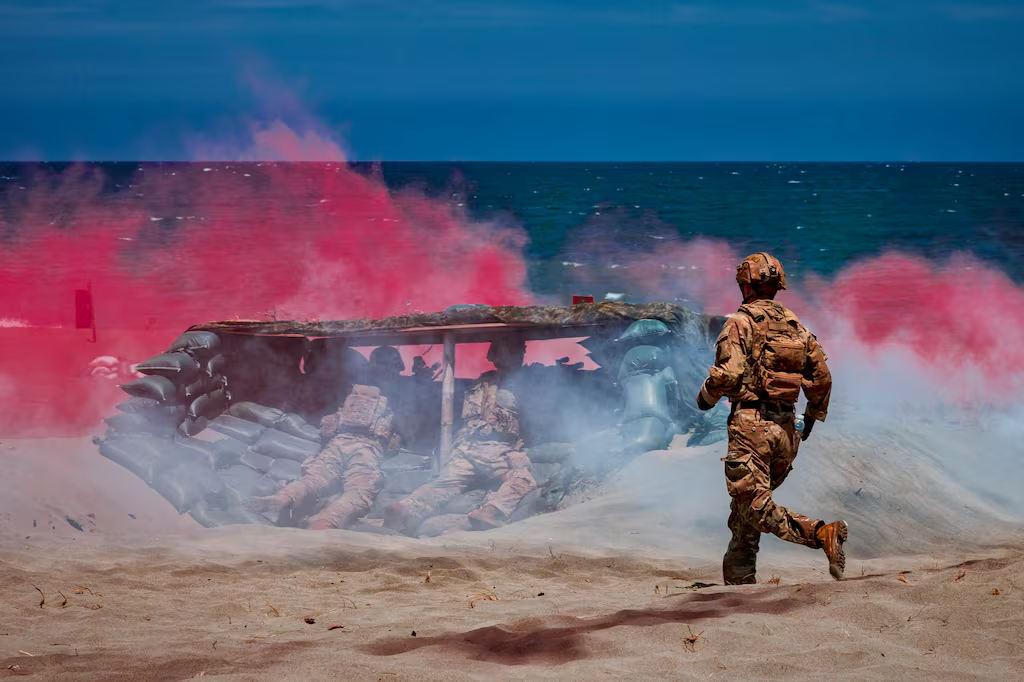
2021年,美国陆军首次在北海道举行的演习中部署了HIMARS系统;2022年,这些武器又被部署到日本西南群岛(该群岛将东海与更广阔的太平洋分隔开来),并在冲绳东北部的一个岛屿上进行了演习。此后,HIMARS成为美军与日本联合演习的常规装备。今年举行的“Keen Sword”演习中,美军再次将HIMARS部署到距离台湾仅150英里的日本岛屿上。
U.S. Army HIMARS operated in Japan for the first time in 2021 during an exercise in Hokkaido and were first deployed to Japan’s Southwest Islands, which separate the East China Sea from the wider Pacific, in 2022 for an exercise on an island northeast of Okinawa. Since then, HIMARS has been a common feature of U.S. exercises with Japan, most recently this year’s Keen Sword, for which Army HIMARS were sent to a Japanese island that is only 150 miles east of Taiwan.
虽然美国陆军早在多年前就在菲律宾使用HIMARS系统,但近年来美军和菲律宾军队已将其用于新的作战任务(如反舰打击),并且将其部署到菲律宾境内新的地区。2024年和2025年的演习中,HIMARS还被部署到巴拉望岛(面向南海)以及吕宋岛北部海岸(面向台湾)。
The Army’s HIMARS has a longer history in the Philippines, but in recent years, U.S. and Filipino troops have employed it in new roles, such as anti-ship strikes, and in new parts of the country. Exercises in 2024 and 2025 saw HIMARS deployed to Palawan, facing the South China Sea, and to the northern coast of Luzon, facing Taiwan.
今年的“肩并肩”联合军演是两国最大的年度军事演习,展示了他们通过陆、海、空三种方式在全国范围内转移海马斯火箭炮系统的能力:4月,美军士兵和空军人员将一套海马斯运至伊塔巴亚特,这是菲律宾最北端的市镇,距离台湾仅100英里,进行了一次实弹射击演习。几周后,美军一艘水上运输艇首次将一套海马斯发射车运至巴拉望岛以南的巴拉巴克岛,进行实弹射击演习,展示了其“保护进入苏禄海和塞莱贝斯海的航运”的能力,美军表示。
This year’s edition of Balikatan, the two countries’ largest annual exercise, showed their ability to move HIMARS around the country by land, sea and air: In April, U.S. soldiers and airmen transported a HIMARS to Itbayat, the Philippines’ northernmost municipality and only 100 miles from Taiwan, for a dry-fire exercise. A few weeks later, an Army watercraft transported a HIMARS launcher to Balabac Island, south of Palawan, for the first time for a live-fire exercise, which showed its ability “to protect shipping going into the Sulu and Celebes Sea,” the Army said.
美国陆军太平洋司令部司令罗纳德·克拉克上将表示,能够将部队调入并穿越第一岛链,体现了联盟一体化,并向竞争对手发出信号。“这真的是一个联合成功的故事,”克拉克本月在华盛顿特区陆军协会年会上表示。
The ability to move forces into and across the first island chain demonstrates alliance integration and sends a message to rivals, according to Gen. Ronald Clark, commander of U.S. Army Pacific. “It’s really a joint success story,” Clark said at the Association of the U.S. Army’s annual conference in Washington, D.C. this month.
克拉克指出了一次近期演习,士兵们在华盛顿州的一个基地将“海马斯”发射装置装载到飞机上,并将其空运至菲律宾,整个过程均在对手的监视之下。“随后,我们将从韩国库存中调拨的弹药运往菲律宾,对手同样能够看到这一过程,然后我们在‘海马斯’快速渗透行动的末端实施实弹射击,”克拉克补充道。“能够做到这一点,第一,需要高超的技能;第二,需要极大程度的伙伴关系,在本案中是盟友的协助。”
Clark pointed to a recent exercise for which soldiers loaded HIMARS launchers on aircraft at a base in Washington state and flew them to the Philippines, all of which was visible to adversaries. “We then join munitions from Korea that were drawn out of stocks there to the Philippines, where our adversary could see it, and then we conduct a live-fire on the backend of a HIMARS rapid-infiltration operation,” Clark added. “Being able to do that, it, one, takes a lot of skill. Second, it takes a tremendous amount of partnership with, in this case, allies to assist us.”
克拉克表示,在日益复杂的演习中展示不断提升的能力,会对对手的思维产生影响。“能够实施作战机动,产生巨大的战术效果,进而对对手产生战略效果,这正是我们所追求的,因为这会让他们有所顾忌。”过去两年里,美国陆军已将其“中程能力”导弹系统——一种名为“泰丰”的新型地基导弹系统——引入第一岛链的训练中。
Demonstrating improving capabilities in increasingly complex exercises has an impact on adversaries’ thinking, Clark said. “To be able to conduct operational maneuver and have tremendous tactical effects that then have a strategic effect on our adversary is exactly what we were looking to gain, because what that does is it gives them pause.”Over the past two years, the U.S. Army has introduced its Mid-Range Capability, a new ground-based missile system known as Typhon, to its training in the first island chain.
“泰丰”可发射“标准-6”导弹打击数百英里外的空中和海上目标,并可发射“战斧”巡航导弹打击最远达1000英里外的陆地目标,使得从菲律宾和日本出发即可覆盖中国和俄罗斯的大片领土。
Typhon can fire SM-6 missiles at air and maritime targets a few hundred miles away and Tomahawk missiles at land targets up to 1,000 miles away, bringing swathes of China and Russia into range from the Philippines and Japan.
“泰丰”于2024年首次部署至菲律宾海外,此后一直驻留当地,并于今年5月首次进行试射,从近400英里外击中吕宋岛中部的一处目标。美国陆军于2025年8月首次将一套“泰丰”系统送往日本,用于次月的一次演习,但该武器系统一直滞留至当年11月。今年夏天,“泰丰”再度部署日本,于6月和9月在日本最南端的主岛参加演习,并于10月移至冲绳的一处基地进行储存。美国官员告知东京方面,此次部署并非意在永久驻留,但目前没有正式的结束日期。
Typhon’s first overseas deployment was in 2024 in the Philippines. It has remained there since then, and in May this year, it was test-fired for the first time, striking a target in central Luzon from nearly 400 miles away. The Army sent a Typhon to Japan for the first time in August 2025 for an exercise the following month, but the weapon lingered until November that year. It returned to Japan this summer, deploying to the southernmost of Japan’s main islands for exercises in June and September and moving to a base on Okinawa for storage in October. U.S. officials told Tokyo the deployment isn’t meant to be permanent, but it has no official end date.
伯纳德·哈林顿少将在美国陆军协会会议的一场演讲中表示,“堤丰”系统是应马尼拉请求被派往菲律宾的,并且“目前已保持前沿存在超过连续30个月”。哈林顿指挥着新近组建的第7步兵师/太平洋多域司令部,该司令部将第7步兵师的地面机动力量与第1多域特遣部队的远程火力和非动能效应结合在一起。
The Typhon was sent to the Philippines at Manila’s request and “has maintained forward presence for now over 30 consecutive months,” Maj. Gen. Bernard Harrington said in a presentation at the AUSA conference. Harrington commands the recently established 7th Infantry Division/Multi-Domain Command-Pacific, which combines the 7th Infantry Division’s ground-maneuver elements with the long-range fires and non-kinetic effects of the 1st Multi-Domain Task Force.
哈林顿在演讲中说,“堤丰”系统在菲律宾的存在使得战区内的训练得以延长,让士兵对诸如“我们如何在该环境中维持作战?如何在该环境中保护这类系统?如何将传感器与射手连接起来?”等问题有了更深入的了解。“能够持久地在前沿做到这一点,并持久地与我们在菲律宾的盟友和我们的伙伴一起做到这一点,对我们来说极其重要。”
Typhon’s presence in the Philippines has allowed for extended in-theater training, giving soldiers more insight into issues like “How do we sustain in the environment? How do you protect those types of systems in the environment? How do you connect sensor to shooter?”Harrington said in his presentation. “To be able to do that persistently forward and persistently with our ally in the Philippines and our partners is incredibly important for us.”
虽然“海马斯”和“堤丰”出现在新地点已被广泛报道,但这些部署也为美军创造了机会,使其能够开展不那么引人注目的工作,以改善通信链路并增强其指挥控制网络,确保友军对战场拥有共同作战图景,并能在战斗中有效使用其武器。
While the presence of HIMARS and Typhon in new places has been widely publicized, those deployments also create opportunities for U.S. troops to do less visible work to improve communications links and enhance their command-and-control networks, ensuring that friendly forces have a common operating picture of the battlefield and can use their weapons effectively in combat.
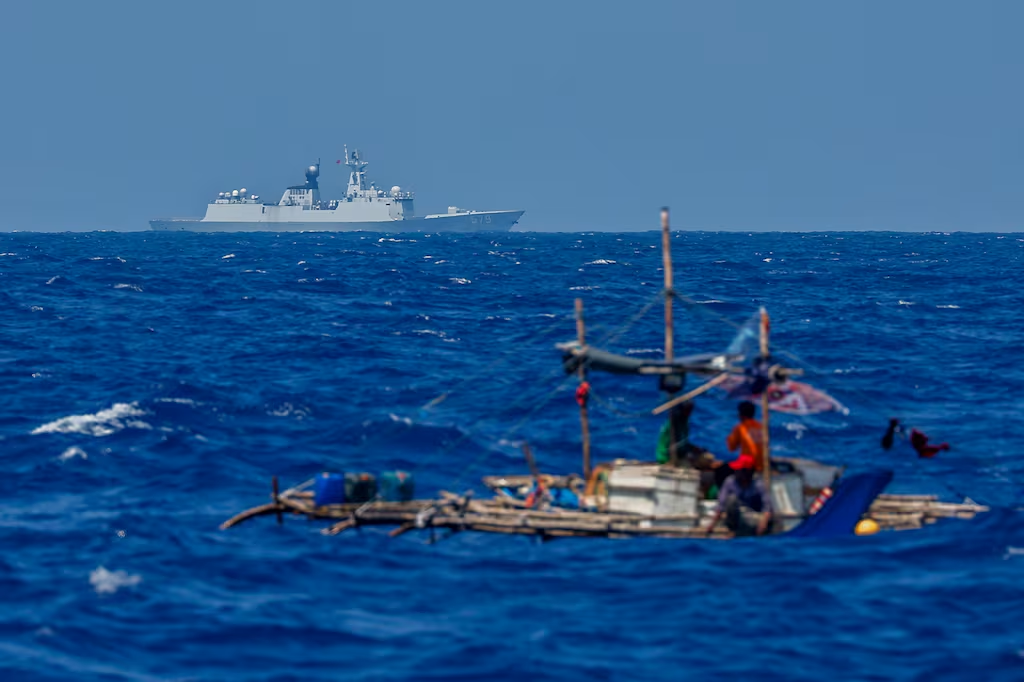
中国一直警惕地关注着这些动向。北京经常批评美国与日本和菲律宾的演习具有挑衅性并破坏稳定,并且特别点名“堤丰”的部署加以猛烈抨击。但中国官方媒体援引的专家也表示,当“海马斯”等武器被部署在台湾附近的岛屿上时,中国对其拥有优势,因为这些岛屿面积小、地形复杂,会妨碍机动和隐蔽,而其偏远又会使发现和阻断补给行动变得更加容易。
China has watched these developments warily. Beijing regularly criticizes U.S. exercises with Japan and the Philippines as provocative and destabilizing, and it has singled out Typhon deployments for vitriol. But experts cited by Chinese state media also say China has an advantage against weapons like HIMARS when they are deployed on islands near Taiwan because the islands’ small size and terrain will hinder mobility and concealment and their remoteness will make it easier to spot and block resupply efforts.
后勤挑战是真实存在的。美军的战争游戏也强调了向台湾附近小岛屿补给的困难——但哈林顿表示,这凸显了美军需要分散部署,并采用与昂贵导弹并行的低成本、低特征武器。
The logistical challenge is real. U.S. war games also emphasize the difficulty of resupplying small islands near Taiwan — but Harrington said it underscores the need for US forces to disperse and adopt lower-cost, lower-signature weapons alongside expensive missiles.
“这既最大限度地扩大了联合部队的选择,也增强了我们士兵的防护和生存能力,”哈林顿在AUSA展会上对《国防新闻》表示。“例如,使用远程一次性攻击无人机、无人水面舰艇和远程发射效应等系统,可能使我们的师为联合部队实现预期效果,同时将我们更大、更精密的系统保留下来,以备特定目的时使用。”
“This maximizes options for the Joint Force while also enhancing the protection and survivability of our soldiers,” Harrington told Defense News at AUSA. “For example, the employment of systems such as long-range one-way-attack drones, unmanned surface vessels, and long-range launched effects may enable our division to achieve a desired effect for the Joint Force while also preserving our larger, more exquisite systems until needed for a specific purpose.”