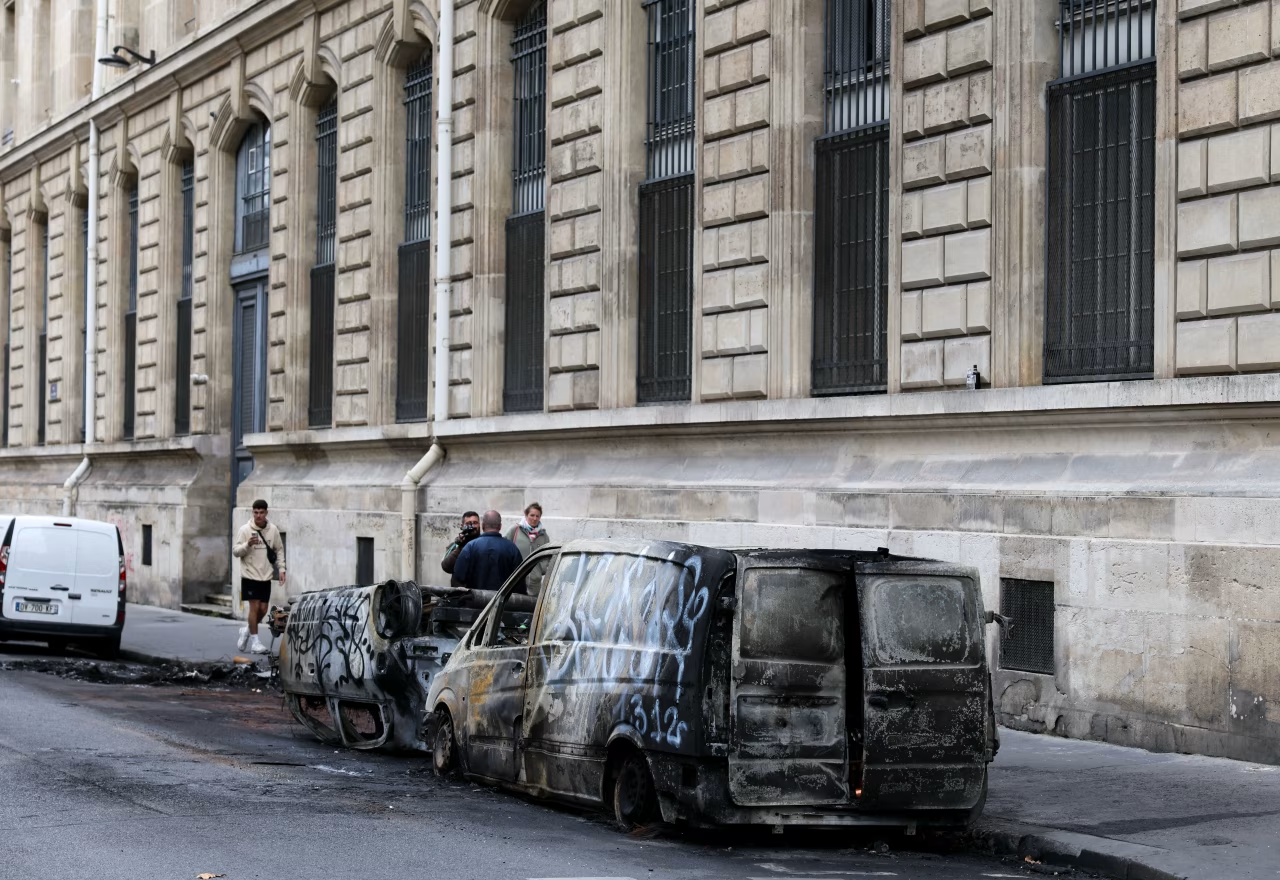
多年来最严重的骚乱席卷法国,暴徒袭击政府大楼和商店,数十万人抗议生活成本上涨。
The worst unrest in years has swept France, as rioters have attacked government buildings and stores while hundreds of thousands protest rising living costs.
政府在试图回应抗议者诉求时面临的难题是,多年来为保护消费者免受涨价冲击而进行的支出,已使该国财政陷入岌岌可危的境地。欧洲最大的预算赤字之一和政治僵局导致投资者抛售法国国债,推高该国10年期借贷成本至5%以上。
The problem for the government, as it seeks to address the demands of protesters, is that years of spending to protect consumers from price hikes have left the country’s finances in a precarious state. One of the largest budget deficits in Europe and political gridlock have driven investors to sell French bonds, pushing the country’s 10-year borrowing costs above 5%.
随着明年总统大选临近,该国下一任领导人面临的选择并无容易之举。以下八张图表展示了法国财政困境的深度。
With a presidential election looming next year, there are no easy choices for the country’s next leader. Here are eight charts that show the depth of France’s financial distress.
法国家庭突然面临过去国家为缓和通胀而付出的代价。2022年至2024年间,政府推出大规模能源价格补贴,由赤字支出提供资金,使国内整体通胀率保持低于邻国水平。
French households are suddenly confronting the bill for past state efforts to soften inflation. Between 2022 and 2024, the government rolled out extensive energy-shield subsidies funded by deficit spending, keeping domestic headline inflation lower than in neighboring states.
随着法国国库面临削减赤字的压力,部长们正在提高电力和天然气税费。据布鲁塞尔智库布鲁盖尔研究所称,在今年因中东局势引发的能源价格飙升期间,法国拨付的紧急能源救助资金甚至少于爱尔兰等规模小得多的经济体。结果是,就在更广泛的欧洲通胀显现降温迹象之际,法国家庭的水电账单出现剧烈、滞后的跳涨。
With the French treasury under pressure to reduce the deficit, ministers are increasing levies on electricity and gas. France has allocated less money toward emergency energy relief during this year’s Middle East price spike than far smaller economies like Ireland, according to Bruegel, a Brussels-based think tank. The result is a sharp, late jump in utility bills for households, just as broader European inflation shows signs of cooling.
根据国际货币基金组织预测,在主要发达经济体中,只有美国今年的预算赤字预计将高于法国。
Among major developed economies, only the U.S. is expected to run a higher budget deficit than France this year, according to International Monetary Fund forecasts.
该预算赤字推高了债券收益率,剥夺了法国政府曾拥有的、通过增加支出解决社会不满或借债渡过危机的灵活性。
That budget deficit has driven up bond yields, robbing the French government of the flexibility it once had to spend more on addressing social grievances or borrow its way out of crisis.
法国实际可支配收入在很大程度上停滞不前。与美国等其他国家工资随物价上涨不同,法国薪资购买力遭到侵蚀。
Real disposable incomes in France have largely plateaued. Unlike other countries such as the U.S., where wages have risen with prices, French pay has been eroded.
在低税收国家,公民通常接受较为精简的政府支持。而在法国,总税收收入接近经济总产出的一半,公众期待慷慨的福利项目、高效的交通网络和完善的公共机构。将税收收入推高至当前水平以上可能损害商业活动,而削减公共服务则会引发即时的社会反弹。
In lower-tax countries, citizens typically accept leaner government support. In France, where total tax receipts are nearly half of total economic output, the public expects generous welfare programs, efficient transit networks and well-developed public institutions. Pushing tax revenue above current levels risks hurting business activity, while cutting public services triggers immediate social blowback.
尽管公共支出看似慷慨,但很大一部分被历史负债所吞噬。本月一份政府报告披露,教育预算的32%直接用于退休员工的公务员养老金,而非活跃的课堂资源。大多数其他国家将此类成本记为养老金支出。据蒙田研究所经济学家马克西姆·斯拜伊称,总体而言,法国中央政府预算中超过11%(相当于每年约560亿美元)用于为养老金提供资金,却未被记录为养老金支出。相反,它们被记在相关政府部门作为工资税上的雇主缴费。这些支付减少了留给学校、设备和教学资源的资金。
While public spending looks generous, a substantial portion is absorbed by historic liabilities. A government report this month revealed that 32% of the education budget goes directly to civil service pensions for retired staff rather than active classroom resources. Most other countries log such costs as pension spending. Overall, more than 11% of France’s central government budget, equivalent to around $56 billion annually, is devoted to financing pensions without being recorded as a pension expenditure, according to Maxime Sbaihi, an economist at the Institut Montaigne think tank. Instead they are logged at the relevant government ministries as employer contributions on payroll taxes. These payments leave less funding for schools, equipment and teaching resources.
与此同时,学生表现指标呈下滑趋势,这在最近的国际学生评估项目(PISA)评价中有所体现,该评价是经济合作与发展组织(OECD)衡量学生能力的指标。
Meanwhile, student performance indicators have drifted downward, as reflected in recent Programme for International Student Assessment evaluations, an Organisation for Economic Cooperation and Development measure of students’ abilities.