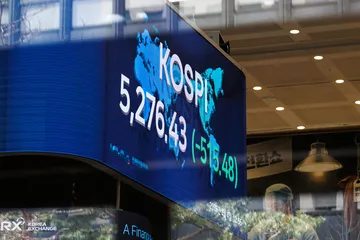
韩国股市在经历了一场惨烈的科技股抛售后,已从今年最火热的主要市场之一转变为全球估值最低廉的市场,其估值水平跌至印度尼西亚的约一半。
Korea has transformed from this year’s hottest major market into the world’s cheapest following a brutal tech selloff, with valuations falling to roughly half of Indonesia’s.
根据彭博汇编的数据,韩国综合股价指数(Kospi)的未来12个月市盈率已降至约4倍,这是在年初总市值超过1万亿美元的18个市场中,自2006年以来未曾见过的估值水平。与此同时,雅加达综合指数的估值为8倍,且该市场正面临摩根士丹利资本国际公司(MSCI Inc.)发出的两步降级警告,以及关于可投资性的质疑。
The Kospi Index’s 12-month forward price-to-earnings ratio has fallen to about four, a valuation unseen since 2006 across any of the 18 markets that began the year with over $1 trillion in value, according to data compiled by Bloomberg. Meanwhile, the Jakarta Composite Index carries a valuation of eight times, while the market faces MSCI Inc.’s warning of a two-step downgrade and questions over investability.
在芯片巨头引领韩国股市强劲反弹之前,投资者已就韩国市场长期低迷的估值抱怨多年。最近的抛售再次提醒人们,在科技股占比较重的市场中,与人工智能(AI)相关的恐慌情绪能多么迅速地扭转市场情绪。这也引发了一个问题:在与全面技术变革相关的不确定性时期,传统的估值指标是否仍能提供可靠的参考。
Before chip giants led a powerful rally earlier this year in South Korea, investors there had spent years complaining about the market’s depressed valuations. The recent selloff there is a reminder of how rapidly AI-related fears can swing sentiment in tech-heavy markets. It also raises questions about whether conventional valuations still provide a reliable guide during times of uncertainties tied to sweeping technological change.
ACG Management Pte董事总经理Hui Ling Loh表示:“对迄今为止激进的AI投资的担忧已进一步扩大,足以抵消稳健的盈利和业绩指引。投资者还在权衡较高借贷成本对AI相关股票的影响,以及对避险资产的需求。”尽管韩国因芯片需求旺盛,今年出口有望突破1万亿美元,且央行表示今明两年经济增长应“显著高于”先前预测,但Kospi指数依然异常低估。围绕存储芯片周期、AI投资支出及较高借贷成本的挥之不去的疑虑,使投资者保持谨慎,对于市场情绪何时最终扭转,观点不一。
“Fears over so far aggressive AI investment have widened further enough to offset the solid earnings and guidance,” said Hui Ling Loh, managing director at ACG Management Pte. “Investors are also weighing the impact of higher borrowing costs on AI-related stocks, on top of demand for safe haven assets.”The Kospi remains unusually cheap despite South Korea heading toward over $1 trillion in exports this year on booming chip demand, while the central bank has said growth this year and next should be “considerably higher” than previous projections. Even so, lingering doubts about the memory-chip cycle, AI investment spending and higher borrowing costs have left investors cautious, with mixed views on when sentiment will finally turn.
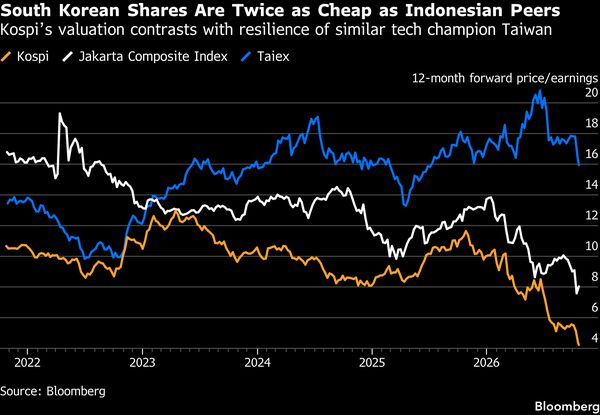
对于一些投资者来说,最近的抛售可能创造了一个买入机会。韩国综合股价指数(Kospi)较6月份的高点下跌了约40%,而在此期间,12个月远期盈利预期却上升了22%。该指数今年以来仍累计上涨了31%。
For some investors, the recent selloff has generated what may be a buying opportunity. The Kospi index has fallen about 40% from its June peak, even as 12-month forward earnings estimates have climbed 22% over that period. The index is still up 31% for the year.
宝盛集团(Julius Baer)亚洲研究主管马克·马修斯(Mark Matthews)在彭博电视上表示,人工智能需求“依然远超供应”。“因此,当半导体股票出现过去几天、特别是隔夜我们所看到的这种大幅回调时,这是一个很好的买入机会。”
AI demand “still massively exceeds supply,” Mark Matthews, head of Asia research at Julius Baer, said on Bloomberg TV. “So when you have these big corrections like the one we saw over the last few days, particularly overnight, in semiconductor stocks, it is a good opportunity to buy.”