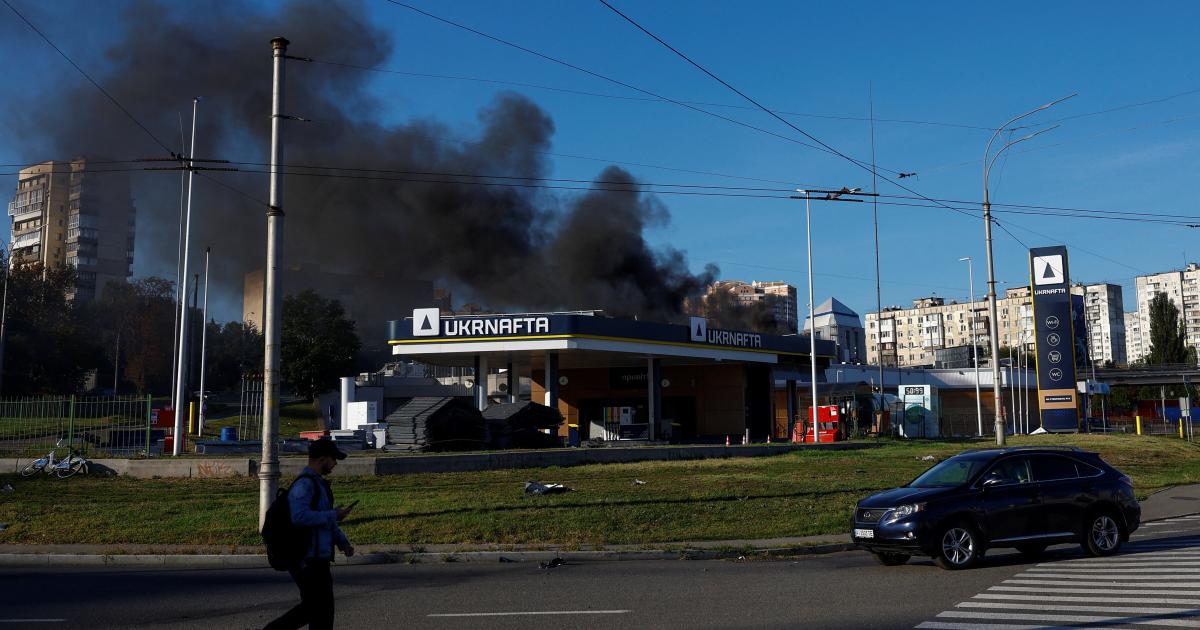
自美国总统唐纳德·特朗普与乌克兰公开决裂、并与俄罗斯日益和解以来,基辅进入战争第五个冬季的前景看起来黯淡。特朗普政府要求乌克兰暂停对俄罗斯炼油厂的攻击,而这类攻击一直是乌克兰向莫斯科施压的最有效手段之一。与此同时,基辅在防空方面面临着危险的缺口,难以应对俄罗斯的喷气式无人机以及弹道导弹使用量的增加。
In the days since U.S. President Donald Trump’s highly public falling out with Ukraine and growing rapprochement with Russia, Kyiv’s prospects going into the fifth winter of war look grim. The Trump administration has demanded that Ukraine suspend its attacks on Russian refineries, which have been one of Ukraine’s most effective means of putting pressure on Moscow. Meanwhile, Kyiv faces dangerous gaps in its air defenses against Russia’s jet-powered drones and stepped-up use of ballistic missiles.
特朗普还与俄罗斯总统弗拉基米尔·普京达成协议,暂时豁免对俄罗斯柴油出口的美国制裁,为莫斯科赢得外交胜利。特朗普的特使们还提议,欧洲增加俄罗斯天然气的购买量,作为争取克里姆林宫支持和平的一部分——这进一步复杂化了乌克兰及其剩余盟友压制俄罗斯的努力。
And Trump has entered into a deal with Russian President Vladimir Putin that temporarily waives U.S. sanctions on Russian diesel exports, offering Moscow a diplomatic win. Trump’s envoys have also proposed that Europe increase purchases of Russian gas as part of an effort to gain the Kremlin’s support for peace—further complicating the efforts of Ukraine and its remaining allies to squeeze Russia.
然而,在这幅悲观图景中缺失的是,乌克兰已经适应了不断升级的攻击。基辅已开发出创新策略,以减轻俄能源打击的影响,并在持续轰炸中保持电网运转。尽管面临新的美国压力,乌克兰仍继续对俄罗斯能源基础设施发动强大的无人机袭击,包括10月中旬对圣彼得堡一个石油码头以及远至苏尔古特和新乌伦戈伊的工业天然气加工厂的成功袭击,后两地距乌克兰边境1800英里。
Yet missing from this bleak picture are the ways that Ukraine has already adapted to escalating attacks. Kyiv has developed innovative strategies to mitigate the impact of Russian energy strikes and keep its grid running, even amid intense bombardment. And despite the new U.S. pressure, Ukraine has continued to launch powerful drone strikes against Russia’s energy infrastructure, including successful mid-October attacks on an oil terminal in St. Petersburg and industrial gas processing plants as far away as Surgut and the Novy Urengoy, 1,800 miles from the Ukrainian border.
总体而言,自2025年中期以来,乌克兰的无人机袭击已使俄罗斯炼油厂产量下降约30%;这些袭击还削弱了莫斯科相当一部分过剩炼油能力,导致汽油短缺约10%。
Overall, since mid-2025, Ukrainian drone strikes have reduced Russian refinery throughput by roughly 30 percent; they have also eroded a significant share of Moscow’s excess refining capacity, resulting in a gasoline shortfall of about ten percent.
尽管如此,这只是一场迅速演变的能源战争的一个侧面。莫斯科已开发出自己的手段来限制乌克兰袭击的影响。同时,它加强了对乌克兰基础设施的攻势,其中包括10月19日的一次集中打击,损毁了十多座能源设施。乌克兰智库DiXi Group估计,2025年和2026年初,俄罗斯向乌克兰能源设施发射了12800枚导弹和无人机,而战争前三年合计仅发射了2800枚。尽管这些数字统计的是发射数量而非成功命中的数量,但它们显示出俄罗斯的这场战役已变得多么大规模且持续不断。
Still, this is only one part of a rapidly evolving energy war. Moscow has developed its own ways to limit the effects of Ukrainian strikes. And it has intensified its assault on Ukrainian infrastructure, including an October 19 barrage that damaged more than ten energy facilities. DiXi Group, a Ukrainian think tank, has estimated that Russia launched 12,800 missiles and drones at Ukrainian energy facilities in 2025 and early 2026, compared with just 2,800 during the first three years of the war combined. Although these figures count launches rather than successful strikes, they show how massive and relentless the Russian campaign has become.
此外,双方现在都能打击过去可用于缓冲损失的替代设施和储备。10月初,俄罗斯袭击当地发电厂后,乌克兰民众经历了大范围停电,尽管乌克兰国家电网有富余电力,但因俄罗斯持续打击输送储备电力的线路和变电站,电力无法送达。夏季期间,乌克兰击中莫斯科周边如此众多的炼油厂和管道,迫使俄罗斯不得不从贝加尔湖等数千英里外的地区通过铁路运输燃料。
Moreover, both sides are now able to target the substitutes and reserves that in the past could be used to cushion losses. Following Russian strikes on local power plants in early October, Ukrainians experienced widespread blackouts, even though Ukraine’s national grid had electricity to spare, because Russia continued hitting the lines and substations carrying the reserve power. During the summer, Ukraine hit so many of the refineries and pipelines around Moscow that Russia was forced to bring fuel by rail from as far as Lake Baikal, thousands of miles away.
如果美国的施压和谈判无法阻止能源战,对乌克兰而言,核心问题在于其非凡的适应能力能否跟上俄罗斯的攻势。与此同时,乌克兰今冬的命运将取决于其能否继续打击俄罗斯基础设施,从而挑战莫斯科的修复和重建能力。如今,俄罗斯和乌克兰都必须昼夜不停地保护和修复各自的全国性网络;攻击方可以集中力量打击最脆弱的目标,并在修复完成后立即再次发动袭击。
If U.S. pressure and negotiations cannot stop the energy war, the central question for Ukraine is whether its remarkable capacity to adapt can keep pace with Russian attacks. At the same time, its fortunes this winter will depend on whether it can continue to hit Russian infrastructure in ways that challenge Moscow’s ability to repair and rebuild. Both Russia and Ukraine must now protect and repair their entire national networks around the clock; attackers can concentrate on the most vulnerable sites and strike again as soon as repairs are done.
在这样的战争中,防御创新与进攻能力同等重要。归根结底,仅靠能源攻击不太可能迫使任何一方接受对方的条件,双方都可能无法取得决定性优势,即便双方付出的代价都在不断增加。认识到这些打击的局限性以及威力,不仅对结束当前冲突至关重要,也对理解能源基础设施在未来战争中可能扮演的角色至关重要。
In such a war, defensive ingenuity matters as much as offensive capability. In the end, energy attacks alone are unlikely to force either side to accept the other’s terms, neither side may be able to gain a decisive advantage, even as both incur mounting costs. Recognizing the limits, as well as the power, of these strikes may be crucial not only to ending the present conflict but also to understanding the role that energy infrastructure will likely play in future wars.
与火箭赛跑 对乌克兰而言,国际支持在遏制俄罗斯的能源轰炸方面发挥了尤为关键的作用。根据联合国、世界银行和欧盟委员会的一份报告,截至2025年11月,在去年冬季最严重的袭击来临之前,乌克兰电力基础设施已遭受171亿美元的直接损失。然而,基辅通过利用国内剩余的核电站、修复火力发电设施、增加电力、天然气和柴油进口,以及利用分布式发电——即接入主电网的太阳能、风能、天然气和柴油小型发电单元——来弥补失去的发电厂,成功维持了电力供应。
THE RACE AGAINST ROCKETS For Ukraine, international support has been especially crucial in containing Russia’s energy barrage. As of November 2025, before the worst of last winter’s attacks, Ukraine had suffered $17.1 billion in direct damage to its electricity infrastructure, according to a report by the UN, the World Bank, and the European Commission. Yet Kyiv was able to keep the electricity flowing by drawing on the country’s remaining nuclear plants; repairing thermal generation facilities; increasing electricity, gas, and diesel imports; and compensating for lost power plants with distributed generation—smaller units running on solar, wind, gas, and diesel energy that are connected to the main grid.
欧洲还提供了关键的替代技术。2025年,欧盟委员会分149批向乌克兰运送了一座已退役的立陶宛火力发电厂的设备,使乌克兰能够为100万人供电。此类转让使外国公用事业公司和供应商成为乌克兰快速修复体系的一部分。9月,乌克兰与联合国开发计划署启动了一个新的协调中心,以加快捐赠能源设备的安装。
Europe has also provided crucial replacement technology. In 2025, the European Commission delivered equipment from a retired Lithuanian thermal power plant to Ukraine in 149 shipments, enabling Ukraine to provide power to one million people. Such transfers have turned foreign utilities and suppliers into part of Ukraine’s rapid repair system. In September, Ukraine and the UN Development Program launched a new coordination center to speed up the installation of donated energy equipment.
电池和分布式电力的扩大使用也发挥着越来越大的作用。2025年9月,乌克兰能源公司DTEK与美国电池制造商Fluence在基辅和第聂伯罗周边的六个地点安装了电池储能设施,其容量足以为60万户家庭(约占基辅的一半)供电两小时。与此同时,基辅已部署了150兆瓦的分布式发电——不足以覆盖冬季高峰需求,但足以为该市一半以上的基本服务提供电力,包括供水、医院和供暖系统。
Expanded use of batteries and distributed power also play a growing role. In September 2025, the Ukrainian energy company DTEK and the U.S.-based battery maker Fluence installed battery storage at six sites around Kyiv and Dnipro, with enough capacity to supply 600,000 households, roughly half of Kyiv, for two hours. Meanwhile, Kyiv has put in place 150 megawatts of distributed power generation—not enough to cover winter peak demand, but sufficient to provide more than half of the city’s essential services, including water supplies, hospitals, and heating systems.
尽管如此,乌克兰的报道显示,基辅1.2万栋公寓楼中可能有2500至3000栋在进入冬季时没有替代供暖来源。俄罗斯不必切断乌克兰的电力,就能造成极其沉重的负担。
Nonetheless, Ukrainian reports suggest that 2,500 to 3,000 of Kyiv’s 12,000 apartment buildings could enter winter without an alternative heat supply. Russia does not have to switch off Ukraine’s power to impose an extraordinary burden.
这种漏洞尤其危险,因为恢复电力并不自动恢复供热。更换锅炉可以提供帮助,但必须在当地安装、供燃料并接入正常运行的供热网络,而这往往要在同一座城市仍在遭受反复袭击的情况下进行。去年冬天,联合国监测员记录了至少74起针对乌克兰供热设施的俄罗斯袭击——这些袭击导致数十万人在严寒中数周没有供暖或热水。保持国家电网运行并未使这些住宅在冰冻天气中变得宜居。居民可以尝试使用电暖器解决问题,但其广泛使用可能会使本已脆弱的电网超负荷。
That vulnerability is especially dangerous because restoring electricity does not automatically restore heat. Replacement boilers can help, but they must be installed locally, supplied with fuel, and connected to functioning heat networks, often while the same city remains under repeated attack. Last winter, UN monitors recorded at least 74 Russian attacks on heating infrastructure across Ukraine—attacks that left hundreds of thousands of people without heat or hot water for weeks on end in frigid temperatures. Keeping the national electric grid running did not make those homes habitable in freezing weather. Residents can try to solve the problem with electric space heaters, but their widespread use could overload the already fragile grid.
为应对今年冬天更为严峻的条件,基辅一直在储备天然气。截至8月,乌克兰的天然气储量为131亿立方米,而一年前为96亿立方米。即便如此,储存的天然气必须输送到正常运行的热电厂,电力也必须通过正常运行的输电网络,而这些设施正不断受到俄罗斯的攻击。无论国家系统多么有韧性,俄罗斯对特定乌克兰城市的持续打击仍使其处于暴露状态,因为当地的替代供应来源往往在受损设施恢复之前就被攻击。
To prepare for even worse conditions this winter, Kyiv has been building up gas reserves. As of August, Ukraine’s gas stocks stood at 13.1 billion cubic meters, compared with 9.6 billion a year earlier. Still, stored gas must reach functioning heat and power plants, and electricity must pass through functioning transmission networks, both of which Russia has been continually attacking. Regardless of how resilient the national system is, Russia’s incessant targeting of particular Ukrainian cities has left them exposed, because local sources of substitute supply are often attacked before damaged facilities can be restored.
与此同时,乌克兰人在维系能源系统生存方面付出的代价是容量指标所未能捕捉的。全国范围内,企业不得不使用昂贵的发电机、削减班次或停业。家庭在可靠供电时间更少的情况下支出更多。工业需求下降可能让电力收支表看起来更健康,但实际情况是经济在持续不断的袭击压力下恶化。这些损失削弱了税基,并增加了对外部援助的需求。
Meanwhile, Ukrainians are paying for the survival of their energy system in ways that capacity measures miss. Across the country, businesses have to run expensive generators, cut shifts, or close. Households spend more for fewer hours of reliable service. Declining industrial demand can make the electricity balance sheet look healthier, when the reality is that the economy is deteriorating under the pressure of relentless attacks. Those losses weaken the tax base and increase the need for foreign support.
俄罗斯并不需要切断乌克兰的电力供应,就能对其施加巨大的负担。不惜一切代价的战争俄罗斯也感受到了能源战日益加剧的影响。理论上,莫斯科拥有大得多的缓冲空间:战争爆发时,其炼油厂生产的燃料超过国内市场的消费量,而且许多炼油厂在蒸馏原油方面的产能过剩,而在将蒸馏出的物流转化为成品车用燃料方面产能不足。
Russia does not have to switch off Ukraine’s power to impose an extraordinary burden. WAR AT ANY PRICE Russia has also felt the growing effects of the energy war. In theory, Moscow has a much larger cushion: when the war began, its refineries produced more fuel than its domestic market consumed, and many had excess capacity to distill crude than to convert the resulting streams into finished motor fuel.
失去一个蒸馏装置并不一定意味着失去同等份额的汽油或柴油供应。但乌克兰今年的袭击已经考验了这种灵活性的极限。
Losing one distillation unit did not necessarily mean losing an equivalent share of gasoline or diesel supply. But Ukraine’s attacks this year have tested the limits of that flexibility.
6月,乌克兰无人机击中了莫斯科卡波特尼亚炼油厂两个加工装置中的一个,六天后又击中了另一个。该炼油厂在6月的袭击后停产,虽然随后恢复了运营,但9月的另一次袭击再次导致加工中断。在其他地方,乌克兰的袭击损坏了旨在提高燃料收率和改善质量的复杂装置;这些装置可能需要六到八个月才能修复,因此它们可能在即将到来的冬季供暖季期间一直无法使用。闲置的初级蒸馏产能无法替代受损的二级设备,而这些设备是将中间产品转化为成品汽油和柴油所必需的。
In June, Ukrainian drones hit one of two processing units at Moscow’s Kapotnya refinery and hit the other six days later. The refinery was shut down after the June attacks and although it subsequently resumed operations, another strike again halted processing in September. Elsewhere, Ukrainian attacks have damaged complex units that are designed to raise fuel yields and improve quality; they can take six to eight months to fix, so they might remain unavailable through the coming winter heating season. Spare primary distillation capacity cannot replace damaged secondary equipment needed to turn intermediate products into finished gasoline and diesel.
为了弥补这些损失,俄罗斯政府放宽了燃料标准,允许将石脑油与辛烷值提升剂混合后进入汽油供应,并扩大了对进口汽油的国家补贴。俄罗斯公司还可以将原油送往其盟友白俄罗斯进行加工,或进口成品油。这些措施帮助加满了消费者的油箱,但并未恢复此前为他们供应燃料的设备。但这些措施是有代价的,消费者、企业和国家最终都将不得不承担这一代价。
To make up for these losses, the Russian government has loosened fuel standards, allowing naphtha blended with octane boosters to enter the gasoline supply, and extended state subsidies to imported gasoline. Russian companies can also send crude to its ally Belarus for processing or import finished products. These measures have helped fill consumers’ gas tanks without restoring the equipment that previously supplied them. But they come at a cost, which consumers, companies, and the state will all ultimately have to absorb.
并非所有乌克兰无人机袭击都能产生如此长期的影响。例如,2026年3月,乌克兰对位于圣彼得堡附近波罗的海的乌斯季卢加石油码头发动了持续近两周的袭击,使该码头的石油运输中断。但乌斯季卢加的运输在几周后便恢复了,到4月下旬,俄罗斯海运原油出口总量日均约为380万桶——比3月增长7%,比去年同期增长11%。这一增长帮助抵消了成品油出口的下降,因为炼油厂受损使得更多原油可供出口。
Not all Ukrainian drone strikes have had such long-term impact. In March 2026, for example, Ukraine attacked the Ust-Luga oil terminal, which is on the Baltic Sea near St. Petersburg, continually for almost two weeks, halting oil shipments from that terminal. But shipments from Ust-Luga resumed a few weeks later, and by late April Russia’s total seaborne crude exports averaged 3.8 million barrels a day—up seven percent from March and 11 percent from a year earlier. This increase helped offset falling exports of refined products, as damage to refineries left more crude available for export.
对莫斯科而言,最紧迫的问题是如何应对燃料短缺。通过提高价格和实行配给,它可以确保军队得到充足供应,即便平民不得不减少用量。它还可以利用补贴和价格管制为消费者提供一些缓解。这些选项没有一个是无代价的,但只要政府愿意压低生活水平并承受由此带来的政治代价,它就仍拥有相当大的回旋余地。乌克兰的袭击可以迫使俄罗斯分散其防空力量、消耗资金和劳动力,并减少其炼油收入。
For Moscow, the most pressing question is how to manage fuel shortages. Through higher prices and rationing, it can ensure that the military remains well supplied even if civilians have to cut back. It can also use subsidies and price controls to provide some relief to consumers. None of these options are costless, but as long as the government is willing to impose lower living standards and absorb the resulting political costs, it retains considerable room to maneuver. Ukrainian strikes can force Russia to spread its air defense thinner, absorb money and labor, and reduce its income from refining.
它们能在一定程度上削减为俄罗斯战争提供资金的石油和天然气收入,但这些代价都不太可能让这场战争对克里姆林宫而言变得昂贵到难以为继。相互指责矛盾的是,乌克兰对俄罗斯炼油厂打击日益成功,反而给基辅自身带来了新的压力。为支撑日益受限的国内市场,俄罗斯减少了对外销售的柴油量。通常情况下,价格上涨应会促使其他地区的炼油商填补缺口,但美国对伊朗的战争使这一调整变得更加困难。
They can somewhat reduce the oil and gas revenue that finances Russia’s war, but none of these costs are likely to make the war prohibitively expensive for the Kremlin. THE BLAME GAME Paradoxically, the growing success of Ukraine’s strikes against Russian refineries has brought new pressure on Kyiv itself. To buttress its increasingly constrained domestic market, Russia has reduced the amount of diesel it is selling abroad. Normally, higher prices should encourage refiners elsewhere to take up the slack, but the U.S. war against Iran has made that adjustment harder.
据国际能源署数据,9月份俄罗斯与中东的柴油和粗柴油净出口量合计比一年前减少了130万桶/日。这场全球供应紧张也波及了美国,而美国如今将美国柴油价格居高不下归咎于乌克兰。
Combined Russian and Middle Eastern net diesel and gasoil exports in September were 1.3 million barrels a day below their level a year earlier, according to the International Energy Agency. That global supply crunch has also affected the United States, which has now blamed Ukraine for stubbornly high U.S. diesel prices.
通常情况下,美国拥有可观的柴油盈余,是世界上最大的柴油出口国。然而,在缺乏出口管制、配额或出口关税的情况下,即使美国国内没有燃料短缺,美国市场也暴露在国际价格飞涨的风险之下。对特朗普政府而言,施压乌克兰停止袭击俄罗斯炼油厂——并与俄罗斯达成柴油协议——也比恢复失去的中东柴油出口要容易得多。
Ordinarily, the United States enjoys a substantial diesel surplus and is the world’s largest diesel exporter. Yet in the absence of export controls, quotas, or export tariffs, the U.S. market is exposed to galloping international prices, even when there is no U.S. fuel shortage. It is also far easier for the Trump administration to press Ukraine to stop its attacks on Russian refineries—and to enter a diesel agreement with Russia—than to restore lost Middle Eastern diesel exports.
实际上,华盛顿的举措不太可能在短期内大幅增加全球供应:重新分配现有出口并不会创造额外的燃料。更大规模、更持久的增长需要俄罗斯炼油厂恢复并维持运转。正是在这一点上,华盛顿有动机去约束乌克兰的袭击——甚至不惜扣留或威胁扣留基辅使用“星链”卫星服务或美国情报的权限,或阻止欧洲为乌克兰购买美国武器。如果乌克兰遵从美国的要求,风险之一便是莫斯科可能在其炼油厂获得保护的同时,继续对乌克兰城市发动攻击。
In reality, Washington’s moves are unlikely to add much to global supply in the near term: redirecting existing exports does not create additional fuel. A larger, lasting increase would require Russian refineries to recover and stay in operation. This is where Washington has an incentive to restrain Ukraine’s attacks—even to the point of withholding, or threatening to withhold, Kyiv’s access to Starlink satellite service or U.S. intelligence, or to block European purchases of U.S. weapons for Ukraine. If Ukraine complies with U.S. demands, one risk is that Moscow could obtain protection for its refineries while continuing its assault on Ukrainian cities.
在这场不断扩大的能源战中,美国并非唯一的外部参与者。对欧洲而言,乌克兰的崩溃将造成远比更换变压器或为燃料进口提供资金更大的安全威胁。因此,10月中旬,欧盟驻乌克兰大使介绍了欧洲正在为即将到来的冬季准备的11亿美元能源支持计划,该计划将增强乌克兰的恢复能力。但如果一些欧洲国家不顾欧盟委员会的反对,同意特朗普政府提出的扩大欧洲购买俄罗斯天然气的提议,以期降低家庭和工业的能源成本——那可能会增加莫斯科的收入及其资助战争的能力。欧洲的能源选择在这场博弈的双方都至关重要。
The United States is not the only external player in this widening energy war. For Europe, Ukraine’s collapse would create a security threat far greater than the cost of replacing transformers or financing fuel imports. Thus, in mid-October, the EU’s ambassador to Ukraine described a $1.1 billion energy support package Europe is preparing for the coming winter, which will enhance Ukraine’s ability to recover. But if some European countries, despite the European Commission’s opposition, accede to the Trump administration’s proposal to expand European purchases of Russian gas in the hope of lowering energy costs for households and industry—that could bolster Moscow’s earnings and its ability to finance the war. Europe’s energy choices matter on both sides of the contest.
中国和印度也可能影响这场能源战的未来走向。迄今为止,两国购买俄罗斯原油帮助维持了俄罗斯的战争机器。此外,通过提炼打折的俄罗斯原油,两国可以使本国产业受益;通过出口更多成品油,它们可以缓解目前推动美国向乌克兰施压的全球供应紧张。但这些国家提高出口的能力取决于可获得的原油和政府批准——尤其是在中国。
China and India may also affect the future direction of the energy war. Thus far, both countries’ purchases of Russian crude have helped sustain Russia’s war machine. Moreover, by refining discounted barrels of Russian crude, both countries can benefit their own industries, and by exporting more refined fuel, they can ease the global crunch that is now driving U.S. pressure on Ukraine. But the ability of these countries to raise their exports depends on available crude and government approval—particularly in China.
随着时间的推移,随着其他供应方恢复、贸易调整以及消费下降,俄罗斯从当前柴油短缺中获得的筹码将会缩小。但这种转变不太可能赶在今年冬季之前发生:国际能源署预计柴油市场将一直紧张到2027年。
Over time, Russia’s leverage from the current diesel crunch will shrink as other suppliers recover, trade adjusts, and consumption falls. But that shift is unlikely to happen in time for this winter: the International Energy Agency expects diesel markets to remain tight well into 2027.
能源战争的演变对于俄罗斯和乌克兰来说,这场能源战争的目的非常明确:那就是破坏对方的经济,从而削弱民众对战争的支持,或使战争变得难以持续下去。然而,目前几乎没有迹象表明任何一方能够实现这一目标。尽管如此,美国的压力仍有可能促使双方达成停火协议,即使这些协议对乌克兰极为不利。如果双方都停止对能源设施的攻击,双方都能得到喘息的机会,并有时间恢复元气。
THE ADAPTATION SPIRAL For both Russia and Ukraine, the aim of the energy war is clear: to disrupt or break the adversary’s economy to the point of undermining support for the war or making it unsustainable. But there are few indications that either side can achieve such an outcome. U.S. pressure could nevertheless produce a cease-fire or a broader settlement, even on terms deeply unfavorable to Ukraine. A mutual halt to energy strikes would give both sides relief and time to recover.
然而,目前莫斯科和基辅在停火条件上存在巨大分歧:双方对于哪怕是临时停火也持有截然不同的立场。彼此之间的高度不信任进一步加剧了这种分歧。此外,如果只保护炼油厂(正如特朗普政府所提议的那样),乌克兰的城市和其他基础设施仍将面临俄罗斯的攻击。而对于莫斯科来说,如果它可以通过美国的压力迫使乌克兰作出让步,而自己无需做出任何让步,那么它就没有太大的动力去接受这样的协议。
For now, however, an enormous gap remains between the conditions that Moscow and Kyiv deem minimally acceptable for even a temporary cease-fire. High levels of mutual distrust have increased that gap further. Moreover, a deal to protect only refineries, as the Trump administration has called for, would leave Ukraine’s cities and other infrastructure still exposed to Russian attacks. And Moscow has less incentive to accept any such deal if it can secure Ukrainian restraint through pressure by Washington, without making concessions of its own.
如果外交努力失败,最有可能的情况是双方会继续在冬季对能源设施和其他基础设施发动持续攻击。到目前为止,俄罗斯在炼油能力方面的损失尚在可承受范围内,但这并不意味着未来不会有更大的问题。随着炼油能力的进一步丧失,俄罗斯保障自身军事能源供应的成本将会越来越高。那些已经受到压迫的地区(比如被占领的克里米亚)可能会变得尤为脆弱。
If diplomacy fails, the most likely scenario is another winter of sustained strikes on energy and other infrastructure by both sides. For Russia, the loss of refining capacity has been manageable thus far, but that does not preclude larger problems ahead. With each additional loss of capacity, Russia’s protection of its military energy supply becomes more expensive. Certain regions that have already been squeezed, such as occupied Crimea, could become especially vulnerable.
如果莫斯科无法迅速进行修复或弥补炼油能力的损失,地区性的燃料短缺很可能会引发更广泛的民用交通和工业瘫痪。仅靠能源方面的攻击,不太可能迫使任何一方接受对方的条款。
If Moscow is unable to make repairs fast enough or otherwise compensate for further losses of refining capacity, regional fuel shortages could develop into wider disruptions to civilian transport and industry. Energy attacks alone are unlikely to force either side to accept the other’s terms.
对乌克兰而言,核心风险在于俄罗斯对同一座城市发动连环式攻击。在长时间严寒期间,无论针对基辅、哈尔科夫还是敖德萨,反复袭击都可能使备用物资耗尽的速度快于维修人员恢复供应的速度。即使国内其他地区仍有电力供应,长时间的水泵停运仍可能导致当地供水、区域供暖和污水管道破裂,酿成灾难性局面。
For Ukraine, the central risk is a cascading series of Russian attacks on the same city. During prolonged cold, repeated attacks—whether on Kyiv or Kharkiv or Odessa—could exhaust backup supplies faster than crews can restore service. Prolonged pump stoppages could lead to a disastrous local scenario of ruptured water supply, district heating, and sewage pipes, even if electricity remains available elsewhere in the country.
较暖和的冬季和及时的设备交付或许能让乌克兰避开此类危机,但防空系统交付延迟或关键供暖设施损毁,可能压垮一座在电力平衡上看似尚可的城市。危险的信号将是:尽管在抢修,当地停电范围却持续扩大,表明恢复速度跟不上袭击速度。
A milder winter and timely equipment deliveries could keep Ukraine ahead of such a crisis, but delays in air defense deliveries or the loss of a critical heating facility could overwhelm a city whose electricity balance looked adequate. An indication of danger will be local power outages that continue to grow despite repairs, showing that recovery is unable to keep pace with attacks.
在备战可能是最严酷的一个冬季之际,基辅面临两难:若削减或暂停对俄罗斯炼油厂的袭击以保全美国军事援助,将给莫斯科争取修复窗口期,而乌克兰电网依然暴露在打击之下;若拒绝这么做,虽可继续打击,却可能面临情报或“星链”切断,导致基础设施更难防守。欧洲资金和技术的额外注入能缓和后果——或许能为美国通信网络提供一些替代方案——但无法完全替代美国的情报和防空能力。只要乌克兰自身基础设施仍暴露在攻击之下,这一两难困境就不会消失。
As it prepares for what will likely be its harshest winter yet, Kyiv faces a dilemma: if it reduces or suspends its attacks on Russian refineries to preserve U.S. military support, it will give Moscow a repair window while the Ukrainian grid remains exposed. If Kyiv refuses, it could continue its strikes but face intelligence or Starlink cutoffs that could make its infrastructure harder to defend. An additional influx of European funds and technology could soften the consequences—and perhaps provide some alternatives to U.S. communication networks—but will not fully replace U.S. intelligence and air-defense capabilities. That dilemma will not go away as long as Ukraine’s own infrastructure is exposed to attack.
随着俄乌冲突即将迎来第五个周年,这场战争以极少有先例的方式改变了能源战的面貌。廉价远程武器的出现,让双方几乎都能无限制地打击对方赖以生存的能源基础设施。与此同时,分布式发电、电池技术和移动设备的创新,为守军提供了新颖的手段,使其即便在大规模袭击面前,也能维持基本服务并持续恢复。俄罗斯深厚的工业储备和乌克兰令人印象深刻的适应能力表明,复杂的能源系统能够承受巨大的破坏。这种韧性远超双方被毁资产的统计数字所暗示的程度。
As it approaches its fifth anniversary, the conflict in Ukraine has transformed energy warfare in ways that have few precedents. The advent of cheap long-range weapons has allowed each side almost unlimited access to the energy infrastructure on which the other depends. Yet at the same time, innovations in distributed power generation, batteries, and mobile equipment have given defenders novel ways to preserve essential services and continually recover, even in the face of large-scale attacks. Russia’s deep industrial reserves and Ukraine’s impressive adaptation have shown that complex energy systems can withstand enormous damage. That endurance has been far greater than a tally of destroyed assets on either side would suggest.
但这种同样的韧性也可能让战争更加漫长和毁灭性更强。正如乌克兰和俄罗斯所展示的,双方都能从自己承受住反复袭击的能力中获得信心,同时说服自己,对对手发动更猛烈的攻势或许最终能取得成功。在这种动态中,一方的每一次调整和变通都招致另一方的新一轮打击,而每一次新的打击又加速了寻找新生存之道的进程。这种适应螺旋即便在经济和人员损失不断攀升的情况下仍可能持续。只有真正的停火才能打破这一循环。而这将取决于仅靠能源攻击无法决定的政治抉择。
But this same resilience can make wars longer and more devastating. As Ukraine and Russia have shown, each side can gain confidence from its ability to sustain repeated attacks while also persuading itself that an even more intense campaign against its adversary might finally succeed. In this dynamic, each adjustment and workaround by one side invites a fresh attack by the other, and each new strike accelerates the search for new ways to endure. This adaptation spiral can continue even as economic and human losses mount. Only a true cease-fire can break the cycle. And that will depend on political choices that energy attacks alone cannot determine.