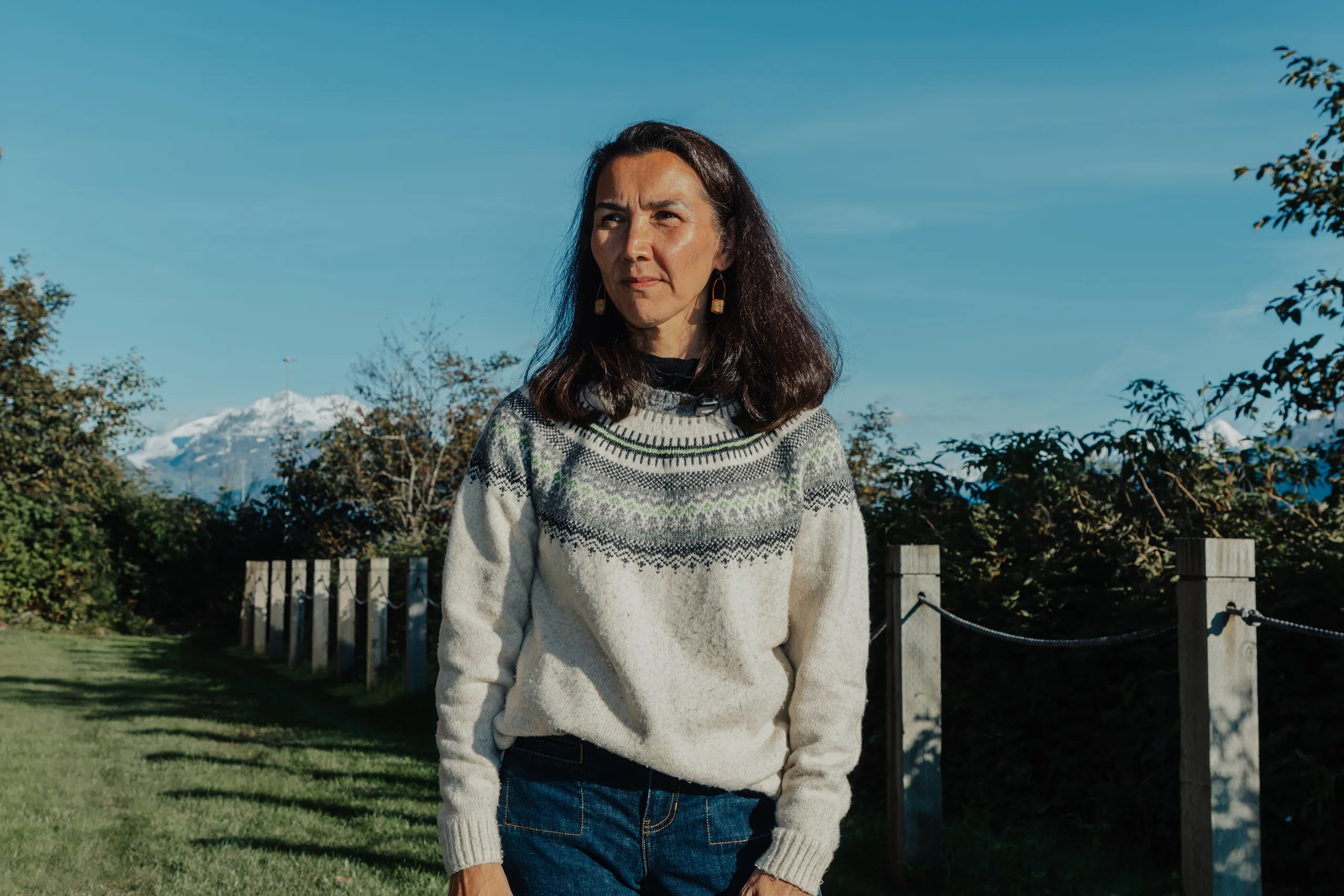
或许关于阿拉斯加参议院竞选最重要的一点是:鲑鱼是相当了不起的鱼类。这场竞选是共和党现任议员丹·沙利文与前联邦众议员玛丽·佩尔托拉之间的胶着较量。鲑鱼会逆流而上、产卵、然后死去。熊爱吃鲑鱼,虎鲸爱吃鲑鱼,人类也爱吃鲑鱼。如果没有鲑鱼,最早的阿拉斯加人在约一万五千年前跨越白令陆桥时就无法生存。
Perhaps the most important thing to know about Alaska’s Senate race, a close contest between the Republican incumbent, Dan Sullivan, and the former congresswoman Mary Peltola, is that salmon are pretty amazing fish. There’s the swimming upstream, the spawning, and the dying. Bears love salmon. Orcas love salmon. People love salmon. Without salmon, the first Alaskans, crossing the Bering land bridge some fifteen thousand years ago, could not have survived.
近期一次阿拉斯加之行中,我先后被请吃鲑鱼晚餐、获赠鲑鱼、并以鲑鱼进行易物交换。直接或间接地,鲑鱼养育了该州几乎一切,包括其政治。阿拉斯加在五十年代末争取建州,部分原因是要防止西雅图商人染指当地鲑鱼资源。商业交易在垂钓度假胜地敲定。2010年,一架水上飞机载着特德·史蒂文斯——这位极可能是阿拉斯加历史上最有权势的政客——前往布里斯托尔湾附近的一处鲑鱼山庄途中坠毁。他身穿防水裤遇难。
On a recent trip to Alaska, I was, at various points, fed salmon for dinner, offered salmon as a gift, and given salmon for barter. Directly or indirectly, salmon feeds almost everything in the state, including its politics. Alaska’s bid for statehood, in the late nineteen-fifties, was in part a matter of keeping the hands of Seattle businessmen off local salmon stocks. Business deals are hammered out at fishing retreats. In 2010, a seaplane carrying Ted Stevens, likely the most powerful politician ever to come out of Alaska, crashed en route to a salmon lodge near Bristol Bay. He died wearing his waders.
美国本土48州的人非常关注阿拉斯加州的参议院选举。本轮选举中,该州每人选举支出是密歇根州的两倍,是德克萨斯州的八倍。这种关注程度不寻常。在联邦选举中,阿拉斯加州一贯投共和党票;每次唐纳德·特朗普出现在选票上,阿拉斯加州都以十个或更多百分点的优势投票支持他。但在总统支持率历史性低迷之际,民主党希望夺下这个席位,这是任何试图夺回国会两院控制权的关键部分。
People in the Lower Forty-eight care a lot about Alaska’s Senate race. This cycle, it has been twice as expensive, per capita, as Michigan’s, and eight times Texas’s. The attention is unusual. In federal elections, Alaska reliably votes Republican; every time Donald Trump has been on the ballot, Alaska has voted for him by ten points or more. But, amid historically low approval ratings for the President, the Democrats are hoping to flip the seat, an essential part of any attempt to wrest back control of both houses of Congress.
与此同时,特朗普显然担心守住这个席位。他最近在安克雷奇以北的小城市瓦西拉为沙利文主持了一场集会。“坐八小时飞机值得,”特朗普说。“别忘了,我回来也要坐八小时飞机。”一月份,查克·舒默招募佩尔托拉参选,称她是他中期选举计划的“最后一块拼图”。佩尔托拉是该州的前众议院全州议员,她以“鱼、家庭、自由”为口号启动了竞选活动。
Trump, meanwhile, is clearly nervous about holding the seat. He recently headlined a rally for Sullivan in Wasilla, a small city north of Anchorage. “This is worth the eight hours on a plane,” Trump said. “And don’t forget, I got eight hours going back, too.”In January, Chuck Schumer recruited Peltola to run, calling her the “last piece to the puzzle” of his midterms plan. Peltola, the state’s former at-large House member, launched her campaign with the slogan “Fish, Family, Freedom.”
对大多数外人来说,这听起来像是为一场不可避免将由唐纳德·特朗普主导的选举所做的质朴包装。但佩尔托拉想谈鱼。最近,我在该州最北端的北极城镇乌特基亚维克的一所小学看到她发表演讲。这是一场非常不寻常的竞选演讲。她为充斥该州的“极度消极、有毒的广告”道歉,包括她自己的广告。她只提到一次对手:一个关于他为她支持的石油项目进行倡导的赞美轶事。
To most outsiders, this read as folksy branding for a race that would inevitably be dominated by Donald Trump. But Peltola wants to talk about fish. Recently, I saw her speak at the elementary school in Utqiagvik, an Arctic town at the state’s northern tip. It was a very unusual stump speech. She apologized for the “super negative, toxic ads” flooding the state, including her own. She mentioned her opponent just once: a flattering anecdote about his advocacy for an oil project she supports.
她完全没有提到特朗普。而且,尽管与该州其他地区相比,鲑鱼在乌特基亚维克并不那么重要,佩尔托拉仍然大多在谈论鱼。
She didn’t mention Trump at all. And even though, compared with the rest of the state, salmon is not so big in Utqiagvik, Peltola still mostly talked about fish.
这种鱼类优先地位在阿拉斯加的政治中相对较新。在过去的选举周期中,鱼类始终只是众多议题之一。但阿拉斯加的鱼类正面临危机。据美国国家海洋和大气管理局称,近年来,育空河上最大且最受尊崇的物种——帝王鲑(即王鲑)的洄游量已比平均水平下降多达百分之八十。一种较为普通的品种——狗鲑,今年表现尚可,但其数量也下降了多达百分之九十。
This piscine primacy is relatively new in Alaska’s politics. In past election cycles, fish have always been one issue among many. But Alaska’s fish are in crisis. In recent years, runs of Chinook, or king salmon, the biggest and most revered species on the Yukon River, have been down as much as eighty per cent from average levels, according to the National Oceanic and Atmospheric Administration. Chum salmon, a more ordinary variety, have had an O.K. year, but they’ve been down as much as ninety per cent.
某些物种和某些地区的情况比其他地区更糟,但总体趋势不佳,包括该州另外两种标志性海产品——大比目鱼和螃蟹。在我走访该州期间,惊讶地发现几乎每个交谈对象都对鱼类情况感到不安。一位政治顾问解释道:“很多人来到这个州,会说,‘玛丽·佩尔托拉的‘鱼、家庭、自由’到底是怎么回事?’我是个住在安克雷奇的白人,我家冰箱里现在装满了我自己捕获的红鲈鱼、大比目鱼和鲑鱼,因为这就是我们所有人都会做的事。”
Some species and some areas are worse off than others, but the general trend is bad, including for the state’s other two iconic seafood catches, halibut and crab. As I travelled around the state, I was surprised to find that virtually everyone I talked to was upset about the fish situation. One political consultant explained, “A lot of people come into the state, and they’re, like, ‘Why the hell is Mary Peltola “fish, family, freedom”?’ I’m a white guy who lives in Anchorage, and my freezer is currently full of rockfish, halibut, and salmon that I’ve caught because that’s just what we all do.”
危机在育空河和库斯科克威姆河等河流上游最为严重。数千年来,整个阿萨巴斯卡族和尤皮克族村庄都依赖鲑鱼生存。土著居民一直在北太平洋渔业管理委员会(N.P.F.M.C.)的会议上发表动情的证词,该委员会由国会设立,负责监管该地区的联邦渔业。“我有九个孙子孙女。我两个最小的甚至还没尝过鱼味,”坦纳当地人罗伯特·阿尔伯特在二月的一次会议上说。偏远河流村庄的生活和社会结构根植于夏季鱼营,社区在那里捕捞、加工和保存鲑鱼,以供他们度过冬季。
The crisis is worst up rivers such as the Yukon and the Kuskokwim. For many thousands of years, entire Athabascan and Yup’ik villages have subsisted on salmon. Indigenous residents have been delivering emotional testimony at meetings of the North Pacific Fishery Management Council (N.P.F.M.C.), which was created by Congress to oversee the region’s federal fisheries. “I got nine grandkids. My two youngest ones haven’t even tasted fish,” Robert Albert, a local from Tanana, said at a meeting in February. Life and social structures in remote river villages are rooted in summer fish camps, where the community catches, processes, and preserves the salmon that feeds them through the winter.
但鱼群数量已降至如此低点,以至于2024年,阿拉斯加政府与加拿大合作,对育空河及其加拿大支流的帝王鲑捕捞实施了为期七年的禁渔期——正好是一个完整的帝王鲑生命周期。鱼营空无一人。“我希望能让你感受到,一个曾经养活多个家庭的男人沦为乞丐是什么感觉,”卡丽·史蒂文斯告诉我,她作为阿萨巴斯卡部落政府理事会的代表向北太平洋渔业管理委员会作证。
But stocks have got so low that, in 2024, the Alaska government, in conjunction with Canada, shut down fishing for king salmon on the Yukon River and its Canadian tributaries for seven years—one complete king-salmon life cycle. The fish camps stand empty. “I wish I could express to you what it feels like for a man who provided for multiple families to become a beggar,” Carrie Stevens, who testified to the N.P.F.M.C. as a representative of the Council of Athabascan Tribal Governments, told me.
来自兰帕特的贾内萨·纽曼对该委员会说:“我最担心的是,如果不在育空河捕鱼,我是否还能在道德上把自己的孩子带到这个世界上。”北太平洋渔业管理委员会和美国国家海洋和大气管理局的研究科学家将这种鱼群死亡现象主要归咎于气候变化。但阿拉斯加的活动人士大多将愤怒集中在一种称为拖网捕捞的捕鱼方式上。
Janessa Newman, from Rampart, told the council, “My immediate concern is whether I can morally bring my own children into this world without fishing on the Yukon River.”Research scientists with the N.P.F.M.C. and N.O.A.A. attribute the die-off, primarily, to climate change. But activists in Alaska have mostly focussed their ire on a type of fishing known as trawling.
在白令海和阿拉斯加湾,商业捕鱼船的主要目标是狭鳕,这是一种中等大小、肉质鲜美、成群结队数量惊人的鱼。拖网渔船通过拖曳巨大的渔网来捕捞狭鳕;有些渔网张开的口径足以吞下一千辆大都会交通局公交车。你在水中放置的任何渔网都会意外捕获其他非目标鱼类。这被称为副渔获物。每年,阿拉斯加狭鳕产业作为副渔获物捕获约两万条帝王鲑和约四分之一百万磅的大比目鱼。最近,这种因鱼类短缺而愈发强烈的对附带损害的愤怒,已演变成一场政治运动。
In the Bering Sea and the Gulf of Alaska, the main target of commercial fishing boats is pollock, a medium-sized, mild fish that swims in fantastically vast schools. Trawlers catch pollock by dragging enormous nets; some open wide enough to swallow a thousand M.T.A. buses. Any net you put in the water will incidentally catch other, non-targeted fish. This is known as bycatch. Every year, the Alaskan pollock industry brings up around twenty thousand king salmon and around a quarter million pounds of halibut as bycatch. Recently, anger at this collateral damage, heightened by the fish shortage, has evolved into a political movement.
在Facebook上,成立于2020年初的“阻止阿拉斯加拖网副渔获”群组拥有近六万名成员,几乎相当于阿拉斯加本州人口的十分之一。该群组呼吁禁止拖网捕捞。“你知道‘虎王’在封锁期间推出后大火吗?这个Facebook群组也是同样的情况,”该群组的管理员大卫·贝耶斯告诉我。尤皮克族人佩尔托拉在库斯科克威姆河畔长大,她在该群组早期就加入了。
On Facebook, the group Stop Alaskan Trawler Bycatch, launched in early 2020, has close to sixty thousand members, almost a tenth the population of Alaska itself. It calls for a ban on trawling. “You know how ‘Tiger King’ came out during lockdown and got big? The Facebook group was the same thing,” David Bayes, who moderates it, told me. Peltola, who is Yup’ik and grew up along the Kuskokwim, joined the group in its early days.
当时,她是库斯科克威姆河部落间渔业委员会的负责人,这是一个与政府共同管理渔业资源的非营利组织。两年后,在2022年的一次特别选举中,她从拥挤的前四名初选中脱颖而出,击败了莎拉·佩林,成为自1970年以来首位赢得阿拉斯加唯一众议院席位的民主党人。那场竞选的决定性问题是拖网副渔获。今年,她正以呼吁禁止外州工厂拖网渔船为纲进行竞选。
At the time, she was the head of the Kuskokwim River Inter-Tribal Fish Commission, a nonprofit that co-manages fishing resources with the government. Two years later, in a special election in 2022, she emerged out of a crowded top-four primary to defeat Sarah Palin, becoming the first Democrat since 1970 to win Alaska’s sole House seat. That campaign’s defining issue was trawl bycatch. This year, she is campaigning on a call to ban out-of-state factory trawlers.
这种反拖网情绪在全州范围内已在政治上流行开来。它已成为州长、州议会甚至市政选举中的焦点议题。“甚至有一个竞选学校董事会的人也在谈论拖网捕捞,”贝耶斯告诉我。
This anti-trawl sentiment has caught on, politically, around the state. It has become a marquee issue in races for governor, the state legislature, and even in municipal elections. “There was one guy running for school board talking about trawl,” Bayes told me.
我原本以为,从事狭鳕产业的人——商人——会倾向于共和党,而关注鲑鱼保护的人——倾向于环保——会倾向于民主党,但事实并非如此。“这与党派无关,”佩尔托拉最近对我说。“当你问那些人,为什么他们分裂投票、投我的票时,很大程度上是因为拖网捕捞。”(竞选团队后来指出,许多这些选民也受高燃油价格所驱动。)
I’d assumed that pollock people—businesspeople—would lean Republican, and the salmon people—the conservation-oriented—would lean Democratic, but that’s not really the case. “There’s nothing partisan about it,” Peltola told me recently. “When you ask folks who are why they’re splitting the ticket and voting for me, it’s largely because of trawling.” (The campaign later pointed out that a lot of those voters are also animated by high fuel prices.)
阿拉斯加的政治具有独特性,很少符合全国性的党派模式。共和党人数量是民主党人的两倍,但无党派选民人数却超过了两者之和。“党派政治对候选人来说效果并不理想,”阿拉斯加最后一位担任州长的民主党人托尼·诺尔斯对我说。一位偏远地区的政府工作人员这样跟我说:“在本地,没人在乎政党。”
Politics in Alaska are idiosyncratic. They rarely map onto a national partisan model. Republicans outnumber Democrats two to one, but independent voters outnumber both. “Partisan politics doesn’t work that well for a candidate,” Tony Knowles, the last Democrat to serve as governor, told me. A government staffer in a remote region put it to me, “Locally, no one gives a shit about the parties.”
阿拉斯加政治的一个奇特之处在于,尽管只有百分之十二的选民自称是民主党人,但目前州参议院和州众议院均由以民主党人和无党派人士为主、并包含一些共和党人组成的联盟控制。联合政府在该州并不罕见,政客们常说务实胜过党派。有时这更多是关于“感觉”。“有些人是个十足的讨厌鬼,我们不想让他们在党团里,所以就组建一个排斥他们的党团,”长期工会领袖乔埃尔·霍尔对我说。
One oddity of Alaska politics is that, though only twelve per cent of voters identify as Democrats, both the State Senate and the State House of Representatives are currently controlled by coalitions made up mostly of Democrats and independents, with some Republicans. Coalition governments are not uncommon in the state, where politicians are fond of saying that pragmatism trumps partisanship. Sometimes it’s more about vibes. “Somebody is a magnificent pain in the ass, and we don’t want them in our caucus so we build a caucus to exclude them,” Joelle Hall, a longtime union leader, told me.
想象一下,一个由国会两党中令人讨厌的立法者——比如泰德·克鲁兹和约翰·费特曼——被踢出去而组成的联合议会。佩尔托拉试图向我解释这种独特的做法,她告诉我,目前的联盟“把最难合作的人放到一边,然后其他人作为多数派加入,共同前进、解决问题。我希望这种模式能推广到全国每个州。”佩尔托拉深知,人际关系与政党同样重要。
Imagine a congressional coalition formed by kicking out the lawmakers, on either side, who are annoying—the Ted Cruzes and the John Fettermans. Peltola tried to explain this unique approach by telling me that the current coalition “took the hardest people to work with and just put them to the side, and then everybody else joined as a majority to move forward and solve problems. And that is a model I am hoping we can export to every state in the nation.”Peltola knows that relationships can be just as important as parties.
她自2022年与佩林互相竞选以来一直与佩林友好。那场竞选中的一场辩论上,她们戴着一对耳环;佩尔托拉把耳环作为礼物送给了佩林。(“这是阿拉斯加女孩的事,”佩林说。)佩尔托拉与阿拉斯加另一位现任参议员丽莎·默尔科夫斯基关系更亲近,默尔科夫斯基是共和党人,尽管在这场竞选中支持沙利文,但在佩尔托拉之前的竞选中曾背书支持她。
She has been friendly with Palin since they ran against each other in 2022. At one debate during that race, they wore matching earrings; Peltola had given them to Palin as a gift. (“It’s an Alaska-chick thing,” Palin said.) Peltola is even closer with Lisa Murkowski, Alaska’s other incumbent senator, a Republican who, despite supporting Sullivan in this race, had endorsed Peltola during her previous campaigns.
佩尔托拉赢得首次选举后,默尔科夫斯基提出让她住在自己在华盛顿的地方。“阿拉斯加的事就是这样,”佩尔托拉告诉我,“我们只有七十三万五千人。我们都被彼此绑在一起,直到死去。”
After Peltola won her first election, Murkowski offered to let her stay at her place in Washington. “That’s the thing about Alaska: there’s only seven hundred thirty-five thousand of us,” Peltola told me. “We’re all stuck with each other until we die.”
“阿拉斯加人认为自己比共和党人更阿拉斯加人,坦率地说,也比美国人更阿拉斯加人,”该州律师兼长期共和党政治顾问斯科特·肯德尔告诉我。“我们彼此喜欢。在我看来,这真是件美好的事。我回过华盛顿特区和其他地方足够多次,知道我们过得有多好。”我告诉他,我来自下四十八州的许多政治假设在这个州并不完全适用。
“Alaskans consider themselves more Alaskan than Republican, and more Alaskan, quite honestly, than they are American,” Scott Kendall, an attorney and longtime G.O.P. political consultant in the state, told me. “We like each other. To me, it’s kind of a beautiful thing. And I’ve been back to D.C. and elsewhere enough to know how good we’ve got it.”I told him that many of my political assumptions from the Lower Forty-eight didn’t quite translate to the state.
“我的大多数民主党朋友都有枪,”肯德尔说。“我许多保守派共和党朋友种大麻。”当前竞选中的许多政治广告——佩尔托拉曾为之道歉的那些——诉诸党派愤怒诱饵(跨性别恐吓、爱泼斯坦)或人身攻击。这些广告往往由与两个竞选活动都无关的州外超级政治行动委员会制作。“我实际上不认为它们很有效,”肯德尔说。“我们都互相认识。人们在机场经常能见到玛丽或丹。”
“Most of my Democratic friends have guns,” Kendall said. “A lot of my conservative Republican friends grow weed.”Many political ads in the current race—the ones Peltola had apologized for—have resorted to partisan rage bait (trans fearmongering, Epstein) or personal attacks. These tend to be produced by out-of-state super s not connected to either campaign. “I actually don’t think they’re very effective,” Kendall said. “We all know each other. People see Mary or Dan in the airport all the time.”
自给自足的捕鱼在竞选中变得重要,这对佩尔托拉有利,她曾写下“我由鱼构成”,对沙利文则不那么有利,他原本来自俄亥俄州,并非著名的垂钓者。
The fact that subsistence fishing has become important to the campaign is good for Peltola, who once wrote of herself, “I am made of fish,” and less good for Sullivan, who is originally from Ohio and not a notable angler.
在安克雷奇散步时,我看到人行道上用粉笔写着“DAN EATS FARMED FISH WITH KETCHUP”(丹吃养殖鱼配番茄酱)。但他也被迫就这个问题发表看法。六月,回到华盛顿特区后,他提出了一项拖网捕鱼法案,对阿拉斯加的捕鱼方式进行了专业化的、渐进式的改变。该法案未能在参议院通过,但确实给了他一个竞选资本。
On a walk in Anchorage, I saw a sidewalk chalked with the words “DAN EATS FARMED FISH WITH KETCHUP.”But he, too, has been forced to weigh in on the issue. In June, back in D.C., he introduced a trawling bill that offered wonkish, incremental changes to fishing practices in Alaska. The bill never made it off the Senate floor, but it did give him something to run on.
在安克雷奇,支持沙利文的“我们支持丹”组织负责人阿瑟·哈克尼向我展示了他最近制作的一则广告。屏幕上的文字写着“这场选举关乎鱼、家庭、自由”,正是佩尔托拉的竞选口号。接着写道,“在这些方面,参议员丹·沙利文确实取得了成果。”哈克尼解释说,“人们不明白,拿别人的东西据为己有是多么容易。”一位与民主党合作的策略人士告诉我,看到沙利文试图抢占捕鱼议题,感觉很超现实。“他是个海军陆战队员,长得英俊。关于他有很多好话可以说。但他不是商业渔民。”
In Anchorage, Arthur Hackney, who runs a Sullivan-aligned called We Stand with Dan, showed me an ad he’d recently cut. On the screen, the text read “This Election is About Fish, Family, Freedom,” Peltola’s exact campaign motto. Then it said, “On all of these, Senator Dan Sullivan actually delivers results.”Hackney explained, “People don’t understand how easy it is to just take the other person’s thing and you claim it for your own.”A strategist working with the Democrats told me it was surreal to see Sullivan trying to co-opt fishing. “He’s a marine, good-looking guy. There’s a lot of good things you could say about him. He’s not a commercial fisherman.”
当我与阿拉斯加各地的佩尔托拉选民交谈时,我注意到一种分歧:一些人认为她谈论捕鱼太多,更强有力的信息应该是伊朗战争或油价;另一些人则担心,敦促佩尔托拉竞选团队关注全国性议题的外部策略人士会淹没她的制胜信息。阿拉斯加的核心选民由原住民、渔民、乡村立法者和工会组成,中间还混杂了一些商会人士。
As I spoke with Peltola voters across Alaska, I noticed a split between those who think she is talking too much about fishing, when a stronger message would be the war in Iran or gas prices, and those who worry that the outside strategists urging the Peltola campaign to focus on national topics will drown out her winning message. Alaska’s core constituency is composed of Natives, fishermen, rural legislators, and unions, with some chamber-of-commerce types mixed in.
佩尔托拉是一位持枪、捕鱼的阿拉斯加丛林土著,曾在矿山工作,支持石油钻探,并与该州最大的劳工工会结盟。“你拥有一位千载难逢的候选人,她一个人集齐了这个联盟的所有要素,”这位策略人士告诉我。“你担心联邦人士会进来把这一切搞砸。”
Peltola is a gun-owning, fish-catching Alaska-bush native, who has worked for mines and supports oil drilling, and is allied with the state’s largest labor unions. “You’ve got a once-in-a-generation candidate who is all the pieces of that coalition as one person,” the strategist told me. “You worry that the federal s will come in and fuck all that up. What’s actually somewhat surprising to me is that we’re here in October, and the dominant issue of the race is still trawl bycatch and local fisheries, which says they didn’t fuck it up that bad.”
让我多少有些意外的是,都到十月了,这场选战的主导议题仍然是拖网兼捕和地方渔业,这说明他们也没把事情搞得太糟。”科迪亚克岛位于阿拉斯加湾,岛上有一个渔业社区,既有大量个体小渔船,也有很多大型拖网渔船。我抵达后的第二天傍晚,大约日落时分,我看到一头母科迪亚克棕熊带着幼崽在岸边觅食。附近,我还注意到一群白头海雕。
Kodiak Island, in the Gulf of Alaska, is home to a fishing community with a large mom-and-pop fleet and a lot of big trawlers. The evening after I arrived, around sunset, I saw a mother Kodiak bear and her cub scavenging along the shore. Nearby, I noticed a convocation of bald eagles.
它们都在啄食粉鲑的尸体,这些鲑鱼几天前产卵后顺流漂了下来。一位当地渔民指出,在岛上到处都能找到鲑鱼的DNA,甚至在内陆绵延的大山山顶上也有——熊的粪便、鸟的排泄物。“鲑鱼在给整个鬼系统施肥,”他告诉我。在岛屿西南部的卡鲁克河,王鲑过去随处可见。到2024年,科学家在整个洄游群体中只数到七十六条。
They were all feasting on pink salmon carcasses, which had floated downriver after spawning days earlier. A local fisherman pointed out that you can find salmon DNA everywhere on the island, even atop the big mountains that run along its interior—bear scat, bird poop. “Salmon is fertilizing the entire goddam system,” he told me. In the Karluk River, on the island’s southwest, king salmon used to be everywhere. By 2024, scientists counted only seventy-six in the entire run.
第二天,我见到了杰克·埃弗里奇和迈克·赫利格索,他们是拖网渔船船长,把一艘名为“阿拉斯加人”号的73英尺渔船停靠在了一家罐头厂旁边。他们来镇上是为了送一船狭鳕去加工。他们向我指出,反拖网捕鱼的Facebook群组里出现了死亡威胁。(“我打赌把他们的船弄沉会非常管用。”)埃弗里奇还补充说,镇上一位拖网渔船的朋友最近轮胎被人割破了。
The next day, I met Jake Everich and Mike Helligso, trawling captains who’d docked their boat, a seventy-three-footer called the Alaskan, next to a cannery. They were in town to deliver a load of pollock for processing. They pointed out to me that death threats had been posted on the anti-trawling Facebook group. (“I bet sinking their boats would work real good.”) Everich added that a trawler friend in town had recently had his tires slashed.
他怀疑是反拖网捕鱼的人干的。他们邀请我上船,船上有一面屏幕墙:雷达和声呐,帮助监测哪些鱼正在进入网中。“我花在避开我们不想捕的鱼上的时间,和花在捕我们想捕的鱼上的时间一样多,”埃弗里奇告诉我。“你会犯错。但有时候捕得相当干净。”阿拉斯加狭鳕拖网渔船每年捕获超过30亿磅的鱼。其中97%是狭鳕。
He suspected it was anti-trawlers. They invited me aboard, where there was a wall of screens: radar and sonar that help monitor which fish are going into the net. “I spend as much time avoiding the fish we don’t want to catch as catching the fish I do want to catch,” Everich told me. “You make mistakes. But sometimes it’s pretty damn clean.”Alaskan pollock trawlers catch more than three billion pounds of fish annually. Ninety-seven per cent of that is pollock.
该行业副渔获物的大部分是水母、太平洋鳕鱼和鱿鱼。阿拉斯加狭鳕渔业联盟发言人萨姆·墨菲表示,他们每年捕获的两万条王鲑,在过去五年中按重量计算平均占副渔获物总量的0.0086%。北太平洋渔业管理委员会还对鲑鱼副渔获物进行基因检测,结果显示其中大部分不是阿拉斯加鲑鱼,而是来自俄罗斯和亚洲孵化场的鲑鱼。“我们甚至根本没有捕你们想要捕的那种鱼,”赫利格索说。“那差不多是完全不同的鱼。”
The majority of the industry’s bycatch is jellyfish, pacific cod, and squid. Sam Murphy, the spokesperson for the Alaska Pollock Fishery Alliance, said that the twenty thousand king salmon they catch annually has averaged .0086 per cent of the total bycatch by weight over the past five years. The N.P.F.M.C. also conducts genetic testing on the salmon bycatch, which shows that most of it consists of not Alaskan salmon but salmon from hatcheries in Russia and Asia. “We’re not even catching that fish that you’re trying to catch,” Helligso said. “That’s, like, a whole different fish.”
埃弗里奇的船上装载着30万磅狭鳕,这是24小时内的法定上限。他用一网就完成了,他说大约花了90分钟。在码头上,一台鱼泵——工作原理像一根巨大的真空管——正把鱼从船舱里吸出来。我们能看到少量的副渔获物,据我判断,全是石斑鱼。赫利格索抓了一条给我看。
Everich’s boat was holding three hundred thousand pounds of pollock, the legal limit for a twenty-four hour period. He did it with a single drag, which he said took about ninety minutes. At the dock, a fish pump, which works like a giant vacuum tube, was sucking the fish out of the hold. We could see a small amount of bycatch, which, as far as I could tell, was all rockfish. Helligso grabbed one to show me.
他用拇指钩住一颗从鱼头里凸出来的眼球,把它提了起来。拖网捕捞可能非常残酷。鱼会因被压碎、窒息或气压伤而死亡——当鱼快速浮出水面时,有些东西有时会爆裂。赫利格索还给我看了一条狭鳕。它大约重两磅,看上去平平无奇。狭鳕通常会被做成鱼柳或加工鱼制品——也就是麦香鱼汉堡里的鱼肉。没人会把狭鳕印在邮票上。
He held it by hooking his thumb underneath an eyeball, which was protruding out of its head. Trawling can be brutal. Fish die by being crushed, by asphyxiation, or by barotrauma—when fish surface quickly, things sometimes go pop. Helligso also showed me a pollock. It weighed two pounds or so and looked unremarkable. Pollock generally becomes fish sticks or processed fish products—Filet-O-Fish fish. No one’s putting pollock on a postage stamp.
但它是又好又便宜的食物。这一季,狭鳕卖给罐头厂的价格是每磅16美分。“有一种想法是,‘这是一种垃圾鱼,’”埃弗里奇说。“它是一种稳定的蛋白质来源,世界上大多数人都能吃。”
But it’s good, cheap food. This season, pollock sells to canneries for sixteen cents a pound. “There’s the thought, ‘It’s a garbage fish,’ ” Everich said. “It’s a stable source of protein that the majority of the world can eat.”
拖网捕捞在科迪亚克是一个分裂性议题。许多人直接或间接依赖拖网捕捞为生,但小型围网渔船、延绳钓渔船和捕蟹渔民对它有重大意见。(“有五个不同的渔业团体,他们基本上都认为其他人在偷他们的鱼,”共和党政治顾问哈克尼告诉我。)2024年,特朗普在科迪亚克以19个百分点的优势获胜。在8月的开放式初选中,佩尔托拉在科迪亚克以10个百分点的优势获胜。
Trawling is a wedge issue in Kodiak. Many people rely on trawling, directly or indirectly, for work, but small seiners, long-liners, and crab fishermen have major issues with it. (“There’s five different fisheries groups, and they all basically think the others are stealing fish from them,” Hackney, the G.O.P. political consultant, told me.) Kodiak went for Trump by nineteen points in 2024. In the open primary, in August, Peltola won Kodiak by ten points.
“这就是许多混蛋会投票反对特朗普的唯一原因,”一名偏左翼的渔民告诉我。去年,一项民调发现,近四分之三的阿拉斯加人支持禁止拖网捕捞。民主党人、共和党人和独立人士之间的支持率几乎没有差别。“他们基于情绪和听起来不错、但实际上并不真实的东西做决定,”当地渔民布鲁斯·沙克特勒告诉我,他曾在阿拉斯加海产品营销协会工作二十年。
“This is the only reason a lot of the sons of bitches will vote against Trump,” one left-leaning fisherman told me. Last year, a poll found that almost three-quarters of Alaskans supported a trawl ban. There was virtually no difference in the level of support between Democrats, Republicans, and independents. “They’re making decisions based on emotion and something that sounds good when in fact it’s not true,” Bruce Schactler, a local fisherman who worked for Alaska Seafood Marketing Institute for two decades, told me.
“我受不了。你看,这是件大事。王鲑数量崩溃了。但这到处都在发生。而且这和捕鱼毫无关系。”我们当时在镇上的啤酒厂,同行的还有市长特里·海恩斯,他也是一名退休渔民,还是当地电台KMXT《阿拉斯加渔业报告》的主持人。
“I can’t stand it. Look, it’s a big deal. You have the crash of the king salmon. But it’s everywhere. And it has nothing to do with fishing.”We were at the brewery in town with the mayor, Terry Haines, who is also a retired fisherman, and the host of the Alaska Fisheries Report on KMXT, the local radio station. (He also d.j.s a half-hour spot of soul music every week.)
(他每周还客串半小时的灵魂乐DJ。)“副渔获物并不是我们鱼类资源崩溃的驱动因素,”他说,“它只是我们唯一能拉动的杠杆。因此,这构成了考虑拉动那根杠杆的正当理由。但你必须认识到,即使你把那根杠杆一直拉到地板,你仍然无法改变导致渔场崩溃的环境。”
“Bycatch is not the driver of our stock crashes,” he said. “It is simply the only lever that we have to pull. So that makes it a valid reason to look at pulling that lever. But you have to realize that you can pull that lever all the way down to the floor, and you’re still not going to change the environment that’s causing the fishery collapses.”
佩尔托拉坚持所谓的“农村优先”:在资源短缺时期,自给性捕鱼必须排在第一位。阿萨巴斯卡部落委员会的代表卡丽·史蒂文斯告诉我:“如果河上的人可以暂停捕鱼、退让一步,那么要求其他人承担保护资源的任何冲击,为什么就这么不可接受呢?”各部落认为,政府的科学家低估了拖网捕捞的影响。其中一个论点是,问题不仅在于副渔获物,还在于捕获量本身。
Peltola insists on what is called “rural preference”: in times of shortage, subsistence fishing must come first. Carrie Stevens, the representative for the Council of Athabascan Tribes, told me, “If people on the rivers have a moratorium to stand down, why is it so obscene to ask others to bear any brunt of conservation?”The tribes contend that the government’s scientists are underestimating the effect of trawling. One argument is that it’s not just the bycatch but the catch itself.
鲑鱼吃幼年狭鳕——或者说本来会吃,如果它们没有变成鱼柳的话。吉姆·巴尔西格于2021年从阿拉斯加最高渔业官员的职位上退休,他最近表示:“四十年来每年从白令海移除三四十亿磅的鱼,这可不是无害的活动。”一天早上,我在当地渔民戴夫·库比亚克的船“拉拉·李”号的驾驶室里拜访了他。他捕捞鲑鱼、大比目鱼和螃蟹。
Salmon eat juvenile pollock—or would, if they didn’t become fish sticks. Jim Balsiger, who retired as ’s top fisheries official in Alaska in 2021, said recently, “Removing three to four billion pounds of fish from the Bering Sea every year for four decades is not a benign activity.”One morning, I visited a local fisherman named Dave Kubiak in the wheelhouse of his boat, the Lara Lee. He catches salmon, halibut, and crab.
他的狗科基陪着他,他喂它一点松饼碎屑,偶尔还跟它打趣。(“你把松饼掉地上了,伙计。这就是我不想再给你的原因,你这脏兮兮的小猎狗。”)库比亚克和他的同行们认为,拖网渔船减少了他们的鱼类资源,还对海底造成了更广泛的破坏。有些拖网渔船,比如那些以箭齿鲽为目标的,是底拖网船。它们压碎螃蟹,撕裂植被。
He was joined by his dog, Corky, whom he fed bits of muffin and occasionally bantered with. (“You spilled it on the floor, buddy. That’s why I don’t want to give you any more, you dirty little hound dog.”) Kubiak and his peers argue that the trawlers diminish their fish stocks and also cause broader damage to the seafloor. Some trawlers, such as those targeting arrowtooth flounder, are bottom draggers. They crush crabs and tear up vegetation.
狭鳕拖网本应是中层水域作业。但渔网变得又大又重,有时会拖到海底。“我们正在从宇宙中咬下巨大的一口,却完全不知道那到底意味着什么,”库比亚克说。
Pollock trawling is supposed to be midwater. But the nets get so big and heavy that they sometimes drag. “We’re taking huge bites out of the universe without any knowledge of what the hell that means,” Kubiak said.
库比亚克教了多年高中英语。(“镇上有一半的成年人都当过他的学生,”海恩斯市长告诉我。)在秋冬两季,他教梭罗和爱默生的作品。到了夏天,他就出海捕鱼。“这能让你彻底焕然一新,”他告诉我。我交谈过的大多数渔民都说他们热爱自己的工作。这份工作收入不错,又是在户外进行。工作中有一种满足感:你捕到鱼,人们吃上鱼。“干过捕鱼这行,你就再也做不了正经工作了,”海恩斯告诉我。
Kubiak taught high-school English for many years. (“Half of the adults in town had him as a teacher,” Haines, the mayor, told me.) In the fall and winter, he’d teach Thoreau and Emerson. In the summer, he’d be on the water. “It completely renews you,” he told me. Most fishermen I talked to told me that they loved their jobs. It pays well. It’s performed outside. There’s a satisfaction in the work: you catch it, people eat it. “Fishing ruins you for an actual job,” Haines told me.
像这样的捕鱼工作对阿拉斯加的认同感至关重要,且在全州范围内一直在下降。阿拉斯加大学安克拉治分校荣休教授、著名渔业经济学家冈纳尔·克纳普告诉我,拖网捕捞问题已不仅仅是渔业法规的问题。“这其中很多是象征性的。有一种愿景认为,世界经济正不可避免地走向由大公司、资本主义和全球企业控制的反乌托邦,个人被边缘化,毫无意义,”克纳普说。
Fishing jobs like these are essential to Alaskan identity and have been declining across the state. Gunnar Knapp, a professor emeritus at the University of Alaska Anchorage and a prominent fishery economist, told me that the trawling issue has become about more than just fishing regulations. “A lot of this is symbolic. There is a vision that the world economy has been moving inexorably toward this dystopia controlled by large corporations, capitalism, and global enterprises, where the individual is marginalized and means nothing,” Knapp said.
“如果你见过拖网渔网收上来的样子,会觉得非常触目惊心。你会想,‘海里的鱼都快没了!’但实际上,对于狭鳕来说,这是可持续的。但它不像一个人举起一条自给自足的鲑鱼那样高尚。”对阿拉斯加人来说,选择很困难:大力打击拖网捕捞,将限制全球粮食供应,并对州经济造成重大损失。作为回报,你可能只能在上游河流获得微小的收益。
“If you’ve ever seen a trawl net when it comes in, it seems so appalling. You think, ‘You won’t have any fish left in the ocean!’ Well, it actually is sustainable, for pollock. But it’s not noble like a guy holding up one subsistence salmon.”The choice for Alaskans is difficult: crack down significantly on trawl, and you’ll limit global food supply and inflict significant damage to the state economy. In return, you’ll possibly get small gains upriver.
“这更多是道德或伦理问题,而非经济问题,”克纳普说。“为了鲑鱼洄游哪怕是微小的改善,付出什么代价是值得的?我认为有些人会说,任何代价都值得。”一位安克拉治的朋友说:“拖网捕捞是我们的数据中心版本。”阿拉斯加的问题不是寻找可说服的选民,而是如何接触到他们。竞选工作人员会带上睡袋和睡垫,以防在偏远村庄被困住。
“It’s less economic than moral or ethical,” Knapp said. “What costs are worth it for even a marginal improvement to the salmon runs? I think some people would say anything is worth it.”As a friend in Anchorage put it, “Trawling is our version of data centers.”The problem in Alaska isn’t finding persuadable voters. It’s reaching them. Campaign staffers pack sleeping bags and pads, in case they get socked in at a remote village.
今年,在努克斯图特选区——一个因纽皮亚特爱斯基摩地区——初选中只有十人投票。该地区大约是新泽西州面积的三倍。在远在白令海的圣乔治岛,佩尔托拉以两比一的比例赢得了初选——总共两票对一票。
This year, in the election precinct of Nuiqsut, an Iñupiat Eskimo area, only ten people voted in the primary election. It’s about three times the size of New Jersey. On St. George Island, way out in the Bering Sea, Peltola won the primary by a ratio of two to one—two votes total, to one.
这个选举季,候选人们乘坐丛林飞机、船只和狗拉雪橇踏上了竞选之路。(佩尔托拉的母亲怀着她时,曾是一场国会竞选的志愿者;她坐着雪地摩托拉票。)在佩尔托拉最近的北极之行中,她乘坐航班,专程前往总人口分别为四百四十七人、八百零九人和六百九十四人的城镇。
This election season, candidates have hit the campaign trail in bush planes, boats, and dog sleds. (When Peltola’s mother was pregnant with her, she was a volunteer on a congressional campaign; she canvassed for votes on a snowmobile.) During Peltola’s recent Arctic swing, she took flights with the sole purpose of visiting towns with total populations of four hundred and forty-seven, eight hundred and nine, and six hundred and ninety-four.
在乌特恰维克小学发表竞选演讲后——那里距安克雷奇的距离,大致相当于纽约市到查尔斯顿的距离——又参加了一场有伊努皮亚克鼓乐和舞蹈的庆祝活动,随后我与佩尔托拉会面。她的许多立场——关于枪支、关于石油——要么属于中间派,要么难以按党派归类,鱼类问题也是如此。我曾请一位政治顾问举出一些佩尔托拉与莉萨·穆尔科斯基分歧的例子,后者是一位温和、支持选择权的共和党人。
After the stump speech at the elementary school in Utquagvik, which is roughly as far from Anchorage as New York City is from Charleston, and following a celebration featuring Iñupiaq drumming and dancing, I met with Peltola. So many of her positions—on guns, on oil—are either centrist or defy partisan categorization, as with the fish. I’d asked one political consultant to name some issues where Peltola differed from, say, Lisa Murkowski, who is a moderate, pro-choice Republican.
他想了一会儿说:“我很难想出一个好例子。”穆尔科斯基在阿拉斯加受到独立人士和一些民主党人的钦佩,同时基本上被右翼所鄙视。不难预见,佩尔托拉与国家左翼之间会出现一种相反的关系。佩尔托拉的父亲是共和党人,她的母亲是长期担任共和党众议员的唐·扬的支持者。我问她是什么让她成为民主党人。“我来自的那个地区,几乎所有人都是民主党人,”她告诉我。
He thought for a while and said, “I’m struggling to think of a good example.”Murkowski is admired by independents and some Democrats in Alaska, while being largely scorned by the right. It’s not difficult to foresee an inverse dynamic with Peltola and the national left. Peltola’s father was a Republican, and her mother was a supporter of the longtime Republican congressman Don Young. I asked her what made her a Democrat. “The region that I’m from, they’re almost all Democrats,” she told me.
“这让我很好奇,因为那个地区非常保守,极其、极其保守。我们非常热衷于维护我们的第二修正案权利。我们支持地方自治。很多都是共和党纲领的一部分。但我不认为有谁在读纲领。”
“It’s a curiosity to me because the region is very conservative, extremely, extremely conservative. We are very much interested in preserving our Second Amendment rights. We’re into local control. A lot of the things that are part of the Republican platform. But I don’t think anybody’s reading platforms.”
在我走访该州各地时,拖网捕捞在政治上显现的方式令我惊讶。拖网捕捞船长埃弗里奇说,他曾经是“一个非常坚定的共和党人”,但渔业政治把一切都打乱了,他目前尚未决定。尽管拖网捕捞业者普遍认为沙利文不那么敌对,但该行业也受到关税、保险和燃料成本上升的挤压。我在码头沿线看到了一些旗帜,但埃弗里奇说,今年“特朗普的支持者改变了看法。因为一场外国战争要为一加仑柴油付七美元,然后还要‘挺特朗普’?”
Everywhere I visited around the state, I was surprised by how trawling manifested politically. Everich, the trawling captain, said that he used to be “a very strong Republican,” but fish politics had scrambled everything, and he was presently undecided. Although Sullivan is widely viewed by trawlers as less antagonistic, the industry has also been squeezed by rising costs from tariffs, insurance, and fuel. I encountered some flags along the docks, but this year, Everich said, “Trump supporters have changed their perspectives. To pay seven dollars a gallon for diesel because of a foreign war and then be, like, ‘Go Trump’? That would be difficult.”
“那会很困难。”库比亚克是一名退休的英语教师兼渔民,他把票投给了佩尔托拉,但他其实并不喜欢她的拖网禁令。“太草率了,”他说,“她这是在用大刷子作画,这么做真的很危险。”
Kubiak, the retired English teacher and fisherman, was voting for Peltola, but he actually didn’t like her trawling ban. “Too easy,” he said. “She’s painting with a broad brush, and it’s really dangerous to do that.”
我问佩尔托拉,她是否认为这些鱼类之争与其他领域的斗争有相似之处:比如对抗气候变化、对抗人工智能垄断,或者大衰退之后对抗银行家。(库比亚克告诉我,他担心狭鳕产业已经变得“大到不能倒”。)她说没有。鲑鱼的重要性是独一无二的。“除非我们去打猎和捕鱼,否则我想不出办法把尤皮克人的价值观教给我的孩子们。”她说。
I asked Peltola if she saw any parallels between the fish battles and fights elsewhere: against climate change, A.I. monopolization, or against the bankers after the Great Recession. (Kubiak told me that he was worried the pollock industry had become “too big to fail.”) She said no. Salmon is uniquely important. “I have not figured out a way to teach my kids Yup’ik values unless we’re hunting and fishing,” she said.
作为一个政治议题,它的用处在于人人都喜欢鲑鱼。佩尔托拉告诉我,她和乌特恰维克有些渊源,那里的大宗食物是muktuk——弓头鲸的鲸脂和鲸皮。她已故的丈夫喜欢吃这个。他在镇上有个朋友,每年那个人都会给他一些muktuk。作为回报,他会给那个人一些鲑鱼。
As a political issue, its utility is that everyone likes salmon. Peltola told me she has some connections to Utqiagvik, where the big food is muktuk—bowhead-whale blubber and skin. Her late husband liked it. He had a friend in town, and, every year, the man would give him some muktuk. In return, he gave the man some salmon.