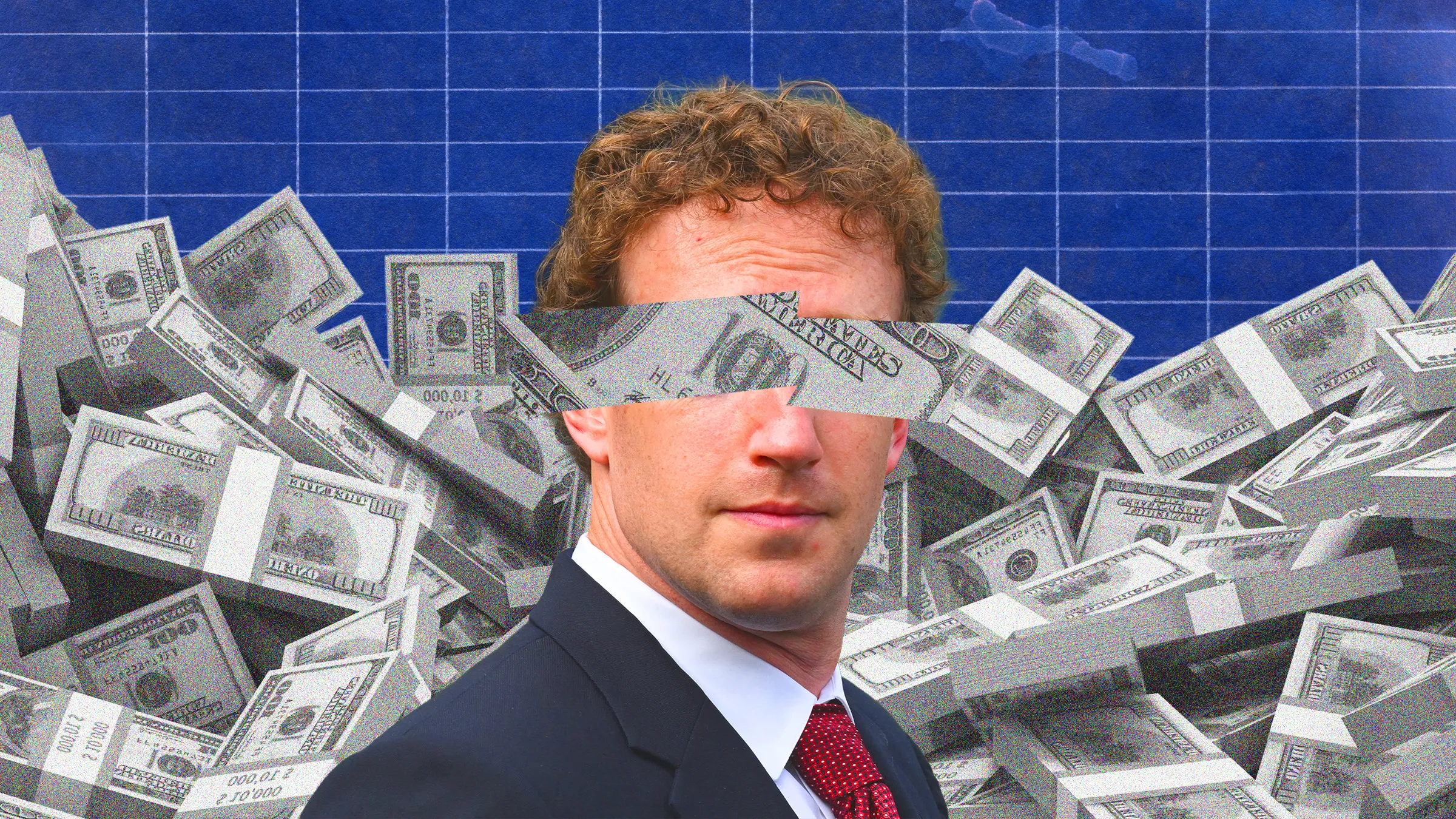
本周早些时候,新墨西哥州一名法官下令 Meta 支付 250 亿美元罚款,理由是该公司违反消费者保护法,相关违规行为可追溯至剑桥分析公司丑闻。250 亿美元是一笔巨额罚款,也是 Meta 迄今面临的最大罚款,但这仍让我们《连线》的人不禁想问:Meta 真的会感到痛吗?
Earlier this week, a New Mexico judge ordered Meta to pay a $25 billion fine for violating consumer protection laws dating back to the Cambridge Analytica scandal. $25 billion is a massive fine, the largest Meta has ever faced, but it still had us folks at WIRED wondering: Would Meta even feel the pain?
简要回顾该案:该诉讼于 2021 年提起,指控该公司违反该州《不公平行为法》,向 Meta 用户撒谎,隐瞒其处理用户数据的方式。(后来,新墨西哥州检察长还就 Meta 的内容审核政策提出指控。)9 月,陪裁团裁定该州胜诉。随后便出现了这项数十亿美元的罚款。
A quick recap of the case: Filed in 2021, the suit alleged that the company violated the state’s Unfair Practices Act by lying to Meta users about the way it handled their data. (Later, New Mexico’s attorney general also made claims against Meta’s content moderation policies.) In September, a jury ruled in favor of the state. Then came the multibillion-dollar penalty.
“这一裁决,以及检察长的执法方式,几乎让在新墨西哥州开展业务成为不可能,”Meta 首席法律官 C.J. Mahoney 在一份声明中说。“从根本上说,这起诉讼旨在对言论征税,以强制执行关于人们可以在网上说什么的新规则。我们有信心在上诉中胜诉。”Meta 的法律麻烦今年激增,以至于难以一一追踪。今年早些时候在新墨西哥州,陪裁团裁定这家社交媒体公司应支付 3.75 亿美元,因其违反该州《不公平行为法》。那场审判与儿童安全有关。案件的第二阶段导致 Meta 被命令支付 5.67 亿美元。
“This ruling, and the Attorney General's approach to enforcement, makes it all but impossible to do business in the state of New Mexico,” C.J. Mahoney, Meta’s chief legal officer, said in a statement. “At its core, this lawsuit seeks to impose a tax on speech to enforce new rules for what people can say online. We are confident we will prevail on appeal.”Meta’s legal troubles have proliferated so much this year that it’s hard to keep track of them. Earlier this year in New Mexico, a jury ruled that the social media company should pay $375 million for violating the state’s Unfair Practices Act. That trial was related to child safety. A second phase of the case resulted in Meta being ordered to pay $567 million.
与此同时,洛杉矶县高等法院认定 Meta 以及谷歌旗下的 YouTube 需对一名用户的心理健康受损负责,原因是其应用程序具有成瘾性的设计功能。原告是一名年轻女性,获赔 600 万美元;Meta 需承担其中大部分赔偿。随后在 8 月,Meta 与美国大多数州提起的里程碑式联邦案件达成和解。该诉讼再次聚焦于其应用程序中据称对儿童有害的成瘾性功能。根据该和解协议,Meta 将在 10 年内向各州支付 170 亿至 180 亿美元。
Meanwhile, a Los Angeles County superior court found Meta—and Google-owned YouTube—liable for harming a user’s mental health with the addictive design features of their apps. The plaintiff, a young woman, was awarded $6 million; Meta is on the hook for the bulk of that payment. Then in August, Meta settled a landmark federal case brought against the company by the majority of US states. This suit, once again, centered on addictive features in its apps that were alleged to be harmful to kids. As part of that settlement, Meta will pay the states between $17 and $18 billion over 10 years.
加起来,这可是一大笔数十亿美元。然而,对Meta来说,这仍然只是经营成本。路透社报道,在最近的新墨西哥州审判中,该州律师最初要求法官弗朗西斯·马修斯判令向该州支付350亿至450亿美元。这对该州来说意义重大,但这额外的200亿美元能让Meta元气大伤吗?不能。
Added up, that’s a lot of billions. And yet: It’s still just the cost of doing business for Meta. Reuters reports that in the most recent New Mexico trial, the state’s attorneys originally asked Judge Francis Mathew to award the state between $35 and $45 billion. That would’ve been significant for the state, but would that extra $20 billion have kneecapped Meta? Nope.
即使Meta被迫支付新墨西哥州判决中的最高罚款总额——高达2190亿美元,即4300万起违规行为每起5000美元,后由法官降至250亿美元——该公司也只会感到轻微刺痛。据撰文时,Meta的市值约为1.7万亿美元。其股价周四下跌,但这源于多种因素叠加,包括Meta周三的财报、公司在人工智能方面的巨额资本支出,以及人工智能股票拖累整体市场。
Even if Meta was forced to pay the total maximum fine of the New Mexico ruling—a whopping $219 billion, or $5,000 across 43 million violations, reduced by the judge to $25 billion—the company would have felt only a mild sting. As of writing, Meta is worth around $1.7 trillion. Its stock took a hit on Thursday, but that was due to a confluence of factors, like Meta’s earnings report on Wednesday, the company’s massive capital expenditures on AI, and AI stocks dragging overall.
目前,Meta没有立即面临金钱损失,法律专家告诉我,要迫使某种改变,需要事件的累积。首先,Meta存在明显的认知问题:陪审团在判决中不支持它,抗议者抨击它,甚至其员工也对公司内部政策越来越直言不讳。
At this point, with no immediate monetary damage to Meta, it would take an accumulation of events to force some kind of change, legal experts tell me. For one, Meta has a clear perception problem: Juries are ruling against it, protesters have railed against it, even its own employees have been more vocal about the company’s internal policies.
每当Meta不和解一起案件,审判中提出的证据就可能被公众审查,并用于未来针对Meta的案件,代表新墨西哥州出庭的外部律师事务所DiCello Levitt的合伙人科班·罗兹表示。“此次审判中,我们能够将超过100件证据纳入公开记录,这些东西自剑桥分析公司事件以来一直保密超过十年,”罗兹对《连线》杂志表示。
Every time Meta doesn’t settle a case, the evidence presented during trial can be scrutinized by the public and used in future cases against Meta, says Corban Rhodes, partner at DiCello Levitt, the outside law firm representing New Mexico in this case. “This trial included more than 100 exhibits that we were able to put into public record, things that had been kept secret for more than a decade since Cambridge Analytica,” Rhodes told WIRED.
其中一份文件是时任首席运营官谢丽尔·桑德伯格在2018年剑桥分析公司丑闻曝光几天后发给几位同事的一封电子邮件。桑德伯格写道:“我们面临的最大问题——我真的需要让每个人都知道这一点——是有一百万开发者拥有数据访问权限。在未来一个月和一年里,我们将面临许多、许多、许多类似的时刻。”
One such item is a 2018 email that then COO Sheryl Sandberg sent to a few colleagues days after the Cambridge Analytica scandal broke. Sandberg wrote, “The single biggest issue we face—and I really need everyone to know this—is that there were a MILLION developers with access to the data. We are going to have many, many, many more moments like this in the next month and year.”
有早期迹象表明,私人保险公司可能开始不愿承担科技公司法律辩护的费用。一些专家认为,保险公司最终甚至可能成为人工智能事实上的治理者,因为它们“将责任注入人工智能的设计、开发和部署中,作为获得保险的条件”。Meta在3月亲身体验了这一点,当时特拉华州一名法官裁定,保险公司没有义务为Meta针对针对它提起的成千上万起诉讼进行辩护。
There are early signals that private insurers may start balking at having to cover the cost of a tech company’s legal defenses. Some experts are suggesting that insurance companies could even end up being de facto governance for AI, as they “inject responsibility into how AI is designed, developed, and deployed as a condition for obtaining insurance.”Meta learned this firsthand in March, when a Delaware judge ruled that insurers do not have a duty to defend Meta against the literal thousands of lawsuits being brought against it.
并没有一个明确的数字界限,一旦达到Meta就会突然变得脆弱——仅凭法律处罚,该公司不太可能倒闭。但波士顿学院法学院研究公司法、并购和交易法的法学教授布莱恩·奎因表示,如果股东或董事会成员不再将公司视为某种无生命实体,而是开始关注做出错误决策的个别董事或高管,问题可能就会出现。比如,那些不断出现在诉讼中的人。
There’s no well-defined number at which Meta suddenly becomes vulnerable—the company is unlikely to ever fold from legal penalties alone. But problems could crop up if shareholders or board members stop seeing the company as some inanimate entity and start to focus on the individual directors or officers who have been making bad decisions, says Brian Quinn, a law professor at Boston College Law School who studies corporate law, M&A, and transaction law. Like, say, the people who keep appearing in lawsuits.
“根据现行赔偿法的规定,公司内部人员被认定违法,并不一定意味着他们必须承担责任,”奎因说。“人们可以认为他们是出于善意,或者是为了公司的最佳利益行事。但如果股东站出来说,等等,不仅有证据表明这位董事或高管违法,而且在同一组事实中已经出现了七次,问题就开始出现了。”奎因说,随着这类结果大量积累,一些愤怒的股东可能会站出来说,公司不应再为这些董事提供赔偿。那时可能就会出现变化,因为 Meta 的高管将不再受到如此充分的保护。
“The way that indemnification law is written right now, the fact that a person in a company was found to have violated a law doesn’t necessarily make them liable. It can be believed that they were acting in good faith, or in the best interest of their company,” Quinn says. “But problems start to arise if shareholders say, wait a minute, there’s not only evidence that this director or operator is violating the law, but it has appeared in the same set of facts seven times now.”After a huge accumulation of these kinds of results, Quinn says, some angry shareholders might stand up and say the corporation should no longer be able to indemnify those directors. That’s when you might see change, because Meta’s executives would no longer be as protected.
最后,由于诉讼往往滞后于颠覆社会的技术,Meta 的法律麻烦很可能远未结束——尤其是在它更深地涉足 AI 领域之际。“监管机构和法院长期以来一直关注社交媒体 1.0 和 2.0 时代的影响,我认为我们正在告别那个时代,”罗兹说。“我预计下一波诉讼将聚焦于 AI。”这是 Steven Levy 和 Lauren Goode 的 Backchannel 通讯的一个版本。
Finally, since litigation is often behind the curve on society-disrupting technology, Meta’s legal woes are likely far from over—especially as it wades deeper into AI. “Regulators and courts have for a long time been focused on the impact of social media 1.0 and 2.0, and I think we’re moving on from that era,” says Rhodes. “I expect the next wave of litigation will be focused on AI.”This is an edition of Steven Levy’s and Lauren Goode's Backchannel newsletter.