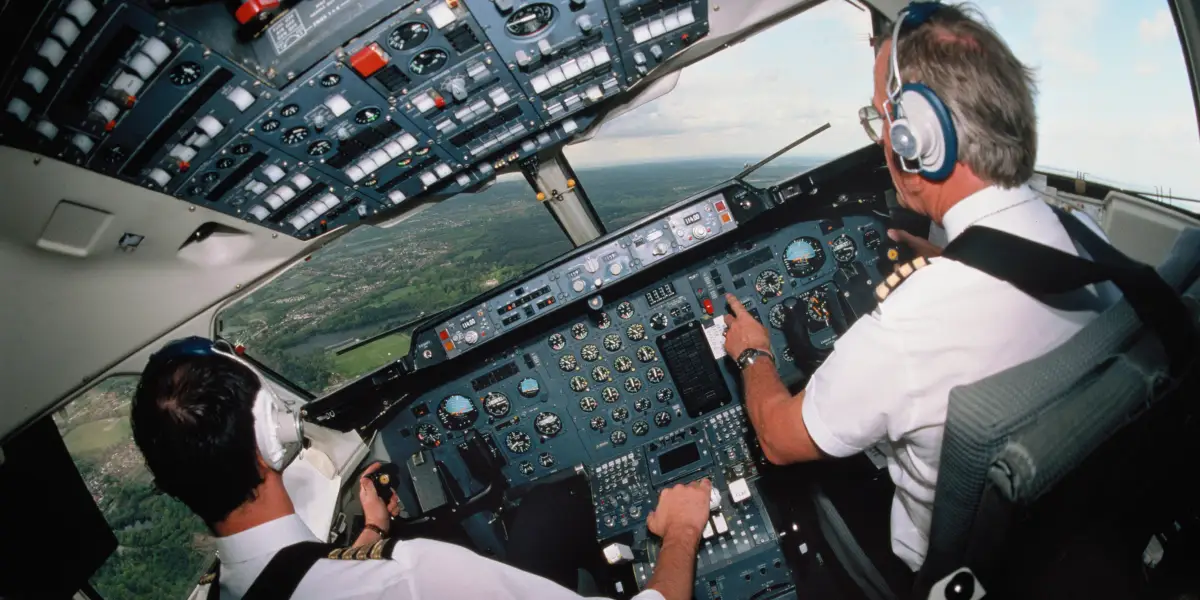
几十年来,飞行员一直依赖自动驾驶仪。他们的经验或许能为越来越依赖人工智能的劳动者提供借鉴。伦敦国王学院助理教授、“认知投降”广受引用研究的共同作者史蒂芬·肖将飞行员对自动驾驶的依赖,与劳动者将思考外包、把工作交办给人工智能进行了类比。
Pilots have relied on autopilot for decades. Their experience could offer a lesson for workers increasingly relying on AI. Steven Shaw, an assistant professor at King's College London and coauthor of a widely cited study on "cognitive surrender," drew a parallel between pilots' reliance on automation and workers outsourcing their thinking and delegating their work to AI.
肖在最近举行的牛津基因峰会(OxGen Summit)的一个小组讨论上说:“我们在飞机上使用自动驾驶仪已经有很长、很长的时间了。因此,他们先学习手动驾驶,然后再学会战略性地使用自动驾驶仪。”
"We've had autopilot in planes for a very, very long time," Shaw said, speaking at a recent OxGen Summit panel. "So they learn to fly manually first, and then they learn to use autopilot strategically."
一些联邦航空指导意见鼓励飞行员偶尔关闭自动驾驶仪,以保持手动飞行技能。这有着长期的记录。美国联邦航空管理局在2013年的一份安全警报中警告称,“持续使用自动飞行系统可能导致飞行员迅速将飞机从非预期状态恢复的能力退化”。该机构在2017年的一份警报中重申了手动飞行重要性,建议航空公司在条件允许时鼓励飞行员定期在没有自动驾驶仪的情况下进行练习。
Some federal aviation guidance encourages pilots to occasionally switch off autopilot to maintain their manual flying skills. There is a long track record of this. In a 2013 safety alert, the Federal Aviation Administration warned that "continuous use of autoflight systems could lead to degradation of the pilot's ability to quickly recover the aircraft from an undesired state." The agency reiterated the importance of manual flying in a 2017 alert, recommending that airlines encourage pilots to practice without autopilot periodically when conditions permit.
肖在谈到反复将认知任务外包给人工智能的危险时说:“即使是专家也面临技能退化的风险。”
"Even experts are at risk of deskilling," Shaw said, referring to the dangers of repeatedly outsourcing cognitive tasks to AI.
在肖发出此项警告之际,一些科技领袖、人工智能研究人员和政治人物纷纷发出警告,称过度依赖人工智能可能会削弱劳动者的基本认知能力。
Shaw's warning comes as some tech leaders, AI researchers, and politicians have cautioned that overreliance on AI could weaken workers' underlying cognitive abilities.
众议员亚历山大·奥卡西奥-科尔特斯周四在缅因州“完美大学”举办的“学生对决亿万富翁”市民大会上发言时警告称,“人工智能的目标是夺走你的思想、夺走你的思考能力,好让你对机器产生依赖”。
Speaking at More Perfect University's "Students vs. Billionaires" town hall in Maine on Thursday, Rep. Alexandria Ocasio-Cortez warned that "AI's goal is to take your thoughts away from you, your ability to think away from you so that you become dependent on a machine."
OpenAI首席执行官萨姆·奥尔特曼今年7月表示,人工智能最被忽视的风险之一是“认知萎缩”,而法国人工智能初创公司米斯特拉尔公司首席执行官阿瑟·门施去年表示,该技术最大的风险可能是“技能退化”。
OpenAI CEO Sam Altman said in July that one of AI's most overlooked risks was "cognitive atrophy," while Arthur Mensch, CEO of French AI startup Mistral, said last year that the technology's biggest risk could be "deskilling."
早期研究表明,人们多么容易将思考外包给人工智能。人工智能研究人员兼理论神经科学家维维安·明今年3月告诉《商业内幕》网站,她的一项涉及72名参与者的实验发现,大约90%至95%的人依赖人工智能生成答案,或者用它来验证自己的假设,而不是去挑战和深化他们的思考。她说:“压倒性的趋势是替代。”
Early research is showing how readily people outsource their thinking to AI. Vivienne Ming, an AI researcher and theoretical neuroscientist, told Business Insider in March that one of her experiments, involving 72 participants, found that roughly 90% to 95% either relied on AI to generate answers or used it to validate their assumptions, rather than challenge and deepen their thinking. "The overwhelming trend is substitution," she said.
同样,肖的研究表明,危险在于人们越来越多地接受人工智能的答案,而不再进行批判性思考。在涉及1372名参与者的实验中,即使答案是故意错误的,人们也有近80%的时间接受人工智能的建议。
Similarly, Shaw's research suggests that the danger is that people increasingly accept AI's answers without thinking critically. In experiments involving 1,372 participants, people accepted AI recommendations nearly 80% of the time even when the answers were deliberately incorrect.
肖将这种现象称为“认知投降”。他提出的避免这种情况的建议很简单:在向人工智能寻求帮助之前,先培养你自己的判断力。
Shaw calls this phenomenon "cognitive surrender." His advice for avoiding it is straightforward: develop your own judgment before asking AI for help.
他在牛津基因峰会的小组讨论中说:“先思考,然后再去输入提示词。”他警告说,从人工智能开始可能会缩小人们独立思考的想法范围。
"Just think first and then go to the prompt," he said during the OxGen Summit panel. Starting with AI, he warned, can narrow the range of ideas people consider independently.
其他专家也提出了类似的建议。普华永道前人工智能采用负责人吉塔·拉詹此前告诉《商业内幕》网站,她在利用人工智能核实事实和对自己的工作提出质疑之前,会先自己写初稿。
Other experts have offered similar advice. Geetha Rajan, a former AI adoption leader at PwC, previously told Business Insider that she writes her own first drafts before using AI to check facts and challenge her work.
数字营销公司首席执行官瑞安·代斯主张实行“10-80-10”原则:人类处理一项任务最初的10%,人工智能承担中间的80%,人类再回来完成最后的10%,以行使判断力并完善结果。
Ryan Deiss, CEO of DigitalMarketer, advocates a "10-80-10" rule: humans handle the first 10% of a task, AI takes on the middle 80%, and humans return for the final 10% to exercise judgment and refine the result.