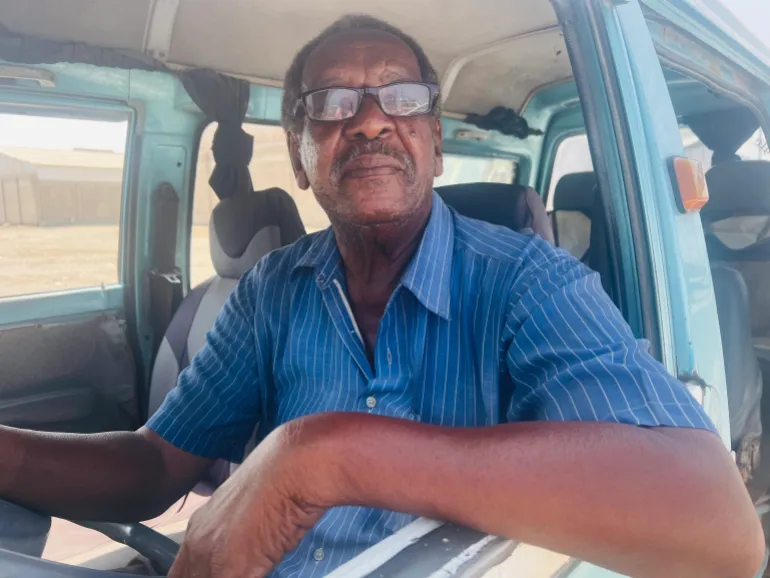
阿兹哈里·穆罕默德每天驾驶小巴,载着八名乘客,从苏丹港的沙加尔社区往返市中心七趟。
Azhari Mohamed drives his minibus and eight passengers seven times a day from the Shagar neighbourhood in the Port of Sudan to the city centre and back again.
但尽管工作时间很长——从早上6点到晚上9点——城市里的燃料短缺让这位60岁的司机难以维持生计。
But despite the long hours – working from 6am to 9pm – fuel shortages in the city have made it difficult for the 60-year-old to make a living.
阿兹哈里的小巴每天消耗三加仑(11升)汽油,花费约10.5万苏丹镑(按苏丹平行市场汇率折合每天约11.30美元)。随着燃料越来越难获取,他现在跑两天车,第三天就得去排队买油。
Azhari’s minibus uses three gallons (11 litres) of petrol a day, costing him about 105,000 Sudanese pounds ($11.30 a day, according to Sudan’s parallel-market exchange rate). With fuel increasingly difficult to obtain, he now spends two days on the road and a third day queuing for fuel.
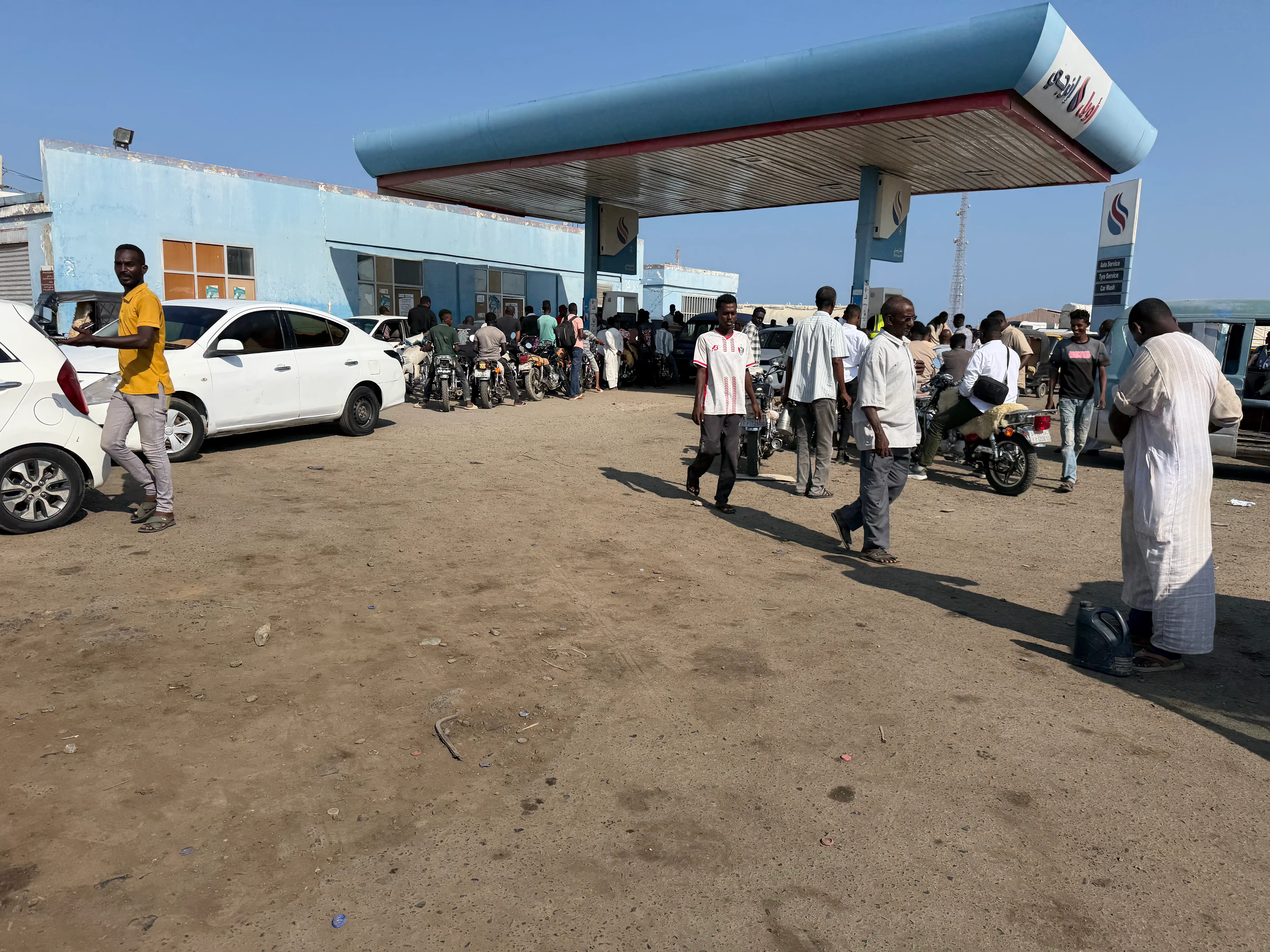
当他需要给小巴加满油时,排队等待可能超过五个小时,而且经常轮到他时汽油已经卖完。遇到这种情况,他只能去另一家加油站重新排队,希望能加上油。
He can spend more than five hours waiting in line when he needs to fill the tank of his minibus and often finds petrol has run out before his turn comes. When that happens, he goes to the back of the queue at another petrol station hoping to fill up there.
短缺导致油价上涨,在喀土穆以南的杰济拉州,一加仑(3.8升)汽油现在要卖4万苏丹镑(约4.30美元),而在苏丹港则是每加仑3.5万镑(约3.80美元)。
The shortages have led to price rises with a gallon (3.8 litres) of petrol now costing 40,000 Sudanese pounds ($4.30) in Gazira State, south of Khartoum, while in Port Sudan it is 35,000 pounds ($3.80) a gallon.
“我们因为燃料短缺已经无法工作了。运费不再足以覆盖车辆运营成本和我们的家庭开支,”阿兹哈里告诉半岛电视台。他说,排队买油花费的漫长时间本可用来赚钱养家。
“We can no longer work because of the fuel shortages. The transport fares are no longer enough to cover the cost of running the vehicle and our household expenses,” Azhari told Al Jazeera. He says the long hours spent queueing for petrol is time he could spend earning money to support his family.
“我每天要花大量时间等待加油,所以不得不在晚上加班,弥补白天损失的时间,”他说。“我的生计靠每天的收入维持。”扣除车辆运营成本后,阿兹哈里每天只剩5万苏丹镑(约5.40美元),勉强够支付家庭开销,家里还有妻子和上大学的女儿,需要资助她的学费和日常花销。
“I spend long hours of the day waiting to refuel, so I have to work extra hours at night to make up for the time I lose during the day,” he said. “My livelihood depends on what I earn each day.”After subtracting his vehicle’s operating costs, Azhari has just 50,000 Sudanese pounds ($5.40) left a day, barely enough to cover the needs of his family, which includes his wife and daughter who is at university and needs support for her tuition fees and daily expenses.
“我们只需要有燃料可用,这样我们才能工作,”他说。“如果有燃料可用,我们就不会面临这个障碍。”由于这场危机,负责监管公共与私营运输服务的苏丹运输商会本月将城际巴士票价上调了40%,小巴票价上调了30%。
“We just need fuel to be available so we can work,” he said. “If fuel is available, we will not face this obstacle.”Due to the crisis, Sudan’s Transport Chambers Union, which regulates public and private transport services, this month raised intercity bus fares by 40% and minibus fares by 30%.
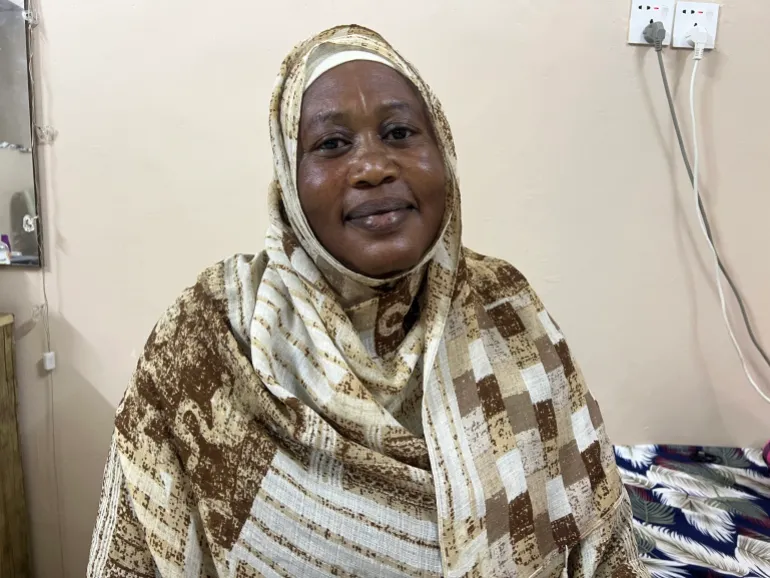
来自苏丹港乌姆古拉街区的阿齐扎·易卜拉欣,靠做清洁工养活四个孩子。对于这位38岁的妇女来说,光是坐公交车上班就已成为巨大的经济负担,她因路费高昂已将工作天数削减至每周三天。
Aziza Ibrahim from the Umm al-Qura neighbourhood of Port Sudan, works as a cleaner to support her four children. Just getting to work by bus has become a huge financial burden for the 38-year-old, who has cut back her work days to three times a week due to the high travel costs.
战前,从她家到市中心主车站的车费为每位乘客700苏丹镑(约合0.08美元)。此后票价飙升,部分线路涨至2500镑(约合0.27美元),其他线路则收取2000镑(约合0.22美元)。
Before the war, a journey from her home to the main transport station in the city centre cost 700 Sudanese pounds ($0.08) per passenger. Fares have since risen to 2,500 pounds ($0.27) on some routes, while others charge 2,000 pounds ($0.22).
“我一周去三天上班,是为了减少交通开销。我往返家里和工作地点一天需要1.1万镑(约合1.18美元),”她告诉半岛电视台。
“I go to work three days a week to reduce transport costs. I need 11,000 pounds ($1.18) a day for the round trip between my home and workplace,” she told Al Jazeera.
交通成本如今吞噬了阿齐扎月薪40万镑(约合43美元)的近一半,昂贵的糖尿病治疗费用则是另一笔经济负担。
Transport costs now consume nearly half of Aziza’s monthly salary of 400,000 pounds ($43), while costly treatment for her diabetes is another financial burden.
“有时我不得不借钱才能去上班。月初发工资时我会还上,但工资勉强只够维持家庭开销,”她告诉半岛电视台。
“Sometimes I have to borrow money just to be able to go to work. I repay it at the beginning of the month when I receive my salary, which is barely enough to cover my family’s needs,” she told Al Jazeera.
据联合国开发计划署称,战争已将苏丹的平均收入水平推回至上世纪90年代的水平。
According to the United Nations Development Programme, the war has pushed average incomes in Sudan back to levels last seen in the 1990s.
部分原因在于内战对苏丹石油行业的冲击。苏丹武装部队(SAF)与对手准军事组织快速支援部队(RSF)的战斗于2023年4月15日爆发。
That is partly due to the effects of the civil war on Sudan’s oil sector. Fighting between the Sudanese Armed Forces (SAF) and rival paramilitary Rapid Support Forces (RSF) began on April 15, 2023.
去年,能源与石油部估算战争相关损失达200亿美元。世界银行报告称,对巴利拉油田的袭击扰乱了向喀土穆炼油厂的供应,该炼油厂此前满足了全国约60%的汽油和液化石油气需求。
Last year, the Ministry of Energy and Petroleum estimated war-related losses at $20 billion. The World Bank has reported that attacks on the Balila oil field disrupted supplies to the Khartoum refinery, which previously met about 60% of the country’s demand for petrol and liquefied petroleum gas.
战争破坏导致石油产量大幅下降,使苏丹不得不依赖进口,而全球燃料危机推高了天然气、汽油、柴油等商品的价格。
War damage has seen a sharp decrease in oil production, leaving Sudan reliant on imports amid the global fuel crisis that has pushed up prices of gas, petrol and diesel, among other commodities.
经济分析师西迪·奥哈吉表示,政府对石油进口商的要求也加剧了短缺。这些要求包括规定进口商必须在中央银行存入200公斤黄金,并拥有燃油储存设施,才能在苏丹开展业务。部分进口商无法满足这些要求,被迫退出市场,从而减少了供应。
Economic analyst Sidi Ohaj said that the government requirements for petroleum importers have also contributed to the shortages. They include a stipulation that importers must deposit 200kg of gold in the Central Bank and own fuel storage facilities in order to operate in Sudan. Some importers have been unable to meet those requirements, forcing them out of the market which reduces supply.
“目前危机的原因之一是政府决定规范石油进口公司的运营,”西迪告诉半岛电视台。“一些公司未能满足要求,导致其退出市场。这使得供应相对于需求减少。”他表示,政府需要紧急简化进口程序以增加国内供应,短缺正在影响更广泛的经济。
“One of the causes of the current crisis is the government’s decision to regulate the operations of petroleum import companies,” Sidi told Al Jazeera. “Some companies did not meet the requirements, which led to their exit from the market. This reduced supply relative to demand.”The government needs to urgently ease import procedures to increase domestic supplies, he said, with shortages affecting the wider economy.
但随着美国和伊朗之间的战争持续扰乱全球能源市场,短期内局势好转的希望渺茫。
But as the war between the United States and Iran continues to disrupt global energy markets, there is little hope the situation will improve any time soon.
“战争的持续,特别是无人机袭击威胁苏丹全境基础设施,是石油部门面临的主要挑战之一,”西迪告诉半岛电视台。能源危机也导致物价上涨,影响了民众的购买力和企业的利润。
“The continuation of the war [in Sudan], particularly drone attacks that threaten infrastructure across Sudan, is one of the main challenges facing the oil sector,” Sidi told Al Jazeera. Prices have also risen due to the energy crisis, impacting the purchasing power of citizens and profits of businesses.
艾哈迈德·哈吉是恩图曼市场的一名本地商贩,销售凡士林等护肤产品,并自行包装。他表示,高昂的能源价格几乎增加了他业务各个领域的成本。
Ahmed al-Haj is a local trader in Omdurman market who sells skincare products, such as petroleum jelly, which he packages himself . He said high energy prices are costing almost all areas of his business.
“我销售的产品原材料是进口的。柴油和汽油价格上涨,使每吨货物的运输成本增加了30%到50%,”艾哈迈德告诉半岛电视台。
“The raw materials for the products I sell are imported. Higher diesel and petrol prices have increased the cost of transporting a tonne of goods by 30 to 50 percent,” Ahmed told Al Jazeera.
“这种增加随后反映在产品价格上。”当停电迫使他使用燃油发电机进行加热或包装时,额外的燃油成本增加了他的日常开支。
“That increase is then reflected in the price of the products.”When electricity cuts force him to use a fuel-powered generator for heating or packaging, the additional fuel costs add to his daily bills.
在恩图曼市内的送货费用,此前为5000苏丹镑(0.70美元),现在则在1万至1.2万镑(1.07美元至1.29美元)之间。由于运输成本高昂,送货到其他州已变得不可能。
Deliveries within Omdurman, which previously cost 5,000 Sudanese pounds ($0.70) now cost between 10,000 and 12,000 pounds ($1.07 and $1.29). Reaching customers in other states has become impossible due to the high transport costs.
他补充道:“运输和分销工人也减少了运输趟数,导致货物堆积在商户手中。”
“Transport and distribution workers have also reduced the number of trips they make, leading to goods piling up at traders’ premises,” he added.