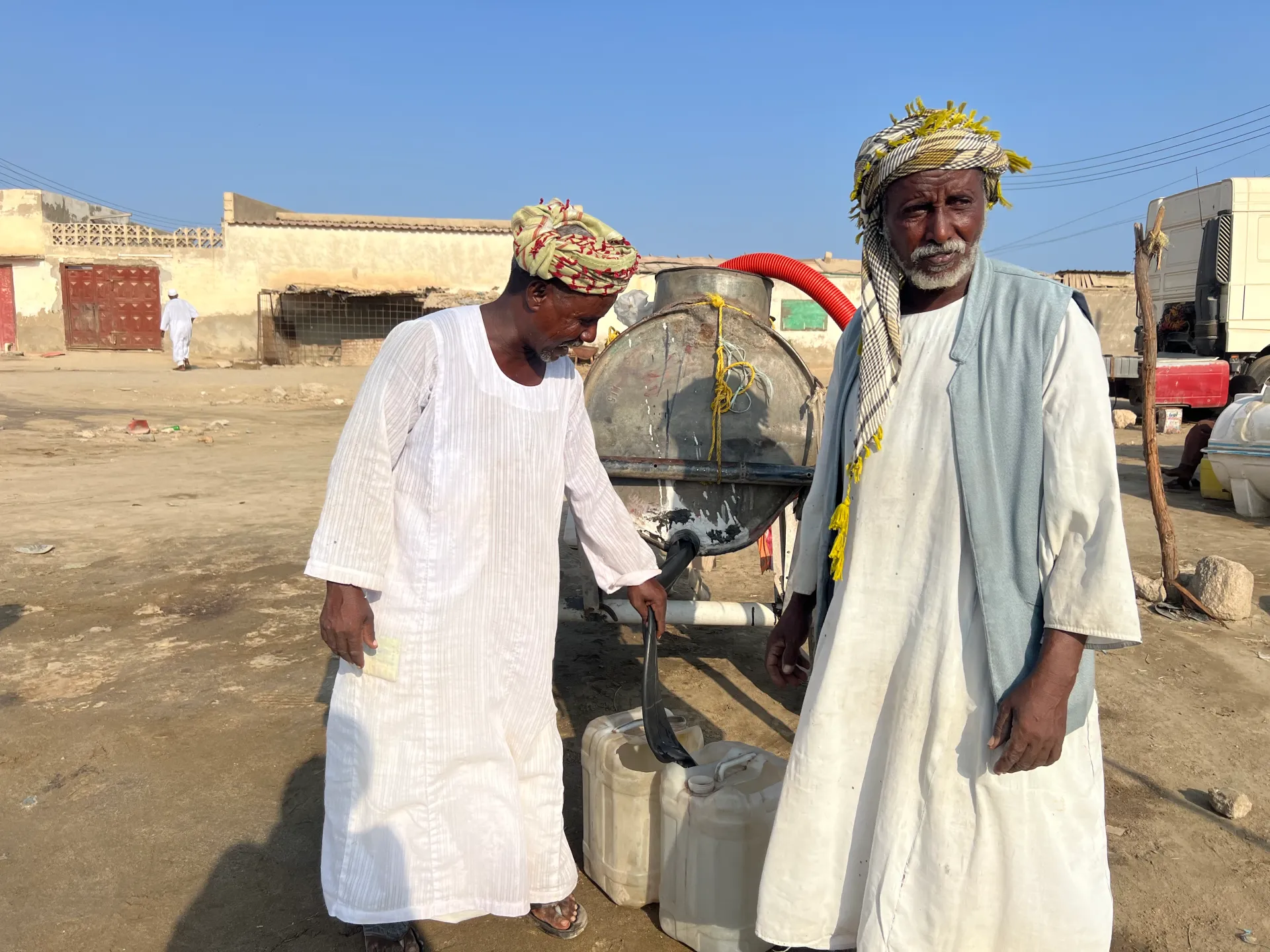
阿米娜·哈利法拉每天要花费1万苏丹镑(按平行市场汇率约合1美元)购买自己和四个孩子所需的水。按30天一个月计算,这笔开支达30万苏丹镑(约合30美元)——相当于她全部的月薪。
Every day, Amina Khalafallah spends 10,000 Sudanese pounds ($1 at the parallel market rate) on water for herself and her four children. Over a 30-day month, that amounts to 300,000 pounds ($30) – the equivalent of her entire monthly salary.
哈利法拉居住在苏丹东部港口城市苏丹港的代伊马约社区,家中未接入自来水管网。她只能依靠街头摊贩供水,摊贩售价为每18升1000苏丹镑(约合0.10美元)。
Khalafallah lives in the Deim Mayo neighbourhood of Port Sudan, in eastern Sudan, where her home is not connected to a piped water network. Instead, she depends on street vendors, who charge 1,000 pounds ($0.10) for 18 litres.
哈利法拉在一家私营机构的食堂工作,丈夫在另一个州务工,有能力时会寄钱补贴家用。
Khalafallah works in a cafeteria at a private institution, while her husband works in another state and sends money to help her out when he can.
夫妻俩凑在一起勉强维持生计,但哈利法拉表示,她经常不得不借钱度日。根据联合国开发计划署(UNDP)的数据,苏丹已持续三年多的战争已将人均收入推回至20世纪90年代初的水平,哈利法拉的遭遇在苏丹并非个例。炎热月份带来额外挑战,水价上涨,摊贩也更难找到。
Between them, the family barely scrambles enough money to get by, but Khalafallah says she often has to borrow money. It’s a typical story in Sudan, where, according to the United Nations Development Programme (UNDP), the country’s more than three-year-long war has pushed average incomes back to levels last seen in the early 1990s. The hotter months bring additional challenges, as water prices rise and vendors become harder to find.
哈利法拉告诉半岛电视台:“夏天我们会优先留出买水钱,然后才考虑其他家庭开销,哪怕因此不得不放弃一些必需品。”
“We make sure to set aside money for water in the summer before covering our other household needs, even if that means going without some essentials,” Khalafallah told Al Jazeera.
据非洲开发银行(AfDB)称,获得安全用水是苏丹最迫切的需求之一,数百万儿童面临水源性疾病的威胁。
According to the African Development Bank (AfDB), access to safe water is one of Sudan’s most urgent needs, with millions of children at risk of waterborne diseases.
苏丹港相对免受困扰该国其他地区战火的波及,但战乱导致的流离失所者涌入,给本已脆弱的基础设施带来额外压力。非洲开发银行报告称,该市供水量不足以满足40%的需求。
In Port Sudan, relatively safe from the fighting that has plagued other areas of the country, the arrival of people displaced by the war has put additional pressure on already fragile infrastructure. The AfDB has reported that the city’s water supply was meeting less than 40 percent of demand.
苏丹港面临的主要问题之一是阿尔巴特大坝垮塌。该大坝位于苏丹港西北部的红海山区,曾满足这座沿海城市一半的日常用水需求。
One of the major issues Port Sudan has faced is the collapse of the Arbaat Dam. Located in the Red Sea Hills northwest of Port Sudan, it once supplied half of the coastal city’s daily water needs.
但2024年8月,强降雨和洪水导致大坝垮塌,摧毁了下游的村庄,并损坏了管道和水井。大坝垮塌后,整个社区都依赖昂贵的卡车运水。
But in August 2024, heavy rainfall and flooding caused the dam to collapse, destroying villages downstream and damaging pipelines and wells. As a result of the collapse entire neighbourhoods are dependent on expensive water deliveries by truck.
在苏丹,一种当地称为“卡洛”或“萨卡”的驴拉水车被用来运水。每辆车大约装载250升水【法蒂玛·埃达姆/半岛电视台】。
水贩成本上涨。30岁的艾哈迈德·奥斯曼过去三年一直在一个供水站工作,该供水站为向家庭送水的街头水贩供水。
A donkey-drawn cart, locally known as a ‘karo’ or ‘saqqa’, used to transport water in Sudan. Each cart carries about 250 litres [Fatima Edam/Al Jazeera] Rising costs for water vendors Ahmed Osman, 30, has spent the past three years working at a water distribution station that supplies street vendors who deliver water to households.
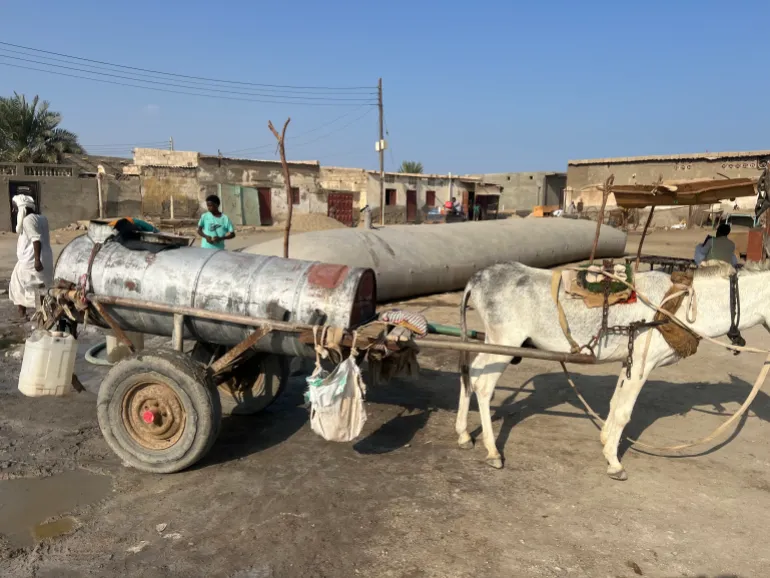
奥斯曼说,2023年4月苏丹战争爆发时,他向水贩收取4000苏丹镑(0.40美元),为他们装满一辆至少装载250升水的驴拉水车。
When Sudan’s war began in April 2023, Osman said he charged vendors 4,000 Sudanese pounds ($0.40) to fill a donkey-drawn cart carrying at least 250 litres of water.
他说,此后由于运营成本不断上升,尤其是将水运到他的供水站所需的燃料费用,这些价格大幅上涨。
Those prices have since risen sharply, he said, because of increasing operating costs, particularly the fuel needed to transport water to his distribution station.
“一辆装载5万升水的运水车现在要花费150万苏丹镑(150美元),而战前约为45万苏丹镑,”奥斯曼告诉半岛电视台。
“A water tanker carrying 50,000 litres of water now costs 1.5 million Sudanese pounds [$150], compared with about 450,000 pounds before the war,” Osman told Al Jazeera.
奥斯曼将水储存在储水罐中,然后再泵入水贩的车里。他收取1.6万苏丹镑(1.60美元),为他们装满一辆装载250升水的水车。
Osman keeps the water in storage tanks before pumping it into the vendors’ carts. He charges 16,000 pounds ($1.60) to fill a cart carrying 250 litres.
扣除开支后,奥斯曼通常每天能赚取约7万苏丹镑(7美元)的利润,由他和他的合伙人平分。
After his expenses, Osman typically makes a profit of about 70,000 pounds ($7) per day, split between him and his partner.
艾哈迈德·奥斯曼在苏丹港代姆马约街区的一个供水站工作,为街头水贩供水【法蒂玛·埃达姆/半岛电视台】。
修复工作尚未结束供水短缺。修复工作已恢复了部分受损供水网络。
Ahmed Osman works at a water distribution station supplying street vendors in the Deim Mayo neighbourhood of Port Sudan [Fatima Edam/Al Jazeera] Repairs yet to end water shortages Rehabilitation work has restored parts of the damaged water network.
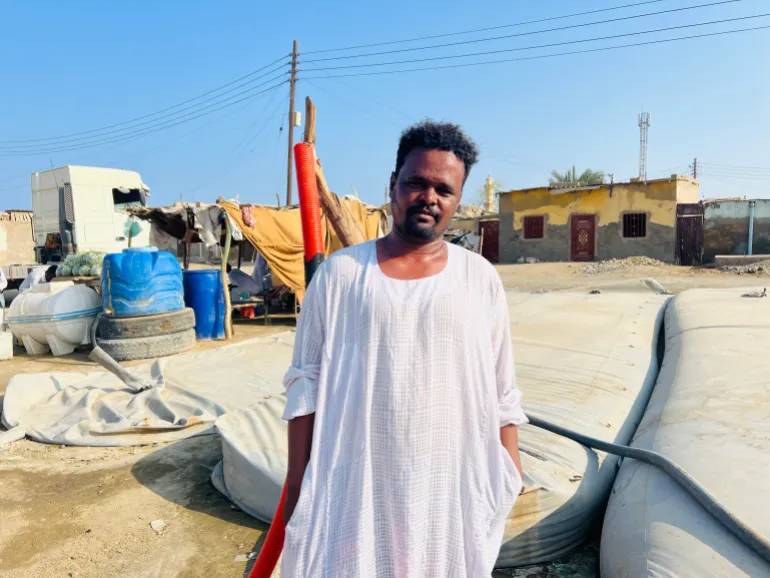
据联合国开发计划署称,修复工作包括钻探或修复15口井、铺设17公里(10.5英里)的新管道,以及安装太阳能水泵。联合国开发计划署表示,修复后的系统可为近23万人供水。
According to the UNDP, the restoration work has included drilling or rehabilitating 15 boreholes, laying 17 kilometres (10.5 miles) of new pipelines, as well as installing solar-powered pumps. The UNDP said the restored system could supply water to nearly 230,000 people.
然而,这仍不足以向苏丹港全城供水,联合国开发计划署估计该市目前人口已达100万。
However, that would still not be enough to supply water to all of Port Sudan, which the UNDP estimates to now have a population of one million people.
因此,还需要其他项目来满足居民的用水需求——包括非洲开发银行和联合国儿童基金会于6月启动的一项计划,旨在为该市多达75万人扩大安全用水获取渠道。
Other projects are therefore necessary to meet the water needs of residents – including one launched in June by the AfDB and UNICEF, which intends to expand access to safe water for up to 750,000 people in the city.
缺水威胁公共卫生 苏丹港教学医院急诊科医学主任埃马德·哈菲兹告诉半岛电视台,水危机对公共卫生构成严重威胁,增加了水源性疾病的风险,并使家庭更难维持基本卫生。
Water shortages threaten public health Emad Hafez, medical director of the emergency department at Port Sudan Teaching Hospital, told Al Jazeera the water crisis poses serious risks to public health, increasing the risk of waterborne diseases and making it harder for families to maintain basic hygiene.
他警告称,供水中断可能迫使家庭依赖未经处理的水源,增加霍乱和其他腹泻病的风险,尤其是在雨季和拥挤的流离失所者营地中。
He warned that disruptions to water supplies can force families to rely on untreated water, increasing the risk of cholera and other diarrhoeal diseases, particularly during the rainy season and in overcrowded displacement camps.
哈菲兹说:“缺水也会使家庭更难维持足够的卫生条件,增加皮肤感染和其他卫生相关疾病的风险。同时,将水储存在敞口容器中会滋生蚊虫,增加疟疾和登革热等媒介传播疾病的风险。” 哈菲兹表示,缺水还威胁医疗服务,解释说医院需要可靠的供水用于感染预防、清洁和患者护理。
“Water shortages can also make it harder for families to maintain adequate hygiene, increasing the risk of skin infections and other hygiene-related illnesses,” Hafez said. “Meanwhile, storing water in uncovered containers can create breeding sites for mosquitoes, raising the risk of vector-borne diseases such as malaria and dengue fever.”Water shortages also threaten healthcare services, Hafez said, explaining that hospitals require reliable supplies for infection prevention, cleaning and patient care.
他说:“除了直接的健康后果外,水资源不安全还会通过破坏农业活动、给本已脆弱的家庭带来额外经济压力,加剧粮食短缺和营养不良。五岁以下儿童和孕妇对营养不足的影响尤为敏感。”
“Beyond its immediate health consequences, water insecurity can worsen food shortages and malnutrition by disrupting agricultural activities and placing additional financial pressure on already vulnerable households,” he said. “Children under five and pregnant women are particularly vulnerable to the effects of inadequate nutrition.”