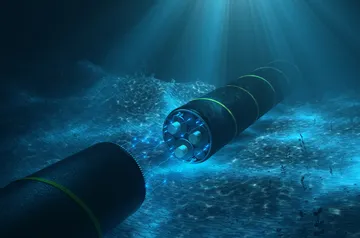
当澳大利亚国防部长理查德·马尔斯今年早些时候在新加坡举行的一个地区防务聚会上将海床描述为战场时,他在向已经信服的人群宣讲。海底光缆的安全——它们承载着超过95%的数据流量和每日数万亿美元的金融交易——早已成为与会高级军事将领、地缘政治分析师和政府部长们关注的重中之重。
When Australia’s Defence Minister Richard Marles described the seabed as a battlefield at a regional defense gathering in Singapore earlier this year, he was preaching to the converted. The security of undersea cables — which carry more than 95% of data flows and trillions of dollars of daily financial transactions — was already top of mind for the senior military brass, geopolitical analysts and government ministers in the room.
澳大利亚、英国和美国迅速宣布了一项新项目,旨在到2027年开发水下无人机技术以保护光缆,而新加坡则启动了一个涵盖东南亚、欧洲、中东和大洋洲的17国框架,以探索在关键基础设施领域的防务合作。
A new project by Australia, the UK and the US was quickly announced to develop underwater drone technology to protect cables by 2027, while Singapore launched a 17-country framework covering Southeast Asia, Europe, the Middle East and Oceania to explore defense cooperation on critical infrastructure.
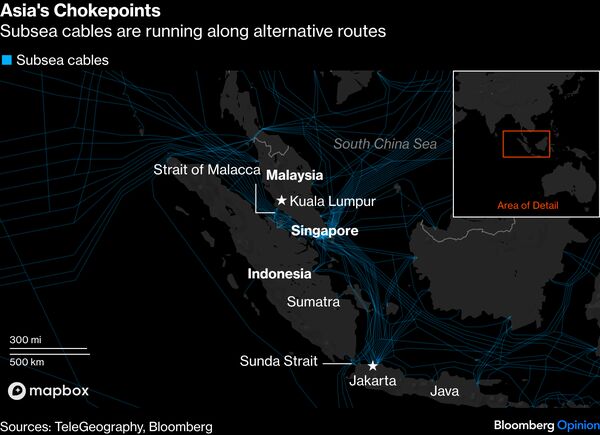
但当各国竞相保卫现有网络时,构建东南亚数字架构的公司面临着另一个挑战:规避海上瓶颈以及中国不断扩大的海上存在所带来的风险。马六甲海峡——位于印度尼西亚、马来西亚和新加坡之间的狭窄水道——因穿越该走廊的光缆高度集中而显得尤为脆弱。
But while nations are racing to defend existing networks, the companies building Southeast Asia’s digital architecture face a different challenge: avoiding maritime bottlenecks and the risk posed by China’s expanding sea presence. The Strait of Malacca, the narrow passage between Indonesia, Malaysia and Singapore, is particularly vulnerable due to the sheer concentration of cables traversing the corridor.
马六甲海峡早已被视为印太地区最关键的咽喉要道——按价值计算,它处理着约21%的全球海上贸易——如今,主要的私营海底光缆项目正越来越多地绕开这一海峡。例如,谷歌的TalayLink将通过印度洋连接澳大利亚和泰国,走线位于巽他海峡以西,避开了拥挤的走廊。
Already considered the Indo-Pacific’s most critical chokepoint — it handles about 21% of global maritime trade by value — the Strait is increasingly being bypassed by major private subsea cable projects. Google’s TalayLink, for instance, will connect Australia and Thailand via the Indian Ocean following a route west of the Sunda Strait that avoids the congested corridor.
但集中风险并非唯一隐患。在地缘政治围绕光缆路由的博弈中,南海的情况最为明显,中国正利用法规和海上执法来控制谁可以在有争议水域建设和维修光缆基础设施。北京实际上正试图重绘海底光缆版图,而美国及其伙伴正在寻找新的方式进行反制。
But concentration isn’t the only risk. Nowhere is the geopolitical contest over cable routes more evident than in the South China Sea, where China is using regulation and maritime enforcement to control who can build and repair cable infrastructure across the contested waters. Beijing is effectively trying to redraw the undersea cable map, while the US and its partners are finding new ways to push back.
谷歌和Meta Platforms公司的“回声”海底光缆——该光缆经由关岛和印度尼西亚将美国与新加坡连接起来——展示了科技巨头如何重新设计亚太地区网络,以减少其对中国的依赖。这些巨头认为,避开北京值得承担额外成本,以及在不太适宜的地形铺设光缆所带来的风险。
Google and Meta Platforms Inc.’s Echo cable — which links the US to Singapore via Guam and Indonesia — shows how tech companies are redesigning Asia-Pacific networks to reduce their exposure to China. These giants have decided that avoiding Beijing is worth the added costs and the risk of laying cables in less suitable terrain.
当然,人们很容易将此视为美中竞争造成的又一附带损害。但这将产生长远影响。为这项耗资惊人的关键基础设施所选定的路由,将在未来几十年影响该地区,巩固国家间的联系,并日益使其他国家处于孤立状态。总部位于墨尔本的拉筹伯大学研究员、两本近期著作(其中一本关于海底光缆)的作者Samuel Bashfield写道,安装商越来越不愿在南海作业,许多人干脆完全避开该区域。
Of course, it’s tempting to dismiss this as yet more collateral damage from the US-China competition. But it will have long-lasting consequences. The routes chosen for this eye-wateringly expensive critical infrastructure will impact the region for decades to come, cementing ties between nations and increasingly isolating others. Samuel Bashfield, a research fellow at Melbourne-based La Trobe University and the author of two recent books including one on submarine cables, has written that installers are increasingly wary of working in the South China Sea, with many avoiding the area altogether.
他说,除了部署中国海警船骚扰维修船员或阻止他们进入光缆作业区,北京还通过繁苛的许可要求,实际上将非中国的海底光纤项目拒之门外。Bashfield告诉我,这些延误迫使一些新项目完全改道,沿着海岸线铺设、将光缆埋入浅海海床,这对网络韧性而言是一个不太理想的解决方案。
Beyond deploying Chinese Coast Guard ships to harass repair crews or prevent them from accessing the cable grounds, Beijing has effectively locked out non-Chinese subsea fiber projects through onerous permitting requirements, he said. These delays have forced some new projects to reroute entirely, hugging coastlines and plowing cables into shallow seabeds, a less-than-ideal solution for network resilience, Bashfield told me.
例如,由初创公司Inligo Networks牵头、耗资7亿美元的“亚洲连接光缆系统”,将绕行南海,改经由印度尼西亚和菲律宾。连接美国与台湾及菲律宾的“太平洋光缆网络”,在其原计划的香港登陆点因美国干预而放弃后,也经历了类似的转型。
The $700 million Asia Connect Cable System, led by startup Inligo Networks, for example, will skirt the South China Sea by running through Indonesia and the Philippines. The Pacific Light Cable Network, linking the US to Taiwan and the Philippines, underwent a similar transformation after its planned Hong Kong connection was abandoned following American intervention.
美国投入大量精力,劝说东南亚和太平洋岛国摒弃中国供应商,转而选择美国、日本或欧洲的替代方案。两大超级大国都担心,外国势力参与海底光缆基础设施建设可能便利情报收集或破坏活动。华盛顿视中国技术为安全风险,而北京也对美国和日本设备提出类似担忧。
The US has devoted considerable effort to convince Southeast Asian and Pacific nations to shun Chinese vendors in favor of American, Japanese or European alternatives. Both superpowers fear that foreign involvement in cable infrastructure could enable intelligence gathering or sabotage. Washington regards Chinese technology as a security risk, while Beijing has raised similar concerns about American and Japanese equipment.
在美国日益严密的审查下,华为于2019年同意将其持有的华为海洋网络有限公司51%股份出售给中国的亨通光电,后者同时收购了其英国合作伙伴的股份。该海缆建设业务随后更名为HMN Technologies Co.(海缆通信有限公司)。然而,由于其所有权背景和技术渊源,美国及其日本、澳大利亚等盟友希望在亚洲减少对该公司的使用。
Amid mounting US scrutiny, Huawei agreed in 2019 to sell its 51% stake in Huawei Marine Networks to China's Hengtong Optic-Electric, which also acquired its British partner’s interest. The cable-building business was subsequently renamed HMN Technologies Co. Yet its ownership and technological origins mean the US and allies like Japan and Australia want to reduce its use across Asia.
他们近期取得了一些成果:8月,澳大利亚宣布,太平洋岛国论坛每个成员国首次都接入了全球海底光缆网络。这是一项重大成就,但并不意味着中国企业已完全被排除在太平洋地区之外。下一个战场是数据中心。为海底光缆提供资金的国家,还需要协助建设在当地存储和处理数据所需的基础设施,否则就有让中国供应商填补这一空白的风险。
They have clocked up some recent successes: In August, Australia announced that every Pacific Islands Forum member was connected to the global undersea cable network for the first time. That’s a significant achievement, but it doesn’t mean that Chinese companies have been excluded from the Pacific altogether. The next battleground is data centers. Countries financing submarine cables will also need to help build the infrastructure needed to store and process data locally, or risk Chinese suppliers filling that gap.
这项工作很大程度上将落在日本身上,日本既是制造大国,也是连接北美与亚洲的枢纽,扮演着关键角色。日本电气株式会社(NEC Corp.)独自一人便是全球最大的海底光缆建设商之一。东京需要利用包括美国、日本、印度和澳大利亚在内的“四方安全对话”(Quad)机制,以及东南亚国家联合会(东盟),来强化印太地区的体系,并扩大铺缆产能,以帮助削弱中国的主导地位。东盟领导人定于下月在马尼拉聚会,届时也将举行“四方”领导人会议。海底光缆安全应列入其议程重中之重。
Much of that work will fall to Japan, which plays a critical role both as a manufacturer and as a connectivity hub between North America and Asia. NEC Corp. alone is one of the world’s largest subsea cable builders. Tokyo needs to utilize groupings such as the Quad that includes the US, Japan, India, and Australia, as well as the Association of Southeast Asian Nations, to strengthen systems in the Indo-Pacific and expand cable-laying capacity to help reduce China’s dominance. Asean leaders are due to gather in Manila next month, where a Quad leaders’ meeting is also planned. Undersea cable security should be high on their agenda.
然而,在遏制北京对关键海底电缆路线影响力的努力中,存在着一种讽刺:这种权力反而正集中在少数美国科技巨头手中。这可能会出什么问题?
There is, however, an irony in efforts to curb Beijing’s influence over critical cable routes: Much of that power is instead concentrating in the hands of a small group of American technology giants. What could possibly go wrong?