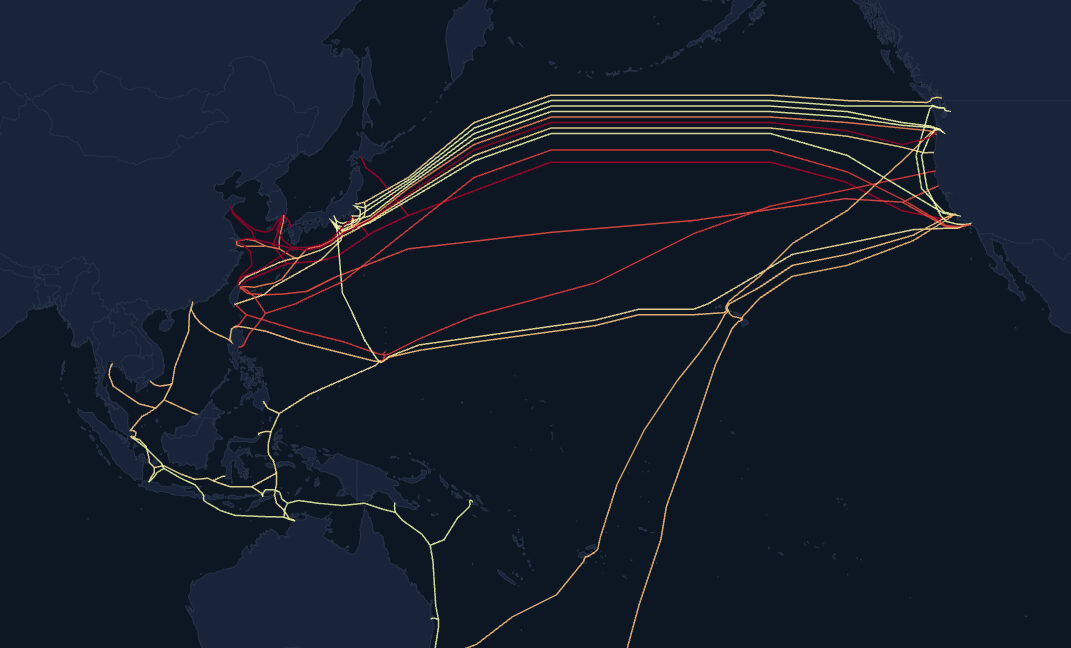
一份新报告称,谷歌和Meta等美国公司拥有的海底电缆项目在太平洋面临深海破坏威胁,风险最大。与此同时,中国科考船花费了异常长的时间,显然是在勘测海底电缆——更不用说中国商船因在欧洲和亚洲水域切断电缆而受到调查。
Subsea cable projects owned by US companies such as Google and Meta face some of the greatest risks from the threat of deep-sea sabotage in the Pacific Ocean, according to a new report. That coincides with Chinese research ships spending an extraordinary amount of time apparently surveying undersea cables—not to mention Chinese commercial ships being investigated for cutting cables in both European and Asian waters.
构成互联网骨干的海底电缆所受的大部分损坏,是由底拖网渔网和船锚刮擦海床等事故造成的,风暴和海底滑坡也是因素之一。但近期国际紧张局势加剧和公开冲突,使人们对更多可疑的电缆切断损坏事件进行新的审视,分析人士特别警告俄罗斯和中国从事电缆破坏或篡改,作为未达到直接军事对抗程度的“灰色地带”战术。
Most damage to the undersea cables that form the Internet’s backbone is the result of accidents involving bottom-trawling fishing nets and ship anchors dragging on the seabed, with storms and undersea landslides also factoring in. But the recent rise in international tensions and open conflicts have placed new scrutiny on more suspicious instances of cable-cutting damage, with analysts warning about Russia and China in particular engaging in cable sabotage or tampering as “gray zone” tactics that fall short of direct military confrontation.
关于中国针对互联网海底基础设施的灰色地带战术的最新风险评估之一,来自美中经济与安全审查委员会发布的一份研究报告,该委员会是向国会提供建议的独立政府委员会。该报告委托总部位于伦敦的智库中国战略风险研究所撰写,于2026年9月发布。
One of the newest risk assessments of China’s gray zone tactics targeting the Internet’s undersea infrastructure comes from a research report published by the US-China Economic and Security Review Commission, an independent government commission that advises Congress. The report was contracted to the London-based think tank China Strategic Risks Institute and published in September 2026.