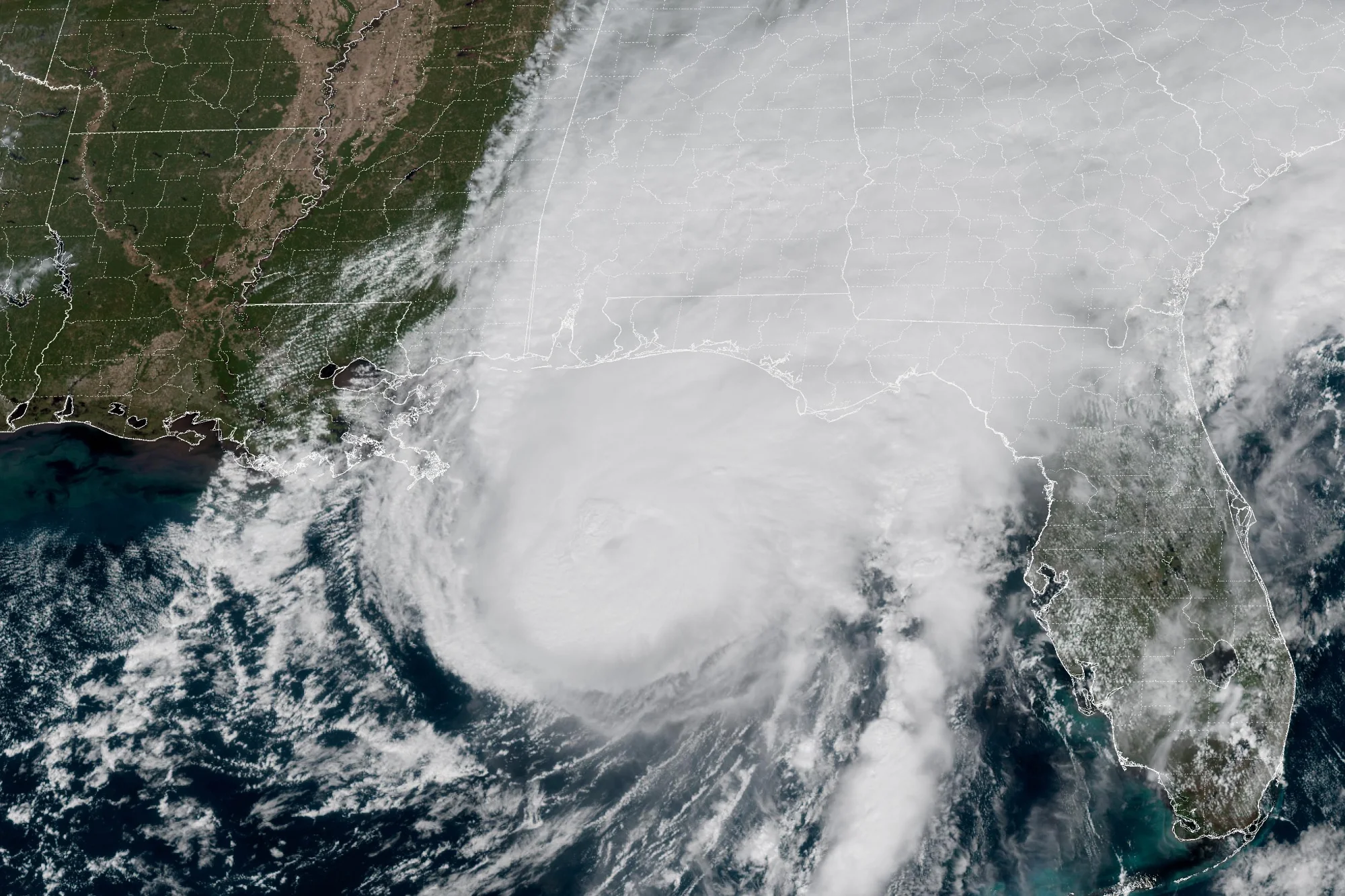
美国国家海洋和大气管理局(NOAA)提供的一张卫星图片显示,2026年10月9日周五,飓风伊萨亚斯正逼近亚拉巴马州和佛罗里达州的墨西哥湾海岸。
A satellite image provided by the National Oceanic and Atmospheric Administration (NOAA) shows Hurricane Isaias approaching the Gulf Coast of Alabama and Florida on Friday, Oct. 9 2026.
NOAA/NOAA 飓风预报员正越来越多地使用人工智能来进行预测——他们表示,这项技术正在迅速改变该领域。
NOAA/NOAA Hurricane forecasters are increasingly using artificial intelligence to make predictions — and they say the technology is rapidly transforming the field.
本月大西洋飓风季的第一个飓风形成时,一个人工智能模型在预测其行进方向方面击败了传统模型。
When the first hurricane of the Atlantic season formed this month, an AI model beat out traditional models at predicting where it would go.
10月初,飓风伊萨亚斯以二级风暴强度在佛罗里达州德斯廷附近登陆。传统的预报模型最初预测它会向更西的方向移动,即朝向路易斯安那州东南部。
In early October, Hurricane Isaias made landfall near Destin, Fla., as a Category 2 storm. Conventional forecasting models initially predicted it would head further west, toward southeastern Louisiana.
但谷歌深度思维(Google DeepMind)的人工智能模型一开局就做出了正确判断:这场飓风将袭击佛罗里达州西北狭长地的西部。
But Google DeepMind's artificial intelligence model called it right out of the gate: the hurricane was going to hit the western Florida Panhandle.
迈阿密资深气象学家兼飓风专家迈克尔·洛里说:“尤其是谷歌深度思维,在过去几年里真正证明了自己是黄金标准模型。”他曾担任联邦紧急事务管理局和国家飓风中心的顾问。
"Google DeepMind, in particular, has really proven itself the last few years as the gold standard model," says Michael Lowry, a longtime meteorologist and hurricane expert in Miami, who has previously advised both the Federal Emergency Management Agency and the National Hurricane Center (NHC).
“这个模型可以说是我们见过的表现最好的计算机模型。没有之一。”一种不同类型的模型 国家飓风中心去年首次开始将谷歌深度思维模型纳入其官方预报中。
"That model has been, by far and away, the best performing computer model that we've ever seen. Period." A different kind of model The National Hurricane Center first started incorporating the Google DeepMind model into its official forecasts last year.
迈阿密大学飓风研究员布赖恩·麦克诺尔迪表示,到2025年大西洋飓风季结束时,它就已经成为预测风暴路径和强度表现最好的模型之一。通常情况下,新模型在首次推出后需要数年时间来进行改进。
By the end of the 2025 Atlantic hurricane season, it was already one of the best at predicting a storm's path and strength, says Brian McNoldy, a hurricane researcher for the University of Miami. Usually, new models take years to refine after first being introduced.
麦克诺迪表示:“这是我们不习惯的事情——一个模型,这个领域的新来者,非常迅速地成为了现有的最佳模型。”“这个模型几乎是一问世就夺得头筹,这是一个相当了不起的壮举。”传统的基于物理学的飓风模型使用由卫星和飞机测量的实时大气数据,如温度、湿度、气压和风切变。然后,它们利用复杂的方程式来预测风暴可能行进的路径及其可能达到的强度。
"It's something we're not used to – to have a model, the new kid on the block, very quickly becoming the best model out there," McNoldy says. "This pretty much came out of the gate in first place, and that's a pretty impressive feat." Traditional physics-based hurricane models use real-time atmospheric data, like temperature, humidity, pressure and wind shear, as measured by satellites and aircraft. Then they use complicated equations to predict what path a storm might travel and how strong it could get.
人工智能模型的运作方式截然不同:它更依赖于历史。它通过分析数千场过去的风暴以及大气数据来识别模式。
An AI model operates very differently: it relies more on history. It identifies patterns by analyzing thousands of past storms along with atmospheric data.
洛里表示:“人工智能模型除了当前的画面之外,对大气层一无所知。除此之外,它并不依靠大气层的控制方程即物理学来进行预测。”
"The AI models don't really know anything about the atmosphere other than the current picture," Lowry says. "Beyond that, it's not leaning on the governing equations of the atmosphere, the physics, to make predictions."
洛里指出,设计和开发这些模型的大多数人甚至都不是气象学家:“他们是软件工程师,他们正在开发神经网络。”“神经网络”是一组仿照人脑建立并经过训练以在海量数据中寻找模式的计算机算法。
Most of the people designing and developing these models aren't even meteorologists, Lowry notes: "They're software engineers, and they're developing neural networks." A "neural network" is a set of computer algorithms modeled on the human brain and trained to find patterns in massive amounts of data.
洛里说,因此,这些模型可能看起来像一个“黑箱”:“我们不知道它们为什么会做出正确的预报。我们也不知道它们为什么会做出错误的预报。”气象学家要依赖一个他们并不完全理解的系统,这可能会让人感到不安——尤其是在数百万人都可能依赖他们预报的风暴期间。
As a result, the models can seem like a "black box," Lowry says: "We don't know why they might get a forecast right. We also don't know why they might get a forecast wrong." It can be unsettling for meteorologists to depend on a system they don't totally understand – especially during storms when millions of people might be relying on their forecasts.
麦克诺迪说:“这让我们感到有点不舒服,因为我们喜欢知道你得出的是正确答案。我觉得我们并不知道——或者至少我不知道原因。”不过,并非所有的人工智能模型都表现良好。洛里表示,市面上有很多未经检验的天气预报人工智能模型。
"It makes us a little uncomfortable, because we like to know you're getting the right answer," McNoldy says. "And I feel like we don't – or at least I don't know why." Not all AI models have performed well, though. There are lots of unproven weather forecasting AI models out there, Lowry says.
到目前为止,尽管存在一些缺陷,但被证明最准确的两个模型是由谷歌深度思维(Google DeepMind)以及总部位于英国的欧洲中期天气预报中心(ECMWF)开发的模型。
The two that have so far proven to be the most accurate, despite some pitfalls, are the models developed by Google DeepMind and by the U.K.-based European Centre for Medium-Range Weather Forecasts (ECMWF).
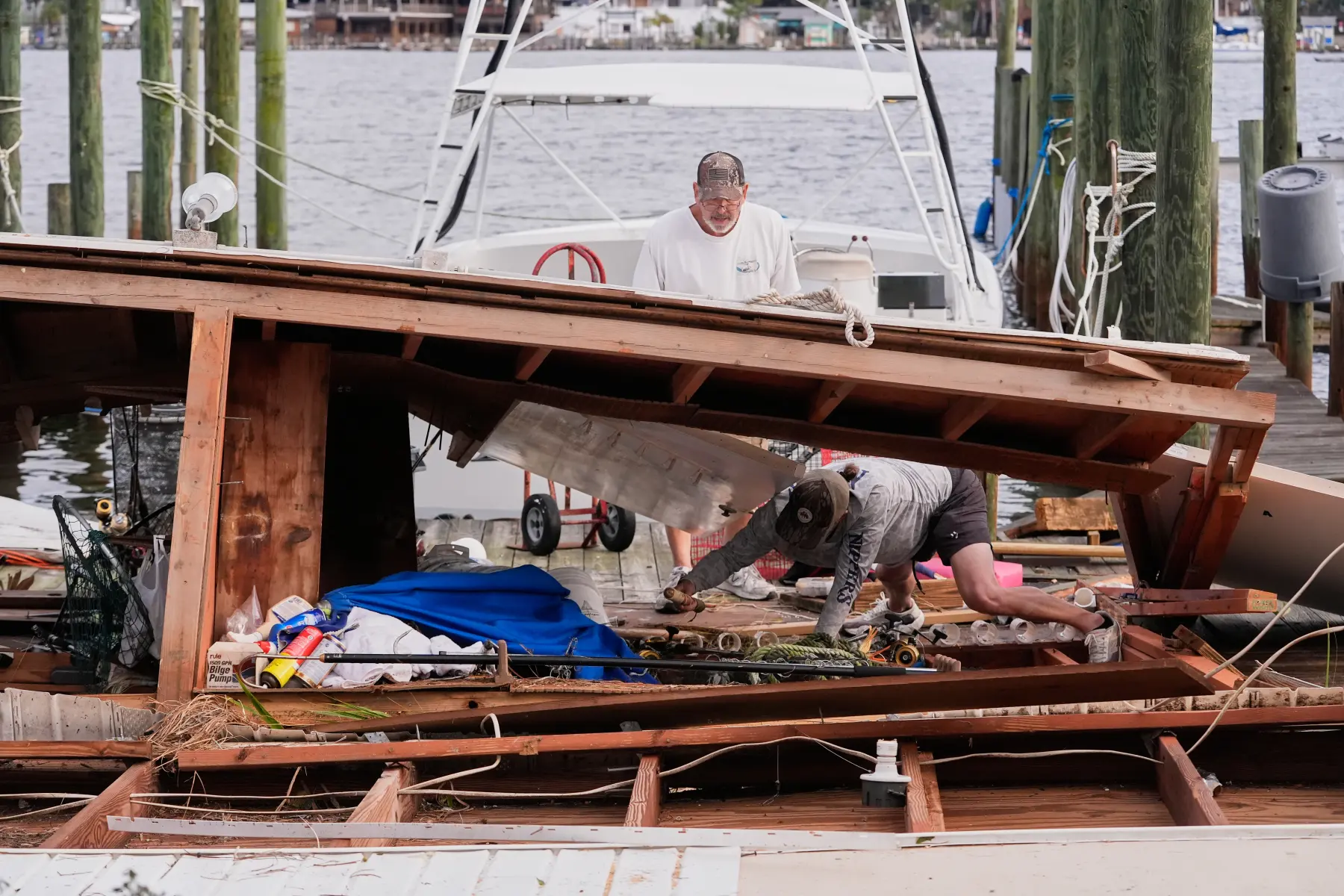
人们于2026年10月10日星期六在佛罗里达州德斯廷清理飓风“伊萨亚斯”过后的损毁船屋,当时正值飓风过后。谷歌深度思维的一款人工智能模型在预测风暴路径方面击败了传统的基于物理学的模型,尽管它在预测风暴强度方面的表现不够理想。
People retrieve belongings from a collapsed boat house in the aftermath of Hurricane Isaias in Destin, Fla., Saturday, Oct. 10, 2026. An AI model from Google Deepmind beat out traditional physics-based models at predicting the path of the storm, though it didn't do as well in forecasting the storm's strength.
杰拉尔德·赫伯特/美联社 依赖模型的“融合” 国家飓风中心的预报员在做出官方预报时,会使用几个经过验证的模型——包括人工智能和传统模型。
Gerald Herbert/AP Relying on a "blend" of models Forecasters at the National Hurricane Center use several proven models – both AI and traditional – when putting together their official forecasts.
国家飓风中心主任迈克尔·布伦南表示:“每场风暴都有不同的预报挑战。这就是为什么我们采取这种共识方法,并使用最佳模型的融合。”而且,在决定向公众发布什么信息之前,仍然需要由人类来解释这些模型的结果。
"Every storm has different forecast challenges," says NHC Director Michael Brennan. "That's why we take that consensus approach and use that blend of the best models." And it's still humans who have to interpret the results of those models before deciding what to tell the public.
在飓风活跃期间,国家飓风中心每六小时提供一次更新。模型本身有时会在连续两次更新之间表现出巨大的变化。预报员必须将这些不断变化的预测转化为人们能够据此采取行动的明确指导。
The NHC provides updates every six hours during active hurricanes. The models by themselves can sometimes show drastic changes from one update to the next. Forecasters have to translate those shifting predictions into clear guidance that people can act on.
布伦南说:“人类预报员提供的一大重要内容就是连续性。我们正在利用我们的专业知识和理解,将飓风预报转化为灾害空间,这才是人们真正需要关注的。” 科学家预计将取得快速进展 布伦南表示,谷歌深度思维的模型仍有一些工作需要完善。虽然它在追踪“伊萨亚斯”的路径方面超过了其他模型,但在确定风暴的强度或烈度方面,它的表现不如国家飓风中心的融合预报。
"That's one thing that the human forecaster provides a lot of, is continuity," Brennan says. "We're using our expertise and our understanding to translate that hurricane forecast into the hazard space, and that's what people really need to pay attention to." Scientists expect rapid advances The Google DeepMind model still needs some work, Brennan says. While it topped other models in tracking the path of Isaias, it didn't do as well as the NHC's blended forecast in determining the intensity, or strength, of the storm.
布伦南的团队定期向谷歌深度思维提供反馈,以帮助改进该模型。谷歌没有回应美国国家公共电台(NPR)就这篇报道提出的问题。
Brennan's team gives regular feedback to Google DeepMind to help improve the model. Google didn't respond to questions from NPR for this story.
布伦南表示,“预报的未来一直在改变。”“推动这些改进的从来不只是单一因素。”他指出,就在不久前,预报员甚至无法在几天内预测一场风暴会有多强。这种情况发生了变化,这要归功于预测模型的进步以及卫星和飞机收集到更好的数据。
The "future of forecasting has always been changing," Brennan says. "It's never just one thing that's driving those improvements." It wasn't that long ago when forecasters couldn't predict how strong a storm would be even within a couple of days, he notes. That changed, because of advances in prediction models and better data collected by satellites and planes.
布伦南说:“就强度预报而言,误差大约是(飓风)卡特里娜等时期的一半。”
"Errors are about half of what they were, say, at the time of [Hurricane] Katrina, in terms of intensity forecasting," Brennan says.
气象学家迈克尔·洛里(Michael Lowry)表示,人工智能令人兴奋的地方在于其进步速度之快。人工智能的更新仅需几个月甚至几周,这与传统模型不同,传统模型充其量只能每年更新一次。
The exciting thing about AI, says meteorologist Michael Lowry, is how quickly it's improving. AI updates take only months or even weeks, unlike traditional models, which are updated annually at best.
洛里说:“它们在一年时间内取得的技术和飓风预报方面的进展,可能需要我们花10年、十年或更长的时间才能实现。”
"They are making advancements in skill and hurricane predictions over the course of a year that would have taken us 10 years, a decade or more, to make," Lowry says.
但洛里表示,尽管人工智能正以迅猛之势发展,但他并不担心人工智能会取代人类。
But even with AI coming in fast and strong, Lowry says he's not worried about artificial intelligence replacing people.
洛里说:“对我来说,我并没有感受到人工智能带来的某种生存危机。如果说有什么不同的话,我认为这对我们的行业是一大福音。”
"For me, I don't feel some sort of existential crisis with AI," Lowry says. "If anything, I think it is a boon for our business."