本月早些时候,在飓风伊萨亚斯(Isaias)以3级飓风强度登陆墨西哥湾沿岸后,应急管理专家劳拉·迈尔斯(Laura Myers)接到了阿拉巴马州一名气象学家的电话。迈尔斯是阿拉巴马大学高级公共安全中心主任,她经常与自己所在地区的州和地方应急管理者交流。这位气象学家告诉迈尔斯,当地一名应急管理者发布了一张图表,显示伊萨亚斯可能会用强风“刺气流”威胁阿拉巴马州海岸。
Earlier this month, after Hurricane Isaias made landfall on the Gulf Coast as a Category 3 hurricane, the emergency management expert Laura Myers got a call from a meteorologist in Alabama. Myers is director of the University of Alabama’s Center for Advanced Public Safety, and she talks to state and local emergency managers around her region all the time. The meteorologist told Myers that a local emergency manager had published a graphic showing where Isaias might threaten the Alabama coast with a “sting jet” of high winds.
问题出在哪里?这位应急管理者是用人工智能聊天机器人生成这张图表的,而且并不准确。
The problem? The emergency manager had generated the graphic using an artificial intelligence chatbot, and it wasn’t accurate.
“那个县的应急管理者试图让利益相关者关注该县的风险,于是他请求人工智能提供帮助,”她说道。“它确实满足了他的要求,但在气象学上并不准确。”多数应急管理机构不允许员工使用生成式人工智能,但迈尔斯和大多数其他应急管理专家一致认为,其使用可能已经普及到了州和地方灾害应对部门。有数百家公司正在向应急管理者推销人工智能工具,用于洪水损失评估和资源协调等任务,但公众沟通是政府员工和初创企业最感兴趣的领域之一。
“That county emergency manager was trying to get his stakeholders to focus on the risk in that county, and so he had asked AI to help him,” she said. “It did what he wanted it to do, but it was not meteorologically accurate.”Most emergency management agencies don’t permit employees to use generative AI, but Myers and most other emergency management experts agree that its usage is likely already pervasive at state and local disaster departments. There are hundreds of companies that are marketing AI tools to emergency managers for tasks like flood damage assessment and resource coordination, but public communication is one of the areas where government employees and startups have the most interest.
原因何在?大多数应急管理者并不擅长发布警报并就灾害与公众进行快速沟通。这不是因为他们是应急管理者,而是因为他们是人。他们往往会使用非专业人士可能听不懂的专业术语,在假定公众已经了解的情况下遗漏信息,并且包含一些无关紧要的细节,这些细节可能会分散人们对他们真正需要了解的事情的注意力。
The reason? Most emergency managers aren’t very good at sending out alerts and quickly communicating about disasters with the public. That’s not because they’re emergency managers, but because they are human beings. They tend to write in jargon that non-experts might not understand, leave out information on the assumption that the public already knows it, and include irrelevant details that could distract people from what they actually do need to know.
“许多机构在资源和人员数量上都非常有限,”奥尔巴尼大学灾害研究员珍妮特·萨顿说,她创建了一个综合仪表板,提供灾害警报模板。“我认为他们将其视为优先事项,但直到意识到本该优先处理时,才真正将其作为优先事项。他们只是试图在不搞砸事情的情况下完成工作。”应急管理人员是负责灾害响应和恢复的政府官员。
“A lot of agencies are really limited in resources and the number of people that they have,” said Jeannette Sutton, a disaster researcher at the University of Albany who has created a comprehensive dashboard that provides templates for disaster alerts. “I think they recognize it as a priority, but they don't prioritize it until they realize they should have. They're just trying to get their job done without screwing something up.”Emergency managers are the government officials who are in charge of disaster response and recovery.
在州和地方层面,是这些官员及其机构,而不是联邦应急管理局,构成了极端天气事件发生后的第一道防线。因此,应急管理人员常说“信任是我们的货币”,而正是在他们与公众的沟通中,他们建立并失去这种信任。
At the state and local level, It is these officials and their agencies, not the Federal Emergency Management Agency, that make up the first line of defense after an extreme weather event. As such, emergency managers often like to say that “trust is our currency,” and it’s in their communication with the public that they build and lose this trust.
随着气候灾害变得更加频繁和广泛,人为沟通失误搞乱应急响应的例子屡见不鲜。例如,2016年,加利福尼亚州相邻县份针对同一场山火,一个发布了“自愿撤离”令,另一个却发布了“强制撤离”令。2019年澳大利亚,官员用“观察并行动”这一措辞警告山火,政府后来表示这造成了“严重困惑”,因为没人知道这是什么意思。
As climate disasters become more frequent and widespread, there have been numerous examples of flawed human communication scrambling an emergency response. In 2016, for instance, adjacent counties in California issued a “voluntary evacuation” and a “mandatory evacuation” for the same wildfire. In Australia in 2019, officials warned about wildfires by using the phrase “Watch and Act,” which the government later said caused “significant confusion” because no one knew what it meant.
在某些情况下,沟通不当可能意味着生与死的区别。2017年托马斯大火之后,加利福尼亚州蒙特西托就发生了这种情况。火灾发生几周后,一场暴雨引发了致命的泥石流。圣巴巴拉县政府艰难地向居民传达风险,当时这些居民仍未从大火的创伤中恢复,并经历着萨顿所称的“警告疲劳”现象。该县向野火“自愿疏散区”的所有人发送了警报,告诉居民“对不断变化的情况保持警惕,并准备立即撤离”。
In some cases, inadequate communication can mean the difference between life and death. This happened in Montecito, California, after the 2017 Thomas Fire. A few weeks after the fire, a heavy rainstorm produced a deadly mudslide. The government of Santa Barbara County struggled to communicate the risk to residents still traumatized from the blaze and experiencing a phenomenon that Sutton calls “warning fatigue.”The county sent alerts to everyone in the “voluntary evacuation zone” for wildfires, telling residents to “stay alert to changing conditions and be prepared to leave immediately.”
这些居民本该立即撤离,但对许多人来说,疏散通知是可选的;其他人则只是不想在一个月内第二次疏散。泥石流造成23人死亡,160多人受伤。
Most of those residents should have left immediately, but to many the evacuation notice was optional; others just didn’t want to evacuate for a second time in a month. The mudslide killed 23 people and injured more than 160 others.
萨顿表示,发布糟糕警告的政府往往会失去公众的信任。“他们正在失去成为帮助人们确保安全的那个声音的机会。”从理论上讲,警报是人工智能(尤其是近年来以惊人速度发展的生成式人工智能系统)的完美应用场景。联邦紧急事务管理局为应急管理者提供培训课程,以学习合成和发送警报的最佳实践,但许多官员在紧急情况降临 V时并不记得他们所有的培训。
Governments that put out bad warnings are apt to lose the public’s trust, said Sutton. “They're losing the opportunity to be that voice to help people to be safe.”In theory, alerts are a perfect use case for artificial intelligence, and in particular for the generative AI systems that have developed at a dramatic pace over the past few years. FEMA provides training sessions for emergency managers to learn best practices for synthesizing and sending alerts, but many officials don’t remember all their training when an emergency arrives.
大语言模型则不同。它可以在短短几分钟内阅读数十万条警报,消化关于在类似情况下什么有效的所有研究,然后在几秒钟内将其应用并编辑人工编写的警报。
A large language model is different. It can read hundreds of thousands of alerts in mere minutes, digest all the research on what works in similar scenarios, and then apply that to edit a human alert in seconds.
密歇根州英厄姆县应急管理局负责人、前气象学家罗布·戴尔说:“如果你一生只发送过一条[警报],那还是在15年前,而你需要记住你所有的培训,并且你在想‘嘿,有一团化学云向我袭来,电话在响,收音机在轰鸣,我需要帮助’,那么人工智能的表现可能会比你好。”
“If you’ve only sent one [alert] in your life, and that was 15 years ago, and you need to remember all your training, and you’re thinking ‘Hey, there's a chemical plume coming my way, the phone's ringing, the radio's blaring, I need help,’ the AI is probably gonna do a better job than you are,” said Rob Dale, a former meteorologist who now runs the emergency management department in Ingham County, Michigan.
戴尔已经在幕后使用人工智能起草了几份演练警报,但他从未需要发出过一份。英厄姆县是密歇根州中部的一个小县,不会受到飓风和火灾等重大天气事件的影响。戴尔表示,如果真发生这类事件,他不介意让聊天机器人起草他的事件通报,但他仍希望由自己掌控警报的发送。
Dale has already used AI to draft a few practice alerts behind the scenes, but he’s never had to send one out. Ingham County is a small county in central Michigan, and it’s immune from major weather events like hurricanes and fires. If such an event did happen, Dale said he would have no issue allowing a chatbot to draft his incident communication, but he’d still want control over sending the alert out.
一些专家认为,这项技术已经足够成熟,可以投入使用。EM1是一家为应急管理人员开发人工智能软件的初创公司,该公司利用萨顿的研究成果训练了一个模型,其高管表示,该模型已经比几乎所有人类应急管理人员都更出色。公司已在包括野火和海啸在内的多个场景中测试了这一内部模型。在大多数基准测试中,它已经能够达到或超越人类水平。
Some experts believe the technology is already good enough to deploy. EM1, a startup that produces AI software for emergency managers, has used Sutton’s research to train a model that its executives say is already better than almost any human emergency manager. The company has tested this in-house model on a number of scenarios including wildfires and tsunamis. It can already match or exceed human capabilities on most benchmark tests.
萨顿向格里斯特举例说明了该软件的工作方式:格里斯特向她提供了一份新墨西哥州某县最近发布的警报,该县当时正试图警告居民圣胡安河发生洪水。
Sutton gave Grist an example of how the software works: Grist provided her with a recent alert sent by a New Mexico county that was trying to warn residents about flooding on the San Juan River.
原始警报写道:“河岸决口。水位正在上涨。立即撤离。麦吉公园向人员、宠物及房车开放。”萨顿要求EM1模型评估并修改这份警报。几秒钟内,该模型就生成了一份她认为好得多的警报,一份符合灾难沟通所有主要要素的警报。
The original alert read, “Breeched banks. The water is rising. EVACUATE NOW. McGee Park open for people and pets, RV.”Sutton asked the EM1 model to evaluate and revise the alert. In a few seconds, it produced what she said is a far better alert, one that checks all the main boxes of disaster communication.
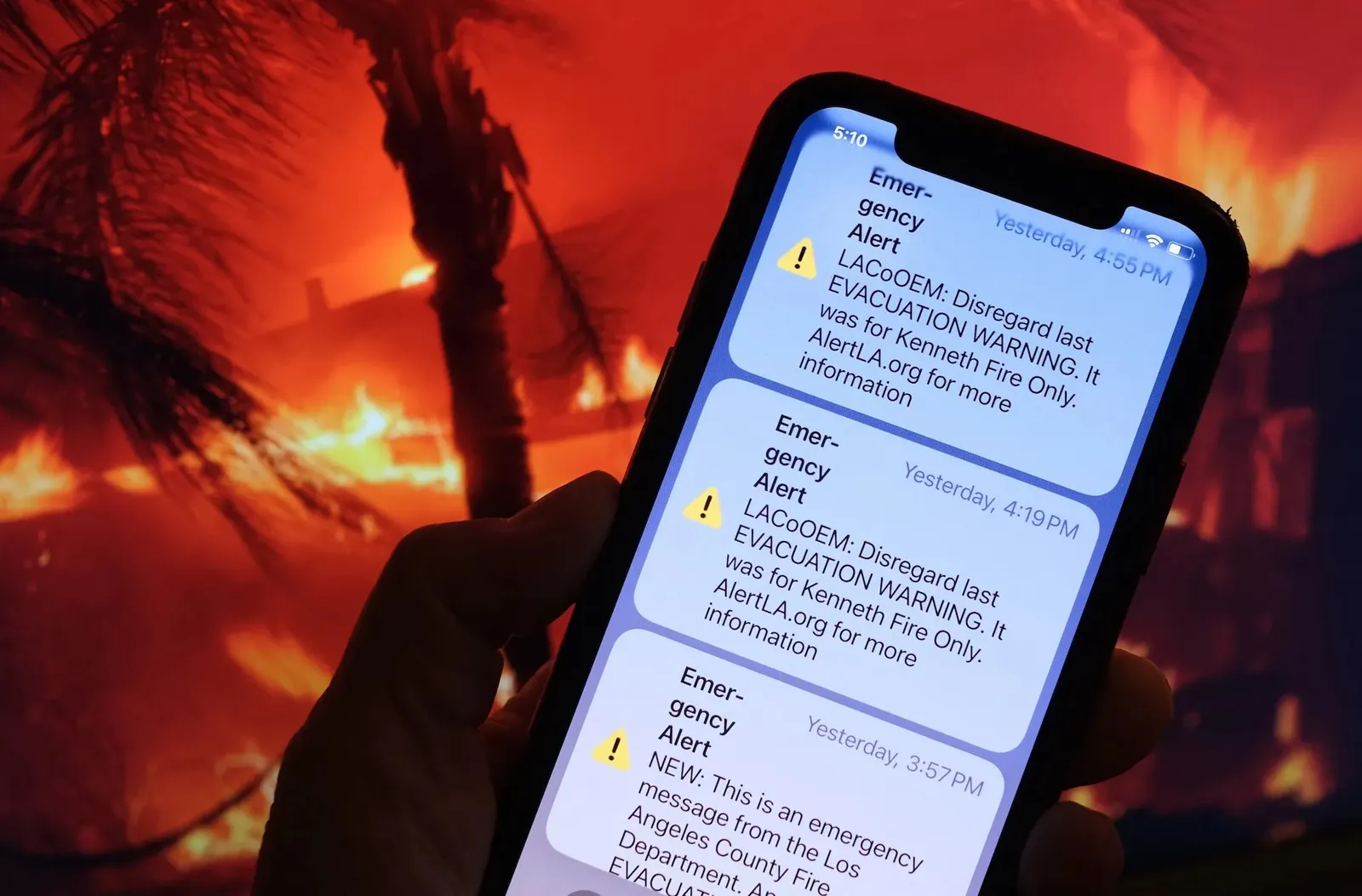
新警报写道:“圣胡安县:洪水正在[地点]附近上涨。[疏散区]的居民:立即离开,前往高地。不要步行或驾车穿越洪水。麦吉公园向人员和宠物开放。请查看[官方更新来源]获取最新信息。”模型识别并修复了原始文本中的几个问题:原始文本没有说明谁在发布警报,没有指明洪水发生的具体地点,也没有明确谁需要撤离以及如何安全撤离。它拼错了“breached”一词,并且没有提供任何关于居民到哪里获取更多信息的指引。
The new alert read: “San Juan County: Floodwater is rising near [location]. People in [evacuation area]: LEAVE NOW for higher ground. Do not walk or drive through floodwater. McGee Park is open for people and pets. Check [official update source] for updates.”The model identified and fixed several problems with the original text, which does not say who is sending the alert, name the specific location where flooding is happening, or clarify who needs to evacuate and give advice on how to do so safely. It misspells the word “breached,” and it doesn’t provide any guidance on where residents can seek further information.
EM1 与大约一百家政府机构和学区签有合同,但目前尚无一家将其用于自动化极端天气警报。目前,他们仅用它来研讨计划和进行内部准备。即便如此,接受本文采访的所有专家均表示确信,许多应急管理人员已经在使用聊天机器人撰写信息,即使他们不愿承认。萨顿表示,参加她警报培训课程的应急管理人员经常向她展示高质量的警报草稿,称他们利用 ChatGPT 或 Gemini 在几秒钟内起草完成。
EM1 has contracts with around a hundred government agencies and school districts, but none are using it to automate their extreme weather alerts just yet. For the moment, they’re only using it to workshop plans and internal preparations. Even so, all the experts interviewed for this story said they are certain that many emergency managers are already using chatbots to write messages, even if they won’t admit it. Sutton said that the emergency managers who take her alert training sessions often present her with high-quality alerts they have drafted in seconds using ChatGPT or Gemini.
“官方采用率相当低,但人们绝对在非官方地使用它,”佛罗里达州皮尔斯学院应急管理教授、国家灾难准备培训中心长期讲师莎拉·米勒说。“他们在使用自己的个人账户,或者使用免费版本。”这听起来像是一笔划算的交易:如果 AI 比人类更好、更快,而优秀警报与劣质警报的区别可能关乎生死,我们就应该在每一次热浪和野火中都使用 AI。
“Official adoption is pretty low, but people are unofficially using it, absolutely,” said Sarah Miller, a professor of emergency management at Pierce College in Florida and a longtime instructor at the National Disaster Preparedness Training Center. “They're using their own personal accounts, or they're using free ones.”It sounds like an easy trade-off: if AI is better and faster than humans, and the difference between a good alert and a bad alert can be life and death, we should be using AI for every heat wave and wildfire.
然而,即使是对聊天机器人技术持乐观态度的研究人员也表示,贸然切换可能会适得其反。对 AI 持怀疑态度、或原本就不信任政府的公众,可能会排斥发布 AI 生成图形或社交媒体帖子的机构。例如在纽约州锡拉丘兹,一个公共雇员工会就当地政府使用 AI 服务应答非紧急 911 电话提起了诉讼。
Yet even researchers who are bullish on chatbot technology say that making the switch could backfire. Members of the public who are skeptical of AI or who don’t trust the government in the first place may spurn agencies that publish AI-generated graphics or social media posts. In Syracuse, New York, for instance, a union of public employees sued the local government for using an AI service to answer non-emergency 911 calls.
“我们信任那些我们认为真实且关心我们的事物,”帮助灾害官员探索如何使用技术的咨询公司 HazAdapt 创始人金尼·卡茨说。“AI 生成的内容让人感觉不真实。”还存在一个风险:聊天机器人可能让应急管理人员发布更多警报、速度更快,从而增加警报疲劳的风险。
“We trust things that we perceive [are] authentic and care about us,” said Ginny Katz, the founder of HazAdapt, a consultancy that helps disaster officials figure out how to use technology. “AI-generated content does not feel authentic.”There’s also a risk that chatbots could allow emergency managers to send out more alerts, and faster, which could increase the risk of warning fatigue.
正如人工智能被应用的其它领域一样,灾害专家表示,目前该软件的能力仅限于使用它的人的水平。经验丰富的应急管理者或许可以通过让聊天机器人起草一系列警报来加快与公众的沟通,但一名经验不足、急于创建紧急警报的人将不知道如何评估像ChatGPT或Claude这类模型输出的内容。
As is the case in other areas where AI is being deployed, disaster experts say that for the moment the software is only as capable as the person using it. A seasoned emergency manager might be able to speed up their communication with the public by having a chatbot draft a series of alerts, but an inexperienced one rushing to create an urgent alert won’t know how to evaluate the output of a model like ChatGPT or Claude.
尽管这项技术距离在没有人类专家参与的情况下独立运行还有一段距离,但这并未阻止许多人手不足的应急管理部门使用它。至于人工智能生成内容的激增如何影响公众对政府的信任,专家表示现在下定结论还为时过早。
Even though the technology is a ways off from being able to perform without a human expert in the loop, that hasn’t stopped many understaffed emergency management departments from using it. As for how the proliferation of AI-generated content is affecting public trust in government, experts say it’s too early to tell.
另一家为应急管理者提供人工智能软件的公司Preppr的创始人贾斯汀·斯奈尔(Justin Snair)说:“如果你收到一条由人类发送的短信与一条由计算机发送的短信,你觉得哪一条会更准确?”他说,答案取决于接收短信的人。
“If you had a human sending you a text message versus a computer sending you a text message, which one would you believe is being more accurate?” said Justin Snair, the founder of Preppr, another company that offers AI software to emergency managers. The answer, he said, depends on the person receiving it.