与战俘共事,乌克兰人压抑对敌人的情感关于乌克兰应如何对待俄罗斯战俘已有诸多讨论。但较少人关注的是,承担这项工作的乌克兰人所经历的情感挣扎。
To Work With P.O.W.s, Ukrainians Suppress Feelings About the Enemy Much has been said about how Ukraine should treat Russian prisoners of war. Less attention has been paid to the emotional struggle for the Ukrainians tasked with that work.
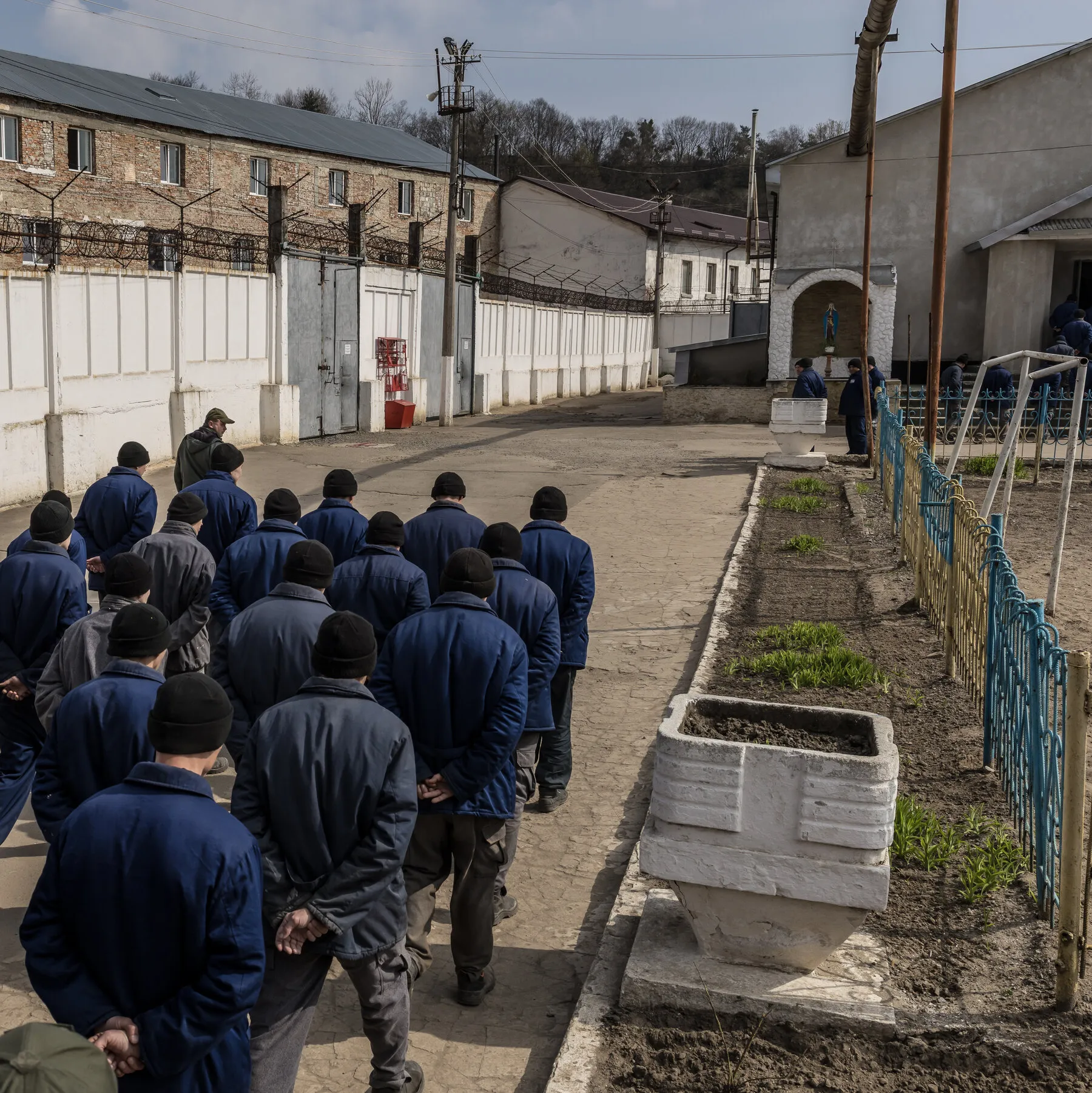
2024年3月,在乌克兰利沃夫的一处拘留中心,俄罗斯战俘正走向营地食堂吃午餐。图片来源……支持者两年来,奥列赫所见到的俄罗斯人只有那些在战斗中试图杀死他的人。如今,数百名俄罗斯人将他包围——这是他自己的选择——在一处俄罗斯战俘营地里。
Russian prisoners of war walking to the camp cafeteria for lunch at a detention center in Lviv, Ukraine, in March. Credit... Supported by For two years, the only Russians Oleh saw were trying to kill him in battle.
在任何国家,看守、供食和医治敌方士兵都是件棘手的事。但与这些战俘共事的乌克兰人还面临额外的挑战:他们知道俄罗斯军队入侵了自己的土地并犯下了暴行,而自己的国家却要向世界展示它以体面的方式对待战俘——这种体面或许是营地工作人员内心并不感受到的。
Now hundreds of them have him surrounded, by his own choice, at a camp for Russian prisoners of war. Guarding, feeding and treating enemy soldiers is fraught in any country.
他们承担这项工作的动机各不相同。奥列赫说,对他而言,这是为了驱除心中的仇恨。“我想直视他们的眼睛,”他说。
But Ukrainians working with these P.O.W.’s have the added challenge of knowing that Russian forces invaded their land and committed atrocities, while their own country wants to show the world it treats prisoners with a decency that camp workers may not feel. They have vastly differing motivations for taking it on. Oleh said that for him, it was about exorcising his hatred.
对其他人来说,动机可能是好奇、为战争出力,或者仅仅是一份薪水。
“I wanted to look them in the eyes,” he said.
联合国和人权组织已充分记录了俄罗斯对战俘的系统性虐待和酷刑。尽管乌克兰也面临极端虐待俄罗斯士兵的指控,尤其是在抓捕过程中,但独立监察机构表示,此类案件要孤立得多。
For others, it can be curiosity, a contribution to the war effort, or just a paycheck. Russia’s systematic mistreatment and torture of prisoners of war has been well documented by the United Nations and rights groups.
这种不平衡在战俘交换的分屏画面中清晰可见——骨瘦如柴、伤痕累累、病弱的乌克兰人,换回的是看起来健康的俄罗斯人。这在乌克兰激起了痛苦和愤怒,也给许多照顾俄罗斯战俘的人带来了深刻的情感挣扎。
While Ukraine has faced accusations of extreme mistreatment of Russian soldiers, particularly during their apprehension, independent monitors say such cases are far more isolated. That imbalance is visible in split-screen images of prisoner swaps — skeletal, wounded and ill Ukrainians, traded for healthy-looking Russians.
58岁的奥列赫在乌克兰西部利沃夫的一处营地工作,除了妻子,他对所有人保密。他的兄弟和侄子们仍在前线作战。“我怎么能对他们说,我在照顾俄罗斯战俘?”他问道。“这对乌克兰有好处”42岁的伊万在俄罗斯2022年入侵后帮助建立了乌克兰第一座战俘营,后来又参与建立了利沃夫的那座战俘营。与所有接受采访的战俘营工作人员一样,出于安全原因,他要求只透露自己的名字。
It spurs pain and anger in Ukraine, and profound emotional struggle for many of those who look after Russian prisoners. Oleh, 58, keeps his job at a camp in Lviv, in western Ukraine, a secret from everyone but his wife. His brothers and nephews are still fighting on the front lines. “How can I say to them that I am caring for the Russian P.O.W.s?” he asked. ‘This Benefits Ukraine’
战争初期,乌克兰人就在基辅附近的布查等地目睹了入侵部队的暴行。战俘营管理人员伊万说,面对被俘的俄罗斯军人“让每个人都不舒服”,“我们每个人都必须跨过某条内心的界线”。战俘营管理人员必须明确表示,禁止虐待行为。
Ivan, 42, helped set up Ukraine’s first P.O.W. camp after Russia’s 2022 invasion, and later the one in Lviv. Like all camp employees interviewed, he asked to be identified by only his first name, for security reasons. From early in the war, Ukrainians saw the atrocities by invading forces in places like Bucha, near Kyiv.
乌克兰竭力将自己与俄罗斯区分开来,向世界展示自己遵守国际法。
Encountering captured Russian troops “was uncomfortable for everyone,” said Ivan, a camp administrator, and “each of us had to cross a certain internal line.”
尽管人们始终担心战俘营的访客会看到经过粉饰的景象,但红十字会、联合国和新闻媒体定期前往那里,并已采访了数千名战俘。这些组织基本上被拒绝进入俄罗斯的战俘营。红十字会已就《日内瓦公约》规定的战俘权利对乌克兰战俘营工作人员进行了培训。
Prison administrators had to make clear that cruelty was prohibited. Ukraine takes pains to differentiate itself from Russia, presenting itself to the world as following international law. While there is always a concern that camp visitors get a sanitized view, the Red Cross, the United Nations and news outlets go there regularly and have interviewed thousands of prisoners.
联合国负责人权事务的助理秘书长最近报告称,在乌克兰的战俘营中,“条件总体符合国际人道法,且自2022年以来有所改善”。来访记者基本上可以不受限制地进入。 《纽约时报》曾多次走访最大的战俘营之一利沃夫战俘营,没有看到虐待的迹象。工作人员和战俘可以同意或拒绝交谈,通常是在战俘营工作人员听不到的范围内。
Those organizations have largely been denied access to Russian camps. The Red Cross has trained Ukrainian camp workers on the rights of prisoners under the Geneva Conventions. The U.N. assistant secretary general for human rights recently reported that in Ukraine’s prison camps, “conditions generally comply with international humanitarian law and have improved since 2022.”Visiting journalists get largely unfettered access.
(《纽约时报》通常不采访战俘,因为他们的配合可能是被迫的,也不展示他们的面部。)伊万说,他不断受到乌克兰同胞的批评,他们质疑为什么俄罗斯战俘受到良好对待。
Several times, The New York Times has visited the Lviv camp, one of the largest, without seeing signs of mistreatment. Workers and prisoners can agree or refuse to talk, often out of earshot of camp staff. (The Times generally does not interview prisoners, whose cooperation could be coerced, or show their faces.)
“人们需要明白,这对乌克兰有利,”他激动地说。“这向我们展示了一个文明的欧洲国家,不像我们的敌人。”持续的不适俄罗斯战俘排队进入战俘营食堂,午餐是罗宋汤、炖肉、意大利面和面包。
Ivan said he faced constant criticism from fellow Ukrainians who question why Russian prisoners are treated well. “People need to understand that this benefits Ukraine,” he said, getting animated. “It shows us as a civilized European country, unlike our enemies.”
对罗曼来说——他负责战俘的饮食与营养——这些人是持续而痛苦的提醒。
Constant Discomfort Russian prisoners file into the camp cafeteria for a lunch of borscht, stewed meat, pasta and bread.
他说,俄罗斯人杀害了他亲近的人,而他却要在“那些干下这些事的人周围工作,而其他像他们一样的人现在仍在干”。他难以控制自己的情绪。
For Roman, who oversees food and nutrition for P.O.W.s., they are constant, painful reminders. The Russians have killed people he was close to, he said, and yet works surrounded by “those who did this, while others like them are still doing it now.”
他坦言,在妻子的表亲于战斗中阵亡之后,有一段时间他实在难以去上班。他请了短假,让“情绪的火焰”平息下来,至少平息一点。罗曼说,等他回来时,他尽量减少与战俘的交流。他说,这道隔阂“始终存在”,“也只能如此”。“他们毁掉了一切”奥列克西与战俘保持的是身体上、而不仅仅是情感上的距离。
He struggles to keep his emotions in check. There was a time after his wife’s cousin was killed in combat, he confessed, when it was simply too difficult to go to work. He took a short leave to let the “emotional flame” die down, at least a little. When he returned, Roman said, he minimized communication with prisoners. The barrier is “always there,” he said, “and it can’t be otherwise.”
“我把他们视为敌人,视为本会试图杀死你的人,”他说。他站在一块泥地球场旁,距离二十多名战俘约10英尺。
‘They Destroyed Everything’Oleksii maintains physical, not just emotional, distance from the prisoners.
他说,在营地工作对他来说比其他人更难,因为他来自乌克兰东部的顿涅茨克地区,俄罗斯在2014年入侵了那里,并意图将其全部夺取。
“I see them as an enemy, someone who would’ve tried to kill you,” he said, standing about 10 feet from two dozen prisoners next to a dirt soccer field.
“他们毁掉了我拥有的一切,”奥列克西说,并补充道,“我该怎么看待他们?”
He said that working at the camp is harder for him than for others, because he is from the Donetsk region of eastern Ukraine, which Russia invaded in 2014 and aims to seize entirely.
实施报复不会有任何结果,而且“如果我们不遵守这些规则,对我们国家来说会更糟,对吧?”
“They destroyed everything I had,” Oleksii said, adding, “How am I supposed to feel about them?”
尽管如此,他谈到俄罗斯战俘时说:“知道他们是什么样的人,最好还是保持距离。”对敌人的仁慈对营地医务员罗伯特来说,保持距离不是选项,他必须与战俘有身体接触。
Exacting revenge would achieve nothing, and “it would be worse for our country if we didn’t follow these rules, right?”Still, he said of Russian prisoners, “Knowing what kind of people they are, it’s better to keep your distance.”
罗伯特说,起初这意味着内心的一场挣扎,他不断问自己,他的工作是否背叛了他的国家、他在军队中的朋友、那些被杀害的人。“每个人都有自己的战争死难者墓地,”他说。
Humanity for a Foe Distance is not an option for Robert, a camp medic, who must make physical contact with P.O.W.s. At first, that meant an internal skirmish, Robert said, constantly asking himself if his work betrayed his country, his friends in the army, the people who have been killed.
38岁的罗伯特直到参加试用日那天才知道自己的病人会是俄罗斯人。他一度有些吃惊,但还是接受了这份工作,因为他认为这是在为战争出力,而且觉得这份工作“独特,有点刺激”。随着时间推移,他内心的挣扎逐渐平息,但从未完全消失。他尽量不去想自己医治的俄罗斯人可能会重返战场。
“Everyone has his own cemetery of people who died in the war,” he said. Robert, 38, learned his patients would be Russians only when he showed up for a trial day. He was briefly taken aback but accepted the role because he saw it as contributing to the war effort and thought it would be “unique, kind of spicy.”The struggle within him subsided over time, though never completely.
他从旋转凳上跳起来,冲进另一个房间,抓起一个小容器,像摇拨浪鼓一样摇晃它。里面装的是医护人员从囚犯伤口中取出的弹片。
He tries not to think about how Russians he heals might return to the fight. Jumping up from a swivel stool, he rushed into another room and grabbed a small container, shaking it like a rattle.
他眼眶湿润,声音开始哽咽,问道,从事这份工作所需要的人性,“为什么没有被击碎,没有被泪水冲走,没有被烧尽?”“我为他们感到难过”43岁的马里扬负责管理一个囚犯编织柳条家具的工坊。对他来说,这份工作关键在于区分界限,把“你只是在和他们一起工作的时刻”和“你在与他们作战的时刻”分开。工坊里到处是锋利的刀片,但他从不觉得不安全。
It contained shrapnel the medics had removed from prisoners’ wounds. His eyes welling and his voice starting to break, he asked why the humanity required to do his work “is it not knocked out, not washed away with tears, not burned out?”‘I Feel Sorry for Them’For Maryan, 43, who oversees a workshop where prisoners weave wicker furniture, the job is about compartmentalizing, separating “the moments when you’re just working with them and when you’re fighting them.”
他说,空闲时、抽烟休息时,他会和囚犯聊天,问他们过得怎么样,问起他们的妻子和孩子,他们也会向他敞开心扉。
There are sharp blades throughout the shop, but he never feels unsafe.
战时的敌人变得抽象。很少有人能靠得足够近,去听他们说话、闻他们的气味、直接面对他们。
He said he chats with prisoners in free moments, on smoke breaks, asks how they’re doing, asks about wives and children, and they open up to him. A wartime enemy becomes abstract.
“很多时候,”马里扬说,“我为他们感到难过。”他说,一些囚犯告诉他,他们当初被承诺只在野战厨房工作,结果却发现自己上了前线。另一些人说他们参军是为了缓解经济困难。他说,大多数人都是“被自己的国家欺骗了”。
Few people get close enough to hear and smell them, to face them directly. “Often,” Maryan said, “I feel sorry for them.”Some prisoners have told him they were promised work in field kitchens only to find themselves on the front line, he said. Others said they enlisted to offset financial woes.
马里扬说,他可以同情囚犯,同时仍然为俄罗斯的行为感到痛苦。他说,有一次,他家具队里一名在换俘中获释的前成员走回工坊并挥手致意,原来他又被俘了。马里扬说,虽然“那是一个非常奇怪的时刻”,但他很高兴。
Most were “deceived by their own state,” he said. Maryan said he could feel empathy for prisoners and still be pained by Russia’s actions. Once, he said, a former member of his furniture crew who had been released in a prisoner swap walked back into the workshop and waved, having been captured again.
他说:“他在这里做点有用的事,总比杀害我的同胞要好。”放下仇恨奥列赫对几乎所有人都隐瞒了自己的工作,最初接到去战俘营开办建筑工坊的提议时,他感到震惊。
While “it was a very strange moment,” Maryan said, he was glad. “It’s better that he’s here doing something useful,” he said, “than killing my fellow citizens.”
他曾是一名士兵,在对俄作战中负伤。奥列赫说:“我习惯了从枪的瞄准镜里看他们。”
Letting Go of Hatred Oleh, who conceals his work from nearly everyone, was initially shocked by the offer to run a construction workshop at a P.O.W. camp. He had been a soldier, wounded in combat against the Russians.
他恨他们,难以想象自己怎么能忍受待在他们身边。后来他意识到,自己需要试一试。
“I was used to seeing them through my gun scope,” Oleh said. He hated them and struggled to see how he could stomach being around them.
他说:“我想看看自己能不能原谅他们,把他们当人看待。”当时空袭警报声盖过了圆锯的声响。他需要知道,“我是不是要带着这种仇恨过一辈子,”他补充道。
Then he realized he needed to try. “I wanted to see if I would be able to forgive them, to treat them as humans,” he said as an air-raid siren wailed over the sound of a circular saw. He needed to know “if I would live all my life with this hatred,” he added.
奥列赫说,刚到战俘营的头几天,他茫然地四处走动,打量着囚犯。他说,他们看起来像一团灰色的东西。可悲。他惊讶地发现自己没有感到愤怒。很快,他就开始与囚犯交谈。
In his first days at the camp, Oleh said, he walked around dazed, sizing up the prisoners. They looked, he said, like a gray mass. Pathetic. He was surprised to feel no anger. Soon he was having conversations with prisoners.
他说:“我需要知道,一个人怎么会决定入侵另一个国家并开始杀人。”现在他把他们仅仅看作人,他感到轻松了些。
“I needed to know how a person decides to invade another country and start killing people,” he said. Now he sees them as mere humans, and he feels lighter.
奥列赫说,尽管他能同情这些囚犯,但他禁止自己对他们产生任何好感。原谅不等于忘记。他说:“我们的人死了太多,我不可能就这么放下。”
While he can sympathize with the prisoners, Oleh said he forbids himself from feeling any fondness. Forgiving does not mean forgetting. “Too many of my people have died for me to just let it go,” he said.
奥列赫希望重返战斗。他说,如果在那里遇到自己工坊里获释的囚犯,他会“毫不犹豫地开枪”。
Oleh hopes to return to combat. If he encountered a freed prisoner from his crew there, he said, he would “shoot without hesitation.”
“但现在,”他说,“我会不带仇恨地这么做。”奥列克桑德·丘布科和奥克萨娜·帕拉费纽克对报道有贡献。
“But now,” he said, “I will do it without hatred.”Oleksandr Chubko and Oksana Parafeniuk contributed reporting.