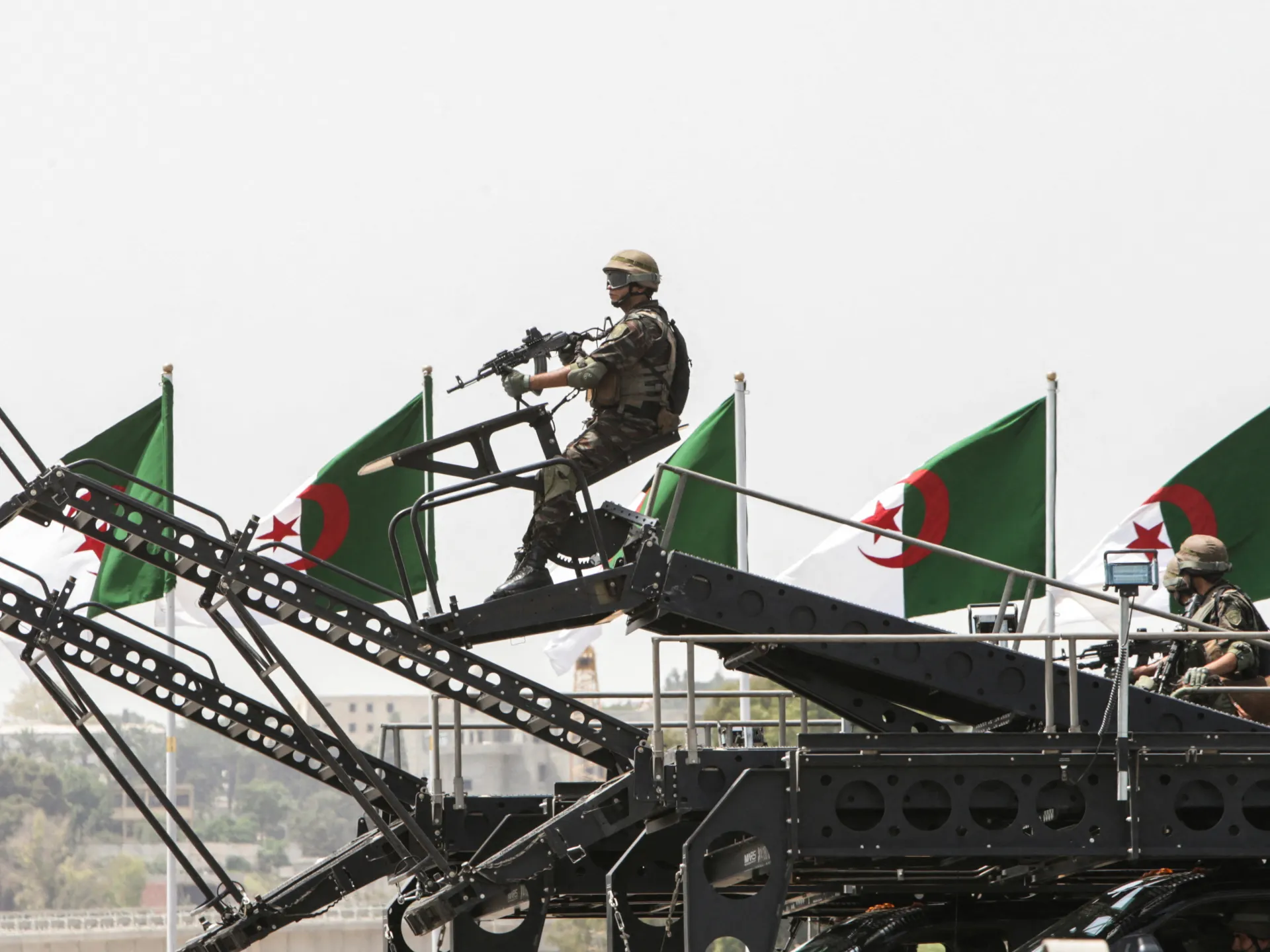
阿尔及利亚议会批准了一项向邻国尼日尔派遣部队的提案,这标志着这个北非国家不干涉主义军事教义发生重大转变。
Algeria’s parliament has approved a proposal to deploy troops to neighbouring Niger, in a major shift in the North African nation’s noninterventionist military doctrine.
阿尔及利亚议会下院——人民国民议会于周日批准了该部署,此前上院——民族委员会当天早些时候一致通过了该提案。关于派遣士兵的数量及部署时间等细节尚未公开。
Algeria’s lower house, the People’s National Assembly, ratified the deployment on Sunday after the upper house, the Council of the Nation, unanimously approved the proposal earlier in the day. Details about the number of soldiers and when they will be deployed have yet to be made public.
这距离阿尔及利亚派遣四架俄制苏霍伊苏-30战机、一架运输机和一架空中加油机飞抵尼亚美,已将近两个月。阿尔及利亚当局称此举是针对一起企图破坏尼日尔军政府稳定的行动。
It comes nearly two months after Algeria dispatched four Russian-made Sukhoi Su-30 jets, a transport aircraft and an aerial refuelling aircraft to Niamey, following what Algerian authorities described as an attempt to destabilise Niger’s military-led government.
此举正值阿尔及尔与尼亚美关系缓和之际:尼日尔总统阿卜杜拉哈曼·奇亚尼于2月访问阿尔及利亚,数月后,其国防部长萨利富·莫迪前往阿尔及尔商讨安全合作。
The step comes amid a thawing of relations between Algiers and Niamey as Niger’s President Abdourahamane Tchiani visited Algeria in February and, months later, his defence minister, Salifou Mody, travelled to Algiers to discuss security cooperation.
去年4月,阿尔及利亚军方击落一架马里无人机,引发外交危机,尼日尔、马里和布基纳法索随即召回驻阿尔及尔大使。阿尔及利亚对2023年尼日尔政变的谴责也曾使双边关系紧张。
The shooting down of a Malian drone by the Algerian army last April triggered a diplomatic crisis after Niger, Mali and Burkina Faso recalled their ambassadors from Algiers. The condemnation of the 2023 coup in Niger by Algeria had also strained ties.
据报道,此次部队部署旨在保护阿尔及利亚国家石油公司“索纳特拉克”在尼日尔的石油设施。阿尔及利亚参议员贝勒卡塞姆·布尔吉蒂对美联社表示,部队将被派遣“以保护阿尔及利亚的经济和战略利益,特别是其在尼日尔的石油设施”。
The troop deployment is reportedly intended to protect oil installations belonging to Algeria’s state-owned energy company, Sonatrach. Troops would be sent “to protect Algeria’s economic and strategic interests, particularly its oil facilities in Niger”, The Associated Press news agency reported, quoting Algerian Senator Belkacem Boulghiti.
此举也正值阿尔及尔寻求深化萨赫勒地区安全合作之际。萨赫勒地区是一片从大西洋延伸至红海的广阔地带,包括阿尔及利亚南部边境沿线的多个国家。这为何重要?
It also comes as Algiers seeks to deepen security cooperation in the Sahel, a vast belt of territory stretching from the Atlantic Ocean to the Red Sea, including several countries along Algeria’s southern frontier. Why does this matter?
阿尔及利亚历来不愿将其武装部队部署至国境之外,这反映了其长期奉行的以主权、不干涉内政和反对外国军事干预为核心的外交政策。但这并不意味着它从未这样做过。
Algeria has historically been reluctant to deploy its armed forces beyond its borders, reflecting a longstanding foreign policy built around sovereignty, noninterference and opposition to foreign military intervention. But that does not mean it has never done so.
阿尔及利亚部队曾参加1973年的阿以战争,但自那以后的几十年里,海外军事部署仍极为罕见。
Algerian forces participated in the 1973 Arab-Israeli war, although overseas military deployments have remained exceptionally rare in the decades since.
2020年的宪法修订将阿尔及利亚军队可被派往国外的条件正式写入法典。
A constitutional revision in 2020 formalised the conditions under which Algerian troops could be sent abroad.
根据第91条,总统可授权此类部署,前提是获得议会两院各自至少三分之二成员的支持。
Under Article 91, the president may authorise such deployments, provided they receive the backing of at least two-thirds of the members of each chamber of parliament.
宪法还规定,阿尔及利亚可在联合国、非洲联盟和阿拉伯联盟的主持下参与维和行动。
The constitution also provides for Algerian participation in peacekeeping operations under the auspices of the United Nations, the African Union and the Arab League.
考虑到阿尔及利亚的军事能力,这一举措尤为重要。据斯德哥尔摩国际和平研究所统计,该国2025年军费开支超过250亿美元,成为非洲最大军费开支国。
The move is particularly significant given Algeria’s military capabilities. According to the Stockholm International Peace Research Institute, the country spent more than $25bn on its armed forces in 2025, making it Africa’s largest military spender.
但这一决定也出于日益加剧的外交紧张局势和不断变化的地区联盟背景。
But the decision also comes against a backdrop of growing diplomatic tensions and shifting regional alliances.
9月,阿尔及利亚与阿拉伯联合酋长国断绝外交关系,指责阿布扎比采取了多次“敌对”和“挑衅行动”,但未公开详述决策背后的具体事件。
In September, Algeria severed diplomatic relations with the United Arab Emirates, accusing Abu Dhabi of repeated “hostile” and “provocative actions” without publicly detailing the incidents behind the decision.
两国长期在多个地区问题上存在分歧,包括西撒哈拉问题以及阿联酋涉嫌干预北非和萨赫勒地区事务。
The two countries have long disagreed over several regional issues, including Western Sahara and the UAE’s alleged interference in North African and Sahelian affairs.
综合这些事态发展来看,阿尔及利亚正日益愿意在国境之外维护其安全利益,同时仍继续强调主权和不干涉原则。为何是萨赫勒?对阿尔及利亚而言,萨赫勒地区的动荡并非遥远的安全担忧。
Taken together, these developments suggest that Algeria is becoming increasingly willing to assert its security interests beyond its borders, even as it continues to emphasise the principles of sovereignty and noninterference. Why the Sahel? For Algeria, instability in the Sahel is not a distant security concern.
该国与马里、尼日尔和利比亚共享数千公里边界,这使得其南部邻国的事态发展具有特别重大的影响。
The country shares thousands of kilometres of borders with Mali, Niger and Libya, making developments in its southern neighbourhood particularly consequential.
目前安全危机的根源部分可以追溯到2011年穆阿迈尔·卡扎菲在利比亚的政府垮台。
The roots of the current security crisis can be traced, in part, to the collapse of Muammar Gaddafi’s government in Libya in 2011.
在阿拉伯之春起义高潮时期,阿尔及利亚采取了坚定立场,反对外国军事干预,并警告利比亚国家的解体可能会使邻国陷入动荡。这些担忧并非毫无根据。
At the height of the Arab Spring uprisings, Algeria took a firm stance against foreign military intervention and warned that the disintegration of the Libyan state could destabilise neighbouring countries. Those concerns were not unfounded.
卡扎菲被推翻后,武器和武装战士(包括曾在利比亚服役的图阿雷格人)扩散至邻国。
Following Gaddafi’s overthrow, weapons and armed fighters, including Tuareg who had served in Libya, spread into neighbouring countries.
他们的回归助长了2012年马里北部的叛乱,导致了一场安全危机,并于当年3月引发了阿马杜·图马尼·杜尔总统被军方推翻。
Their return helped fuel a rebellion in northern Mali in 2012, contributing to a security crisis that preceded the military overthrow of President Amadou Toumani Toure that March.
在随后的十年里,武装叛乱蔓延至萨赫勒地区的部分国家,特别是马里、布基纳法索和尼日尔。
Over the following decade, armed rebellion expanded across parts of the Sahel, particularly Mali, Burkina Faso and Niger.
自2012年以来,仅这三个国家就经历了六次军事政变:马里三次,布基纳法索两次,尼日尔一次。
Since 2012, those three countries alone have experienced six military coups: three in Mali, two in Burkina Faso and one in Niger.
许多政变发生在安全形势恶化的背景下,军方领导人指责文职政府未能遏制日益壮大的武装团体。
Many of the coups unfolded against a backdrop of deteriorating security, with military leaders accusing civilian governments of failing to contain increasingly powerful armed groups.
但不安全并非唯一因素。政治不满、治理失败以及武装部队内部的竞争也助长了这些政变。还有谁在萨赫勒地区活动?
But insecurity was not the only factor. Political grievances, governance failures and rivalries within armed forces also contributed to the coups. Who else is operating in the Sahel?
另一个影响阿尔及利亚考量的因素是该地区外国军事力量存在的变化。
Another factor shaping Algeria’s calculations is the changing presence of foreign military forces across the region.
十多年来,法国一直是萨赫勒地区反恐行动的核心参与者,部署数千名士兵打击与基地组织和“伊斯兰国”(ISIS)有关联的武装团体。但这种军事存在已基本瓦解。
For more than a decade, France was a central player in counterterrorism operations in the Sahel, deploying thousands of troops to combat armed groups linked to al-Qaeda and ISIL (ISIS). But that military presence has largely unravelled.
继连续发生政变和外交关系恶化之后,法国于2022年8月从马里、2023年2月从布基纳法索、2023年12月从尼日尔撤军。
Following successive coups and deteriorating diplomatic relations, France withdrew its troops from Mali in August 2022, Burkina Faso in February 2023 and Niger in December 2023.
撤军伴随着反法情绪日益高涨,以及军政府要求更多掌控其安全政策的诉求。
The withdrawals were accompanied by growing anti-French sentiment and demands from military governments for greater control over their security policies.
尼日尔在2023年7月政变后,要求约1500名法国士兵撤离。
Niger demanded the departure of approximately 1,500 French soldiers following its July 2023 coup.
仅几个月后,即2024年4月,约100名俄罗斯军事人员抵达尼亚美,携带装备并为尼日尔部队提供训练。
Just months later, in April 2024, approximately 100 Russian military personnel arrived in Niamey, bringing equipment and providing training to Nigerien forces.
这些人员与“非洲军团”有关联,该俄罗斯准军事组织与克里姆林宫关系密切。
The personnel were associated with Africa Corps, a Russian paramilitary group close to the Kremlin.
莫斯科还扩大了与马里和布基纳法索的军事合作,俄罗斯人员在这两国承担训练、咨询和安全角色,包括在马里提供战斗支援。美国的军事足迹也在收缩。
Moscow has also expanded its military cooperation with Mali and Burkina Faso, where Russian personnel have undertaken training, advisory and security roles, including combat support in Mali. The United States has also seen its military footprint shrink.
2024年,在尼日尔军政府终止安全合作协议后,华盛顿从尼日尔撤出约1000名士兵。撤军包括驻扎在阿加德兹附近一个重要美国无人机基地的人员。
In 2024, Washington withdrew approximately 1,000 soldiers from Niger after the military government terminated their security cooperation agreement. The withdrawal included personnel stationed at an important US drone base near Agadez.
结果导致萨赫勒地区安全伙伴关系显著重组,西方军事力量撤离,俄罗斯扮演更突出的角色。阿尔及利亚能获得什么?
The result has been a significant realignment of the Sahel’s security partnerships, with Western military forces departing and Russia assuming a more prominent role. What does Algeria stand to gain?
对阿尔及尔而言,向尼日尔拟议的部署具有直接安全和更广泛的战略意义。
For Algiers, the proposed deployment to Niger carries immediate security and wider strategic implications.
在最务实的层面上,保护阿尔及利亚能源投资将有助于维护该国在该地区的经济利益,该地区受武装叛乱和政治动荡影响,包括跨撒哈拉天然气管道(TSGP),该管道将把尼日利亚天然气输送至欧洲,并途经尼日尔和阿尔及利亚。
At the most practical level, protecting Algerian energy investments would help safeguard the country’s economic interests in a region affected by armed rebellions and political instability, including the Trans-Saharan Gas Pipeline (TSGP), which would transport Nigerian gas to Europe and traverse Niger and Algeria.
这也可能深化与尼日尔的合作,后者的军政府自2023年掌权以来一直在寻求新的安全伙伴。
It could also deepen cooperation with Niger, whose military government has sought new security partners since taking power in 2023.
更广泛地说,此举将使阿尔及利亚能够在萨赫勒地区安全架构正在重塑之际,在一个邻国建立直接军事存在。
More broadly, the move would allow Algeria to establish a direct military presence in a neighbouring country at a time when the Sahel’s security architecture is being reshaped.
“我们不是派遣士兵去尼日尔打仗,而是执行保护经济基础设施的任务,”布尔吉蒂参议员在投票后对记者表示。“这仅仅是我们的军事教义对不断演变的形势做出的适应,以便我们能够应对萨赫勒地区局势带来的新挑战。”
“We are not sending our soldiers to wage war in Niger, but for a mission to secure economic infrastructure,” Senator Boulghiti told reporters after the vote. “It is simply an adaptation of our doctrine to evolving circumstances so we can rise to the new challenges imposed by the situation in the Sahel region.”