中国古代军事战略家孙子曾写道,面对对手时,重要的是给对方留一条退路,以避免陷入难以解决的战斗。在双方都面临彻底切断联系压力之际,华盛顿和北京似乎在生物技术行业听取了这一建议。
The ancient Chinese military strategist Sun Tzu once wrote that when confronting an adversary, it’s important to leave them an escape route to avoid an intractable fight. Washington and Beijing seem to have taken this advice to heart in the biotech industry at a time when both sides are being pressured to cut ties completely.
美国财政部上周发布了草案规则,限制对包括中国和俄罗斯在内的国家进行投资。华盛顿提议对中国制药公司实施与半导体和人工智能等行业相同的国家安全限制。
The US Treasury Department unveiled draft rules last week limiting investment in countries including China and Russia. Washington is proposing to subject Chinese pharmaceutical companies to the same national security restrictions already imposed on industries such as semiconductors and artificial intelligence.
然而,保留了一个关键例外。一位美国官员告诉我,新提案不涉及纯许可协议。这意味着,只要避免合资企业或其他形式的直接投资,美国公司可以继续达成协议,将中国研发的药物推向全球患者。虽然这意味着辉瑞公司向信达生物制药投资1亿美元股权等交易可能不再可行,但它保留了全球药企巨头与中国药物开发商之间最常见的合作伙伴关系形式。在国家主席习近平和总统唐纳德·特朗普预计将再次会晤前几周,这是可以预期的最好结果。
However, a key exception was carved out. The new proposals don’t address pure licensing agreements, a US official told me. That means American companies can continue striking deals to bring Chinese-developed medicines to patients around the world as long as they avoid joint ventures or other forms of direct investments. While this means transactions like Pfizer Inc.’s $100 million equity investment in 3SBio Inc. may no longer be possible, it preserves the most common kind of partnership between global pharma giants and Chinese drug developers. It’s the best result that can be expected just weeks before Presidents Xi Jinping and Donald Trump are due to meet again.
许可协议几十年来一直是大型制药企业商业模式的固定组成部分。它们允许较小的生物技术公司在不放弃所有权的情况下,借助大型药企的帮助将其发现商业化。早期的一个例子是,现在是罗氏控股有限公司旗下部门、行业先驱的基因泰克公司,近50年前将其开创性的胰岛素技术授权给礼来公司。
Licensing agreements have been a fixture of Big Pharma’s business model for decades. They allow smaller biotechnology companies to commercialize their discoveries with the help of larger drugmakers without surrendering ownership. An early example was when Genentech Inc., now a unit of Roche Holding AG and an industry pioneer, licensed its groundbreaking insulin technology to Eli Lilly & Co. nearly 50 years ago.
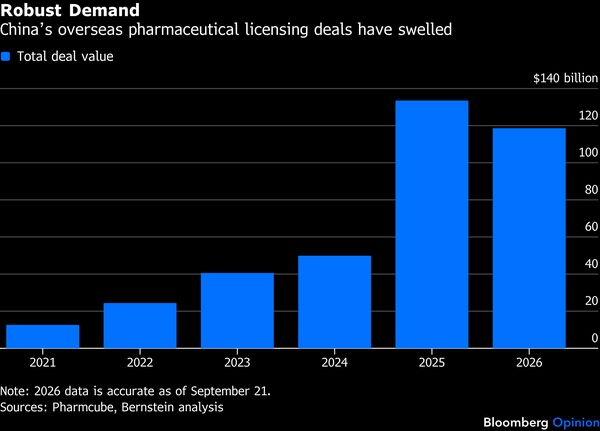
中国通过以跨国竞争对手极小部分的成本、更快的速度创制新药,打破了这一延续已久的模式。面对部分最赚钱药物的专利即将到期,药企巨头纷纷收购疗法以充实其研发管线,尤其是在癌症和肥胖症这两个中国研究取得快速进展的领域。过去五年,此类交易激增逾10倍。
China has disrupted this longstanding model by creating new drugs faster and at a fraction of the cost of its multinational rivals. Facing patent expirations on some of their most profitable drugs, pharma giants have been snapping up treatments to replenish their pipelines, particularly in cancer and obesity, two areas where Chinese research has made rapid advances. Over the past five years, such deals have risen more than 10-fold.
这一趋势令华盛顿的共和党和民主党议员都感到不安,他们担心美国制药公司过度依赖中国创新。因此,美国财政部将生物技术纳入一项与国家安全相关的投资法涵盖的行业名单,该法于12月通过,并不令人意外。
The trend has alarmed both Republicans and Democrats in Washington, who fear that US pharmaceutical companies are becoming too dependent on Chinese innovation. So it’s no surprise that the US Treasury added biotech to the list of industries covered by a national security-related investment law passed in December.
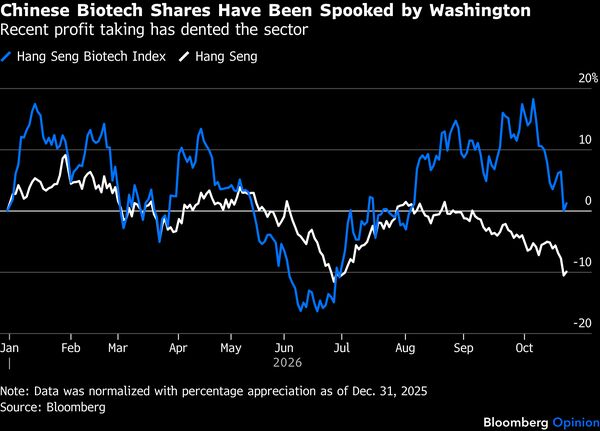
北京周末对该提案进行反击,称其具有歧视性。但这属于政治姿态。正如华盛顿担忧美国研究实力下降一样,中国国内也在进行类似的辩论,焦点在于其药企是否过于廉价地授权知识产权。授权方通常只能获得其本土市场以外收入的10%至15%分成,尽管前期开发工作是由其完成的。
Beijing hit back at the proposal over the weekend, calling it discriminatory. But this is political posturing. Just as Washington frets about a decline in America’s research prowess, there is an analogous debate in China over whether its drugmakers are licensing intellectual property too cheaply. The licensor usually gets only a 10% to 15% cut of revenues outside its home market, even though it has done the early development work.
有影响力的研究人员开始公开反对“卖苗子”这种做法,即允许有前景的药物发现在尚未成熟前就被大型药企抢购一空。全国人大代表、科学家李晓昆(其药物专利实现销售额100亿元人民币,约合15亿美元)在3月表示,这不仅有放弃未来利润的风险,还可能丧失全球医药产业的领导地位。
Influential researchers have started to speak out against the practice of or “selling green seedlings,” which refers to allowing promising drug discoveries to be snapped up by Big Pharma before they’ve had a chance to mature. Li Xiaokun, a national legislator and scientist whose drug patents have achieved 10 billion yuan ($1.5 billion) in sales, said in March that this risks surrendering not just future profits, but also leadership of the global pharmaceutical industry.
在美国财政部上周发布公告前几天,中国商务部提议限制细胞和基因疗法等五项生物医药技术的境外转让。但与特朗普政府一样,北京选择豁免此类交易,以及合作伙伴关系和研发服务外包。
Days before the Treasury announcement last week, China’s Commerce Ministry proposed to restrict the overseas sale of five biomedical technologies including cell and gene therapy. But like the Trump administration, Beijing opted to exempt such deals as well as partnerships and the outsourcing of research services.
由于资金不足的国内医疗保险体系难以负担这些创新,许多中国制药商无法将初期的发现转化为可盈利的药物。这意味着,将其授权给海外制药公司存在巨大的经济激励。如果不改革公共医疗体系或大幅扩展私人保险,这种情况不太可能改变。
Because the underfunded domestic health insurance system struggles to afford these innovations, many Chinese drugmakers aren’t able to turn fledgling discoveries into profitable medicines. That means there’s enormous financial incentive to keep licensing them to overseas pharmaceutical companies. The situation isn’t likely to change without an overhaul of the public healthcare system or major expansion of private insurance.
与此同时,允许授权协议,同时采取措施减少更直接的基于股权的合作,是一种可接受的妥协。它让双方都能满足批评者,同时保留新药的关键渠道。
In the meantime, allowing licensing agreements while taking steps to reduce more direct equity-based collaboration is an acceptable compromise. It allows both sides to satisfy critics while preserving a crucial pipeline of new drugs.
双方都不必背叛自己的核心利益,就能认识到某些形式的合作值得保留。孙子懂得,即使是竞争对手也需要一条出路。在开发救命药物的竞赛中,保持这条道路畅通绝非小胜。
Neither side has to betray its core interests to recognize that some forms of cooperation are worth preserving. Sun Tzu understood that even rivals need a way out. In the race to develop lifesaving medicines, keeping that path open is no small victory.