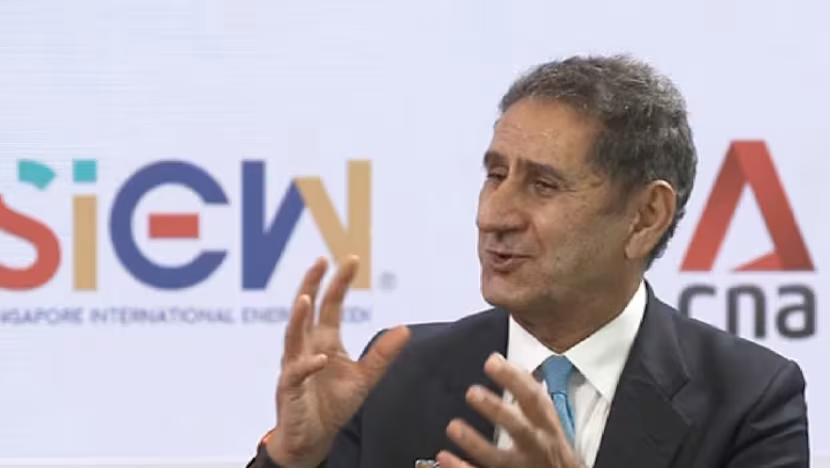
新加坡:国际可再生能源机构(IRENA)总干事弗朗切斯科·拉·卡梅拉(Francesco La Camera)警告称,世界正逐渐接近2030年可再生能源装机容量目标,但即便实现该目标,也可能不足以达成全球气候目标。
SINGAPORE: The world is moving closer to its 2030 renewable energy capacity target, but even achieving that goal may not be enough to meet global climate objectives, the International Renewable Energy Agency (IRENA) chief has warned.
拉·卡梅拉周一(10月26日)表示,这是因为能源需求增长快于预期,而能源效率提升进展持续滞后。
This is because energy demand is growing faster than expected, while progress in energy efficiency continues to lag, IRENA director-general Francesco La Camera said on Monday (Oct 26).
在2023年迪拜COP28气候峰会上,各国承诺到2030年将全球可再生能源装机容量增至11.2太瓦(TW),即增加两倍。
At the COP28 climate summit in Dubai in 2023, countries committed to tripling global installed renewable energy capacity to 11.2 terawatts (TW) by 2030.
拉·卡梅拉在新加坡国际能源周(SIEW)间隙接受CNA采访时说:“我们正越来越接近203年达到11.2太瓦的目标。”“我们不会完全达到,但会非常接近。”不过,最初的目标是基于对未来能源需求的预测制定的,而这些预测此后已发生变化。
“We are getting closer and closer to the (target of) 11.2TW by 2030,” Mr La Camera told CNA on the sidelines of the Singapore International Energy Week (SIEW). “We will not get there exactly but very close to it.”However, the original target was based on projections about future energy demand that have since changed.
他说:“需求上升得更快,是因为生活方式的改变——供暖更多、制冷更多”,并指出人工智能是一个促成因素。
“The demand has been rising faster because of the change in lifestyle – more heating, more cooling,” he said, pointing to artificial intelligence as a contributing factor.
近年来,人工智能热潮推动高能耗数据中心快速增长,随着算力需求激增,增加了全球用电量。
In recent years, the AI boom has driven rapid growth in energy-intensive data centres, adding to global electricity consumption as demand for computing power surges.
各国在COP28上还承诺到2030年将全球年均能源效率提升率翻倍,但拉·卡梅拉表示进展缓慢。
Countries at COP28 also committed to doubling the global average annual rate of energy efficiency improvement by 2030 but Mr La Camera said progress has been slow.
他说:“我们在能源效率方面的进展不太理想。这意味着供需差距一直在扩大。”
“We have had not very good progress in energy efficiency. This means that the gap between supply and demand has been widening,” he said.
他补充说,即便达到装机容量翻三倍的目标,可能也不足以让世界保持在与《巴黎协定》气候目标一致的路径上,即将全球升温控制在比工业化前水平高出2摄氏度以内,并努力限制在1.5摄氏度以内。他说,该机构正在制定一份路线图,以使全球能源转型重回正轨。
He added that even meeting the tripling target might not be sufficient to keep the world on a pathway consistent with the Paris Agreement’s climate goal of limiting global warming to well below 2 degrees Celsius above pre-industrial levels, while pursuing efforts to limit the increase to 1.5°C. The agency is working on a roadmap to bring the global energy transition back on track, he said.
可再生能源创纪录增长,但速度依然不够快 国际可再生能源署负责人拉卡梅拉发出这一警告之际,可再生能源装机容量仍在不断创下历史新高。
RECORD GROWTH FOR RENEWABLES, BUT STILL NOT FAST ENOUGH Mr La Camera’s warning comes even as renewable energy installations continue to reach record highs.
根据国际可再生能源署的数据,2025年全球新增可再生能源发电容量692吉瓦,占全球所有新增发电容量的85.6%。
The world added 692 gigawatts of renewable power capacity in 2025, accounting for 85.6 per cent of all new power capacity installed globally, according to IRENA.
截至去年底,全球可再生能源发电总容量达到5,149吉瓦,年增长率为15.5%。
Total renewable power capacity reached 5,149 gigawatts by the end of last year, an annual increase of 15.5 per cent.
拉卡梅拉指出,尽管经历了新冠疫情、乌克兰战争和中东能源危机等接连不断的全球危机,绿色能源装机容量仍在持续增长,这证明了能源转型的韧性。他补充说,这些动荡也凸显了可再生能源在能源安全方面的好处。
Mr La Camera pointed to the continued growth in green energy installations despite successive global crises, including the COVID-19 pandemic, the war in Ukraine and the Middle East energy crisis, as evidence of the transition's resilience. He added that the upheavals also highlighted the energy security benefits of renewables.
他表示:“现在,面对所有这些接连不断的危机,我们看到人们正在依赖可再生能源,依赖一个本质上似乎比化石燃料更安全的分布式能源系统。”
“Now, with all these crises, one after the other, we see that people are relying on renewables, on a decentralised energy system that appears to be intrinsically more secure than fossil fuel,” he said.
不过,拉卡梅拉强调,全球向更清洁能源系统的转变将是一个渐进的过程,需要持续的努力。
However, Mr La Camera stressed that a global shift towards a cleaner energy system would be a gradual process, requiring sustained efforts.
他说:“我们是国际可再生能源署,但我们从未要求(彻底)淘汰化石燃料,因为我们知道这在短期内是不可能的。”可再生能源能否满足人工智能不断增长的需求?
“We are the International Renewable Energy Agency, but we never asked for (completely) phasing out fossil fuel because we know that is impossible to do in the short term,” he said. CAN RENEWABLES MEET GROWING DEMAND FROM AI?
随着人工智能和数据中心对不间断电力的需求不断推动,关于可再生能源和电池储能能否取代传统天然气发电的疑问依然存在。
With AI and data centres driving demand for uninterrupted electricity, questions remain over whether renewables and battery storage can replace conventional gas-fired power generation.
拉卡梅拉表示它们可以取代,并指出中国青海省的一个大型数据中心采用了塔式太阳能热发电、光伏系统、风电和水力发电相结合的模式。
Mr La Camera said they could, pointing to a major data centre in China’s Qinghai province that uses a combination of concentrated solar power, solar photovoltaic systems, wind and hydropower.
他还认为,与建设新的天然气发电厂相比,可再生能源与储能相结合可能是一个更具吸引力的选择。
He also argued that renewable energy combined with energy storage could be a more attractive option than building new gas-fired power plants.
不过,他承认,各国和各地区的能源需求与实际情况各不相同,在过渡期间仍需要天然气。
However, he acknowledged that energy needs and circumstances vary across countries and regions, and that natural gas would still be needed during the transition.
拉卡梅拉表示,除了减少排放和能源安全之外,电费成本将在决定各国经济竞争力方面发挥日益重要的作用。
Beyond emissions reduction and energy security, Mr La Camera said the cost of electricity would play an increasingly important role in determining countries’ economic competitiveness.
他说:“是什么让经济具有竞争力?产品的质量、产品的推广,还有我们生产商品所需的电费成本。”他还说:“而成本最低的是可再生能源。”
“What makes the economy competitive? The quality of products, the promotion of products, but also the cost of the electricity that we need for producing the goods,” he said. “And the lower cost is with renewables.”