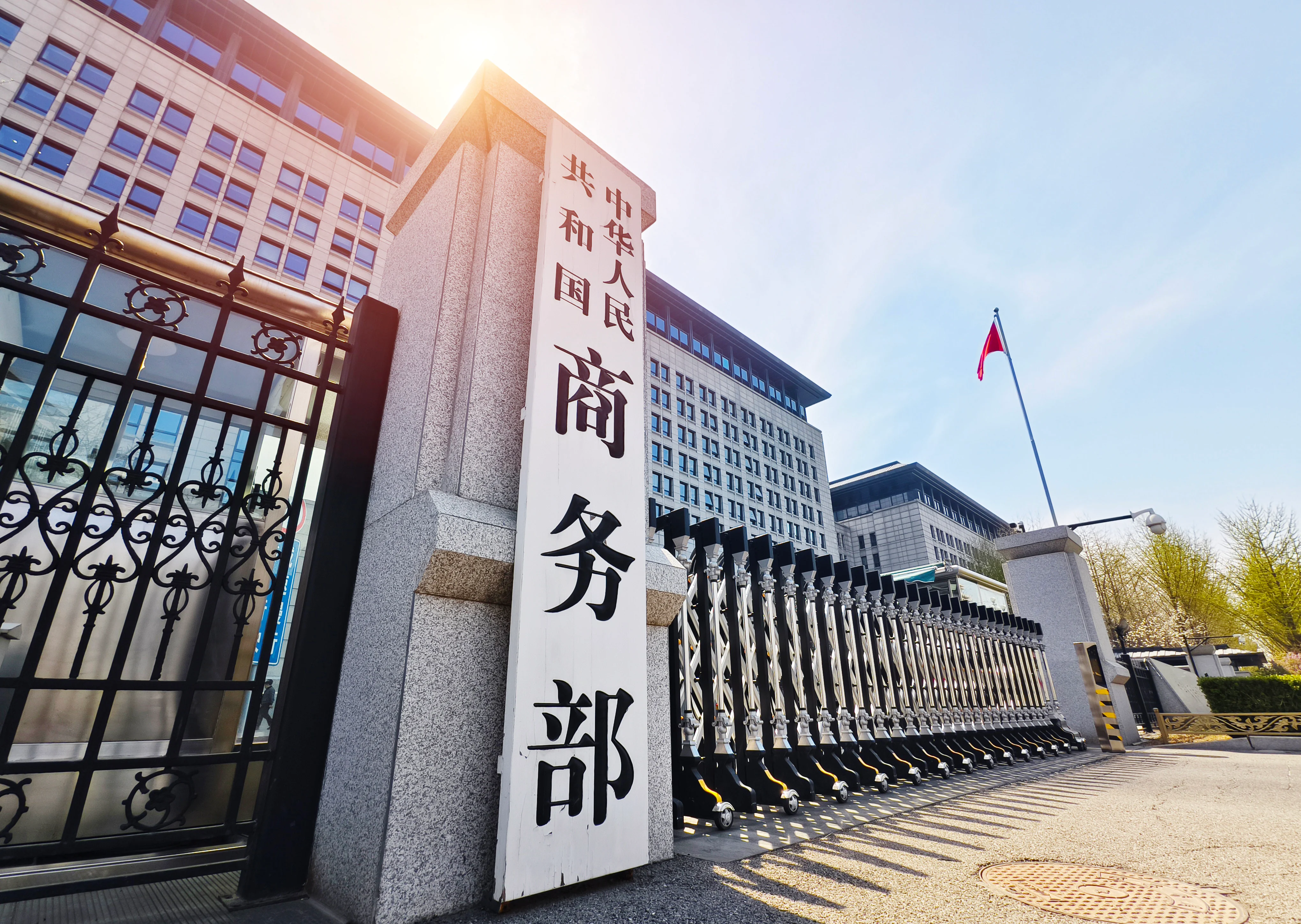
中国计划针对侵犯本地商业秘密的外国实体采取新措施,以加强其在与美国的科技竞赛中的法律防御。
China plans new measures against foreign entities that infringe on local trade secrets, a boost to its legal defences in a technology race with the United States.
根据商务部周一发布的提案,新规将涵盖任何损害或“对中国国家主权、安全和发展利益构成现实威胁”的侵权行为。公众意见征询期至11月24日。
New rules will cover any infringement that harms or “poses a real threat to China’s national sovereignty, security and developmental interests”, according to proposals released by the commerce ministry on Monday. The window for public comment is open until November 24.
这些草案规则通过扩大政府干预范围,并创建将违规者实际上排除在中国庞大国内市场之外的处罚措施,来强化中国的知识产权保护。这些提案出台之际,中国正在电动汽车、清洁能源和开放权重人工智能(AI)模型等行业中,越来越多地在技术上领先于美国和欧洲。
The draft rules toughen China’s intellectual property protection by broadening the scope for government intervention and creating penalties that would effectively shut violators out of the country’s huge domestic market. The proposals come as China increasingly builds a technology lead over the US and Europe in industries such as electric vehicles, clean energy and open-weight artificial intelligence (AI) models.
计划中的处罚包括禁止或限制在中国进行交易和投资,以及限制人员和车辆入境、取消工作签证和罚款等更有限的措施。
Planned punishments include bans or restrictions on trading and investments in China as well as more limited steps such as curbs on the entry of personnel and vehicles, the cancellation of work visas and fines.
根据草案,如果外国实体“自主采取纠正行动,停止侵权,消除危险,并赔偿损失”,可以请求解除处罚。
A foreign entity will be able to request the lifting of penalties if it “voluntarily takes corrective action, ceases the infringement, eliminates the danger, and compensates for losses”, according to the draft law.
美国上周宣布对五家涉嫌从美国企业窃取商业秘密的中国实体实施制裁。名单包括上海之算科技,其创始人、前谷歌工程师丁林伟于1月被判定从这家美国科技巨头窃取人工智能商业秘密。
The US last week announced sanctions against five Chinese entities suspected of stealing trade secrets from American businesses. The list included Shanghai Zhisuan Technology, whose founder, ex-Google engineer Ding Linwei, was convicted of stealing AI trade secrets from the US tech giant in January.
中国商务部表示,它“坚决反对”这一举动,该举动“污名化了中国公司”并损害了其权利和利益。
China’s commerce ministry said it “firmly opposed” the move, which “stigmatised Chinese companies” and undermined their rights and interests.
美国财政部上周公布的拟议规章规定,美国投资者在涉及中国科技公司的交易时将面临更严格的管制。生物技术、先进芯片、人工智能和高超音速武器系统属于这些规则涵盖的领域,这些规则落实了《2025年综合对外投资国家安全法》。该法律加强了对针对中国以及伊朗和俄罗斯等其他对手的投资的审查。中国商务部表示:“美国对华投资限制不仅会损害中美经贸合作,也会损害美国企业的利益。”
US investors face tougher controls on deals involving Chinese technology companies under proposed regulations published by the US Treasury last week. Biotechnology, advanced chips, AI and hypersonic weapons systems are among areas covered by the rules, which implement the 2025 Comprehensive Outbound Investment National Security Act. The law boosts scrutiny of investment in China and other adversaries including Iran and Russia. “US restrictions on investment in China would not only harm China-US economic and trade cooperation but also hurt the interests of US firms,” China’s commerce ministry said.
据彭博社周一援引知情人士消息报道,欧盟计划最早于2027年第一季度出台措施,以放缓中国制造的化学品、家具和机械的进口。这些措施可能包括进口配额或关税,旨在效仿该集团近期在限制中国产混合动力汽车涌入方面取得的成功。欧洲领导人已转向支持对华采取更严厉的措施,以帮助削减已超过每天10亿欧元(合12亿美元)的双边贸易逆差。
The European Union plans to introduce measures to slow imports of Chinese-made chemicals, furniture and machinery as soon as the first quarter of 2027, Bloomberg News reported on Monday, citing people familiar with the matter. The measures, which could include import caps or tariffs, aim to mirror the bloc’s recent success in restricting the flow of Chinese-made hybrid cars. European leaders have swung to supporting tougher measures against China to help pare a bilateral trade deficit that has surpassed €1 billion (US$1.2 billion) a day.
人工智能巨头Anthropic已向纳斯达克提交了规模可能创纪录的首次公开募股申请,尽管对该技术长期盈利能力不断上升的担忧正对从上海到纽约的股市造成拖动。据报道,这家《克劳德》(Claude)的开发商计划筹集高达1000亿美元资金,超过科技大亨埃隆·马斯克旗下的太空探索技术公司(SpaceX)在6月份筹集的857亿美元。Facebook的母公司Meta则单独宣布了出售975亿美元股票的计划,以为人工智能投资筹集资金。
AI giant Anthropic filed for a potentially record initial public offering on the Nasdaq, even as rising concerns about the long-term profitability of the technology weigh on stock markets from Shanghai to New York. The Claude developer is reportedly planning to seek as much as US$100 billion, surpassing the US$85.7 billion raised by tech mogul Elon Musk’s SpaceX in June. Facebook owner Meta separately announced plans to sell US$97.5 billion of stock to fund AI investments.
重视知识产权:虽然知识产权盗窃仍然是一个重大的挑战,但用它来理解现代中国与知识产权的关系是远远不够的。中国仅仅是一个无视知识产权的盗窃者的形象,反映了其技术发展的早期阶段。在过去的二十年里,中国已成为多个行业的全球领先创新者和主要的知识产权生产国。它现在将知识产权理解为一项能够服务于其更广泛技术目标的工具,并据此加强了其知识产权体制。
Serious about IP: While IP theft remains an important challenge, it is an insufficient framework for understanding modern China’s relationship with IP. The image of China as simply a thief with disregard for IP rights reflects an earlier stage of its technological development. Over the last two decades, China has become a world-leading innovator in a range of industries and a major IP producer. It now understands IP rights as an instrument that can serve its broader technological objectives, and it has strengthened its IP institutions accordingly.
换句话说,中国之所以开始重视知识产权,是因为知识产权现在能够推进中国的国家利益。(战略与国际研究中心)新增工具:中国正将其应对外部技术限制的经验转化为额外的制度工具,以保护自身的科技优势。目前,其目标不仅局限于通过增强技术自立来克服限制;它还开始加强商业秘密保护,并提高盗窃商业秘密和使用中国技术的成本。
In other terms, China has become serious about IP because IP can now advance China’s national interests. (Center for Strategic and International Studies) Added tools: China is turning its experience of external technological restrictions into additional institutional tools to protect its own technological strengths. For now, the target is not limited to overcoming restrictions through greater technological self-reliance; it has also started to strengthen trade-secret protection and make the theft of trade secrets and the use of Chinese technology more costly. (Inside China, Substack) Tech goes global: The government is increasingly concerned not only with how technology leaves China, but also who controls it after it goes overseas, and what happens if foreign parties obtain it improperly.
(中国内幕,Substack子栈)技术走向全球:政府不仅越来越关注技术如何流出中国,还关注技术出海后由谁控制,以及如果外国方不当获取技术将会发生什么。技术出口管制体系、海外投资规则以及拟议的商业秘密保护措施,各自拥有不同的适用范围和法律门槛。但这三者都应对了同一挑战的不同方面:即在是中国企业进行国际扩张的同时,保护与技术相关的权益。
(地缘政治科技,Substack子栈)先发制人的行动:《保护中国商业秘密特别规定(征求意见稿)》有两个触发条件,其中第二个条件——构成“实际威胁”的行为——涵盖了尚未发生损害的情况,这为商务部采取先发制人的行动提供了依据。
The technology export control system, overseas investment rules, and proposed trade secret protection measures each have their own scope and legal thresholds. But all three address different aspects of the same challenge: protecting technology-related rights and interests as Chinese companies expand internationally. (Geopolitechs, Substack) Preemptive action: The Special Provisions on Protecting China’s Trade Secrets (Draft for Comment) has two triggers, and the second – conduct that poses an “actual threat” – covers situations where no harm has yet occurred, which gives MOFCOM a basis to act preemptively.
此外,“中国商业秘密”这一术语并不明确——它是取决于持有人的国籍、商业秘密的所在地,还是某种其他联系……(《国家法律评论》)严重事件:哈佛大学和加州大学伯克利分校的研究人员梳理了1995年至2024年间发生的300多起严重的中国网络间谍活动和知识产权盗窃事件。在其中的每一起事件中,美国都未能保护其资产和关键技术,包括半导体制造计划和航空航天设计。
Further, the term Chinese trade secrets is unclear – is it dependent on the holder’s nationality, the location of the trade secret, or some other connection … (The National Law Review) Severe incidents: Researchers at Harvard University and the University of California, Berkeley, have catalogued more than 300 severe incidents of Chinese cyber-espionage and intellectual property theft from 1995 to 2024. In every one of these incidents, the United States failed to secure its assets and critical technologies, including semiconductor manufacturing plans and aerospace designs.
外国对手利用这些攻击加速了它们自己的发展,通过窃取而不是创新来取得进展。(《外交事务》杂志,评论)长期以来,中国一直是美国和欧洲就知识产权盗窃(包括刑事诉讼)进行抱怨的目标。如今,该国也有了自己的商业秘密需要保护。
Foreign adversaries used these attacks to accelerate their own development, progressing by theft rather than by innovation. (Foreign Affairs, opinion) China has long been the target of US and European complaints about intellectual property theft, including criminal proceedings. These days, the country has commercial secrets of its own to protect.
这种转变是一个非同寻常的发展,因为中国直到1984年才颁布专利法。在此之前,知识产权不由企业专利持有,而是作为专有国家技术由国家研究机构和国有企业持有。
The switch-around is a remarkable development, as China didn’t even enact a patent law until 1984. Before that, intellectual property was held by state research institutes and state-owned enterprises as proprietary national technology instead of corporate patents.
根据西格里德·施马尔策(Sigrid Schmalzer)2016年出版的著作《红色革命:中国的杂交水稻与绿色革命》(Red Revolution: Agroscience in Socialist China)记载,中国知识产权的第一次现代转让发生在1980年,此前美国实业家阿芒德·哈默(Armand Hammer)听说了该国在抗虫杂交水稻品种上取得的成功。哈默旗下西方石油公司(Occidental Petroleum)的一个部门随后与中国种子集团公司签署了一笔交易,允许这家美国公司生产和销售杂交水稻品种,以换取来自美国的杂交棉花。
The first modern transfer of Chinese intellectual property (IP) took place in 1980 after US industrialist Armand Hammer heard of the country’s success with hybrid strains of rice that were resistant to insects, according to Sigrid Schmalzer’s 2016 book . A unit of Hammer’s Occidental Petroleum subsequently signed a deal with China National Seed Corp., allowing the US company to produce and market the hybrid rice strains in exchange for hybrid cotton from the US.
中国国家知识产权局7月表示,如今,在中国有效的每六件发明专利中,大约就有一件涵盖人工智能、云计算或大数据等先进技术。这些都是中美技术竞争中的关键领域。
Nowadays, about one in every six invention patents valid in China covers advanced technologies like artificial intelligence (AI), cloud computing or big data, the China National Intellectual Property Administration said in July. These are all key areas in the China-US technology rivalry.
联合国世界知识产权组织在7月的一份报告中表示,在过去两年中,中国还占全球生成式人工智能专利发放量的75%以上,共公布了4.3万多项专利族。在此期间,该国拥有五大专利生成机构中的四家——腾讯、中国平安、百度和中国科学院。日本软银以2985项已公布的专利族位居该名单榜首。
China also accounted for more than 75 per cent of the global generative AI patents issued in the last two years, publishing over 43,000 patent families, the UN’s World Intellectual Property Organization said in a July report. The country boasts four of the five biggest patent generators in the period – Tencent, Ping An Insurance, Baidu and the Chinese Academy of Sciences. Japan’s SoftBank topped the list with 2,985 published patent families.
中国企业在锂离子电池、风力涡轮机、太阳能电池板、电动汽车、半导体生产和稀土加工等众多其他技术领域也已成为全球领军者。
Chinese companies have similarly become global leaders in numerous other technology fields, including lithium ion batteries, wind turbines, solar panels, electric vehicles, semiconductor production and rare earths processing.
中国科技行业的增长引发了关于盗窃商业秘密的法律纠纷,其中包括跨境纠纷。去年,北京亦庄半导体科技有限公司起诉美国竞争对手应用材料公司,就一家美国子公司开发的商业秘密侵权索赔1400万美元。该案目前仍在北京知识产权法院等待审理。
The growth of China’s tech sector has contributed to legal disputes over the theft of commercial secrets, including cross-border disputes. Last year, Beijing E-Town Semiconductor Technology sued US rival Applied Materials, seeking US$14 million for infringement of trade secrets developed by a US unit. The case is still awaiting trial at the Beijing Intellectual Property Court.
在美国,北京新云东方系统科技有限责任公司针对IBM的商业秘密诉讼于2022年被一家联邦法院驳回。该案的中心是客户信息而非技术。
In the US, Beijing Neu Cloud Oriental System Technology had a trade secrets claim against IBM thrown out by a federal court in 2022. The case centred on customer information rather than technology.
中国国内也曾出现关于企业窃密的投诉。去年8月,上海一家法院将华为技术有限公司的14名前员工判处监禁,罪名是窃取芯片相关的商业秘密。这些曾在这家科技巨头的芯片研发单位海思工作的工程师被判处了长达六年的有期徒刑,并被处以罚款。
There have also been complaints within China about corporate theft. Last August, a Shanghai court imprisoned 14 former Huawei Technologies employees for stealing chip-related business secrets. Sentences as long as six years, as well as fines, were handed down to the engineers, who had worked for the tech giant’s chip development unit HiSilicon.
美国和欧洲对中国技术窃密的投诉可以追溯到几十年前,且跨越了不同党派。早在1996年,时任美国总统、民主党人比尔·克林顿就曾威胁要对价值20亿美元的中国进口商品征收关税,原因是没有保护好美国的知识产权。
US and European complaints about Chinese technology theft stretch back decades and across party lines. As far back as 1996, then-US president Bill Clinton, a Democrat, threatened tariffs on US$2 billion of imports from China because of failures to protect American IP.
更近一些时候,共和党人唐纳德·特朗普在他所有的三次总统竞选中都提出了类似的不满。在特朗普任下担任联邦调查局局长的克里斯托弗·雷在2020年的一场演讲中,将中国的知识产权盗窃形容为“人类历史上最大规模的财富转移之一”。
More recently, Republican Donald Trump made similar complaints in all three of his presidential campaigns. Christopher Wray, the head of the Federal Bureau of Investigation under Trump, described Chinese IP theft as “one of the largest transfers of wealth in human history” in a 2020 speech.
特朗普政府利用了由民主党人乔·拜登签署成为法律的立法,来协助捍卫美国的商业机密。该政府最近利用《2022年保护美国知识产权法》对五个中国实体实施了制裁,其中包括丁林伟(音)建立的一家公司。今年1月,一家美国法院裁定这名前谷歌软件工程师窃取该科技巨头的商业机密等七项罪名成立。
The Trump administration has taken advantage of legislation signed into law by Democrat Joe Biden to help defend US trade secrets. It recently used the Protecting American Intellectual Property Act of 2022 to impose sanctions on five Chinese entities, including a company set up by Ding Linwei. In January, a US court convicted the former Google software engineer on seven counts of stealing trade secrets from the tech giant.
与此同时,欧盟已就一系列投诉将中国诉至世界贸易组织,这些投诉包括操纵全球专利使用费,以及允许华为和小米等公司以低至半价的价格获得技术许可。欧盟还对中国法院禁止外国专利权人在海外法院提出侵权诉讼的做法提出了质疑。
The European Union, meanwhile, has taken China to the World Trade Organization over a range of complaints, including fixing worldwide patent royalties and allowing companies like Huawei and Xiaomi to secure technology licences for as little as half price. The EU has also challenged the practice of Chinese courts barring foreign patent holders from making infringement claims in overseas courts.
鉴于中国的快速发展和日益激烈的科技竞争,美国和欧洲对中国技术盗窃的更多投诉似乎是不可避免的。现在,我们也可以预料到会有一些反方向的举措。
More US and European complaints about Chinese technology theft seem inevitable, given China’s rapid advancement and increasingly heated tech competition. Now we can expect some moves in the other direction as well.