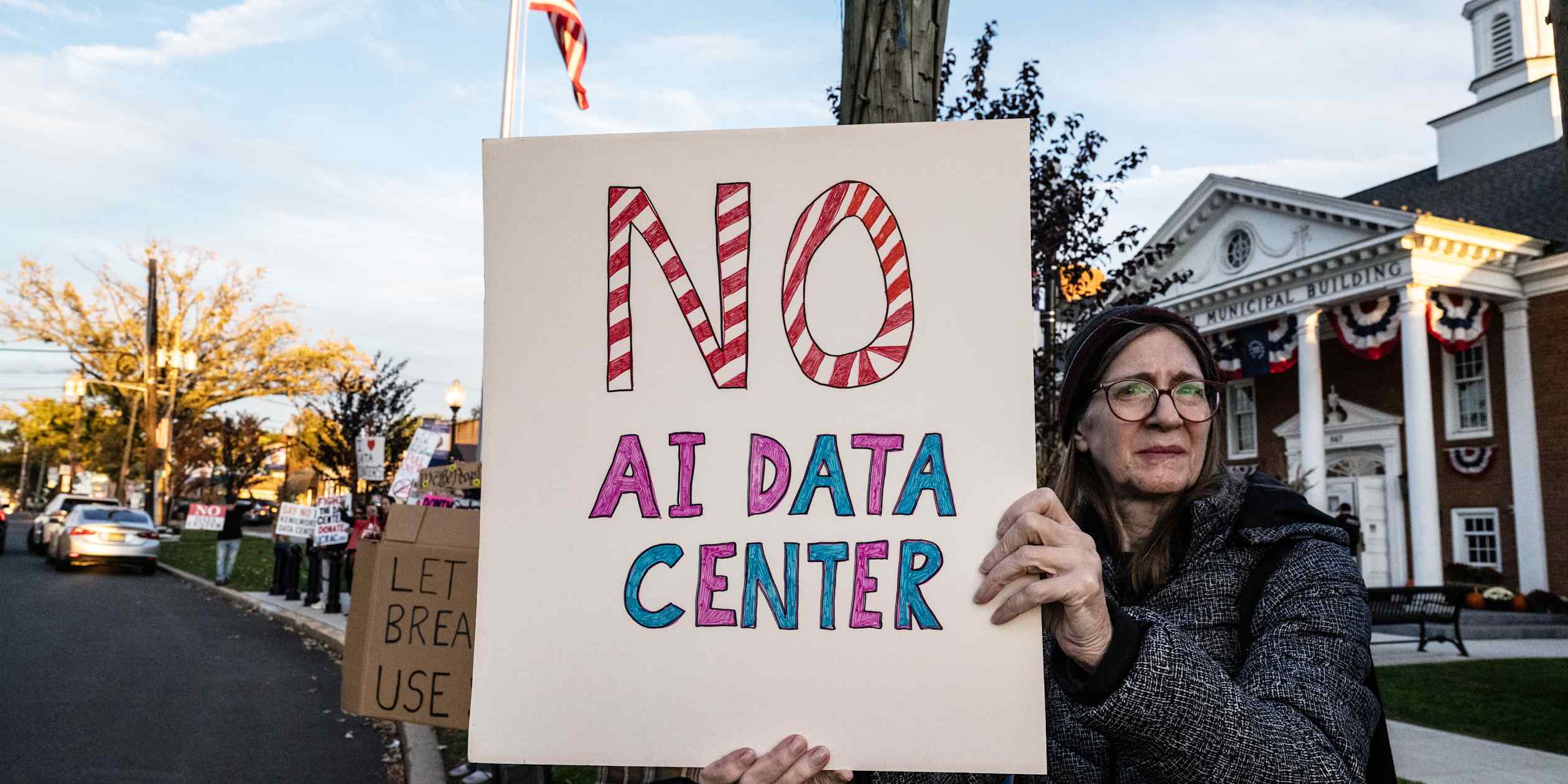
俄亥俄州杰克逊县/华盛顿/旧金山 —— 当凯西·胡佛·霍尔的父亲在一个三月的晚上把她和妹妹叫到位于俄亥俄州杰克逊县的家庭农舍时,她不知道会发生什么。但她知道一条他们从小遵守的规矩:绝不卖地。
JACKSON COUNTY, Ohio/WASHINGTON/SAN FRANCISCO -- When Kasey Hoover Hall's father called her and her sister to the family farmhouse in Jackson County, Ohio, one March evening, she didn't know what to expect. What she did know was the rule they had grown up with: You never sell the land.
但一份报价来了。一位不愿透露姓名的开发商想在胡佛家族四代人拥有的约273英亩(约1105公顷)土地上,建设一个占地2000英亩(809公顷)的数据中心园区的一部分。报价为每英亩5万美元——是该县在售房产最高要价的两倍多——这笔钱可能改变一生。然而,霍尔并不感兴趣。
But an offer had come in. An unnamed developer wanted to build part of a 2,000-acre (809-hectare) data center campus on about 273 acres owned by four generations of the Hoover family. At $50,000 per acre -- more than double the highest asking prices for properties on sale in the county -- the money being offered was potentially life changing. Hall, however, wasn't interested.
“我宁愿穷得快乐,也不愿富得不再务农,”她告诉《日经亚洲》。
"I'd rather be poor and happy than loaded and not farming my farm," she told Nikkei Asia.
但说“不”并不是她参与的终点。几天后,在当地市政法院工作的霍尔开始给邻居发短信,其中包括几位也收到土地报价的邻居,询问他们能否见面讨论开发商的提议。这迅速演变成一场本地运动,数据中心项目被搁置。
But saying "no" wasn't the end of her involvement. Days later, Hall, who works at the local municipal court, began to text neighbors, including several who were also given offers for their land, and asked whether they could meet to discuss the developer's proposal. This swiftly turned into a local movement, and the data center project has been put on hold.
现在,霍尔和她的家人——全都是登记在册的共和党人——正在深红的杰克逊县考虑一个不同寻常的举动:在11月3日的美国中期选举中投票给民主党,以惩罚他们相信曾迎合该行业、并背叛了他们信任的政客。
Now Hall and her family, all registered Republicans, are considering an unusual step in deep-red Jackson County: voting Democratic in the U.S. midterm elections on Nov. 3 to punish the politicians they believe courted the industry -- and betrayed their trust.
“对我来说,这不是政治问题,但它变成了政治问题,”她说。“我只想保护我们的农业。我要保护我们的资源。”霍尔并不孤单。她对数据中心的反感是全美趋势的一部分,其影响远及亚洲,那里的公司——从台湾的服务器制造商到韩国的芯片制造商——正通过帮助建设美国的人工智能基础设施赚取巨额利润。
"To me, it's not political, but it's gotten political," she said. "I just want to save our agriculture. I want to save our resources." Hall is not alone. Her turn against data centers is part of a nationwide trend with implications as far away as Asia, where companies ranging from Taiwanese server makers to South Korean chipmakers are reaping enormous profits by helping build America's AI infrastructure.
在一个因大多数重大问题而陷入激烈党派争端的国家里,一场反对数据中心的意外共识在2026年选举的竞选活动中浮现,此次选举将决定唐纳德·特朗普总统领导的共和党是否保持对国会两院的控制权,还是将一院或两院让给少数党民主党。
In a country marked by bitter partisan disputes over most big issues, an unexpected consensus opposing data centers has emerged during the campaign for the 2026 elections, which will determine whether President Donald Trump's Republican Party retains control of the two houses of Congress or cedes one or both to the minority Democrats.
据《经济学人》和YouGov的民调显示,超过60%的美国人——其中71%的民主党人和52%的共和党人——表示他们将反对在其所在地区建设数据中心。共和党人的反对具有重要意义,因为据追踪电力基础设施和数据中心开发的Cleanview统计,60%的在建数据中心位于特朗普在2024年总统大选中获胜的州。
Over 60% of Americans -- 71% of Democrats and 52% of Republicans -- said they would oppose a data center being built in their area, according to a poll by the Economist and YouGov. The Republican opposition is significant because 60% of data centers under construction are in states that Trump won in the 2024 presidential election, according to Cleanview, which tracks power infrastructure and data center development.
贝恩全球科技、媒体和电信业务主席大卫·克劳福德表示:“无论出于何种原因,数据中心,至少在美国,已经成为某种阶级冲突的代名词。”“它们被视为亿万富翁的玩具,如果你要在我的社区建设,我最好能因此得到补偿。”克劳福德表示,他认为新政治环境最可能导致的结果是开发步伐的改变,这意味着该行业将不得不参与一场关于建设如此多项目影响的“合理辩论”。
"For whatever reason, data centers, at least in the United States, have become kind of a synonym for class conflict," said David Crawford, chair of Bain's global technology, media and telecommunications practice. "They're [viewed as] billionaires' toys, and if you are building in my neighborhood, I better get paid for it." Crawford said he believed that the most likely outcome of the new political environment would be a change in the pace of development, meaning the industry would have to take part in a "legitimate debate" about the impact of building so many projects.
“数据中心选址毫无阻力的时代大概已经结束了,”他说。“你必须走完各项流程,就像你要建一个巨大的公寓楼一样。”
"The era of data centers being sited without any friction is probably over," he said. "You have to work through the processes, just as you would if you were building a giant apartment complex."
这种对数据中心态度的转变在俄亥俄州尤为显著,特朗普在2024年在那里获得了55%以上的选票。民调显示,现任共和党参议员乔恩·赫斯特德与民主党挑战者谢罗德·布朗陷入胶着,后者将人工智能发展置于竞选核心,抨击对手是“数据中心的代言人”。全国共和党参议员委员会一份日期为8月18日、被《Axios》报道的备忘录将赫斯特德支持数据中心的记录描述为一项“风险”,并警告他的失败可能改变该行业的政治气候。
The shift in attitudes about data centers has been particularly dramatic in Ohio, where Trump won more than 55% of the vote in 2024. Polls show Jon Husted, the incumbent Republican senator, is locked in a close battle with Democratic challenger Sherrod Brown, who has put AI development at the heart of his campaign, attacking his opponent as "the face of data centers." A memo from the National Republican Senatorial Committee, dated Aug. 18 and reported by Axios, described Husted's record of support for data centers as a "risk" and warned that his defeat could transform the political climate for the industry.
备忘录称:“数据中心是悬在赫斯特德脖子上的沉重包袱。如果他落败且数据中心背负责备,全国各地的政客都会注意到——他们将不敢碰下一个数据中心项目。”在该州一些地区,数据中心本身已成为选票上的议题。在霍尔家族农场以北100多英里(161公里)的帕塔斯卡拉,选民将就一项提案投票,该提案旨在禁止功率超过25兆瓦的数据中心,或用电量足以供1.8万户家庭使用的数据中心。
"Data centers are the anchor hanging around Husted's neck," the memo said. "If he loses and data centers get the blame, politicians across the country will take notice -- and they will not go near the next one." In some parts of the state, data centers themselves are on the ballot. Over 100 miles (161 kilometers) north of the Hall family farm, voters in Pataskala will vote on a proposal to ban data centers larger than 25 megawatts, or those that use enough electricity to power 18,000 homes.
据选举信息追踪网站Ballotpedia统计,这只是全美约40项将于11月3日投票的涉及数据中心发展的地方投票议题之一。绝大多数旨在通过暂停令、规模限制或全面禁令来遏制建设。
It is just one of around 40 local ballot measures nationwide concerning data center development that will be up for a vote on Nov. 3, according to election information tracker Ballotpedia. The vast majority are aimed at curbing construction via moratoriums, size limits or outright bans.
“保护俄亥俄”成员奥斯汀·鲍里希特正推动就大型数据中心举行全州公投,他说这些项目存在一层套一层的“巴布什卡娃娃”式担忧。和霍尔一样,他反对开发商的做事方式,称开发商在未咨询当地社区的情况下就推进项目。“他们推进开发的方式侵犯了人们的民主权利,”鲍里希特说。
Austin Baurichter, a member of Conserve Ohio, which is pushing for a state referendum on big data centers, said there is a "babushka doll" of concerns about the projects. Like Hall, he objects to how developers have gone about their business, saying they have moved forward without consulting local communities. "The way they've gone at developing it has gone against people's democratic rights," said Baurichter.
另一个担忧是数据中心开发对电价的影响。根据联邦能源信息管理局的数据,7月份全美电费同比上涨4.4%,俄亥俄州上涨15.2%。科技公司承诺控制电价,联邦层面也已提出立法,旨在确保超大规模企业——即运营大规模云计算和数据中心网络的大型科技公司——分担成本。
Another concern is the impact of data center development on the price of power. Electricity costs rose 4.4% nationwide in July from a year earlier, and 15.2% in Ohio, according to the federal Energy Information Administration. Tech companies have promised to keep electricity prices down and federal legislation has been introduced to ensure that hyperscalers -- large tech companies that operate massive cloud computing and data center networks -- share the costs.
但选民显然担心电价上涨。据追踪数据中心反对声浪的研究机构“数据中心观察”统计,基层反对导致2026年第二季度美国至少45个、共89个新的大规模数据中心项目被叫停或推迟。这使上半年受影响的项目总数达到120个。
But voters are clearly worried about rising power prices. Grassroots opposition has resulted in at least 45 out of 89 new large-scale data center projects in the U.S. being blocked or delayed in the second quarter of 2026, according to Data Center Watch, a research group that tracks opposition to data centers. That brings the total for the first half of the year to 120 projects impacted.
特朗普坚定支持数据中心,他在社交媒体发文称,社区反对数据中心的唯一原因“是如果他们想最终变得落后和贫穷”。但其他共和党领袖在该问题上已有所让步。得克萨斯州州长格雷格·阿博特——此前支持数据中心扩张——于8月在寻求第四任期之际,下达全州范围暂停新项目的禁令。
Trump has remained resolutely in favor of data centers, saying in a social media post that the only reason for a community to oppose them "is if they want to end up being backwards and poor." But other Republican leaders have given ground on the issue. Texas Gov. Greg Abbott -- who previously supported the expansion of data centers -- issued a statewide moratorium on new projects in August as he sought a fourth term.
其他社区今年已对数据中心实施为期一年的暂停令,而加利福尼亚州蒙特利公园成为美国首个通过永久禁令的城市。此类事态发展与全球范围内日益增长的抵制浪潮一致,亚洲也不例外。
Other communities have imposed one-year moratoriums on data centers this year, and Monterey Park in California became the first city in the U.S. to pass a permanent ban Such developments are in line with a growing pushback seen around the world, including in Asia The economic stakes for Asia's tech suppliers are substantial.
对亚洲科技供应商而言,经济利害关系重大。今年前八个月,台湾对美出口较去年同期增长逾56%,主要得益于数据中心组件和芯片。根据最新美国贸易数据,8月韩国对美月度贸易顺差较去年同期翻倍,同样由半导体芯片推动。
Taiwanese exports to the U.S. for the first eight months of this year have risen over 56% compared with the same period last year, driven by data center components and chips. Meanwhile, South Korea's monthly trade surplus with the U.S. doubled in August compared with a year earlier, fueled by semiconductor chips, according to the most recent U.S. trade data.
阿里巴巴国际站总裁张阔告诉《日经亚洲》,该电商平台今年在美国的商品交易总额同比增长近30%,部分原因是数据中心电子设备销售在AI算力建设中快速增长。
Zhang Kuo, president of Alibaba.com, told Nikkei Asia that the e-commerce platform's nearly 30% year-on-year gross merchandise value growth in the U.S. this year was partly due to sales of electronic equipment for data centers growing rapidly amid the buildout of AI compute.
一位韩国芯片巨头高管表示,虽然美国本土也出现过针对半导体生产设施建设的抵制,但力度不如针对数据中心的激烈。他说,这是因为芯片制造相对清洁安静,且承接芯片生产设施的经济效益大得多。
An executive at a South Korean chip giant said that while there has been some local pushback on the construction of semiconductor production facilities in the U.S. as well, the opposition was not as intense as for data centers. This, he said, is because chipmaking is relatively clean and quiet, and the economic benefits of hosting a chip production facility are much greater. "A chip fab needs thousands of workers for the long term.
他说:“芯片厂长期需要数千名工人。数据中心在建设期间可能雇佣一些建筑工人,之后只需少数人处理日常运营。而且数据中心运营商现在也在寻求用机器人取代这少数人。”
A data center might hire some construction workers during construction, then it only needs a few people to handle the day-to-day operations. And data center operators are now looking to replace that handful of people with robots as well," the executive said.
在芯片行业内部,高管们依然有信心克服反AI的政治浪潮。半导体占建设和运营AI数据中心所需资本支出的50%以上。
Within the chip industry, executives remain confident they will overcome the anti-AI political tide. Semiconductors account for more than 50% of the capital expenditure required to build and operate an AI data center.
在旧金山举行的 Semicon West 行业盛会上,ASM 首席法务官兼全球合规官 Ryan Liebengood 表示,从目前来看,“可能不会有巨大影响”,因为“两党都关心半导体”。GlobalFoundries 首席制造官 Pradip Singh 称,他不认为大选会“导致半导体相关政策出现任何重大转变”。
At the Semicon West industry event in San Francisco, Ryan Liebengood, chief legal officer and global compliance officer at ASM, said there would "probably not [be] a huge impact from what we see" because "both sides of the aisle care about semiconductors." Pradip Singh, GlobalFoundries' chief manufacturing officer, said he did not expect the election would "really cause any kind of big shift" in semiconductor related policies.
杭州神氏节能科技有限公司(一家数据中心制冷设备制造商)总经理沈扎克(Zach Shen,音译)表示,与中国相比,美国的形势依然乐观。
Zach Shen, a general manager at Hangzhou Shenshi Energy Conservation Technology, a maker of cooling equipment for data centers, said that compared with China, the U.S. situation remains promising.
沈扎克说:“中国的数据中心市场竞争极其激烈。美国仍是一个高增长、高潜力的市场,数据中心设备领域的竞争较小,因为 AI 算力需求依然在快速增长,短期内不会放缓。”
"The data center market in China is hypercompetitive. The U.S. is still a high-growth, high-potential market, less competitive for data center equipment because the AI compute demand is still growing rapidly and it won't slow down anytime soon," Shen said.
一位不愿透露姓名的日本电力公司高管告诉《日经亚洲》,政治反弹尚未影响数据中心相关销售。该高管拒绝具名,因为他未获授权公开发言。
An executive at a Japanese power company, declining to be named because he was not authorized to speak publicly, told Nikkei Asia that the political backlash had yet to affect data center-related sales.
该高管说:“我们没有看到任何取消或放缓的迹象。”他补充道:“政客们只是在说他们为留住选民所必须说的话。”不过,业内高管和经济发展官员承认,他们在应对基层反对声浪时面临沟通挑战。
"We've not seen any cancellations or slowdowns," the executive said, adding: "Politicians are just saying the things they need to keep their constituencies." However, industry executives and economic development officials acknowledge that they face a communications challenge in dealing with grassroots opposition.
加利福尼亚州大萨克拉门托经济委员会主席兼首席执行官 Barry Broome 指出 AI 发展带来的潜在税收收益,他说:“我们想要合适的超大规模企业,想要合适的品牌,想要高质量的产品。”
"We want the appropriate hyperscalers. We want the appropriate brands and we want high quality products," said Barry Broome, president and CEO of the Greater Sacramento Economic Council in California, pointing to the potential tax revenue benefits from AI development.
“现在美国到处都在反对数据中心,但这并不代表他们是对的。我们的工作是出于正确的理由,做正确的事。”负责监督包括大型科技企业数字基础设施在内的项目的Gray Development副总裁卡尔·格雷表示,该行业有机会将当前的辩论转化为自身的优势。
"Now everyone is against data centers everywhere in the United States, but that doesn't mean they're right. And our job is to do the right things for the right reasons." Carl Gray, vice president of Gray Development, which oversees projects including digital infrastructure for large technology firms, said the industry had an opportunity to turn the current debate to its advantage.
“我们欢迎这种辩论:畅通沟通渠道,公开信息,回应他们的担忧和诉求,”格雷说。“我们在关注它,参与其中,并做出回应。”如果中期竞选有任何迹象的话,数据中心建设者与批评者之间的这种对话必将持续下去。Data Center Watch的米格尔·维拉表示,他预计针对数据中心的基层反对声浪将在所有选票清点完毕后依然存在。
"We welcome it: open lines of communication, getting information out there, responding to their concerns and requests," Gray said. "We're monitoring it, we're participating in it and we're responding to it." This kind of dialogue between data center builders and critics is certain to continue, if the midterm campaign is any indication. Miquel Vila of Data Center Watch said he expects grassroots opposition to data centers will persist after all the votes are counted.
在杰克逊县,霍尔表示,她将在大选后继续工作,保护她的俄亥俄州社区免受数据中心影响。她提出了新的分区规则,将于2027年11月进行表决。
In Jackson County, Hall said she would continue her work after the election to protect her Ohio community from data centers. She has proposed new zoning rules that would be voted on in November 2027.
“政客们变了调子,他们改变了信息传递的方式,”她说。“我确实感觉我们取得了一些进展,但我们也必须用选票发声,因为我确实觉得,归根结底,让这些人听进去的唯一办法,就是开始夺回他们的权力。”
"The politicians are changing their tune, they have changed their messaging," she said. "I do feel like we're making some progress, but we have to speak with our vote as well, because I do feel, at the end of the day, the only way to get through to these people is to start taking their power back."