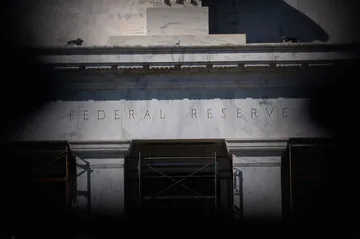
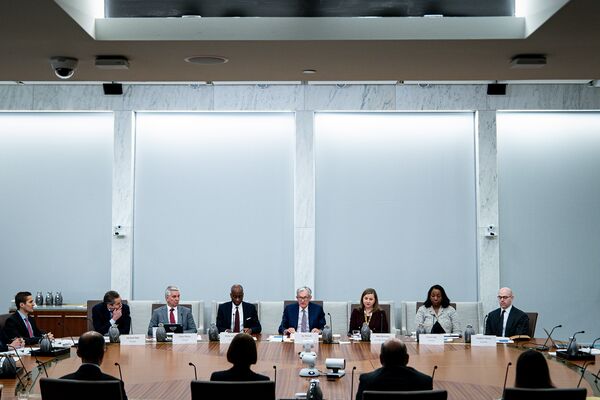
周三,美联储将决定是否动用全球最强大的经济工具之一,调整美国的基准利率。这也是投资银行、经济学家、美联储观察人士和全球记者聚精会神关注的日子,大家都想看看自己对联邦公开市场委员会(FOMC)12位有投票权成员决策的预测是否准确。
On Wednesday the Federal Reserve will decide whether to use one of the most powerful economic tools in the world and adjust the US’s benchmark interest rate. This is also the day when investment banks, economists, Fed watchers and journalists the world over tune in to see whether their predictions were correct about what the 12 voting members of the Federal Open Market Committee will do.
但在另一个世界里,投票已经尘埃落定,央行行长们都已就通胀、就业市场和油价上涨发表了看法。不过,这个世界只是一个AI模拟。“通胀虽高于目标,但并未快速加速,劳动力市场保持稳定,”明尼阿波利斯联储主席尼尔·卡什卡里(Neel Kashkari)的化身宣称,并投票决定维持利率不变。
But there’s another world where the votes are already in, where the central bankers have all weighed in on inflation, the job market and the rising cost of oil. This world is, however, an AI simulation. “Inflation, while above target, is not accelerating rapidly and the labor market remains stable,” declares an avatar for Federal Reserve Bank of Minneapolis President Neel Kashkari, which voted to hold rates steady.
这就是“模拟美联储”(Sim Fed),一个由乔治·华盛顿大学经济系主任塔拉·辛克莱尔(Tara Sinclair)和斯坦福数字经济实验室研究科学家索菲亚·卡兹尼克(Sophia Kazinnik)开发的人工智能模拟系统。在ChatGPT的协助下,她们耗时一年半开发该工具。去年年底,她们发布了一篇关于该系统的初步论文,并表示目前正在为模拟系统做最后润色。
This is the Sim Fed, an artificial intelligence simulation developed by Tara Sinclair, chair of the Department of Economics at George Washington University, and Sophia Kazinnik, a research scientist at the Stanford Digital Economy Lab. They’ve been developing the tool (with the help of ChatGPT) for the past year and a half. They published a preliminary paper on it late last year and say they’re putting the finishing touches on the simulation now.
辛克莱尔表示,Sim Fed围绕那12位利率投票人构建,采用“模拟每位FOMC决策者的AI代理人”。辛克莱尔曾在美国财政部从事通胀预测工作多年。“有模拟鲍威尔、模拟库克、模拟沃勒。”每个模拟体都输入了其对应央行行长的公开信息库,包括出版物、演讲,以及教育背景和学术导师等信息。
Sim Fed is built around the 12 individuals who vote on interest rates with “AI agents that impersonate each of the FOMC decision-makers,” says Sinclair, who spent years doing inflation forecasting at the US Treasury. “There’s Sim Powell, Sim Cook, Sim Waller.”The sims are each loaded up with publicly available information about their appointed central banker, a corpus that includes publications, speeches and information about where they went to school and who their academic mentors were.
同行经济学家建议卡津尼克和辛克莱为模拟人物补充更多个人数据,使其更加完整。“人们总是想添加更多背景故事,”辛克莱说,“而我会想,‘他们的咖啡订单对货币政策审议有影响吗?’”(也许有。咖啡比去年贵了7.1%。)模拟人物充实之后,辛克莱和卡津尼克利用可追溯至1999年的央行会议纪要,以及新闻发布会和出版物,教AI工具了解美联储会议的运作方式。
Fellow economists have suggested that Kazinnik and Sinclair add more personal data to round out their sims. “People always want to add more backstory,” says Sinclair. “I’m like, ‘Does their coffee order matter for a monetary policy deliberation?’” (It might. Coffee is 7.1% more expensive than it was last year.) Once the sims were fleshed out, Sinclair and Kazinnik taught the AI tool how Fed meetings work, using minutes from central bank events going back to 1999, as well its news conferences and publications.
这帮助“模拟美联储”理解了会议的结构,以及与会者如何推理做出决策。每有新的事件,最新数据就会被加入:失业人数、通胀率、消费者支出等。每个模拟人物都会审视数据并投出一票,同时以其美联储成员的“口吻”给出长篇解释。
This helped the Sim Fed understand the structure of the meetings and how participants reason through their decisions. For every new event, the latest data is added: unemployment numbers, inflation rates, consumer spending, etc. Each sim examines the data and casts a vote with a lengthy explanation in the “voice” of its Fed member.
当然,有些东西是数据无法捕捉的。去年夏天,杰罗姆·鲍威尔的美联储主席任期接近尾声,关于谁可能接替他的猜测开始升温,这是辛克莱和卡津尼克早期得到的教训之一。克里斯托弗·沃勒自2020年起担任美联储理事,长期以来一直被视为鹰派(优先考虑压低通胀的人,这通常意味着加息),但去年他的鸽派一面显露出来,让AI感到困惑。“模拟沃勒的行为与真实的美联储理事沃勒并不一致,”辛克莱回忆道。
Of course, there are things the data doesn’t capture. This was one of the early lessons for Sinclair and Kazinnik as Jerome Powell’s term as Fed chair drew to a close last summer and speculation started up about who might replace him. Christopher Waller has been a Fed governor since 2020 and had long been known as a hawk (someone who prioritizes keeping inflation low, which typically means raising interest rates), but his dovish side surfaced last year, confusing the AI. “Sim Waller’s behavior wasn’t lining up with actual Fed Governor Waller,” Sinclair recalls.
7月,当美联储投票决定维持利率不变时,现实中的沃勒投了反对票,主张降息。对模拟版沃勒来说,这似乎不符合他的性格,但辛克莱和卡津尼克知道一些数据中没有明确体现的事情:沃勒在白宫接替鲍威尔出任主席的候选名单上。总统唐纳德·特朗普强烈主张降低利率。辛克莱和卡津尼克发现自己处于一种颇为奇怪的境地:不得不向一个机器人解释,表现出一点鸽派倾向如何可能是一种精明的职业策略。
In July, as the Fed voted to hold interest rates steady, the real Waller dissented, voting to cut rates. To the sim, this seemed out of character, but Sinclair and Kazinnik knew something that wasn’t explicit in the data: Waller was on the White House’s short list to replace Powell as chair. President Donald Trump was strongly advocating for interest rates to be lower. Sinclair and Kazinnik found themselves in the rather strange position of having to explain to a robot how showing a little dovishness could be a savvy career move.
“我们不得不引入这样一个概念:事情存在政治层面,”卡津尼克说。她说,尽管如此,模拟版沃勒只用了几句话就明白了。“大型语言模型非常擅长理解人类行为。”对辛克莱来说,这是一种启示。“通常,用标准经济模型时,你会想,‘我怎么把这个数学化?’但有了人工智能,我们可以直接说,‘你有成为主席的概率。’”
“We had to introduce the notion that there is this political aspect to things,” Kazinnik says. Still it took just a few sentences for Sim Waller to catch on, she says. “Large language models are so good at understanding human behavior.”For Sinclair, this was a revelation. “Normally, with standard economic models you're like, ‘How do I mathematize this?’ But with AI, we can just literally say, ‘You have a probability of being the chair.’”
辛克莱说,他们花了很多心思思考如何解释投票成员可能经历的变化中的压力和激励。“那个夏天,我花了很多时间与模拟版沃勒相处,”她说。现实中的沃勒在解释自己的投票时没有提到政治。他提到了疲软的就业市场以及通胀可能是暂时性的前景。(沃勒未能获得最高职位,该职位最终由凯文·沃什获得。)为了试图解释立场的转变和政治的现实,辛克莱和卡津尼克调整了他们的模拟美联储,使其更加关注模拟银行家最近的演讲和出版物,而不是平等地考虑所有内容。
Sinclair says they thought a lot about how to explain the changing pressures and incentives the voting members might experience. “I spent a lot of time with Sim Waller that summer,” she says. The real Waller didn’t mention politics when he explained his vote. He cited the sluggish job market and the prospect that inflation might be temporary. (Waller was passed over for the top job, which ultimately went to Kevin Warsh.) To try to account for changes of heart and the realities of politics, Sinclair and Kazinnik tweaked their Sim Fed so it would pay more attention to the most recent speeches and publications from the sim bankers, instead of considering everything equally.
辛克莱和卡津尼克希望该项目能帮助经济学家、企业和政界人士更好地理解美联储及其决策方式,同时也为他们提供一种测试不同情景的方法,例如就业报告出人意料地强劲或油价大幅下跌时会发生什么。投资者和决策者似乎迫切渴望任何能帮助他们解读由凯文·沃什执掌的、透明度较低的美联储的工具。许多机构已经创建了“AI美联储”和“AI沃什”,试图更好地预判决策,但卡津尼克表示,他们的“模拟美联储”比市面上其他任何同类工具都更细致、更准确。
Sinclair and Kazinnik hope the project can help economists, businesses and politicians better understand the Fed and how decisions get made — and also give them a way to test out different scenarios, such as if the job report is unexpectedly positive or if oil prices fall drastically. Investors and policymakers appear to be hungry for any help they can get to decode the less transparent Fed run by Kevin Warsh. Many institutions have created AI Feds and AI Warshes to try to better anticipate decisions, though Kazinnik says their Sim Fed is more nuanced and accurate than anything else out there.
至于周三的利率投票呢?卡津尼克和辛克莱运行了七次模拟,其中五次“模拟美联储”维持利率不变。(另外两次则加息。)不过投票并非一致通过。模拟版米歇尔·鲍曼投了反对票。
As for Wednesday’s vote on interest rates? Kazinnik and Sinclair ran seven simulations, and in five of them, the Sim Fed held rates steady. (In the other two, it raised rates.) The vote wasn’t unanimous though. Sim Michelle Bowman dissented.
卡津尼克表示,他们的“模拟美联储”已经相当准确,并且能迅速从错误中学习。“AI不是完美的工具,但它可能是我们建模人类行为的最佳工具。”她说,这段经历让她更加深刻地体会到,美联储12名投票委员做出决策时需要考虑多少因素——他们必须权衡所有涌入的数据,以及地缘政治、选举等即将发生的事件、相互矛盾的数据、外部压力,还有无论他们做出什么决定都会受到影响的企业和个人。
Kazinnik says their Sim Fed has become quite accurate and learns quickly from mistakes. “AI is not a perfect tool, but it’s probably the best tool we have for modeling human behavior.”She says the experience has given her a greater appreciation for how much goes into the decisions made by the 12 voting members of the Fed — who must consider all of the data coming in, as well as geopolitics, upcoming events like elections, contradicting data, outside pressures, and the businesses and individuals impacted by whatever they decide.
“我花了大量时间试图把它做对,而这极其困难,”卡津尼克说。“这些决策涉及的因素太多了,而且观点是动态的。它们会随着时间改变——因为他们是人。他们不是机器人。”
“I’ve spent a lot of time trying to get it right, and it’s extremely difficult,” Kazinnik says. “There’s so much that goes into these decisions, and opinions are dynamic. They change over time — because they’re people. They’re not robots.”