往年这个时候,所有人的目光都会投向利雅得——金融巨头们一年一度前往“未来投资倡议”大会朝圣,就全球经济高谈阔论,并会见他们最重要的客户之一:沙特王室。随后是阿布扎比、科威特,有时还有迪拜和多哈这些不那么受关注的站点,它们都是费用和资本的重要来源,却不愿抢走沙特年度投资盛会的风头。
All eyes would normally be on Riyadh this time of year, when the titans of finance make their annual pilgrimage to FII, pontificate on the global economy, and meet one of their most important clients: the Saudi monarchy. Then come the less buzzy stops in Abu Dhabi, Kuwait, sometimes Dubai, and Doha, all important sources of fees and capital, but reluctant to take the shine off Saudi’s annual investment jamboree.
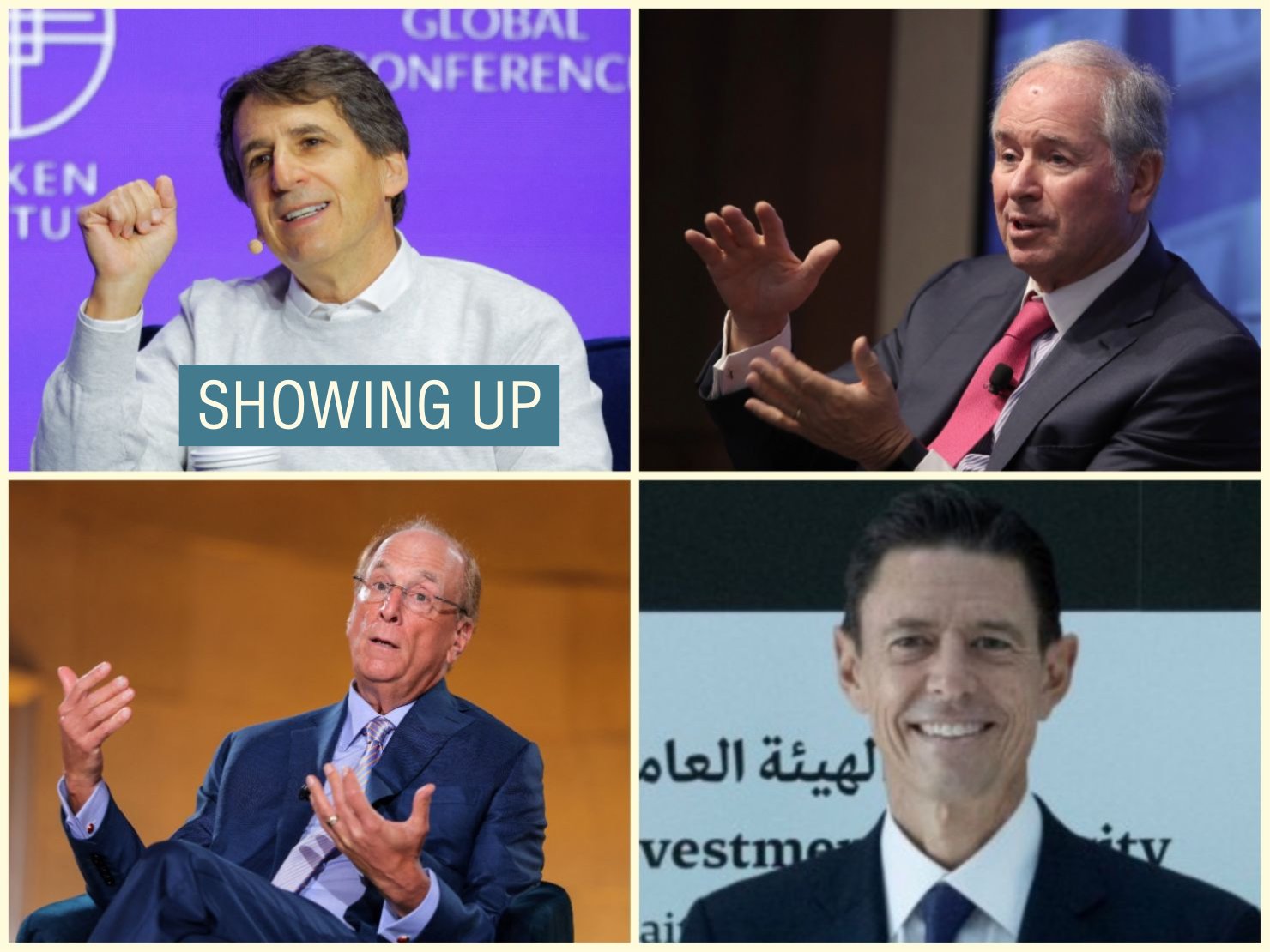
今年,胡塞武装的袭击迫使“未来投资倡议”大会延期,但高管们——包括阿波罗的马克·罗恩、贝莱德的拉里·芬克、黑石的苏世民以及KKR的斯科特·纳托尔——还是踏上了该地区之行。
This year, Houthi attacks forced the postponement of FII, but executives — including Apollo’s Marc Rowan, BlackRock’s Larry Fink, Blackstone’s Stephen Schwarzman, and KKR’s Scott Nuttall — made the trip to the region anyway.
本周,有人在阿布扎比和科威特看到了他们。罗恩和苏世民接受了阿联酋副总统旗下报纸《国民报》的采访,谈及该地区的机遇,其中一些机遇由战争推动:罗恩估计,海湾国家将斥资1万亿美元加固基础设施并修建替代运输路线;苏世民则预计,随着各国将脆弱的基础设施转入地下,将出现“非常大规模的建设热潮”。
They were seen in Abu Dhabi and Kuwait this week. Rowan and Schwarzman spoke to The National, the newspaper owned by the UAE’s vice president, about opportunities in the region, some of which are driven by the war: Rowan estimates Gulf states will spend $1 trillion hardening infrastructure and building alternative transport routes, and Schwarzman expects a “very substantial construction boom” as countries move vulnerable infrastructure underground.