近几周,随着乌克兰的服务先被限速后又恢复,基于卫星的连接由谁控制这一问题成为焦点。无论本刊读者对这些涉及SpaceX的Starlink和Starshield的活动持何立场,对一个可能不会一直保持友好的外部势力的依赖现在正受到密切关注。存在替代方案,包括Eutelsat OneWeb的星座,还有更多方案正在筹备中。我们参观了另一家竞争者Open Cosmos位于哈威尔的设施。
The question of who controls satellite-based connectivity came into sharp focus in recent weeks after Ukraine's service was throttled and then restored. Wherever Reg readers stand on those activities involving SpaceX's Starlink and Starshield, reliance on a foreign power that may not stay friendly is now under intense scrutiny. Alternatives exist, including Eutelsat OneWeb's constellation, and more are in the works. The toured the Harwell facility of another contender – Open Cosmos.
这家公司成立才十多年,在包括英国、希腊和葡萄牙在内的多个地点运营。多年来,它已发射了数十次任务,包括其OpenConstellation服务,各组织利用该服务共享地球观测卫星的数据。当它在2022年推出OpenConstellation时,目标是拥有25颗卫星,提供空间分辨率和光谱分辨率的组合。虽然其他服务(如欧盟委员会的哥白尼计划)提供类似数据,但OpenConstellation允许客户指派卫星执行特定任务,以收集特定数据。
The business is just over a decade old and operates from multiple locations, including the UK, Greece, and Portugal. It has launched dozens of missions over the years, including its OpenConstellation service, which organizations use to share data from Earth observation satellites. When it launched OpenConstellation in 2022, the aim was to have 25 satellites offering a mix of spatial and spectral resolution. While other services, such as the European Commission's Copernicus, provide similar data, OpenConstellation lets customers assign satellites specific tasks for specific data collection.
然而,真正让那些担心把所有连接服务的鸡蛋都放在一个可能突然被夺走的篮子里的用户感兴趣的,是ConnectedCosmos。该星座的前两颗卫星现已入轨;它们由火箭实验室于2026年1月发射。该公司计划到2028年底运营超过96颗卫星,并在2030年前实现全面覆盖。核心连接骨干网将由192颗卫星组成,创始人兼首席执行官拉费尔·霍尔达·西基耶将其描述为“基础,而非上限”。
However, it is ConnectedCosmos that will interest users concerned about putting all their connectivity eggs in a basket that might be abruptly snatched away. The first two satellites in the constellation are now in orbit; they were launched by Rocket Lab in January 2026. The business plans to operate more than 96 satellites by the end of 2028 and to achieve full coverage by 2030. The core connectivity backbone will consist of 192 satellites, which founder and CEO Rafel Jordà Siquier described as "the foundation, not the ceiling."
该公司估计自己每天能生产一颗卫星,从我们在哈威尔看到的情况来看,这个数字似乎可行,尽管这与SpaceX在其IPO文件中声称的每周约70颗Starlink卫星相去甚远。由于ConnectedCosmos在1000公里以上的高度运行,它需要的卫星数量要少得多,但代价是延迟增加。
The company reckons it can churn out one satellite per day, and judging by what we saw in Harwell, that figure seems realistic, though it's a far cry from the approximately 70 Starlinks per week SpaceX claimed in its IPO filing. Because ConnectedCosmos operates from an altitude above 1,000 km, it needs far fewer satellites, though at the cost of latency increases.
联合创始人兼首席技术官乔迪·巴雷拉·阿尔斯告诉我们,延迟“在30到80毫秒之间”。这对大多数应用来说没问题,但对某些应用来说就不太好了。例如,目前并不在计划之中。Open Cosmos商业卫星通信副总裁丹妮尔·爱德华兹表示:“我们非常专注于直连设备业务。直连智能手机目前并不是我们感兴趣的领域。”“永远别说永远……”她补充道,“谁知道下周二会出现什么。但就目前而言,直连设备的重点确实是在物联网这一侧。”
Jordi Barrera Ars, co-founder and CTO, told us that latency was "anything between 30 and 80 milliseconds." This is OK for most applications, but not great for some. Direct to smartphone is, for example, not currently on the cards. Open Cosmos's VP of Commercial Satcom, Danielle Edwards, said, "We're very much in the direct device business. Direct to smartphone is not an area that we have an interest in right now." "Never say never…" she added, "and who knows what might come along next Tuesday. But for right now, the direct device play really is on the IoT side."
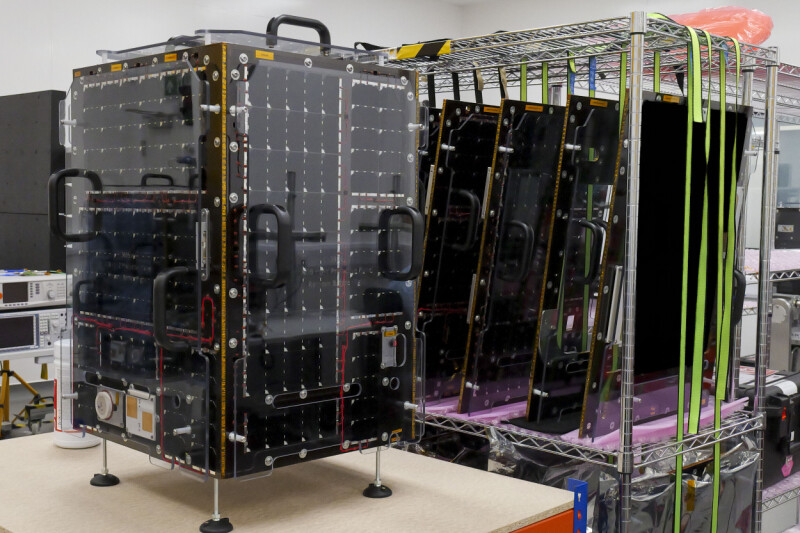
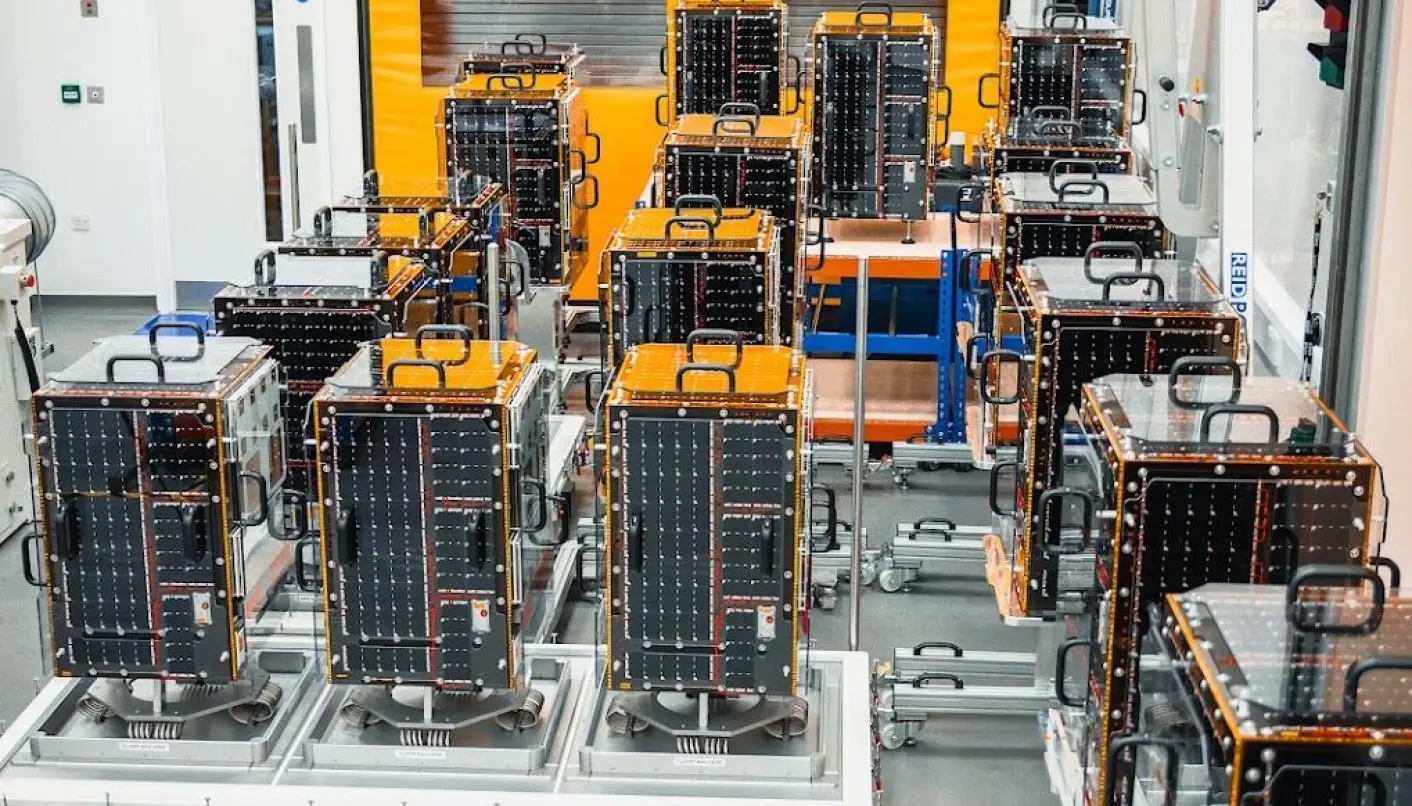
在参观期间,Open Cosmos展示了其组装和测试设施(包括温度和压力测试),以及一台模拟发射条件的振动台。卫星本身由一个通用平台构成,太阳能电池板和有效载荷安装在其上。然后它们被存放在一位公司代表所称的“卫星托儿所”中,等待发射。这种做法很有意思:OpenConstellation卫星使用ConnectedCosmos星座作为连接骨干,而后者还提供点对点宽带。
During the tour, Open Cosmos showed off its assembly and testing facilities (including temperature and pressure testing), as well as a shaker table that simulates launch conditions. The satellites themselves consist of a common bus, onto which solar panels and the payload are fitted. Then they are stored, ready for launch, in what one company representative called "the satellite nursery". The approach is interesting: OpenConstellation satellites use the ConnectedCosmos constellation as a connectivity backbone, while the latter also provides point-to-point broadband.
据Open Cosmos称:“该星座是刻意围绕政府、机构和商业客户的需求设计的,这些客户需要安全、有韧性的连接以及对关键数据的明确掌控权。”对于担心现有服务的客户来说,这很大程度上是一个欧洲的替代选择。例如,Open Cosmos提供的服务并不适合引导高速飞行的无人机,这并非其重点所在,但它将提供不受某个人一时兴起和一个巨大的红色关闭开关所左右的主权通信渠道。
According to Open Cosmos: "The constellation is deliberately designed around the requirements of government, institutional and commercial customers that need secure, resilient connectivity and clear custody of critical data." It is very much a European alternative to customers who are worried about existing services. The service on offer from Open Cosmos will not, for example, be suitable for guiding drones traveling at high velocities, that isn't really the point, but it will provide sovereign communication channels that aren't beholden to the whim of a man and a big, red Off switch.
星链星座拥有远超1万颗卫星,而Open Cosmos提出的数量则要 modest 得多,也不太可能以同样的方式惊动天文学家。
Where the Starlink constellation stands at well over 10,000 satellites, the numbers proposed by Open Cosmos are far more modest and less likely to alarm astronomers in quite the same way.
此外,该公司还通过其OpenConstellation平台(以及为个别客户定制的航天器)积累了行业经验。而且,与业内许多公司不同,它的卫星和设施并非只停留在幻灯片演示中。毕竟,我们亲眼见过它们。®
Plus, the company has sector experience through its OpenConstellation platform (as well as custom spacecraft built for individual customers). And, unlike so many in the industry, its satellites and facilities exist beyond PowerPoint presentations. After all, we've seen them. ®