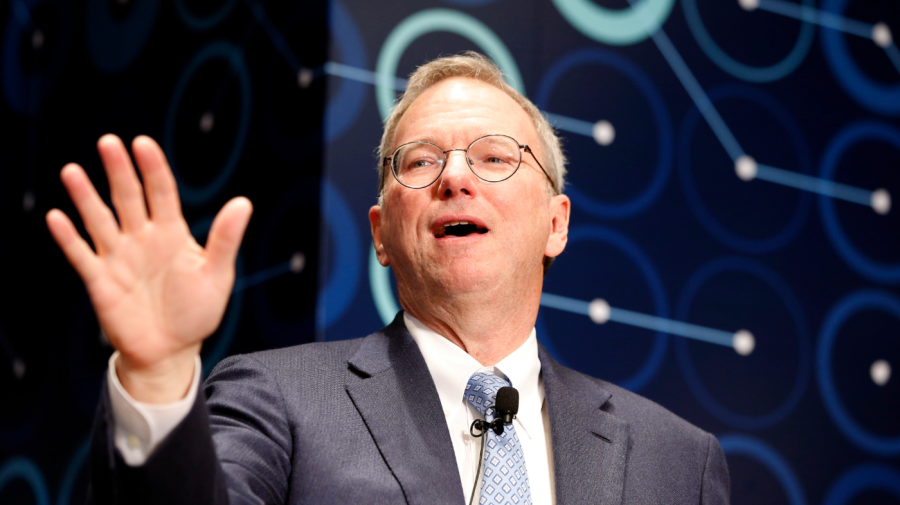
前谷歌首席执行官埃里克·施密特表示,中国在全球人工智能开发竞赛中现在仅落后美国六个月,并警告称中国在能源方面拥有重大优势。在周三发布的《快公司》专访中,施密特说,尽管美国限制中国获取先进计算机芯片,但两国之间的差距在过去两年里已大幅缩小。“一两年前,看起来中国落后一两年。现在看起来它们落后六个月,而且有许多研究显示这一点,”施密特说。
Former Google CEO Eric Schmidt said China is now just six months behind the U.S. in the global race to develop AI, warning that China has a major advantage when it comes to energy. In an interview with Fast Company released Wednesday, Schmidt said the gap between the two countries has narrowed dramatically over the past two years, despite U.S. restrictions on China’s access to advanced computer chips. “A year or two ago, it looked like China was a year or two behind. Now it looks like they’re six months behind, and there are many studies that show this,” Schmidt said.
这位前谷歌掌门人曾帮助推动芯片限制,他表示最初认为这些限制会让中国的进步放缓约十年。相反,中国开发者找到了利用大幅减少的能源和算力构建具有竞争力的人工智能系统的方法。“我原以为它们会奏效约十年,”他说。施密特称,美国在先进芯片、人才和融资渠道方面仍占上风,但他认为中国在建设支持人工智能开发所需基础设施方面拥有显著优势。
The ex-Google chief, who helped advocate for the chip restrictions, said he initially believed they would slow China’s progress for about a decade. Instead, Chinese developers have found ways to build competitive AI systems using substantially less energy and computing power. “I assumed they would work for about 10 years,” he said. Schmidt said the U.S. still has the upper hand in advanced chips, talent and access to capital, but argued that China has a significant advantage in building the infrastructure needed to support AI development.
“中国拥有无限能源,其中大部分是可再生能源,这是我们十年前说过要在本国实现却未能做到的事,”他说。他指出中国正在快速建设数据中心和电力基础设施,而美国开发商在将新设施接入电网方面面临漫长延误。“它们没有长达七年的并网排队等待。它们没有同类争论。它们正在建设数据中心,而且是大规模建设,”施密特说。
“China has infinite energy, most of it renewable, something we said we were going to do in our country 10 years ago and failed to do,” he said. He pointed to China’s rapid construction of data centers and power infrastructure, while American developers face lengthy delays connecting new facilities to the electrical grid. “They don’t have interconnection queue waits that go on seven years. They don’t have the same kind of debates. They’re building the data centers, and they’re building them massively,” Schmidt said.
他估计,到2030年或2031年,美国将需要600亿至800亿瓦特的电力以跟上人工智能需求,每吉瓦成本约500亿美元。“我们缺的是能源,也缺数据中心,”他说。
He estimated the U.S. will need between 60 and 80 gigawatts of power by 2030 or 2031 to keep pace with AI demand, with each gigawatt costing roughly $50 billion. “What we don’t have is the energy, and we don’t have the data centers,” he said.
他的言论发表之际,随着人们对不断上涨的电力成本和当地水资源压力的担忧日益加剧,人工智能数据中心的快速扩张正面临越来越严格的审视。民主党议员已经开始调查该行业的能源需求。本月初,参议员伊丽莎白·沃伦(民主党-马萨诸塞州)、理查德·布卢门撒尔(民主党-康涅狄格州)和克里斯·范霍伦(民主党-马里兰州)发布了一份报告,审视数据中心如何可能推高成本。
His remarks come as the rapid expansion of AI data centers faces growing scrutiny in over concerns about rising electricity costs and pressure on local water supplies. Democratic lawmakers have already begun investigating the industry’s energy demands. Earlier this month, Sens. Elizabeth Warren (D-Mass.), Richard Blumenthal (D-Conn.) and Chris Van Hollen (D-Md.) released a report examining how data centers could drive up costs.
如果民主党在11月重新掌控国会,这种审视可能会进一步加剧,议员们已表示计划推动更严格的人工智能安全法规,并对大型科技公司展开调查。
The scrutiny could intensify if Democrats regain control of Congress in November, with lawmakers signaling plans to pursue tougher AI safety regulations and investigations into major technology companies.