Anthropic 本周向投资者披露的财务数据显示,其 AI 编程工具 Claude Code 完全达到了这家前沿实验室预期的商业成功程度。公司在第二季度实现了运营盈利,净收入留存率达到 900% —— 即 2025 年第三季度同一批客户的支出在 2026 年第三季度增长了九倍。
The financials Anthropic shared with investors this week suggest that its AI coding tool, Claude Code, is every bit the business success the frontier lab wanted. The company recorded an operating profit in the second quarter, and 900% net revenue retention—that is, spending from the same customers in Q3 2025 grew nine times in Q3 2026.
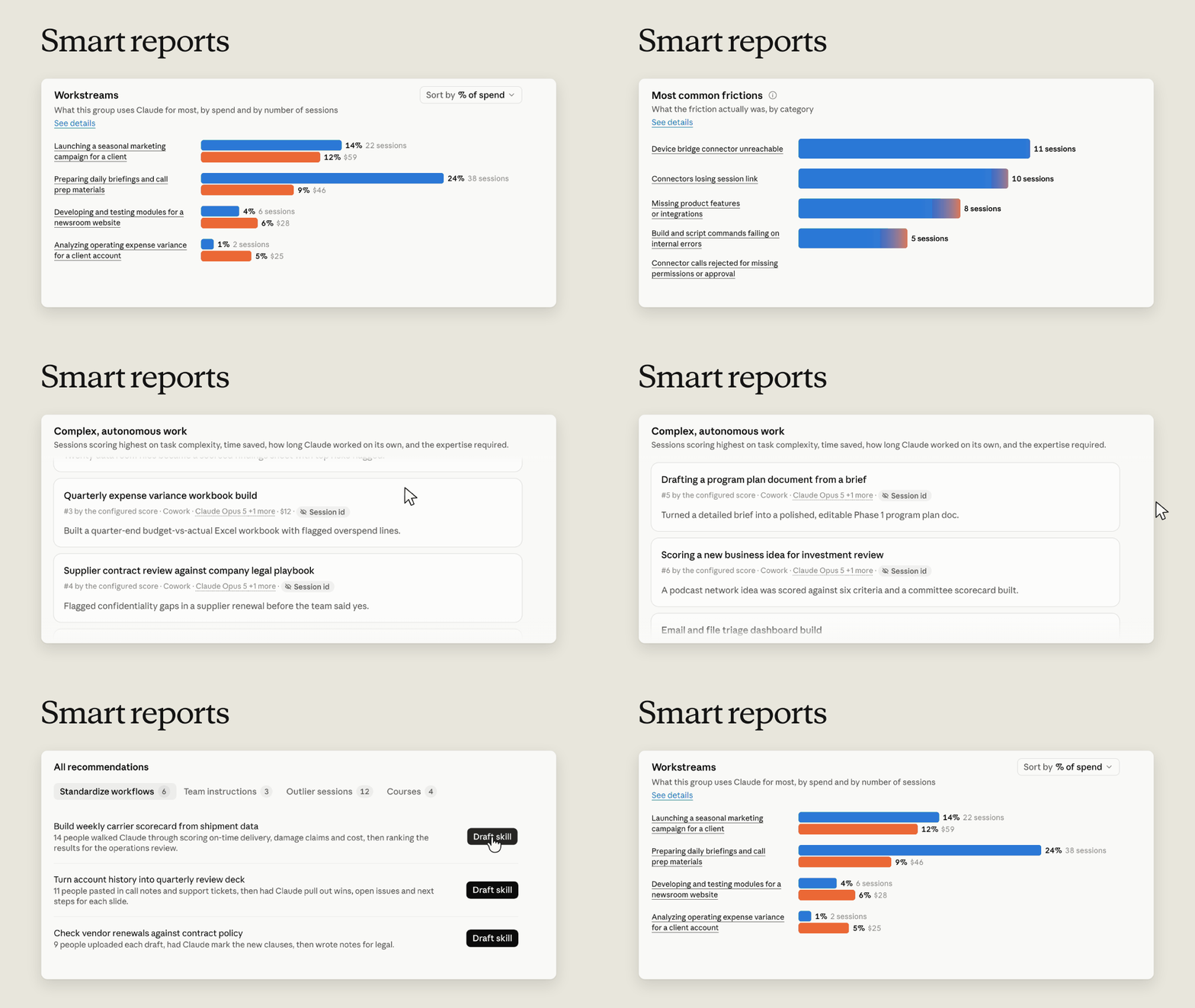
Anthropic 一直致力于留住企业用户,周三宣布推出一套新的报告工具,旨在让这些客户更细致地了解其 Token 支出带来的价值。
Anthropic has focused on getting enterprise users to stick around, and Wednesday announced a new suite of reporting tools designed to give those customers a more granular understanding of the value they get from their token spend.
管理者可利用内部分析和员工调查,查看团队在特定日期范围内的工作情况、产出内容、成本高低,以及工作流在哪里出现了故障。Anthropic 表示,默认不会将这些数据用于模型训练。报告还将提供改进结果的建议。
Using internal analytics and employee surveys, managers can view a team’s work over a given date range, what the team produced, how much it cost, and where its workflows broke down. Anthropic says it won’t use this data for model training by default. The reports will also offer recommendations on how to improve the results.
这显然是为了展示 Anthropic 工具的投资回报率,并指导客户如何提高回报率 —— 这是大客户的一大关切。Anthropic 还在创建共享团队预算,以便团队更好地管理 Token 支出。
This is a clear attempt to demonstrate the return on investment of Anthropic’s tools, and to show customers how to improve it—a major concern among large customers. Anthropic is also creating pooled group budgets to allow teams to better manage token spending.
企业一直在寻找这类信息,以便弄清如何最好地部署 AI 工具。虽然风投支持的企业的使用量在推动 Token 支出,但大多数财富 500 强企业从部署 AI 中并未看到显著收益。
Businesses have been hunting for that kind of information as they figure out how best to deploy AI tools. While usage among venture-backed firms is driving token spend, most of the Fortune 500 are not seeing major gains from deploying AI.
为软件开发者提供工具的公司 Jellyfish 昨日发布的一份新报告,基于其 27.6 万客户对智能体编程工具的使用情况。Claude Code 及其他基于 Anthropic 模型构建的工具在调查中仍是使用最广泛的,占所有提交审查的代码变更提案的近三分之一。更重要的是,这些工具的支出自今年初以来增长了 10 倍,其成本现在约占工程总成本的 2%。
Jellyfish, a company that makes tools for software developers, released a new report yesterday based on the use of agentic coding tools by 276,000 of its customers. Claude Code and other tools built on Anthropic models remain the most widely used in the survey, responsible for nearly a third of all proposed code changes submitted for review. More importantly, spending on those tools has grown 10x since the beginning of the year, with their cost now equal to about 2% of total engineering cost.
“即使你认为 2% 仍然很小,但 10 倍的增长是大多数首席财务官未曾规划的增长,”Jellyfish 首席科学家 Nicholas Arcolano 告诉《TechCrunch》。“我们肯定正在达到这样一个节点:人们意识到,光投入大量资金是不够的。现在你必须对其进行优化,让它真正发挥作用。”Anthropic 的新报告正是针对这一挑战。Anthropic 在企业客户中处于领先地位,但要确定是什么让一款智能体编码工具真正具有粘性却很难。
“Even if you’re saying 2% is still small, that 10x growth is growth that most CFOs didn’t plan for,” Nicholas Arcolano, the chief scientist at Jellyfish, told TechCrunch. We’re certainly getting to the point where people are realizing, okay, it’s not enough to just spend a bunch. You now have to optimize it, make it work.”Anthropic’s new reports speak to that challenge. Anthropic leads among enterprise customers, but what makes an agentic coding tool truly sticky is difficult to identify.
OpenAI 今夏发布的 Astra 模型似乎曾对 Anthropic 构成潜在威胁,但迄今为止并未减缓 Anthropic 的采用势头。
The release of OpenAI’s Astra model this summer seemed like a potential threat to Anthropic, but so far it hasn’t slowed Anthropic’s adoption numbers.
“我们花了很长时间才在数据中真正看到 Codex 冒头,而它随着 Astra [OpenAI 最新模型] 的出现才浮现,”Jellyfish AI 产品负责人 Nikolas Albarran 告诉《TechCrunch》。他继续说道,看 X 平台,你会得到一种明显的印象,即竞争更加激烈。“硅谷的每个人都在说:‘哦,Codex 更好。’”但实际上,Albarran 继续说道,“Anthropic 只是凭借出色的企业推进策略率先切入,并拥有自身的现有优势——这些东西就是好用、很好用,许多人投入大量精力围绕它标准化工作流。而且没有足够大的理由去切换。”这不仅仅关乎模型和工作流。
“It took a long time for us to see Codex really pop in our data at all, and it has come up with Astra [OpenAI’s latest model],” Nikolas Albarran, the AI product lead at Jellyfish, told TechCrunch. Looking at X, he continued, you’d get the distinct impression that the competition is more heated. “Everyone in the in the Valley is like, ‘Oh, Codex is better.'”In reality, Albarran continued, “Anthropic was just there with great enterprise motions, and they had an incumbent weight of their own—this stuff just worked and worked well, and a lot of people just put a lot of effort into standardizing workflows around it. And there’s not a big enough reason to switch.”It’s not just a question of models and workflows, either.
商业现实意味着,一旦前沿实验室切入某个客户,让其更换供应商比让个人程序员或小型组织更换要难得多。Albarran 指出,所有主要 AI 实验室都在大力投资前沿部署工程(FDE)团队,这些团队将 AI 顾问嵌入客户组织内部,帮助他们起步。这些新的报告工具可被视为一种“轻量版 FDE”,为 Anthropic 客户提供这种亲力亲为帮助的简化版本。
The realities of business mean that once a frontier lab has gotten its hooks into a customer, switching is harder than it is compared to an individual programmer or small organization. Albarran points to the investment all the major AI labs are making in forward-deployed engineering (FDE) organizations, teams that embed AI consultants inside customer organizations to help them get off the ground. These new reporting tools can be seen as a kind of FDE-lite, a lighter version of that hands-on help, for Anthropic customers.
“我们现在处于一个阶段,它已经足够成熟,一旦你进入了,转换将变得越来越难,因为你已经投入了精力,”他说。“即使它们大多都一样,它们也都会略有不同,在处理代理到ND文件等方面都有自己细微的怪癖,因此转换成本并非为零。”
“We’re at a point now where it’s mature enough, where once you’re in, it’s going to be harder and harder to switch because you’ve spent the effort,” he said. “Even if they’re all mostly the same, they’re all going to be slightly different, have their own slight quirks of how they handle agents to ND files, etc., and so that cost to switch is not zero.”