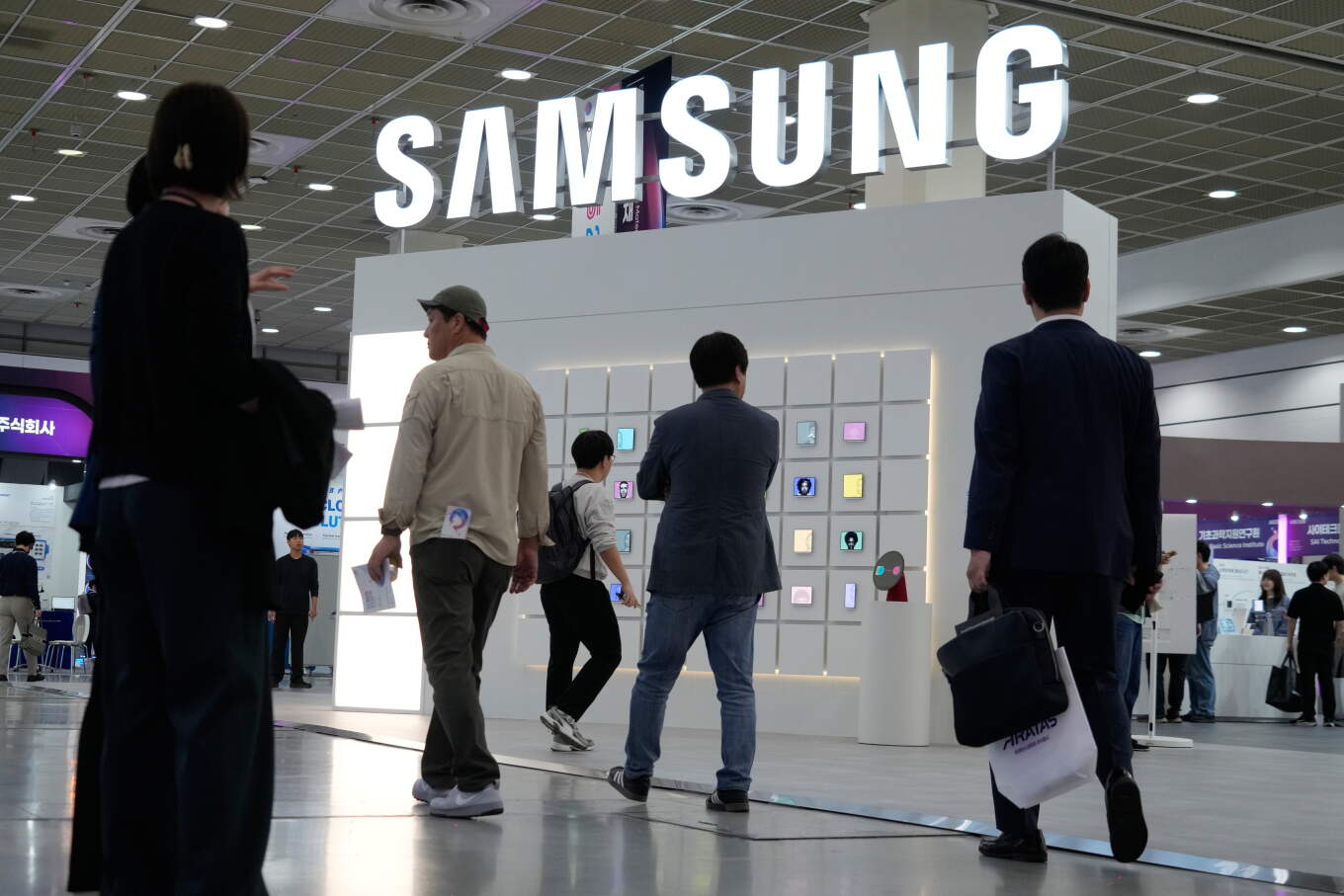
三星电子周四表示,得益于用于人工智能系统的计算机存储芯片需求激增,其上一季度营业利润达到创纪录的107.4万亿韩元(约合805亿美元)。
Samsung Electronics has reported a record operating profit of $80.5 billion, driven by high demand for computer memory chips used in AI systems.
7月至9月期间的营收升至历史新高的195.3万亿韩元(约合1460亿美元),标志着该公司连续第四个季度创下利润和营收双双创纪录。
SEOUL, South Korea —Samsung Electronics said Thursday that its operating profit for the last quarter reached a record 107.4 trillion won ($80.5 billion), fueled by surging demands for its computer memory chips used in artificial intelligence systems.
三星电子的监管申报文件在其国内竞争对手SK海力士也报告第三季度利润创纪录的一天后发布。这两家韩国半导体巨头合计控制全球存储芯片市场约三分之二的份额,正面临全球AI热潮带来的看似永无止境的芯片需求。
Revenue for the July-September period rose to an all-time high at 195.3 trillion won ($146 billion), marking the company’s fourth straight quarter of record profit and revenue. Samsung’s regulatory filing came a day after domestic rival SK Hynix also reported record third-quarter profit, as the two South Korean semiconductor giants, which together control about two-thirds of the global memory market, face seemingly insatiable demand for their chips amid the global AI boom.
三星在声明中表示,预计其AI相关芯片的需求将在2027年前加速增长,因客户争相扩建AI基础设施,需求将超过供应。公司称将专注于供应用于AI服务器的先进存储芯片和存储产品,包括高带宽存储芯片、服务器DRAM和固态硬盘。
Samsung said in a statement that it expects the demand for its AI-related chips to accelerate through 2027, outpacing supply as clients race to expand AI infrastructure. The company said it will focus on supplying advanced memory chips and storage products used in AI servers, including high-bandwidth memory chips, server DRAMs and solid-state drives.
随着韩国扩大AI雄心,韩国科技企业正在半导体制造设施和数据中心进行大规模投资。三星和SK海力士于6月宣布,计划共同投资800万亿韩元(约合5990亿美元),在该国西南部建设新的芯片制造中心,以抓住AI驱动的需求。
South Korean tech companies are making major investments in semiconductor manufacturing facilities and data centers as the country expands its AI ambitions Samsung and SK Hynix in June announced plans to invest a combined 800 trillion won ($599 billion) in a new chipmaking hub in the country’s southwest to capitalize on AI-driven demand.
但一些分析师质疑这笔支出最终是否会获得回报,韩国央行警告称,该国依赖贸易的经济正变得过度依赖芯片,这可能加深任何与AI相关的低迷造成的损害。
But some analysts question whether the spending will ultimately pay off, and South Korea’s central bank has warned that the country’s trade-dependent economy is becoming too reliant on chips, which it said could deepen the damage of any AI-related downturn.