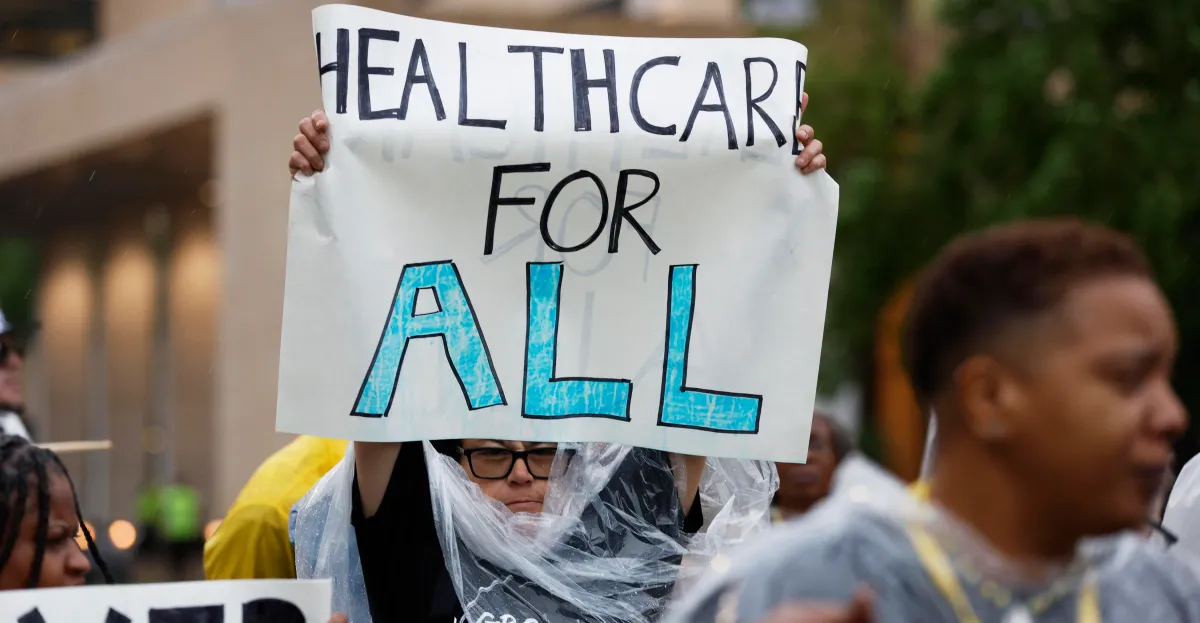
美国民众希望改革医疗体系,而今年中期选举的候选人正在大肆承诺如何改善医疗:全民医保、公共医保选项,或是为所有人提供免费基础医疗。如果民主党今年大获全胜,他们可能会积累势头,在2029年控制国会和白宫,从而有利地着手解决美国医疗体系这个棘手难题。
Americans want changes to their healthcare, and the candidates in this year’s midterms are making bold promises about how they are going to improve it: Medicare-for-all, or a public health insurance option, or free primary care for everyone. If Democrats win big this year, they could build up momentum to control Congress and the White House in 2029, which could leave them well-positioned to take on the thorny problem of how to fix the US health system.
历史表明,这不会轻而易举。每有一个《平价医疗法案》通过,就伴随着废除它的失败尝试,或是克林顿时代医疗改革倡议的惨败。美国人想要变革,但也害怕变革。我花了数年时间研读医疗民调、与选民交谈、参加焦点小组讨论。公众对医疗行业的看法日益恶化,对医疗权威机构的不信任达到历史高点。人们厌倦了破败的医疗体系,却担心大刀阔斧的变革最终会对自己不利。
History suggests that this won’t be easy. For every Affordable Care Act, you have the failed attempt to repeal it or the calamity of the Clinton-era healthcare initiative. Americans want change — but they fear it, too. I’ve spent years reading healthcare polls, talking to voters, attending focus groups. The public’s opinion of the healthcare industry has grown more and more sour, and distrust of the medical establishment is at an all-time high. People are sick of having a broken health system, but they worry that big changes could end up being bad for them.
尽管有意义的改革尝试仍需数年,任何形式的全民医保似乎都像是进步派的痴心妄想,但医疗行业并未袖手旁观。
Even though a meaningful attempt at reform is still years away and universal health care in any form might seem like a progressive pipe dream, the industry is not sitting idly by.
随着民主党开始推出政策提案,以期重夺国会控制权,医疗行业已着手为自己辩护。在一些竞选中,这意味着支持共和党人,但也意味着游说民主党领袖守住底线,抵制那些想要推动深远变革的进步派成员。
As Democrats have started to roll out policy proposals in anticipation of winning back Congress, the industry has been there to start making its case. In some campaigns, that means backing Republicans, but it also means lobbying Democratic Party leaders to hold the line against their more progressive members who want to push for far-reaching changes.
现在的问题是:他们的老套路还管用吗?医疗行业能否说服民主党缩减政策雄心,还是说他们对国会的掌控力正在松动?
The question now is: Will their old playbook work? Can the industry convince Democrats to scale back their policy ambitions, or is their grip on Congress loosening?
“未来两年实际上相当关键,用于打基础以及进行所有必要的社交、建立共识,”金·蒙克(Kim Monk)表示。她曾是国会医疗保健助理,联合创立了私营研究公司“资本阿尔法合伙人”(Capital Alpha Partners)。“正是这些工作让你达到这样一个节点:任一党派决定,好吧,这将列入我们的纲领——或者不列入。”这将是未来两年的拔河较量:一方是手握数亿美元资源的医疗公司,另一方是进步派议员、活动人士和患者倡导者,双方展开一场公关战,最终将决定美国医疗保健下一阶段能实现什么。
“The next two years are actually quite pivotal, for doing the groundwork and all the necessary socializing, consensus-building,” said Kim Monk, a former congressional healthcare staffer who co-founded the private-sector research firm Capital Alpha Partners. “That’s the work that gets you to a point where either party decides, okay, this will be on our platform — or not.”That will be the tug-of-war of the next two years: a PR battle waged between health companies with hundreds of millions of dollars at their disposal on one side and progressive lawmakers, activists, and patient advocates on the other that will ultimately determine what’s possible in the next phase of American healthcare.
医疗行业不希望民主党大获全胜 短期内,面对民主党高涨的声势,该行业正在两边下注。
The healthcare industry doesn’t want Democrats to win too big In the short term, the industry is hedging its bets in the face of a Democratic wave.
私营企业历史上一直支持共和党,但这种情况开始发生变化。医疗行业最看重的是平衡。如果民主党毫无约束地运作,更有可能对医疗公司实施政府监管。但共和党全面掌控也伴随着自身风险,例如作为“一个宏伟美好法案”(One Big Beautiful Bill Act)一部分通过的1万亿美元医疗补助削减,这已经导致诊所和医院裁员,甚至彻底关闭设施。
Private enterprise has historically backed the Republican Party, but that’s starting to shift. What the healthcare industry values above all else is balance. Democrats operating without any constraints are more likely to impose government regulations on medical companies. But full GOP control comes with its own risks, like the $1 trillion in Medicaid cuts passed as part of the One Big Beautiful Bill Act, which has already led to clinics and hospitals laying off staff or even closing facilities altogether.
我们的政治健康版图已发生变迁:新领袖、可疑科学、相互矛盾的建议、破裂的信任、令人应接不暇的体系。普通人该如何理清头绪?Vox资深记者迪伦·斯科特(Dylan Scott)深耕健康领域多年,每周他将深入棘手辩论,回应合理提问,并为美国医疗保健政策的最新动态提供背景脉络。
Our political wellness landscape has shifted: new leaders, shady science, contradictory advice, broken trust, and overwhelming systems. How is anyone supposed to make sense of it all? Vox’s senior correspondent Dylan Scott has been on the health beat for a long time, and every week, he’ll wade into sticky debates, answer fair questions, and contextualize what’s happening in American health care policy. Sign up here.
“至少在短期内,我认为医疗保健行业会欢迎民主党控制国会,这将带来更多确定性,遏制对医疗补助和《平价医疗法案》的进一步削减,并可能扭转或推迟已经实施的一些削减措施,”KFF健康政策执行副总裁拉里·莱维特说。“从长远来看,医疗保健行业的政治算计更为复杂。许多民主党人正在推动政府在医疗保健中发挥更大作用。”
“At least for the short term, I imagine the healthcare industry would welcome control of Congress by Democrats, creating more predictability, forestalling more cuts in Medicaid and the Affordable Care Act, and potentially reversing or delaying some of the cuts that have already been made,” said Larry Levitt, executive vice president for health policy at KFF. “The longer-term political calculus for the healthcare industry is more complicated. Many Democrats are pushing for a bigger role for government in health care.”
换句话说,虽然医疗保健公司可能欢迎民主党控制众议院,以此作为对特朗普总统不可预测性的制约,但它们未必希望出现大规模的“蓝色浪潮”,因为如果民主党在2028年赢得白宫,这可能使重大改革成为严肃的可能性。
In other words, while healthcare companies might welcome a Democratic House as a check on President Donald Trump’s unpredictability, they aren’t necessarily hoping for a massive blue wave that could make significant reforms a serious possibility if Democrats were to win the White House in 2028.
当行业预感浪潮式选举正在酝酿时,其惯常做法是平衡天平:我曾在2016年报道过,在看起来对民主党有利的那一年,制药行业在竞争激烈的选区以6比1的比例向共和党候选人的竞选活动注资,旨在遏制被普遍看好的总统希拉里·克林顿的议程。(当然,他们和我们其他人一样,仍可能判断失误。)而这正是行业应对2026年选举的方式:在许多关键的众议院和参议院竞选中,他们正在支持共和党。
The industry’s MO when it looks like a wave election is brewing is to balance the scales: I reported in 2016 how, in what was looking like a good year for Democrats, the drug industry poured money into the campaigns of Republican candidates by a 6-to-1 margin in competitive races, hoping to stifle the agenda of presumed President Hillary Clinton. (Of course they, like the rest of us, are still susceptible to being wrong.) And that’s how the industry has been approaching the 2026 election: In many of the pivotal House and Senate races, they are backing the GOP.
正如医疗记者梅里尔·古兹纳上周报道的那样,美国医院协会政治行动委员会和制药行业贸易团体PhRMA在历史上最昂贵的俄亥俄州参议院竞选中,向共和党现任议员乔恩·休斯特合计捐赠了14500美元,而他的民主党挑战者谢罗德·布朗一分钱也没收到。在缅因州,共和党参议员苏珊·柯林斯收到了所有主要医疗行业贸易团体——医院、制药、保险公司和医生团体——的捐款,而她的对手、民主党人特洛伊·杰克逊则一无所获(他也发誓拒绝企业政治行动委员会的资金)。
As healthcare journalist Merrill Goozner reported last week, the American Hospital Association PAC and PhRMA, a drug industry trade group, have given a combined $14,500 to Republican incumbent Jon Husted and none to his Democratic challenger Sherrod Brown in the historically expensive Ohio Senate race. In Maine, Republican Sen. Susan Collins has received donations from all of the major healthcare trade groups — hospitals, pharma, insurers, and doctors — while her opponent, Democrat Troy Jackson, got none. (He also has sworn off corporate PAC money.)
即使是在没有现任议员的公开竞选中,如爱荷华州参议院竞选,共和党候选人也获得了医院和制药业的捐款,而民主党候选人没有,古兹纳报道说。
Even in an open race without an incumbent, like the Iowa Senate campaign, the Republican candidate has scored donations from hospitals and pharma, but the Democrat has not, Goozner reported.
如果民主党赢得众议院但未赢得参议院,这将立即给他们的医疗改革计划泼冷水——而赢得参议院多数席位将允许他们在两院开始起草和辩论法案,着眼于如果他们在2028年也获胜,什么法案真正能够通过。
If Democrats take the House but not the Senate, that would immediately put a damper on their healthcare reform plans — whereas winning a Senate majority would allow them to start drafting and debating bills in both chambers with an eye toward what could actually pass if they win in 2028 too.
“如果下周真的出现蓝色海啸,民主党在参议院获得51席以上,那将是一件大事,”蒙克说。“你不能只说这不重要,因为特朗普会否决它,因为我认为这很大程度上将成为一个2028年的议题。”即使他们致力于推动下一届国会更符合他们的意识形态偏好,医疗行业也在为之后的斗争做准备。
“If there is actually a blue tsunami next week and Democrats get 51-plus [members] in the Senate, that’s a really big deal,” Monk said. “You can’t just say this doesn’t matter because Trump’s going to veto it, because I think it very much becomes a 2028 issue.”And even as they work to push the next Congress more to their ideological liking, the healthcare industry is preparing for the fight that comes after.
行业正在为雄心勃勃的医疗提案准备反击 中期选举尘埃落定后,未来两年在国会和总统竞选活动中将至关重要。行业已经在努力设定辩论条款,并反击重大变革。
The industry is prepping its counterattacks on ambitious healthcare proposals After the midterms wrap up, the next two years in Congress and on the presidential campaign trail will be crucial. The industry is already working to set the terms of the debate and push back against big changes.
行业的各个细分领域都有自己版本的这种论调:制药业警告价格管制会扼杀创新,保险公司警告强制承保会推高保费,医院警告资金限制会导致倒闭和裁员。(华盛顿圈内流传着一句名言:每个国会选区都有一家医院,这让每位议员都可能对行业的说辞动摇——新医疗立法可能导致他们自己的选民失业。)他们在新议员抵达华盛顿之前,就已着手试图抹黑更全面的医疗政策提案。
Each subset of the industry has its own versions of this argument: Pharma warns that price controls could stifle innovation, insurers warn that coverage mandates will increase premiums, hospitals warn that constraints on their funding could lead to closures and job losses. (There’s a well-known saying among DC insiders that every congressional district has a hospital, making every member potentially susceptible to the industry’s message that new healthcare legislation could result in their own constituents losing their jobs.) They’ve started by trying to discredit the more sweeping health policy proposals before new members ever arrive in Washington, DC.
例如在得克萨斯州,共和党团体援引一项行业出资委托的研究,攻击支持“全民医保”的民主党参议员候选人詹姆斯·塔拉里科,警告称这将导致农村医院资金被削减——至少根据“美国未来伙伴关系”出具的一份分析,该联盟由行业团体组成,成立的明确目的就是反对“全民医保”或公共选项。他们在宾夕法尼亚州针对民主党人珍内尔·斯特尔森投放了类似广告,后者正试图击败现任众议员斯科特·佩里。
In Texas, for instance, Republican groups have leaned on an industry-commissioned study to attack Democratic Senate candidate James Talarico for supporting Medicare-for-all, warning that it would lead to cuts for rural hospitals — at least according to an analysis produced by the Partnership for America’s Future, a coalition of industry groups that exists explicitly to oppose Medicare-for-all or a public option. They ran a similar ad against Democrat Janelle Stelson, who’s trying to topple incumbent Rep. Scott Perry in Pennsylvania.
行业正试图在选民心中植入这样一种观念:这些宏大、大胆的提案表面听起来或许诱人,实则暗藏重大风险:你可能失去现有的医保计划,可能失去原本的医生,可能面临更高的税收。(而且他们往往有自己的研究来支撑这些论点,就像今年竞选中引用的那项研究一样,用来反驳改革倡导者提供的支持改革的证据。)
The industry is trying to plant the idea in voters’ minds that these big, bold proposals may sound superficially appealing, but carry significant risks: You could lose your plan, you could lose your doctor, you could pay higher taxes. (And they often have their own studies to back those arguments, like the one cited in this year’s campaign, to counter the evidence offered by advocates in support of reform.)
而且这种策略极可能像过去一样奏效。正如前国会医疗保健助理、《美国的错误转向:新自由主义时代的美国医疗保健》作者约翰·麦克多诺(John McDonough)对我所说,历史很清楚:“每一次全面性的努力都以失败告终,而每一次渐进式的努力都取得了成功。”这在一定程度上归因于医疗保健行业的影响力及其在界定辩论框架方面的成功。
And it might work exactly like it has in the past. As John McDonough, a former congressional healthcare staffer and author of America’s Wrong Turn: US Health Care in the Neoliberal Era, put it to me, the history is clear: “Every comprehensive effort, defeat, and every incremental effort succeeds.”That is in part because of the healthcare industry’s influence and its success in framing the debate.
除了试图左右竞争激烈的选战,行业还试图在中期选举前让两党内最重要的盟友保持满意。正如健康与民主中心的数据所示,仅健康保险行业的政治行动委员会就向民主党和共和党领袖,以及众参两院医疗保健相关委员会的资深成员捐赠了数万美元。
On top of trying to sway the competitive races, the industry is also trying to keep its most important allies within both parties happy ahead of the midterms. As the Center for Health and Democracy’s data shows, the health insurance industry PACs alone have given tens of thousands of dollars to Democratic and Republican leaders, as well as senior members of the healthcare-focused House and Senate committees.
这是另一种对冲策略,旨在让明年将决定议程的成员站在自己这边。该行业支持扭转共和党大幅削减医疗补助的做法,并增加对《平价医疗法案》市场的资助,这两项是民主党若在中期选举中赢得国会控制权后的首要任务。但他们希望党领袖能引导党内成员远离一些彻底改革医疗保健的更激进想法。因为虽然医疗保健领域内的各个部门可能会为小规模改革争吵,但整个行业一致反对从根本上改变美国医疗体系的计划。
It’s another hedge, an attempt to keep the members who will decide what’s on the agenda next year on their side. The industry supports reversing the GOP’s massive Medicaid cuts and increasing funding for the ACA marketplaces, two top-priority items for Democrats if they win Congress in the midterms. But they are hoping the party’s leaders will steer their members away from some of their more radical ideas for overhauling healthcare. Because while individual sectors within healthcare may squabble over smaller-scale reforms, the entire industry is united against plans to fundamentally change the US health system. (They are also increasingly owned by the same parent company, as consolidation in the medical sector becomes more and more common.)“The healthcare industry is all for more people having coverage and stable government financing,” Levitt said, “but will circle the wagons to fight Medicare-for-all.”
(随着医疗领域的整合日益普遍,它们也越来越多地归同一家母公司所有。)莱维特说:“医疗保健行业全力支持让更多人获得保障和稳定的政府融资,但会团结一致反对‘全民医保’。” 每当民主党开始谈论他们的医疗政策想法时,行业早已准备好回应。上个月,当一些民主党人宣布支持公共保险选项时,“美国医疗保健未来伙伴关系”辩称这会减少获取途径。
Already, whenever Democrats start talking about their health policy ideas, the industry is ready with a response. Last month, as some Democrats announced support for a public insurance option, the Partnership for America’s Health Care Future argued it would reduce access.
“公共选项不是患者和家庭面临的负担能力和获取挑战的答案,”该组织执行主任劳伦·克劳福德·谢弗说。
“A public option is not the answer to the affordability and access challenges patients and families are facing,” said the group’s executive director, Lauren Crawford Shaver.
与此同时,健康保险游说团体“美国健康保险计划协会”于10月发布了一份40页的文件,阐述如何改善负担能力和获取途径,并借此反对公共选项,理由是它会“扼杀竞争,并威胁大多数美国人想要保留的保障”。据新闻媒体《Sludge》报道,接受行业资助的中间派民主党团体表示,他们正在“为反对‘全民医保’的战争做准备”。
Meanwhile, the health insurance lobbying group, AHIP, released a 40-page document in October on how to improve affordability and access, using it in part to argue against a public option because it would “stifle competition and threaten the coverage most Americans want to keep.”Centrist Democratic groups who receive industry support have said they are “preparing for war” against Medicare-for-all, according to the news outlet Sludge.
然而,该行业并非全能,如果未来几年美国人的医疗保健状况恶化,这场辩论仍可能发生变化。随着疫情防护措施到期,数百万民众的医疗成本上升,美国无保险率一直在上升。除非民主党成功阻止共和党在《一项大而美好的法案》(OBBBA)中削减医疗补助和《平价医疗法案》(ACA)资金,否则这一问题将会恶化——这也可能迫使民主党在如何解决问题上想得更大胆一些。
The industry is not omnipotent, however, and the debate could still change if Americans’ healthcare gets worse over the next few years. The US uninsured rate has been on the rise as pandemic protections expire and the costs of healthcare rise for millions. Unless Democrats succeed in stopping the Republican Medicaid and ACA cuts in the OBBBA, that problem is going to get worse — and that could also force Democrats to think bigger about how to fix it.
北卡罗来纳大学社会医学教授、前《健康政治、政策与法律杂志》编辑乔纳森·奥伯兰德在电子邮件中告诉我:“我不确定是否有人完全意识到这将会造成多大的破坏和混乱——包括对医院和医疗系统的冲击。大规模失去医保将引发医疗健康政治的巨大动荡,或许会为更大胆的提案打开一扇窗口。”那么,该行业的论点还管用吗?
“I am not sure anyone has fully absorbed how damaging and disruptive that is going to be — including to hospitals and health systems,” Jonathan Oberlander, professor of social medicine at the University of North Carolina and the former editor of the Journal of Health Politics, Policy and Law, told me over email. “Large coverage losses will trigger great instability in health politics and perhaps open more of a window to bolder proposals.”So, will the industry’s arguments still have juice?
盖洛普民调显示,医疗行业在疫情期间曾短暂迎来声望回升,但目前50%的美国人对其持负面看法,而持正面看法的仅为37%。而且改革的呼声日益高涨:64%的美国人认为政府有责任确保每个人都有医疗保障——除了2000年代末、ACA颁布前夕,这是历次民调中的最高比例。
After the medical industry enjoyed a brief rebound in popularity during the pandemic, 50 percent of Americans say they have a negative view of it, while 37 percent have a positive view, per Gallup. And the appetite for reform is growing: 64 percent of Americans say it is the government’s responsibility to make sure that everyone has healthcare coverage — the highest share at any time, except for the late 2000s, shortly before the ACA became law.
即便是长期以来比制药或保险公司享有更多公众支持的医院行业,其声望也在动摇:家庭美国组织8月的一项民调发现,压倒性的81%美国人认为医院价格不合理。
Even the hospital industry, which has long enjoyed more public support than pharma or insurance companies, is seeing its popularity waver: A Families USA poll from August found that an overwhelming 81 percent of Americans thought hospital prices were unreasonable.
蒙克说:“医院在国会山为自己哭穷做得很好。‘我们可能是唯一必须为所有上门者提供护理的提供者。我们没有理由提高效率。只管给我们更多钱。’我认为这个论点有点站不住脚了。”
“Hospitals have done a great job of pleading poverty on Capitol Hill. ‘We’re probably the only provider who basically has to provide care to whoever shows up. We have no reason to be efficient. Just give us more money,’” Monk said. “I think that argument is wearing a little bit thin.”