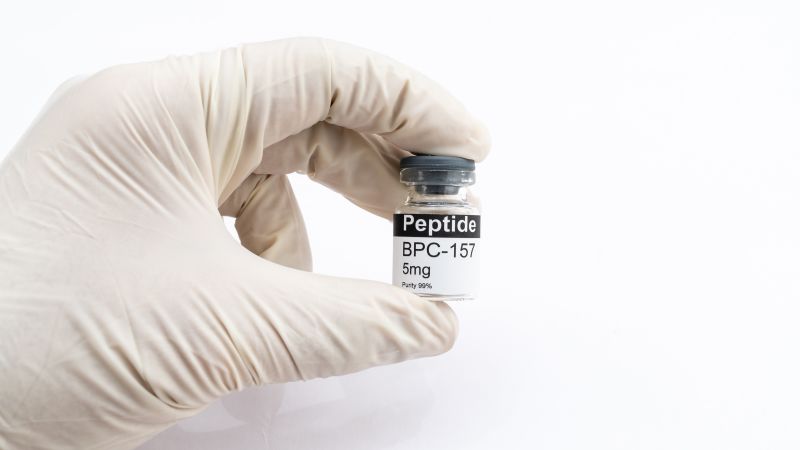
美国卫生与公众服务部(HHS)发布了一份政策草案,旨在放宽有关在美国某些肽类物质如何被制造的限制,实质上为这些物质打开了获取渠道。一些健康倡导者对此表示欢迎,而另一些人则提出了担忧。以下是关于肽类及其此次变化可能意味的内容。
The US Department of Health and Human Services posted a draft policy that would ease restrictions about how certain peptides may be created in the United States, essentially opening up access to them. Some wellness advocates applauded the move, while others have raised concerns. Here’s what to know about peptides and what the change could mean.
肽是氨基酸的短链,在体内作为蛋白质的构建基础。其中一些是重要的处方药。例如,胰岛素就是一种肽,GLP-1类药物如Ozempic和Wegovy也广泛用于治疗糖尿病和肥胖。
Peptides are short chains of amino acids and act as the building blocks of proteins in the body. Some are important prescription medicines. Insulin, for example, is a peptide, as are GLP-1 medications widely used to treat diabetes and obesity, such as Ozempic and Wegovy.
但新草案中包含的六种注射用肽类则有所不同。它们受到健康网红、精英运动员以及部分医生的青睐,这些人称它们可以帮助减轻炎症、促进恢复、延缓衰老并提升整体健康。
But the six injectable peptides that are included in the new draft HHS policy are different. They’re popular among wellness influencers, elite athletes and some doctors, who say they can help reduce inflammation, improve recovery, promote longevity and boost overall health.
然而,这六种注射用肽类并未获得美国食品药品监督管理局(FDA)的批准,意味着它们尚未通过FDA审批流程经过安全性、质量和有效性评估。目前,部分消费者通过不受监管的灰色市场获取这些产品,从未咨询过医生——这可能是一个风险较高的选择。
But they’re not approved by the US Food and Drug Administration, meaning they have not been evaluated to meet certain safety, quality and effectiveness standards through the FDA approval process. Currently, some consumers get them through an unregulated gray market, without ever consulting a physician — a potentially risky option.
今年7月,FDA的药品制剂咨询委员会仅微弱地支持了允许由制剂药房制造六种肽类的提议:这些肽类不会获得FDA批准——该机构不会在上市前对复方制剂的安全性、有效性和质量进行审查——但HHS认为它们仍有可能提高安全性。
In July, the FDA’s Pharmacy Compounding Advisory Committee narrowly supported opening the door for six peptides to be created by compounding pharmacies: They wouldn’t be approved by the FDA — the agency doesn’t review compounded drugs for safety, effectiveness or quality before they are marketed — but HHS argues that they could still improve safety.
“卫生部长肯尼迪正在根据该建议采取行动,发布了一份草案临时政策,设有14天的征求意见期,支持在适用州和联邦监管下在美国进行患者特异性复方制剂配制,”HHS发言人艾米丽·希尔蒂尔在周三的一封邮件中表示。
“Secretary Kennedy is acting on that recommendation with a draft interim policy with a 14-day comment period supporting patient-specific compounding in the U.S. under applicable state and federal oversight,” HHS spokesperson Emily Hilliard said in an email Wednesday.
希利亚德表示:“该政策并未授予FDA批准,也未确立临床安全性和有效性。它要求针对具体患者的处方、可追溯的成分、质量检测和安全报告,以此约束配制者,并为患者提供不受监管卖家的替代选择。”该政策称:“配制通常是指持证药剂师、持证医生,或在外包设施的情况下由持证药剂师监督下的人员,将药物成分组合、混合或改变,以制成针对单个患者需求定制的药物。”
“The policy does not grant FDA approval or establish clinical safety and effectiveness,” Hilliard said. “It requires patient-specific prescriptions, traceable ingredients, quality testing, and safety reporting to hold compounders accountable and give patients an alternative to unregulated sellers.”“Compounding is generally a practice in which a licensed pharmacist, a licensed physician or, in the case of an outsourcing facility, a person under the supervision of a licensed pharmacist, combines, mixes or alters ingredients of a drug to create a medication tailored to the needs of an individual patient,” the policy said.
迄今为止,使用肽类产品的人可以在无需看医生的情况下,从未受监管的网站等渠道订购BPC-157或TB-500等产品。根据这项临时政策,寻求肽类产品的人需要医生处方,才能从持证配制药房获得这些产品。
So far, people who use peptides have been able to order products like BPC-157 or TB-500 from places like unregulated websites without ever seeing a doctor. With the interim policy, people seeking peptides would need a doctor’s prescription to get them from a licensed compounding pharmacy.
尽管这些肽类产品不会获得FDA批准,甚至不会正式列入配制者可制备的物质清单,但新政策表示,“HHS不打算对州持证药房、联邦设施或持证医生使用”六种肽类之一“配制药品的行为采取执法行动”。
Although the peptides wouldn’t be FDA-approved or even officially on the list of substances that compounders can prepare, “HHS does not intend to take enforcement action against a State-licensed pharmacy, Federal facility, or licensed physician compounding a drug product using” one of the six peptides, the new policy said.
该政策称:“HHS部长已认定,这一有限的执法自由裁量政策将遏制由外国制造商供应的某些仅限研究用途肽类产品的持续广泛使用,这些产品对美国患者构成安全风险。通过在适当保障措施下允许对本指南所涉物质进行有限配制,该政策为患者提供了一种更受控制的替代选择。”
“The Secretary of HHS has determined that this limited enforcement-discretion policy will discourage the continued, widespread use of certain research-use-only peptides supplied by foreign manufacturers that pose a safety risk to US patients. By allowing limited compounding of the substances addressed in this guidance under appropriate safeguards, the policy provides patients with a more controlled alternative,” the policy said.

这项政策草案似乎针对的是灰色市场,直到另一项最终规则出台,明确某种肽类是否被列入配制药房在特定法律条件下可用于制备定制药物的成分清单。
The draft policy appears to target the gray market until a separate final rule addresses whether a peptide is or is not included on the list of ingredients that compounding pharmacies may use to prepare customized medications under specific legal conditions.
在政策草案为期14天的意见征询期结束后,美国卫生与公众服务部预计将发布最终政策。
After the 14-day comment period for the draft policy, HHS is expected to issue that final policy.
“尽管复合药物可以满足某些患者的重要医疗需求,但它们也可能给患者带来风险,”该政策草案表示。“然而,根据药房复合咨询委员会(PCAC)的会议以及有关肽类使用情况的数据,美国卫生与公众服务部认为,人们对在复合药物中使用这些肽类有浓厚兴趣。”当美国食品药品监督管理局咨询委员会在7月开会时,其成员以微弱多数同意支持放宽对六种肽类的限制。
“Although compounded drugs can serve an important medical need for certain patients, they also may pose risks to patients,” the draft policy said. “However, based on the Pharmacy Compounding Advisory Committee (PCAC) meeting and data regarding utilization of peptides, HHS believes that there is significant interest in the use of these peptides in compounding.”When the FDA advisory committee met in July, its members narrowly agreed to support easing restrictions on the six peptides.
许多投赞成票的成员认为,这样做将带来更安全的途径,让人们可以获得这些药物。
Many of the members who voted in favor argued that doing so would lead to a safer pathway through which people could access the drugs.
“把这件事留在受监管的药房并不是当前的风险所在。真正的风险是灰色市场供应链,而它之所以公开运作,是因为我们允许它如此,”委员会成员、Gameday Men’s Health全球首席医疗官哈尔·穆罕默德博士说。“作为一名医生,我必须确保尽可能保障患者安全。这是我的职责:不造成伤害。”但许多投票反对通过复合药物让这些肽类更容易获得的委员会成员认为,缺乏证据和研究表明这种做法能阻止灰色市场,而且某些肽类的有效性和风险仍存在一些未知数。
“Keeping this in a regulated pharmacy is not the risk in the room. The gray market pipeline is, and it operates in the open because we let it,” said committee member Dr. Hal Mohammed, global chief medical officer of Gameday Men’s Health. “Myself as a physician, I have to make sure that I’m keeping patients as safe as possible. That’s my mandate: Do no harm.”But many of the committee members who voted against making the peptides more accessible through compounding argued that there is a lack of evidence and research to suggest that the approach would stop the gray market, and that there are still some unknowns around the effectiveness and risks of certain peptides.
“我担心我们是在回应市场诱导的需求,而不是基于可靠科学的决定,”委员会成员、得克萨斯大学MD安德森癌症中心的伊丽莎白·雷贝洛博士说。
“I’m concerned that we’re responding to a market-induced demand rather than a decision based in solid science,” said committee member Dr. Elizabeth Rebello, of the University of Texas MD Anderson Cancer Center.
公共卫生联盟“安全药物伙伴关系”执行主任沙比尔·伊姆伯·萨夫达尔周三在一份声明中表示,该政策草案让人无法明确肽类物质是否安全,“尽管FDA自己的科学家出于对证据的担忧,建议不要投票支持这些物质”。上周,该联盟提交了一份公民请愿书,敦促FDA阻止肽类药物的调配。
Shabbir Imber Safdar, executive director of the public health coalition Partnership for Safe Medicines, said in a statement Wednesday that the draft policy makes it unclear whether peptides are safe or not, “even though the FDA’s own scientists recommended against voting in favor of these substances due to concerns with evidence.”Last week, the coalition filed a citizen petition urging the FDA to block the compounding of peptides.

萨夫达尔说:“政府的这一决定是在FDA药物调配咨询委员会投票支持调配六种‘健康’肽之后作出的。然而,这次投票中被忽视的一点是,许多新任命的PCAC成员似乎存在与所审议肽类物质直接相关的利益冲突。”
“The Administration’s decision comes after a vote from the FDA’s Pharmacy Compounding Advisory Committee in support of compounding six ‘wellness’ peptides. However, overlooked in this vote is that many newly appointed PCAC members appear to have conflicts of interest directly related to the peptide substances under consideration,” Safdar said.
萨夫达尔说:“这一结果破坏了任何可信度和透明度的感觉,将他们的利益置于美国人民的安全之上。政府应该改变方向,专注于起诉那些一直在非法生产和向公众分销危险产品的不法分子。”支持肽行业的美国肽协会对新政策草案表示赞赏。
“This outcome shreds any sense of credibility and transparency, placing their interests above the safety of the American people,” Safdar said. “The Administration should change course and focus on prosecuting the bad actors who have been illegally producing and distributing dangerous products to the public.”The American Peptide Association, which supports the peptide industry, applauded the new draft policy.
该协会联合创始人杰夫·科恩在一份书面声明中说:“这是肽行业、临床医生和消费者过去几年来一直希望并努力争取的亟需的明确性,也是迈出的大胆一步,走出了通常由制药公司驱动、FDA管理的路径。”
“It is much needed clarity that the peptide industry, clinicians and consumers have hoped and worked for for the past couple years and is a bold step outside the usual pharma driven, FDA managed pathway,” Jeff Cohen, co-founder of the association, said in a written statement.
BioLongevity Labs联合创始人、《优化你的健康:治疗性肽》一书作者杰伊·坎贝尔表示,对于希望通过处方获取肽类产品的人来说,这份政策草案是“潜在的好消息”。“医生将能够开具BPC-157、TB-500和Semax等化合物的处方,并由持牌药房配药,而无需担心联邦执法。但对于如今从直接面向消费者的市场获取肽类产品的数百万人来说,这可能是坏消息。这项政策只涵盖处方药,而处方药的价格将开始上涨,”坎贝尔周三在一封电子邮件中表示。他本人也使用肽类产品。
The draft policy is “potentially good news” for people who want to access peptides through a prescription, says Jay Campbell, co-founder of BioLongevity Labs and author of the book “Optimize Your Health With Therapeutic Peptides.”“A physician would be able to prescribe compounds like BPC-157, TB-500, and Semax and have a licensed pharmacy fill it without the threat of federal enforcement. But it’s potentially bad news for the millions of people who get their peptides from the direct-to-consumer marketplace today. This policy only covers compounded prescriptions, which will start to carry higher prices,” Campbell, who also uses peptides himself, said in an email Wednesday.
“随着需求上升,这些肽类产品可能会大幅涨价,尤其是如果直接面向消费者层面的获取渠道受到限制或被切断。药房还必须从FDA注册的制造商处采购,并进行全面的质量检测,而这些成本会转嫁给患者,”他写道。“那些一直支付研究市场价格的人应该做好准备,在药房柜台面对一张截然不同的账单。”美国肽协会的科恩表示,对于已经在使用肽类产品的人来说,仍有一些问题没有答案。
“As demand rises, these peptides could get substantially more expensive, especially if access at the direct-to-consumer level is restricted or cut off. Pharmacies will also have to source from FDA-registered manufacturers and run full quality testing, and those costs get passed on to the patient,” he wrote. “People who have been paying research-market prices should be prepared for a very different bill at the pharmacy counter.”Cohen from the American Peptide Association said there are still unanswered questions for people already using peptides.
“尽管最近为希望由临床医生主导的消费者铺就的监管路径,因这一最新变化而得到了很好的满足,但对于不希望由临床医生主导的消费者而言,路径仍然模糊不清,”科恩说。“这些消费者得不到临床医生的临床指导,他们的产品也不来自复合药房。它们来自非药房制造商,其安全性和质量可能不受监管且参差不齐。”行业贸易协会美国药房复合联盟表示,欢迎卫生与公众服务部的这一举措。
“While the recent regulatory pathway being paved for consumers who want to be clinician led is well served by the recent change, the pathway for consumers who do not want to be clinician led remains obscure,” Cohen said. “Those consumers do not receive clinical guidance from clinicians, and their products do not come from compound pharmacies. They come from non pharmacy manufacturers, where the safety and quality can be unregulated and spotty.”The Alliance for Pharmacy Compounding, the industry’s trade association, said it welcomes HHS’s move.
“我们一直都说,问题不在于患者是否在使用这些肽类物质。他们确实在用。问题在于他们从哪里获得这些物质,”首席执行官斯科特·布伦纳周三在一份声明中表示。“眼下,太多患者从非法供应商处获取肽类物质,几乎无法保证药瓶中实际装的是什么。这是一个已经存在的公共卫生威胁,而且不会仅仅因为禁止配制这些物质就消失。”
“We’ve said all along that the question isn’t whether patients are using these peptides. They are. The question is where they’re getting them,” CEO Scott Brunner said in a statement Wednesday. “Right now, far too many patients are obtaining peptides from illicit suppliers with little assurance about what’s actually in the vial. That’s an existing public health threat, and one that isn’t going away simply because compounding of the substances is prohibited.”
该联盟指出,这份政策草案包含了一些其呼吁的保障措施,包括“广泛的检测和记录,以及报告严重不良事件和产品质量问题”。但该联盟表示,将就政策如何与州药房委员会协调以及政策何时生效等问题寻求美国卫生与公众服务部的澄清。
The alliance noted that the draft policy includes some safeguards it called for, including “extensive testing and documentation, and reporting of serious adverse events and product quality issues.”But it said it would seek clarification from HHS on issues like how the policy will be coordinated with state boards of pharmacy and when the policy takes effect.
“一项可信的联邦政策,加上有实际意义的患者安全保障措施,能为各州自身的监管提供可靠依据,并有助于避免各州规则和限制各自为政,这种局面可能削弱美国卫生与公众服务部试图提供的可及性,”布伦纳说。
“A credible federal policy with meaningful patient-safety safeguards gives states a sound basis for their own oversight and helps discourage a patchwork of state rules and restrictions that could undermine the access HHS is trying to provide,” Brunner said.