安大略省的经济前景恶化,该省继续推迟实现收支平衡,目前预计要到2030财年才能实现盈余。
Ontario continues to delay balancing its books as its economic outlook deteriorates, and now projects it won’t reach a surplus until the 2030 fiscal year.
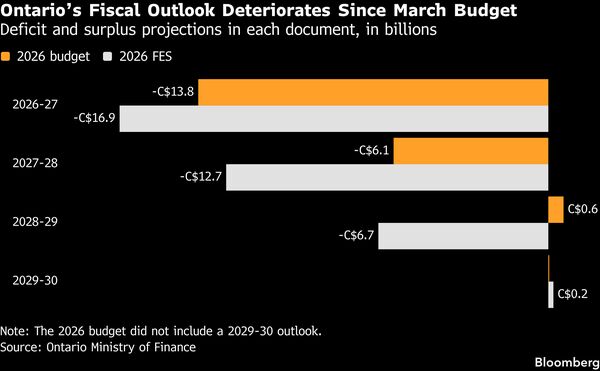
在周四发布的更新报告中,该省预测,从4月1日开始的财年赤字将达到169亿加元(121亿美元),高于3月预算中预测的138亿加元。超出预期的赤字将持续到2029-30财年,届时政府预计将实现2亿加元盈余。在3月的预算中,安大略省已经连续第三年推迟实现收支平衡。
In an update released Thursday, the province forecast a C$16.9 billion ($12.1 billion) deficit for the fiscal year that began April 1, up from the C$13.8 billion projected in its budget released in March. Larger-than-expected deficits continue until 2029-30, when the government predicts a C$200 million surplus. In its March budget, Ontario had already postponed balancing the books for the third year in a row.
自去年以来,加拿大一直与其最大贸易伙伴美国处于贸易战之中,这拖累了经济增长。作为加拿大最大的经济体和制造业中心,安大略省受到的冲击尤为严重。唐纳德·特朗普总统的几项关税措施影响了该省的关键产业,如汽车和钢铁。
Canada has been in a trade war with the US, its largest trading partner, since last year, which has weighed on growth. As the country’s largest economy and its manufacturing heartland, Ontario is particularly hard hit. Several of President Donald Trump’s tariffs affect critical industries in the province, such as autos and steel.
该省的更新报告目前预测今年实际国内生产总值增长0.5%,明年增长1.5%,分别低于预算中预测的1%和1.7%。
The province’s update now predicts real gross domestic product growth of 0.5% this year and 1.5% next year, down from 1% and 1.7%, respectively, in the budget.
“虽然赤字在长期内并不可取,但在当前环境下是必要的,”财政部长彼得·贝思伦法维在事先准备好的讲话中表示。“正如我们所展示的,我们的政府将继续投资以保护我们的经济。”赤字增加的部分原因是预计税收减少,包括随着房地产市场持续放缓而导致土地转让税收入下降。安大略省还将配合联邦政府扩大大型资产税收减免(即生产率超级减免)的政策,这将在五年内耗费省库80亿加元。
“While deficits are not desirable in the long term, they are necessary in the current environment,” Finance Minister Peter Bethlenfalvy said in prepared remarks. “As we have shown, our government will continue investing to protect our economy.”The increased deficits are due in part to lower projected tax revenue, including from the land transfer levy as the housing market continues to slow. Ontario will also match the federal government’s expanded tax write-off for large assets, known as the productivity mega deduction, costing provincial coffers C$8 billion over five years.
该省今年还向其应急基金追加38亿加元,以“保护关键公共服务、应对薪酬相关压力”,并在美国贸易战持续期间作为缓冲。今年预计的赤字占GDP的1.3%。
The province is also adding C$3.8 billion to its contingency fund this year to “protect key public services, address compensation-related pressures” and as a buffer while the US trade war continues. This year’s projected deficit represents 1.3% of GDP.
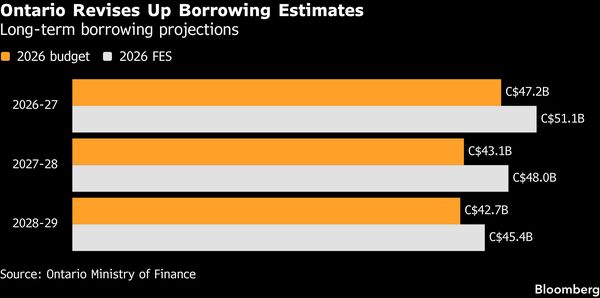
赤字扩大意味着安大略省计划本财年长期借款511亿加元,比3月份公布的数字多39亿加元。迄今为止,其借款中约有63.5%以加元计价。该省还估计,未来两个财年所需的债务将超过此前预期。预计到2027财年末,短期借款将达到415亿加元。
The bigger deficit means Ontario plans C$51.1 billion in long-term borrowing this fiscal year, C$3.9 billion more than stated in March. About 63.5% of its borrowing so far was in Canadian dollars. The province also estimates it’ll need more debt than previously expected for the next two fiscal years. Short-term borrowing is expected to reach C$41.5 billion by the end of fiscal 2027.
全国各地的经济状况并不一致。在阿尔伯塔省,省政府本财年有望实现20亿加元的预算盈余,这与此前预测的94亿加元赤字形成鲜明对比。这一转变几乎完全是由油价上涨和产量增加带来的意外收益所推动。
Economic conditions are not uniform across the country. In Alberta, the provincial government is on track for a C$2 billion budget surplus in the current fiscal year, a stark contrast to its previous forecast for a C$9.4 billion deficit. That turnaround is being driven almost entirely by a windfall from higher oil prices and production.