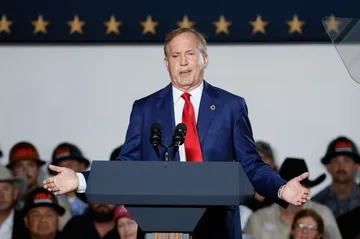
焦虑的共和党人尽可以靠幻想大规模民调出错来自我安慰。但如果共和党团体自己的内部调查数据没有亮起蓝灯(译注:蓝色为美国民主党代表色),它们就不会在众多深红州砸下大钱来捍卫本党的参议院多数席位。
Anxious Republicans are free to self-medicate with daydreams of a massive public polling error. But GOP groups wouldn’t be spending big money in red states galore to defend the party’s Senate majority if their own internal survey data wasn’t flashing blue.
一些共和党人坚持认为,有关民主党将掀起蓝色浪潮的广泛预测,将被低估了共和党候选人支持率和投票率的民意调查推翻。学术和媒体调查的民意测验专家承认,共和党选民更难接触到;民主党人更热衷于回答调查。民调以前也不是没出过错(尽管通常不是在中期选举中)。那么,为什么共和党委员会、超级政治行动委员会和政治非营利组织要在至少七个深红州投入数亿美元,来捍卫本党的参议院多数席位呢?
Some Republicans insist widespread forecasts of a Democratic wave will be undone by public opinion polls underestimating voter support — and turnout — for GOP candidates. Pollsters for academic and media surveys concede that GOP voters have been harder to reach; that Democrats are more eager to answer surveys. And it’s not like the polls haven’t missed before (although usually not in midterm elections.) So, why then, are Republican committees, super PACs and political nonprofits dumping hundreds of millions of dollars into at least seven ruby red states to defend the party’s Senate majority?
这并不是因为这些团体喜欢看着钱打水漂。而是因为该党的私下调查也拉响了警报。
It’s not because these groups like to watch money burn. It’s because the party’s private surveys are sounding the alarm, too.
他们雇用的经验丰富的共和党民意测验专家擅长对红州选民进行建模;他们通过对数据进行加权来缓解低回复率问题,以正确估测这些出人意料的参议院战场州的共和党投票率。他们在为党内团体进行的私下调查中,基本上看到了与我们在公开数据中看到的相同情况:选民对唐纳德·特朗普总统和共和党候选人的幻想破灭。
The experienced Republican pollsters on their payroll are adept at modeling red-state electorates; they mitigate for low response rates by weighting data to properly gauge GOP turnout in these surprising Senate battlegrounds. And they’re essentially seeing the same voter disenchantment with President Donald Trump, and Republican candidates, in the private polls they’re conducting for party groups that the rest of us are seeing in publicly available numbers.
换句话说,共和党专业人士并没有发现一个与RealClearPolitics民调平均值所显示的选择环境截然相反的政治环境——这些平均值涵盖特朗普的工作支持率、衡量选民更希望哪个政党控制国会的通用选票,以及竞争激烈的红州参议院选举。在中期选举前几天,所有这些数字都显示民主党的前景一片光明。
In other words, GOP professionals haven’t discovered a political environment diametrically opposed to the electoral conditions suggested by RealClearPolitics survey averages for Trump’s job approval rating, the generic ballot measuring which party voters would prefer control Congress, and competitive red-state Senate races. All of these numbers show just how bright the prospects are for Democrats, just days before the midterm elections.
据美国全国广播公司新闻台报道,2026年选举周期为期两年的广告支出创下了中期选举和总统选举的新纪录:民主党和共和党竞选活动已花费并仍在花费112亿美元。但真正透露玄机的是共和党人把资金投向何处。
Advertising expenditures in the two-year, 2026 election cycle have established a new record for midterm and presidential contests: $11.2 billion and counting by, and for, Democratic and Republican campaigns, according to NBC News. But it’s where the Republicans are directing their cash that’s revealing.
共和党团体正竭力保住一度被认为稳操胜券的参议院多数席位(即便在政治逆风可能导致该党失去众议院控制权的情况下),它们已将越来越多的资源输送到那些很少——或几十年来从未——在全州选举中选出民主党人的州。这些投入包括特朗普的到访。总统一直在他连续三次总统选举中轻松获胜的地盘上举办标志性的竞选集会。阿拉斯加、艾奥瓦、密西西比、俄亥俄和南卡罗来纳都在名单之上。堪萨斯和得克萨斯也是如此。
GOP groups scrambling to save a Senate majority once presumed safe (even amid political headwinds likely to cost the party control of the House of Representatives) have funneled an increasing amount of resources to states that rarely elect Democrats to statewide office — or haven’t done so at all in decades. That investment includes visits by Trump. The president has been hosting signature campaign rallies in territory he won effortlessly in three consecutive presidential elections. Alaska, Iowa, Mississippi, Ohio and South Carolina are on that list. Kansas and Texas are, too.
堪萨斯州近100年来没有向参议院输送过一名民主党人。得克萨斯州自1994年以来没有选出过任何民主党人担任联邦或全州公职。
Kansas hasn’t sent a Democrat to the Senate in almost 100 years. Texas hasn’t elected a Democrat to any federal or statewide office since 1994.
然而,根据Open Secrets汇编的数据,与参议院多数党领袖、南达科他州共和党人约翰·图恩结盟的超级政治行动委员会“参议院领导基金”以及特朗普的“MAGA Inc.”已在堪萨斯花费近3000万美元,帮助共和党参议员罗杰·马歇尔抵御民主党大型教会牧师亚当·汉密尔顿的挑战。在得克萨斯州,“参议院领导基金”在当地的分支“得克萨斯政治行动委员会”与“MAGA Inc.”及其他保守派团体已投入超过3.5亿美元,试图挽救州检察长肯·帕克斯顿岌岌可危的选情,助其击败州议员、民主党人詹姆斯·塔拉里科。
Yet super PACs like the Senate Leadership Fund (SLF), aligned with Senate Majority Leader John Thune, a South Dakota Republican, and Trump’s MAGA Inc. have spent nearly $30 million dollars in Kansas to help Republican Senator Roger Marshall fend off Democratic megachurch pastor Adam Hamilton, per figures compiled by Open Secrets. In the Lone Star State, SLF’s affiliate there, Texas PAC, along with MAGA Inc. and other conservative groups, have delivered more than $350 million to try to to salvage state Attorney General Ken Paxton’s struggling bid to outlast Democrat James Talarico, a state legislator.
这是巨额资金,分别超过了两州参议院竞选史上任何一次的花费。而这还没有算上民主党团体的支出。
That’s big money, more than has ever been spent, respectively, in a Senate race in either state. And that’s without accounting for expenditures from Democratic groups.
一些共和党人——活动人士、网红、媒体人物,甚至一些明知故犯的当选官员——坚持认为这里没什么可看的,除了压制共和党投票率的阴谋。
Some Republicans — activists, influencers, media figures and even some elected officials who surely know better — insist there’s nothing to see here, other than a conspiracy to suppress GOP turnout.
“让我们去问问希拉里·克林顿,那些假民调到底有多假。我们根本不理会那些民调。显然,它们是为了阻止我们的选民出门——出门去投票,”艺人、特朗普代言人妮琪·米娜在10月下旬拍摄的一段视频中说,当时她身处空军一号上,白宫发言人张斯蒂文也在场。(我一直认为2016年的民调是准确的,失败的是评论员;但那是另一码事。)不妨去问问共和党最优秀的民调专家。
“Let’s ask Hillary Clinton how fake the fake polls are. We don’t pay those polls any mind. Obviously, they are there to deter our voters from going out — from going out and casting their vote,” Nicki Minaj, an entertainer and Trump surrogate, said in a video filmed aboard Air Force One in late October alongside White House spokesman Steven Cheung. (I’ve long argued the 2016 polls were on target, it’s the pundits that failed; but that’s another matter.) Take it up with the Republican Party’s best pollsters.
我理应对任何公开民调保持怀疑,并与党内人士讨论过共和党团体用于指导广告策略的内部数据。他们解释说,决定在堪萨斯州、得克萨斯州及其他上述红州大量投放广告,是基于内部调查显示共和党候选人陷入胶着竞选,局势可能向民主党倾斜。
I’m appropriately skeptical of any public poll and have discussed with party insiders the private data GOP groups are using to inform advertising strategy. They’ve explained that decisions to flood the airwaves in Kansas, Texas and the other aforementioned red states are based on internal surveys that show Republican candidates embroiled in competitive campaigns that could break for Democrats.
这并不意味着民主党将大获全胜。正如我所写,之所以称它们为“红州”和“蓝州”,自有其原因。
That doesn’t mean Democrats are headed for a clean sweep. As I’ve written, they don’t call them “red states” and “blue states” for nothing.
21世纪的美国政治见证了选民更紧紧地依恋党派忠诚,并在地理上自我分类,导致大多数州演变为民主党或共和党的坚固堡垒。这就是民主党在将决定参议院多数党归属的红州中逆流而上的自然趋势。这也是为什么共和党团体的资金注入完全可以说服共和党选民放下对特朗普的不满,支持本党候选人——而不是袖手旁观或倒戈投向对方。
American politics in the 21st century has seen voters cling tighter to partisan allegiances and sort themselves geographically such that most states have evolved into strongholds for either the Democratic or Republican parties. That’s the natural current Democrats are swimming against in the red states that will decide the Senate majority. It’s why the cash-infusion from Republican groups could absolutely convince GOP voters to set aside frustrations with Trump and back the party’s ticket — rather than sitting on the sidelines or crossing the aisle.
但即使那样发生,即使民主党未能夺取参议院多数席位,也不会改变实地的事实。
But even if that comes to pass, even if Democrats fall short of capturing the Senate majority, it won’t alter the facts on the ground.
美国人对特朗普的领导感到不满:高昂的生活成本迟迟未见缓解,与伊朗的战争看不到明显的尽头,白宫内部的自我交易行为似乎毫无约束,而共和党控制的国会因害怕得罪总统,毫无意愿对任何事情采取行动。
Americans are unhappy with Trump’s leadership, over high costs that haven't abated, an Iran war with no apparent end in sight, self-dealing at the White House with no apparent constraints and a Republican-controlled Congress that, for fear of crossing the president, has no inclination to do anything about anything.
这就是为什么佐治亚州、新罕布什尔州和北卡罗来纳州等摇摆州的参议院选战几乎毫无竞争性。这就是为什么与特朗普2018年首次中期选举时红州参议院选战无人在意不同,2026年最共和党的席位绝非无关紧要。
That’s why Senate contests in purple states like Georgia, New Hampshire and North Carolina are barely competitive. That’s why, unlike Trump’s first midterm election in 2018, when red-state Senate contests were an afterthought, the most Republican of seats in 2026 are anything but.