中国凭借对稀土的近乎垄断,获得了大量谈判筹码。现在,它试图在一个更为平凡的行业重演这一伎俩——并可能借此压制一位关键的亚洲竞争对手。
China has gotten a lot of bargaining power out of its near-monopoly over rare earths. Now it’s looking to repeat the trick in a more mundane industry – and perhaps squeeze a key Asian rival.
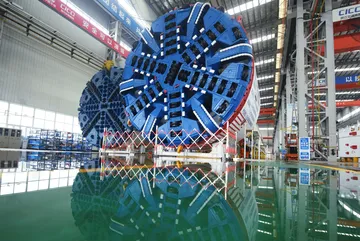
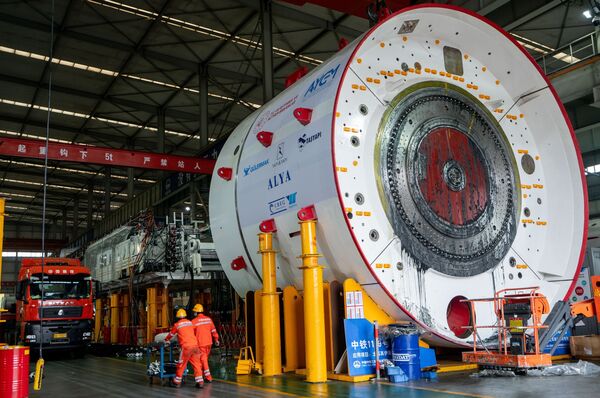
北京最新的出口管制措施瞄准的是建筑设备,包括隧道掘进机,这些是世界上最大、最复杂的工业设备之一。它们用于修建地铁,或在山脉中开凿道路和铁路。中国主导着全球市场,而印度是其主要客户之一。
Beijing’s newest export controls target construction equipment — including tunnel-boring machines, some of the world’s largest and most complex industrial devices. They’re used to build subways or drill roads and railways through mountains. China dominates the global market and India is among its main customers.
建筑工地在全球经济中似乎不是一个显而易见的咽喉要道——不像北京也提议列入限制清单的人工智能技术,或用于智能手机和高科技武器的稀土。此外,中国对该行业的控制虽然强大,但并非绝对,试图将其转化为杠杆,可能会促使其他国家赶上来。
Building sites might not be an obvious chokepoint in the global economy — unlike the AI technologies that Beijing has also proposed adding to its restricted list, or the rare earths used in smartphones and high-tech weapons. What’s more, China’s grip on this industry is strong but not absolute, and seeking to turn it into leverage could spur others to catch up.
“北京越来越将其作为全球关键建筑设备生产国的地位视为战略问题,”布鲁金斯学会研究员凯尔·陈说。“这增加了依赖的风险,并激励其他国家试图摆脱对中国的依赖。”不过,短期内要做到这一点并不容易。与此同时,乌克兰和伊朗的战争凸显了地下设施日益增长的军事重要性。至于印度,由于这些新限制将于本月晚些时候生效,因此具有特殊的针对性。
“Beijing increasingly sees its position as a key global producer of construction equipment in strategic terms,” said Kyle Chan, a fellow at the Brookings Institution. “It raises the risks of dependency, and incentivizes other countries to try to de-risk from China.”Still, that’s hard to do in the short run. Meanwhile wars in Ukraine and Iran have highlighted the growing military importance of underground facilities. And when it comes to India, there’s a particular edge to the new curbs due to take effect later this month.
除了隧道掘进机,这些管制还适用于其他建筑设备,包括用于高海拔喷射混凝土的机器。北京援引了所谓的军民两用潜力。它表示,与中国有争议的“敏感国家和地区”将面临更严格的规则。印度领导人有理由认为,这种措辞指向他们。
Along with tunnel-diggers, they apply to other construction equipment including machines for spraying concrete at high altitudes. Beijing invoked the potential for so-called dual use in military as well as civilian projects. It said “sensitive countries and regions with disputes with China” will face stricter rules. There are reasons for India’s leaders to think this language points in their direction.
世界人口最多的两个国家之间的喜马拉雅边境长期以来一直是热点地区,上周那里的紧张局势再次升级。印度正在该地区修建铁路和公路,目的是缩短部队动员时间。他们需要大量隧道。
The Himalayan border between the world’s most populous countries has long been a flashpoint and tensions there flared again just last week. India is building railway lines and roads in the area, with an eye on reducing troop mobilization times. They’ll need a lot of tunnels.
彭博经济学表示……“对专用建筑设备的管制可能会减缓一些基础设施项目,包括其有争议的喜马拉雅边境沿线的战略性建设”“但中国收紧的出口管制制度也可能强化印度作为替代制造基地的论点。外国设备制造商……有动力在印度等大型市场增加产能。”——切特娜·库马尔。
What Bloomberg Economics Says...“Controls on specialized construction equipment could slow some infrastructure projects, including strategic construction along their disputed Himalayan border”“But China’s tightening export control regime could also strengthen India’s case as an alternative manufacturing base. Foreign equipment makers ... have an incentive to add capacity in large markets such as India.”— Chetna Kumar. To read the full note, click here.
清华大学国际安全与战略中心研究员孙成昊表示,将高海拔机械列入管制,可能表明特别关注“战略敏感地形”。
The inclusion of high-altitude machinery could suggest particular attention to “strategically sensitive terrain,” said Sun Chenghao, a fellow at Tsinghua University’s Center for International Security and Strategy in Beijing.
“对中国来说,核心关切是中国工程能力被用于何处,以及它们是否可能增强另一个国家的军事基础设施,”孙说。
“For China, the central concern is where Chinese engineering capabilities are used and whether they could strengthen another country’s military infrastructure,” Sun said.
中国过去曾作为隧道掘进机的主要出口国展示其肌肉。2024年,中国推迟了德国赫伦克内赫特公司(Herrenknecht AG)向印度出售其掘进机的努力——该公司部分掘进机在中国制造——用于艾哈迈达巴德-孟买高铁和德里地铁等项目。
China has flexed its muscle as chief exporter of tunnel-diggers in the past. In 2024 it delayed efforts by Germany’s Herrenknecht AG – which manufactures some of its boring machines in China — to sell them to India, for use in projects like the Ahmedabad-Mumbai bullet train and the Delhi metro.
赫伦克内赫特公司的一位发言人表示,该公司正在研究中国最新的限制措施。
A spokesperson for Herrenknecht said the firm is studying the latest Chinese restrictions.
新德里全球贸易研究倡议组织创始人阿贾伊·斯里瓦斯塔瓦表示,对于任何“优先项目”,印度可以将设备从其他工地调拨。但还有另一个问题:中国的新限制也适用于部件。
For any “priority project,” India can shift equipment from other sites, said Ajay Srivastava, founder of the New Delhi-based Global Trade Research Initiative. But there’s another catch: China’s new curbs apply to components too.
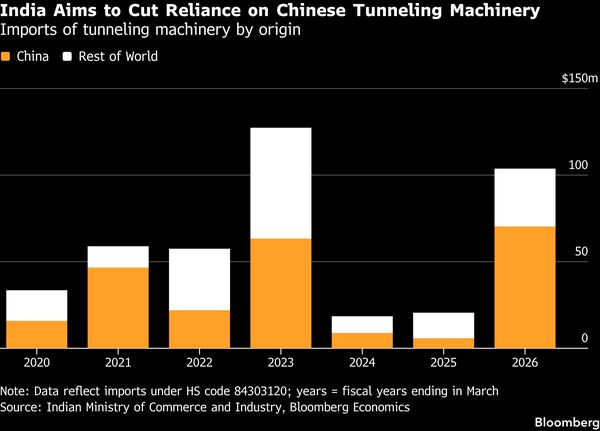
“这些机器在使用中磨损严重,我们需要定期供应零部件,”斯里瓦斯塔瓦说,因此这将对现有设备库存以及新设备采购产生影响。
“When there is heavy wear and tear in these machines we require regular supply of parts,” Srivastava said, so there’ll be an impact on the existing stock of machines as well as procurement of new ones.
印度远非中国掘进设备的唯一买家。北京官方媒体称,中国在该行业的全球份额约为70%。最大生产商中国铁路工程装备集团有限公司表示,其设备已用于包括丹麦和法国在内的36个国家。
India is far from the only buyer of China’s tunneling gear. Beijing state media put the country’s global share of the industry at around 70%. The top producer, China Railway Engineering Equipment Group Co Ltd, says its kit is used in 36 countries including Denmark and France.
除了赫伦克内赫特,美国和日本还有其他制造商生产潜在替代品。从长远来看,中国的限制可能对其中一些厂商有利。但对大多数客户来说,立即摆脱中国供应商并不容易。
Besides Herrenknecht, there are other manufacturers in the US and Japan that build potential substitutes. In the long run, China’s restrictions could prove a boon to some of them. But for most customers an immediate switch away from a Chinese supplier is difficult.
建设国内产能同样困难——对于像印度这样拥有宏大基建计划的大国来说,这是一个颇具吸引力的选择。
So is building domestic capacity – an appealing option in a large country like India with ambitious infrastructure plans.
公路运输与高速公路部长尼廷·加德卡里表示,印度计划在未来五年内投资高达96亿美元用于隧道建设,并敦促本地工业制造掘进机。据报道,政府正在考虑为建筑设备制造商制定一项12亿美元的激励计划。
Road Transport and Highways Minister Nitin Gadkari has said India aims to invest up to $9.6 billion on tunneling over the next five years, and urged local industry to manufacture boring machines. The government is reportedly considering a $1.2 billion incentive plan for makers of construction equipment.
位于孟买的工程巨头拉森与图布罗有限公司总裁R·尚卡尔·拉曼表示,该公司正在制造一台隧道掘进机原型机,“如果我们的实验证明成功”,可能能够自行采购机械并销售给其他客户。但由于印度制造业仍处于早期阶段,而中国已实现规模化生产,在成本上无法竞争。
R. Shankar Raman, president of Mumbai-based engineering giant Larsen & Toubro Ltd., said his company is building a prototype tunnel-borer and “if our experiment proves successful” might be able to source its own machinery and sell to others. But with India at an earlier phase of manufacturing, and China doing it at scale, there’s no way to compete on cost.
“如果人们仍然要与中国价格比较,并寻找从中国进口的办法,”他说,“那么印度将处于劣势。”
“If people are still going to compare with Chinese price and find ways to import from China,” he said, “then India will be at a disadvantage.”