
科技把我们从家里带了出来。它给了我们老板、办公室政治和闹钟——那很糟糕。我们习惯了它;我们让它运转起来。如今科技可能会夺走那些工作。但或许它也能恢复曾经定义工作的自主性与灵活性。
Technology took us out of our homes. It gave us a boss, office politics and an alarm clock — and it was awful. We got used to it; we made it work. Now technology might take those jobs away. But perhaps it will also restore the autonomy and flexibility that once defined work.
从我们作为狩猎采集者、农民、小规模手工业者,继而成为工厂工人和办公室职员以来,技术创新一直在改变最优的工作安排。人工智能可能正在再次改变工作。我们倾向于认为变化是坏事,而过渡无疑可能很艰难。变化也往往是不可避免的,它挑战着我们对工作面貌的想象。AI 乐观主义者认为机器会夺走我们所有的工作,但机器人也能创造现代工作,那些工作类似于工业化前的工作观念。
From when we were hunter gatherers, farmers, small scale artisans and then factory workers and office drones, technological innovation has altered the optimal work arrangement. Artificial intelligence may be changing work again. We tend to assume change is bad, and transitions undoubtedly can be hard. Change is also often inevitable, challenging our imagination on what work can look like. The AI optimists believe that machines will take all our jobs, but bots can create modern jobs, too, jobs that resemble a pre-industrial notion of work.
今天,我们把工作应有的样子视为理所当然。你在特定时间出现,有一个老板。他们告诉你做什么,作为交换,你获得现金和福利报酬。他们提供保障和一种生活方式。我们清醒的大部分时间都在工作,与同事和老板在一起。雇主承担了我们面临的大部分风险。我们生病时他们发工资,提供医疗和残疾保险,在令人失望的年份不削减我们的工资(除非情况长期恶化。那时,他们可能会裁员。)
Today we take for granted what a job should be. You show up at a certain time and have a boss. They tell you what to do, and in exchange, you are paid in both cash and benefits. They offer security and a lifestyle. We spend most of our waking hours at work, with our coworkers and bosses. Our employers bear lots of the risk we face. They pay us when we are sick, offer health and disability insurance and don’t cut our wages in disappointing years (unless things go badly for a long time. Then, they might lay us off.)
这种安排运作得相当不错,尽管开局坎坷。工业化早期伴随着流离失所和可怕、危险的工作条件。尽管我们今天抱怨不断,但得益于多种因素的共同作用——中产阶级壮大、工会施压、税制的特殊之处以及支持通勤等活动的基础设施日益完善——工作变得更好、更有保障、更安全了。
This arrangement works pretty well, though it had a rocky start. The early days of industrialization featured displacement and terrible, dangerous working conditions. As much as we complain today, work has become better, more secure and safer thanks to a confluence of factors: a rising middle class, pressure from unions, the quirks of the tax code and more infrastructure to support activities, such as commuting to work.
情况并非一直如此。在人类历史的大部分时间里,我们在家里或家附近工作,通常独自一人或与几个熟人一起,按自己的时间安排工作。工业经济的出现改变了这一点,它要求大量工人在同一时间聚集在同一地点。工业化的最初一百年充满了艰辛。人们习惯了为自己工作的自主性。被迫去别的地方、整天待在那里、听从命令,被认为是有辱人格的。这也是工厂最初雇佣妇女和儿童的原因之一。这也是我们实行普及教育的原因,目的是让工人习惯听从命令、按时上班。
It wasn’t always this way. For most of human history, we worked at or near home, often alone or with a few people we knew well, on our own time. That changed with the industrial economy, which required large numbers of workers in one place at the same time. The first hundred years of industrialization were rough. People were used to the autonomy of working for themselves. Being forced to go somewhere else, be there all day and take orders was considered demeaning. It is one reason why factories initially hired women and children. It is also why we have universal school, to condition workers to take orders and show up on time.
老板成了常态。自主经营和创业变得不那么普遍——直到最近。变化始于疫情前几年,并在2020年代初发生了巨大变化。
A boss became the norm. Self-employment and entrepreneurship became less common — until recently. Things started to change in the years before the pandemic, and they changed a lot during the early 2020s.
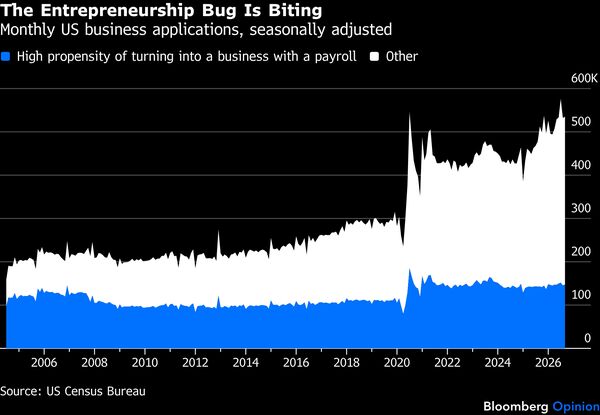
我的彭博观点同事贾斯汀·福克斯指出,新企业成立数量的增加很大程度上是单人实体,它们不会雇佣任何人,也不会让创始人致富。其中许多是副业,许多新创始人年龄较大,或许是在临近退休时寻求逐步退出劳动力市场。
My Bloomberg Opinion colleague Justin Fox has pointed out that much of the increase in new business formation has been single-person entities that won’t hire anyone or make their founders rich. Many of these are side hustles, and many new founders are older, perhaps seeking a gradual exit from the labor force as they approach retirement.
这并不意味着我们应该低估正在发生的事情,因为这可能预示着一种回归到早期工作形式的趋势。美国银行6月的数据显示,Z世代在商业申请增长方面超越了所有其他世代,这可能预示着年轻人应对人工智能时代方式的实质性转变。如果技术在18和19世纪剥夺了我们的自主权,那么现在它可能正在将自主权还给我们。
This does not mean we should devalue what’s happening since it could signify a throwback to an earlier form of work. Bank of America Corp. data for June showing Gen Z surpassing all other generations in business application growth may signal a material shift in how young people are responding to the age of AI. If technology took away our autonomy in the 18th and 19th centuries, now it may be bringing it back.
亚马逊公司并不完美,但它让企业家能够小规模销售商品,并能提供物流和更大的销售网络。如今的应用程序让人们能轻松找到咨询和零工工作,覆盖技能和工资分布的各个层面。技术使人们无需承担实体店的固定成本即可开展副业——如果顺利,这可以变成全职工作。调查显示人们喜欢灵活性和做自己的老板。这本该如此,这是一种更自然的工作方式。
Amazon.com Inc. is not perfect, but it allows entrepreneurs to sell goods on a small scale, and it can offer logistics and a bigger sales network. Apps today make it easy to find consulting and gig work at all parts of the skill and wage distribution. Technology makes it possible to start a side hustle without the fixed costs of a brick-and-mortar store — and if it works out, that can become a full-time gig. Surveys show people like flexibility and being their own boss. As they should, it is a more natural way to work.
人工智能可能将这一趋势推向新高度,因为它进一步降低了创业和经营业务的成本。它可以提供基本法律建议,充当虚拟助手,为网红编辑文档或短视频。它或许会减少大型雇主的岗位,但也让我们能按自己的条件创办新业务。
AI may take this trend to a new level because it further lowers the costs of starting and running a business. It can offer basic legal advice, be a virtual assistant, edit documents or short form videos for influencers. Maybe it will reduce jobs at big employers, but it also enables us to start new businesses on our own terms.
转型需要时间,过程可能混乱。我们依然拥有一个为面对面工作而构建的经济和文化。这是大多数人获取培训、医疗保健、失业救济或病假的方式。它在社交化方面也发挥着重要作用,因为工作是我们经常结交朋友、遇见伴侣的地方。更多的个体经营工作或许能提供更多灵活性、带来更大的创造性满足感,但也可能加剧我们现有的孤独流行病。前工业时代的人们拥有我们现在缺乏的其他社交渠道,无论是提供学徒制,还是通过共同兴趣和宗教建立社区。
Transitions take time and can be messy. We still have an economy and culture built for in-person work. It is how most people get training, healthcare and unemployment benefits or sick leave. It also plays an important role in socialization, since work is where we frequently make friends and meet spouses. More single proprietor work may offer more flexibility and be more creatively satisfying, but it could add to our existing loneliness epidemic. People had other social outlets in the pre-industrial age that we lack now, whether that was offering apprenticeships or building community through shared interests and religion.
向工业经济的转型比必要时更漫长、更痛苦,因为人们执着于对工作的固有观念,体制调整需要时间。如果我们希望这次转型更顺利,就需要减少对过去的依恋,寻找更有创意的方式来支持这种新的工作模式。
The transition to an industrial economy was longer and more painful than it needed to be because people were attached to a notion of what work was, and it took time for institutions to adjust. If we want things to go better this time, we need to be less tied to the past and find more creative ways to support this new way of work.