
瑞士的通胀率上升至近三年来的最高水平,主要受油价飙升和瑞郎走弱的推动。
Switzerland’s inflation rate rose to the highest level in almost three years, driven by the surge in oil costs and a weaker franc.
统计局周二表示,10月份消费者物价指数同比上涨1.5%。该涨幅高于9月份的1%,也超过彭博社调查的所有经济学家的预测。
Consumer prices increased 1.5% from a year earlier in October, the statistics office said on Tuesday. That’s up from 1% in September and stronger than predicted by any of the economists in a Bloomberg survey.
虽然该数据仍在瑞士央行设定的0%至2%区间内,但已明显高于政策制定者对第四季度1.2%的预测。官员们认为大部分加速是暂时的,并表示中期压力仅略有上升。
While the reading is within in the Swiss National Bank’s 0-2% range, it’s already noticeably above the 1.2% forecast of policymakers for the fourth quarter. Officials see most of the acceleration as temporary and have said that medium-term pressures increased only slightly.
瑞士央行的借贷成本已保持在全球最低的零水平超过一年,部分原因是伊朗战争的成本冲击在瑞士并不明显。汽油价格虽有上涨,但能源在瑞士通胀篮子中的占比较小,未能推动整体指数。
SNB borrowing costs have been at the world’s lowest level of zero for more than a year, in part because the cost shock from the Iran war has been benign in Switzerland. Petrol prices have risen, but a smaller share of energy in the Swiss inflation basket has kept that from driving the gauge.
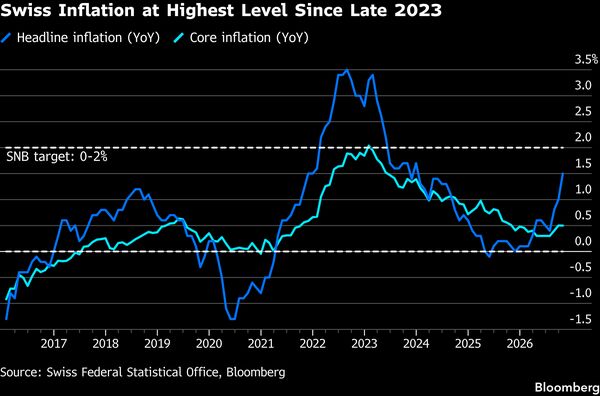
统计局称,10月份取暖油、汽油和柴油价格上涨推动了通胀。剔除能源等波动因素的所谓核心通胀保持在0.5%不变。
In October, rising prices for heating oil, petrol and diesel drove inflation, the statistics office said. So-called core inflation, which excludes volatile elements such as energy, held steady at 0.5%.
与周边欧元区相比,瑞士的通胀加速仍显温和,后者因伊朗战争的影响,上月的物价增长可能已达到欧洲央行目标的两倍。按照欧盟统一方法,10月份瑞士通胀为1.6%,而欧元区预期为4%。
The acceleration in Switzerland remains muted compared to the surrounding euro area, where the fallout from the Iran war probably drove price growth to twice the European Central Bank’s target last month. According to the harmonized European methodology, Swiss inflation in October was 1.6%, versus an expected 4% in the currency bloc.
过去几个月,瑞郎持续走弱提升了国内成本,因为在国外购买变得更贵。政策制定者在9月的最新一次利率决议中承认了这一点,并在采取一定的货币贬值行动后,降低了干预的威胁。
Over the past months, a continued weakening of the franc has boosted domestic cost increases, as buying abroad became pricier for the Swiss. Policymakers acknowledged this at their most recent rate decision in September, dialing down their threat of intervention after some action to weaken the currency.