
印度是世界上增长最快的主要经济体。一项面向侨民的一次性美元存款计划刚刚使外汇储备增加了20%。卢比正在企稳,税收收入激增。在地缘政治紧张的时刻,债券市场本应成为投资者的宠儿。
India is the fastest-growing major economy in the world. A one-time dollar-deposit program for its diaspora has just lifted foreign-exchange reserves by 20%. The rupee is steadying and tax revenues are surging. The bond market should be the darling of investors at a time of geopolitical tension.
然而,全球资金管理者正在对该国失去兴趣。印度的风险溢价正以七年来最快的速度上升。
Instead, global money managers are souring on the country. India’s risk premium is rising at its fastest pace in seven years.
投资者持有印度10年期主权债券而非美国国债所要求的溢价在10月份跳升了58个基点。这是自2019年8月以来最大的单月涨幅,当时经济增长放缓,卢比经历了六年来最剧烈的抛售。现在的经济背景几乎截然相反。然而投资者的表现却仿佛出了严重问题。
The premium investors demand to own India’s 10-year sovereign bonds over US Treasuries jumped 58 basis points in October. That was the biggest monthly increase since August 2019, when growth was slowing and the rupee was suffering its sharpest selloff in six years. The economic backdrop is almost the opposite now. Yet investors are behaving as if something has gone badly wrong.
这是最新证据,表明市场正在超越过去二十多年来支撑印度投资逻辑的主题:经济增长和消费市场规模。这些仍然是不可否认的优势,但基金经理多年来已将它们计入印度股票和债券的定价中。国家领导人需要一个不同的说辞来吸引下一美元全球资本。他们需要展示经济韧性和政策公信力。
It’s the latest evidence that markets are looking beyond the themes that have powered India’s investment case for more than two decades: economic growth and the size of the consumer market. Those remain undeniable strengths, but fund managers have been pricing them into Indian stocks and bonds for years. The nation’s leaders require a different pitch to lure the next dollar of global capital. They need to showcase economic resilience and policy credibility.
正如官方数据所反映的,宏观经济表面上看大多稳定。然而,透过表象看,企业和消费者经历的环境要动荡得多。最明显的压力是输入性通胀:在伊朗战争的推动下,全球油价飙升,传导至全经济各环节成本。即使储备激增也不如表面那样令人安心:侨民存款计划连同6月安排的货币互换,使央行面临估计2000亿美元的远期美元承诺,压缩了其有效缓冲垫。但所有这些都无法解释突如其来的市场压力。
The headline economy, as reflected in official data, looks mostly stable. Look beneath it, however, and the environment experienced by businesses and consumers is far more turbulent. The most obvious pressure is imported inflation: Global oil prices have surged in the wake of the Iran war, feeding into costs across the economy. Even the reserves windfall is less comforting than it appears: The diaspora deposit program, together with currency swaps arranged in June, has left the central bank with an estimated $200 billion in forward dollar commitments, shrinking its effective cushion. But all these cannot explain the sudden market stress.
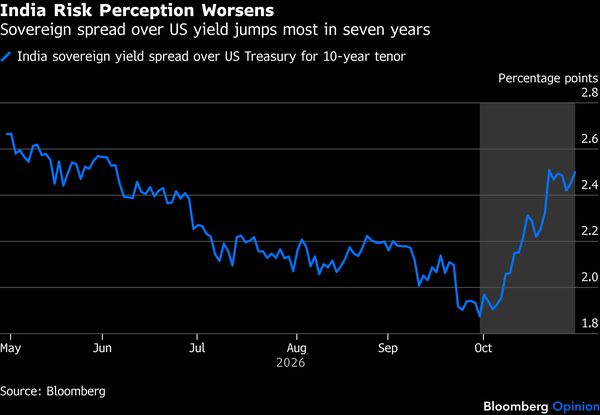
今年早些时候,随着布伦特原油价格升破每桶100美元、美国国债遭抛售,印度的风险溢价实际上却在下降。因此,发生变化的不仅仅是该国面临的风险,而是投资者对政策制定者应对这些风险方式的信心。
Earlier this year, as Brent crude climbed above $100 a barrel and as US Treasuries sold off, India’s risk premium was actually falling. What has changed, then, isn’t simply the risks confronting the country. It’s investors’ confidence in how policymakers are responding to them.
印度储备银行处于这些担忧的核心。问题不仅在于它是否本应更早加息。等到它采取行动时,其长期的“观望”做法可能已经造成了损害。随后印度风险溢价的飙升表明,投资者不再相信央行能走在事态前面。
The Reserve Bank of India is at the center of those concerns. The question isn’t just whether it should have raised rates sooner. By the time it acted, its prolonged wait-and-watch approach may have already done the damage. The subsequent spike in India’s risk premium suggests investors are no longer convinced the central bank is ahead of events.
矛盾在于,10年期收益率逼近7.5%,而实际政策利率却徘徊在零附近。根据印度储备银行自身的通胀预测,实际利率很快可能转为负值。然而,央行并未提供明确路径,说明如何回到其偏好的1.4%-1.9%实际利率区间。其对卢比波动的应对可能加剧了信誉问题。加息数日后,印度储备银行收紧了部分货币头寸的限制,暗示投机在一定程度上导致了压力。
The paradox is that the 10-year yield is approaching 7.5% even as real policy rate hover near zero. Against the RBI’s own inflation projections, real rates could soon turn negative. Yet the central bank has offered no clear path back to its preferred real-rate range of 1.4%-1.9%. Its response to rupee volatility may have compounded the credibility problem. Days after raising rates, the RBI tightened restrictions on some currency positions, implying that speculation was partly responsible for the pressure.
但基本面力量正在推动卢比贬值,令投资者怀疑政策制定者是在治标而非治本。这些限制还使一些套期保值策略变得更困难、成本可能更高,给了外国投资者另一个保持谨慎的理由。
But fundamental forces are pushing the rupee lower, leaving investors to wonder whether policymakers are treating the symptom rather than the disease. The restrictions have also made some hedging strategies more difficult and potentially more expensive, adding another reason for foreign investors to be wary.
尽管如此,印度债券市场的压力并非完全源于国内因素。今年早些时候的美国国债抛售主要是由美国特有的财政担忧驱动,并未引发包括印度在内的新兴市场的更广泛撤资。始于8月下旬的第二轮抛售则有所不同。人们担心飙升的燃料价格会巩固通胀,迫使美联储加息,从而威胁到全球融资条件收紧。这一次,压力迅速蔓延至新兴市场。这有助于解释为何印度的债券风险溢价在早期的美债抛售期间保持了显著的稳定,却在10月急剧膨胀。
Still, India’s bond-market stress isn’t solely homegrown. The Treasury selloff earlier this year was driven largely by US-specific fiscal concerns and did not trigger a broader retreat from emerging markets, including India. The second selloff, which began in late August, was different. Fears that surging fuel prices would entrench inflation and force the Federal Reserve to raise interest rates threatened tighter financing conditions worldwide. This time, the pressure spread quickly to emerging markets. That helps explain why India’s bond-risk premium, which had remained remarkably stable through the earlier Treasury selloff, ballooned in October.
对于印度债券买家而言,危险在于这演变成一轮漫长的重新定价。包括霍尔木兹海峡局势动荡在内的全球风险,均不大可能迅速消散。即使这些压力缓解,投资者也可能得出结论:印度对进口能源的依赖及其地缘政治脆弱性,理应享有更持久的风险溢价。
The danger for buyers of Indian bonds is that this becomes a prolonged repricing. None of the global risks, including disruption to the Strait of Hormuz, looks likely to disappear quickly. Even when those pressures ease, investors may conclude that India’s dependence on imported energy and geopolitical vulnerabilities warrant a more persistent risk premium.
更高的收益率和更宽的利差无疑让印度债券在纸面上更具吸引力。外国投资者最终可能会回归,但他们可能希望看到更有力的证据,证明印度央行(RBI)能够未雨绸缪。
Higher yields and wider spreads have undoubtedly made Indian bonds more attractive on paper. Foreign investors may eventually return, but they’re likely to want stronger evidence that the RBI can get ahead of the curve.
他们的愿望清单虽长却很直接:可预期的货币政策、可信的通胀控制、准入便利的货币市场、稳定且灵活的套期保值机制,以及从长远看,一份明确削减印度对进口石油依赖的路线图。
Their wish list is long but straightforward: predictable monetary policy, credible inflation control, an accessible currency market, stable and flexible hedging mechanisms and, over the longer term, a clear road map for reducing India’s dependence on imported oil.
印度花费多年向投资者兜售其增长前景的承诺。该国现在需要说服他们,它有能力管控随增长而来的风险。
India has spent years selling investors on the promise of its growth. The country now needs to convince them that it can manage the risks that come with it.