承诺宏大:Anthropic 首席执行官称,人工智能可能在十年内治愈大多数人类疾病。另一位科技高管开玩笑说,AI 研究人员开始抽烟了,因为他们非常自信 AI 会治愈肺癌。制药高管们不买账。
The promises are grandiose: Anthropic’s chief executive said artificial intelligence could cure most human diseases within a decade. Another tech exec joked that AI researchers have started smoking cigarettes because they are so confident AI will cure lung cancer. Pharma executives don’t buy it.
“完全是胡扯,”Vertex Pharmaceuticals 执行董事长 Jeff Leiden 说,他回忆起最近与一位科技领袖的交谈,对方声称 AI 将在未来七年治愈 90% 的人类疾病。
“That’s complete BS,” said Jeff Leiden, executive chairman of Vertex Pharmaceuticals, recalling a recent conversation with a tech leader who claimed AI would cure 90% of human disease in the next seven years.
Leiden 说,Vertex 曾使用大约 50 家 AI 公司来筛选其包含 1 万种药物化合物的数据集。没有一家成功生成出一种有效的药物。
Vertex has used roughly 50 AI companies to comb through its data set of 10,000 drug compounds, Leiden said. Not one managed to generate a working drug.
“光靠它自己根本行不通,”Leiden 说,“任何声称能做到这一点的公司——至少根据我们的经验,我们考察过其中大多数——都是不真实的。” 领导新药研发公司的高管们表示,AI 短期内不会治愈癌症。他们正在给这项技术在药物研发中的应用降温,称人类生物学过于复杂,即使是超级智能也难以应对。
“It just doesn’t work by itself,” Leiden said, “and any company that says they can do that—at least in our experience, we’ve looked at most of them—it’s not true.”Executives leading the companies that discover new drugs say AI isn’t going to cure cancer anytime soon. They are dimming the hype around the technology’s use in drug research, saying human biology is too complicated even for superintelligence.
药企当然在使用 AI —— 甚至用它来创造新药。它正帮助研究人员选择靶点、优化实验性药物,并识别哪些患者适合接受这些治疗。Leiden 说,它作为科学家的“副驾驶”很有用。
Drugmakers are certainly using AI—even to to create new drugs. It is helping researchers pick targets, fine-tune experimental medicines and identify which patients would be good candidates for the treatments. Leiden says it is useful as a scientist’s copilot.
然而,在将 AI 融入医药的竞赛中,硅谷的承诺与制药高管们所说的新药研发残酷现实之间,出现了尖锐的分歧。生物学中仍有太多未知领域,数据分析无法解决。
Yet in the race to integrate AI into medicine, a sharp divide has emerged between Silicon Valley’s promises and what pharma execs say are the harsh realities of drugmaking. There are still so many unknowns with biology that data analysis can’t fix.
“如果在行业里待得够久,我们很快就会学会谦逊,”阿斯利康首席执行官帕斯卡尔·索里奥说。“疾病很复杂,生物学也很复杂。说人工智能将治愈癌症,可能有点言过其实了。”这家英国药企最近与人工智能生物技术公司Insitro达成一项协议,预付4000万美元以发现新的心脏病和减肥药物,并与甲骨文公司签署协议,帮助简化临床试验患者招募流程。位于马萨诸塞州剑桥市的一个新开放的研发基地正利用人工智能帮助加快实验进程。
“If we are in the industry long enough, we quickly learn to be humble,” said AstraZeneca Chief Executive Pascal Soriot. “Disease is complicated, biology is complicated. To say AI is going to cure cancer is maybe a little bit of a jump.”The British drugmaker recently inked a deal with AI biotech Insitro worth $40 million up front to discover new heart and weight-loss drugs, and signed an agreement with Oracle to help streamline the process for recruiting patients to clinical trials. A recently opened research and development site in Cambridge, Mass., uses AI to help speed up experiments.
麦肯锡高级合伙人亚历克斯·德弗雷森专注于人工智能在药物开发中的应用,他表示,该技术能比以往更快地设计新的实验性药物,但这并不意味着它能研制出可行的药物。他说,药物开发中大约四分之一的中后期失败可追溯到安全性问题,因为药物存在“脱靶”问题,即它们在体内产生非预期作用,导致不必要甚至有害的副作用。目前的人工智能模型难以预测这一点。
McKinsey senior partner Alex Devereson, who focuses on AI in drug development, said the technology can design new experimental medicines quicker than before, but that doesn’t mean it is coming up with workable drugs. Around a quarter of mid-stage to late-stage failures in drug development can be traced to safety problems because drugs have “off-target” issues, he said, meaning they do unintended things within the body that lead to unwanted or even harmful side effects. Current AI models struggle to predict this.
“投资正流向最容易解决的问题,而非最重要的问题,”德弗雷森说。
“Investment is flowing to the problems that are easiest to solve, not the problems that are most important,” Devereson said.
根据麦肯锡的数据,2025年全球风险投资和私募股权公司向人工智能药物发现领域投资了84亿美元,高于两年前的约40亿美元。然而,只有少数几家人工智能原生生物技术公司——如英矽智能和Generate Biomedicines——让药物进入了晚期患者测试阶段,美国食品药品监督管理局尚未批准其中任何一款。
Venture capital and private-equity firms invested $8.4 billion globally into AI drug discovery in 2025 alone, up from roughly $4 billion two years prior, according to data from McKinsey. Yet only a few AI-native biotechs—such as Insilico Medicine and Generate Biomedicines—have gotten drugs into late-stage patient testing and the Food and Drug Administration hasn’t cleared any of them yet.
尽管如此,硅谷最大的参与者仍将药物开发视为一个利润丰厚、适合颠覆性创新的机会。“我认为实际上在5到10年内治愈大多数人类疾病将成为可能,听起来虽疯狂但属实,”Anthropic首席执行官达里奥·阿莫代伊9月在X平台发文称。
Still, Silicon Valley’s largest players see drug development as a lucrative opportunity prime for disruption. “I think it will actually be possible to cure most human disease in ~5-10 years, as crazy as it may sound,” Anthropic CEO Dario Amodei posted on X in September.
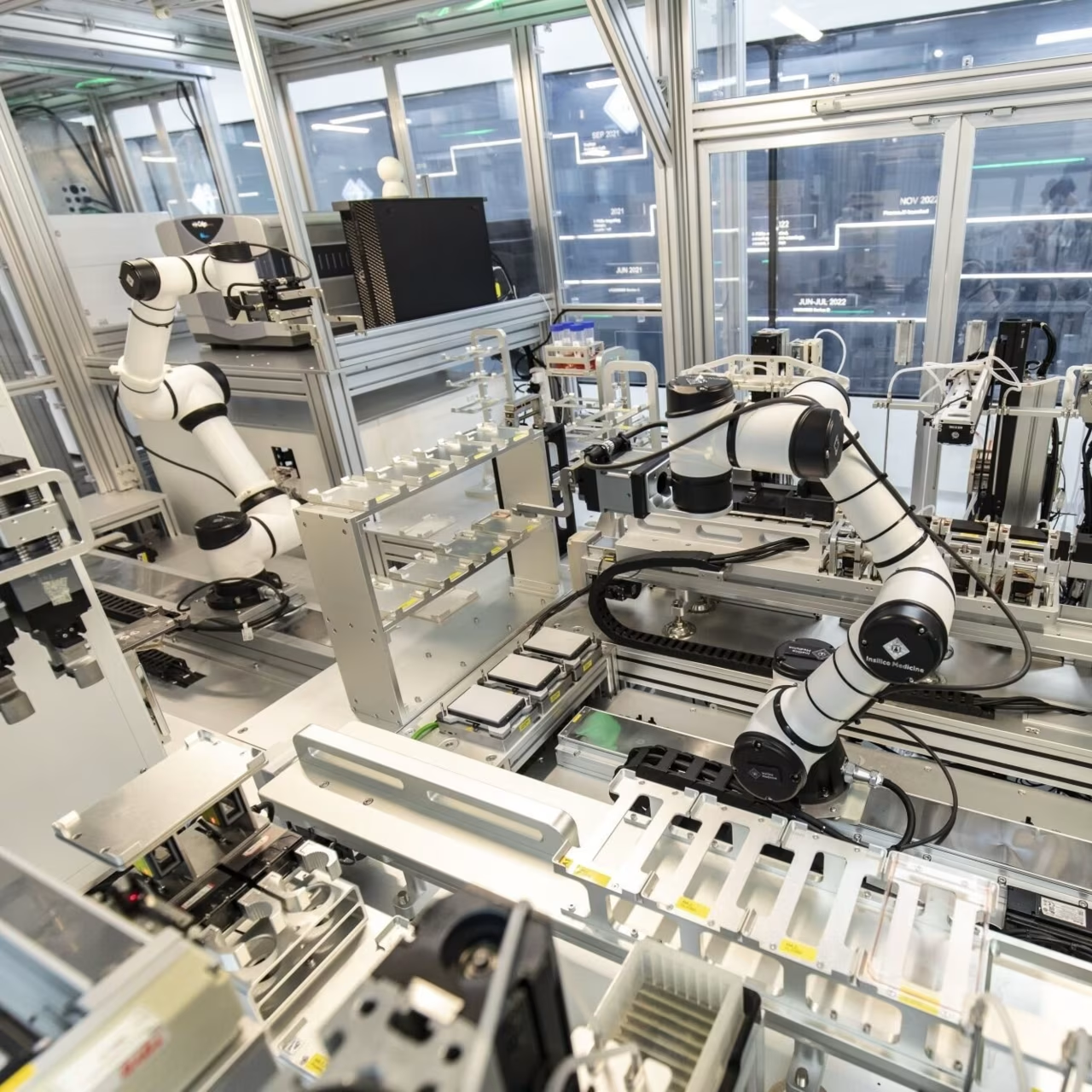
Anthropic 今年早些时候收购了一家处于隐身模式的生物技术公司,最近又收购了一家由一人运营、几乎完全依靠 AI 运作的生物技术公司。OpenAI 上个月宣布收购了一家 AI 药物发现生物技术公司。
Anthropic bought a stealth-mode biotech earlier this year and recently bought a one-person biotech running an almost completely AI-enabled operation. OpenAI announced it bought an AI drug-discovery biotech last month.
大多数制药公司也与 AI 开发商建立了合作伙伴关系。礼来公司和英伟达 1 月表示,将在五年内投资高达 10 亿美元,研究 AI 在药物发现、机器人技术等方面的作用。百时美施贵宝、诺和诺德和赛诺菲均已宣布与 OpenAI 或 Anthropic 建立合作伙伴关系。
Most pharma companies have partnerships with AI developers, too. Eli Lilly and Nvidia said in January they would invest up to $1 billion over five years to research AI’s role in such things as drug discovery and robotics. Bristol Myers Squibb, Novo Nordisk and Sanofi have all announced partnerships with OpenAI or Anthropic.
包括 Regeneron 首席科学官、拥有 1000 多项专利的 George Yancopoulos 在内的研究负责人认为,AI 有潜力在实验室提供协助,但不认为它是一场革命。
Research chiefs including George Yancopoulos—Regeneron’s chief scientific officer and holder of more than 1,000 patents—see the potential for AI to assist in the lab but don’t see it as a revolution.
“AI 不会神奇地介入,告诉我们该怎么做,把研发周期从 15 年缩短到 5 年,”Yancopoulos 说。
“AI is not going to just miraculously come in and tell us how to do things and cut things from 15 years to five years,” Yancopoulos said.
监管机构最近提出了新框架,以规范 AI 在监管提交和试验数据分析中的应用,但这无助于加速流程中一些更棘手的环节,例如寻找足够多的合适患者,并在整个研究过程中对他们进行监测。
Regulators have recently proposed new frameworks to govern AI use in regulatory submissions and trial data analysis, but that doesn’t help accelerate some of the thornier parts of the process such as finding enough of the right patients and monitoring them throughout studies.
随着技术的发展,AI 很可能成为药物开发中更有用、潜力更大的工具。
As the technology evolves, it is likely to become a more useful and potentially more powerful tool in drug development.
总部位于德国的拜耳基因疗法部门的一个团队最近利用 AI 在几天内筛查了 1 亿份患者记录,通过查看基因标记和患者病史,找出最适合其基因编辑技术的五种疾病。
A team at Germany-based Bayer’s gene therapy unit recently used AI to comb through 100 million patient records in a matter of days, looking at genetic markers and patient histories to find the five best diseases prime for their gene-editing technology.
“这本身并不是 AI 在治愈疾病,”拜耳首席运营官 Sebastian Guth 说,“当你将人类科学家的才智与 AI 结合时,奇迹就会发生。”
“Is that AI as such curing a disease? It isn’t,” said Sebastian Guth, Bayer’s chief operating officer. “The magic happens when you marry the brilliance of human scientists with AI.”