中国机器人行业融资在过去几个月急剧放缓,10月降至约110亿元人民币(约合16亿美元),表明自优必选在春节晚会上展示人形机器人震惊世界以来,投资的狂热步伐正在降温。
Chinese robotics sector fundraising decelerated sharply in past months to about 11 billion yuan ($1.6 billion) in October, suggesting a cooling in the frenzied pace of investment since Unitree wowed the world with its Spring Festival humanoids showcase.
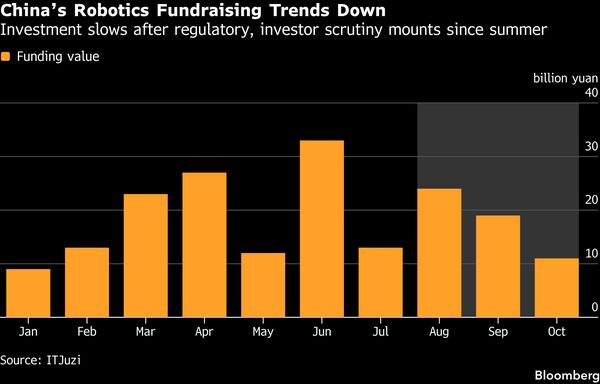
据本土投资追踪机构IT桔子编制的数据,这一总额不足8月近240亿元人民币的一半,较6月328亿元人民币的历史峰值下降67%。该研究机构统计的交易涉及优必选、智元机器人等人形机器人开发商、为机器人创建AI模型的公司,以及从传感器到灵巧手等零部件供应商。
That total is less than half the nearly 24 billion yuan raised in August and down 67% from an all-time-high of 32.8 billion yuan in June, according to data compiled by local investment tracker ITjuzi. The research firm counts deals involving humanoid developers like Unitree and AgiBot, companies that create AI models for robots and the suppliers of components from sensors to dexterous hands.
2026年中国机器人融资已达创纪录的1850亿元人民币,超越2025年全年,反映出资本对该领域的浓厚兴趣,该领域是北京对抗美国技术领先地位努力的关键。然而,自夏季以来融资的显著放缓,表明在数百家企业拥挤的赛道中,投资者正变得更加审慎——其中许多预计无法在最终的行业洗牌中生存。
Chinese robotics funding in 2026 has already surpassed 2025 at a record 185 billion yuan, reflecting interest in a sector key to Beijing’s effort to counter US technological leadership. Yet the marked slowdown in funding since the summer signals growing discernment around a sector crowded with hundreds of players — many of which aren’t expected to survive an eventual shakeout.
融资放缓可能是全行业整合的前兆。深圳研究机构GGII(高工机器人产业研究所)称,未来三年将有超过15%的机器人相关初创企业面临破产或被收购。
The funding slowdown may be a precursor to industry-wide consolidation. More than 15% of robotics-related startups will face either bankruptcy or acquisition in the next three years, according to Shenzhen-based research firm GGII.
“整合已经在发生,”投资了诺埃特、深度机器人等公司的创新天使基金初级合伙人吴某(Mavis Wu)表示,“只有头部玩家能生存下来,因为这些领军企业吸引了初级市场上大部分的流动性。” 2025年春节晚会——当年度收视率最高的电视节目——上优必选展示跳舞机器人引发的最初“错失恐惧症”,如今已撞上更严格的监管审视,以及机器人在家庭或职场展示出的应用有限这一认知。
“The consolidation is already happening,” said Mavis Wu, a junior partner at Inno Angel Fund, which invests in firms including Noetix and Deep Robotics. “Only the top players can survive, because those leading players are attracting most of the liquidity from the primary market.”The initial fear-of-missing-out inspired by Unitree’s demo of dancing robots during 2025’s Spring Festival gala — the most-watched TV event of the year — has now run up against tighter regulatory scrutiny and a recognition that robots have demonstrated limited use in either the home or workplace.
一个核心关注点是对IPO的审查。据本地媒体《第一财经》报道,作为确保上市公司质量的更广泛努力的一部分,监管机构正就寻求上市的人形机器人开发商的商业前景提出尖锐问题。
One key concern is scrutiny of IPOs. Regulators are asking hard questions about the commercial prospects of humanoid developers seeking to go public, as part of a broader effort to ensure the quality of listed companies, local media Yicai reported.
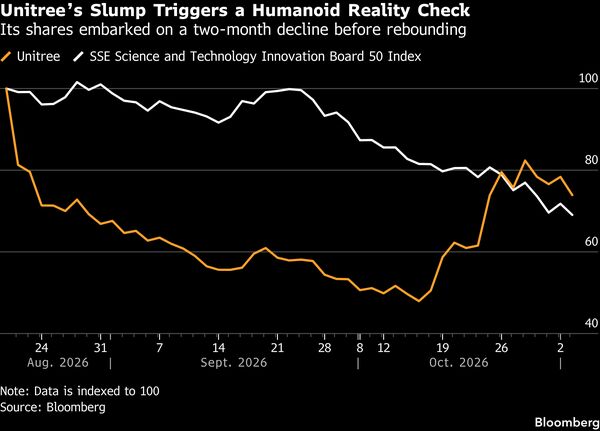
这与对AI估值日益增长的谨慎态度不谋而合。优必选的股价已从高点下跌超过20%,此前该公司于8月进行了首次公开募股。这家正式名为宇树科技有限公司、中国领先的机器人制造商,在上市首日飙升逾600%后,股价持续走低。其股价仍远高于发行价。
That’s coincided with growing caution about AI valuations. Unitree’s stock has slid more than 20% from its peak following an August initial public offering. Formally known as Yushu Technology Co., China’s leading robots maker has trended southward since surging over 600% on its first day of trading. It remains well above its IPO price.
“无论是技术还是这些机器人的部署,都未达到市场的预期,”咨询公司Omdia首席分析师苏建业表示。
“Neither the technology nor these robots’ deployment has lived up to the market’s expectation,” said Lian Jye Su, chief analyst at consultancy Omdia.
近期制造人形机器人的初创企业融资额明显减少。部分企业在前八个月完成了有史以来最大规模融资,包括小鹏汽车旗下机器人业务获得9亿美元融资,以及Sharpa通过一笔45亿元人民币的交易融资。投资者今年早些时候还向所谓的“世界模型”开发商投入巨资,向深圳的X Square Robot和上海的Tars等公司投入数十亿元资金。
Startups that make humanoids have raised noticeably less capital of late. Some completed their largest-ever financings in the first eight months, including Xpeng Inc. with a $900 million robotics unit funding, and Sharpa via a 4.5 billion yuan deal. Investors also wrote big checks to so-called “world model” developers earlier this year, funneling several billion to the likes of Shenzhen-based X Square Robot and Tars in Shanghai.
据IT桔子汇总数据,近几个月来这种情况有所减少,最大规模交易的融资额多在10亿元人民币左右。
That’s dwindled in recent months, with the biggest deals raising mostly around 1 billion yuan, according to ITjuzi’s collated data.
投资者仍在向该领域投入资金,但重点已转向能够展示商业应用和稳定收入的初创企业,以及致力于改进人形机器人技术的公司。
Investors are still pouring money into the sector but the focus has shifted to startups that demonstrate commercial applications and stable income, as well as companies working on technologies to improve humanoids.
此类公司在过去两个月主导了融资。深圳手术机器人企业Cornerstone Robotics从美敦力公司获得7亿美元融资——这是近期唯一获得约50亿元人民币融资的机器人企业。制造机器人芯片的D-Robotics(地平线机器人)从包括韩国Mirae Asset Venture Investment Co.和美团在内的投资者处获得4亿美元融资。
Such companies led fundraising in the past two months. Shenzhen-based surgical robotics firm Cornerstone Robotics nabbed $700 million from Medtronic Plc — the only robotics firm to secure around 5 billion yuan of financing recently. D-Robotics, which makes chips that power robots, secured $400 million from investors including South Korea’s Mirae Asset Venture Investment Co. and Meituan.
这些公司仍能获得投资支持,凸显了初创企业寻找清晰营收路径的必要性,Omdia的苏某表示。
That these companies are still winning backing underscores the need for startups to find a clear path to revenue, according to Omdia’s Su.
“中国机器人行业大概有近一千家公司,”苏某说。“它们现在面临的挑战是,如何快速找到产品商业化的途径,并有力论证这些机器能为客户带来明确的投资回报。”
“There are probably nearly a thousand companies in China’s robotics industry,” Su said. “They now face the challenge of finding a quick a way to commercialize their product and make a strong case that these machines can bring about clear return on investment for their clients.”