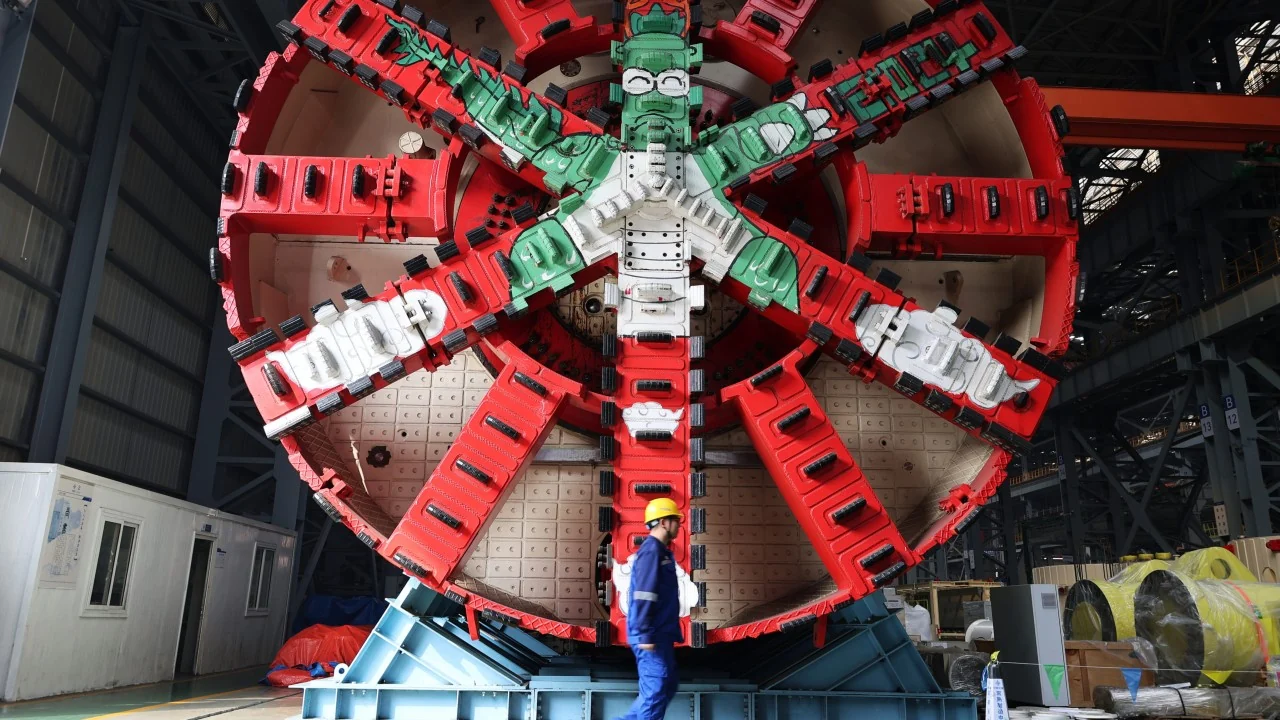
印度雄心勃勃的计划——修建高速铁路、地铁网络以及穿越喜马拉雅山的战略公路——可能会因中国拟议对隧道掘进机的限制而受阻,这暴露出印度对外国技术的依赖,而新德里可能难以摆脱这种依赖。
India’s ambitious plans to construct high-speed railways, metro networks and strategic roads through the Himalayas could be hampered by China’s proposed restrictions on tunnel-boring machines, exposing a dependence on foreign technology that New Delhi may find difficult to overcome.
专家表示,尽管这些限制不太可能使建设完全停滞,但可能会拖慢重大项目的进度,并加剧了要求印度自主研发先进隧道掘进设备的呼声。
Experts say while the curbs are unlikely to halt construction, they could slow major projects and have intensified calls for India to develop its own advanced tunnelling equipment.
这些限制还可能使这两个亚洲邻国之间谨慎的关系缓和变得更加复杂,令外界质疑:在持续存在的战略紧张局势下,双方的经济关系究竟能恢复到何种程度。
The restrictions also threaten to complicate a cautious thaw in relations between the Asian neighbours, raising questions about how far their economic ties can recover amid persistent strategic tensions.
印度商务部长皮尤什·戈亚尔周二表示,德里不会屈服于压力,也不会为了从中国获得关键技术而做出让步,但如果供应受到限制,印度将发展自己的制造能力。
India’s Commerce Minister Piyush Goyal said on Tuesday that Delhi would not bow to pressure or make concessions to secure critical technology from China, but would instead develop its own manufacturing capabilities if supplies were restricted.
“如果他们不给我们隧道掘进机,我们将在印度自主研发。印度不是会屈服的国家,”戈亚尔说。但他也试图释放和解信号,称德里不想损害与北京的关系。
“If they don’t give us tunnel-boring machines, we will develop it in India. India is not someone who will give in,” Goyal said. But he sought to strike a conciliatory note, saying Delhi did not want to damage its relationship with Beijing.
“我们与中国的关系良好,在没有新障碍的情况下将会进一步改善,”他说。
“Our ties with China are good and will improve in the absence of new obstacles,” he said.
北京于10月19日宣布、定于11月18日生效的出口管制措施,将要求向与中国存在争端的国家出口某些隧道掘进机及零部件时须获得许可证,而向其他地区的出口则须进行登记。
Beijing’s export controls, announced on October 19 and due to take effect on November 18, would require licences for shipments of certain tunnel-boring machines and components to countries with which China has disputes, while exports elsewhere would face registration requirements.
中国表示,这些措施旨在维护国家安全,并指出该设备具有潜在的军事和民用用途。中方未指明哪些国家将面临更严格的许可要求。
China said the measures were intended to protect national security, citing the equipment’s potential military and civilian uses. It did not identify which countries would face the stricter licensing requirements.
尽管如此,这些限制已在印度引发担忧。印度与中国长期存在边界争端,而有报道称,两国军队在存在争议的喜马拉雅边境地区再次发生对峙。
Nevertheless, the restrictions have raised concerns in India, which has a long-standing border dispute with China, amid reports of renewed stand-offs between troops along their disputed Himalayan frontier.
过去一年,两国一直在努力修复因2020年加勒万河谷致命冲突而紧张的关系,直飞航班在中断五年后于去年恢复。
The two countries have spent the past year trying to repair relations strained by a deadly clash between their troops in the Galwan Valley in 2020, with direct flights resuming last year after a five-year hiatus.
9月,中国国家主席习近平七年来首次访问印度,在金砖国家峰会期间与总理纳伦德拉·莫迪举行了双边会晤。隧道掘进机限制并非中国出口管制首次在印度引发担忧。
In September, Chinese President Xi Jinping visited India for the first time in seven years, holding a bilateral meeting with Prime Minister Narendra Modi on the sidelines of the Brics summit. The tunnel-boring machine restrictions are not the first Chinese export controls to raise concerns in India.
戈亚尔表示,德里也在努力减少对中国稀土矿产的依赖。此前北京去年实施的限制措施损害了印度的技术和汽车产业。
Goyal said Delhi was also trying to reduce its dependence on China for rare earth minerals, following curbs imposed by Beijing last year that hurt India’s technology and automotive industries.
“当他们停止供应稀土时,我们并没有去乞求他们,”这位部长说,并补充称一些初创企业现在已在生产不使用稀土矿产的电机。
“When they stopped rare earths, we did not go begging to them,” the minister said, adding that some start-ups were now producing motors without rare earth minerals.
专家表示,中国的最新限制不太可能彻底中断隧道建设,因为印度也严重依赖爆破等传统开挖方法和其他设备。然而,他们警告称,这些限制可能会减缓发展步伐。
Experts said China’s latest curbs were unlikely to disrupt tunnel construction outright, as India also relied heavily on conventional excavation methods such as blasting and other equipment. However, they warned that the restrictions could slow the pace of development.
印度已开始对其铁路网络进行大规模多层次扩建,包括一条穿越孟买-艾哈迈达巴德走廊的高铁项目,以及在与中国的喜马拉雅山脉边境地区修建公路、隧道和桥梁。
India has embarked on a massive multilayered expansion of its railway network, including a bullet train project through a Mumbai-Ahmedabad corridor and construction of roads, tunnels and bridges across Himalayan mountain ranges where it shares a border with China.
隧道掘进机对于复杂项目尤为重要,包括人口稠密地区地下的隧道,在这些地方传统开挖方法可能不太适用。
Tunnel-boring machines are particularly important for complex projects, including tunnels beneath densely populated areas where conventional excavation methods may be less suitable.
“我们一直为每一条地铁和铁路隧道进口这些机器,很少有人问为什么我们不在这里制造它们。中国的举动迫使(印度)面对这个问题,”泰米尔纳德邦多领域金融服务公司Port City Nidhi Ltd的执行董事维贾亚拉姆·苏里亚穆尔蒂说。
“We’ve been importing these machines for every metro and rail tunnel, and very few people asked why we weren’t making them here. China’s move has forced that question [upon India],” said Vijayaram Suryamurthy, executive director of Port City Nidhi Ltd, a multi-domain financial services firm in Tamil Nadu.
他表示,印度可以轻松制造盾构机的钢制外壳,但刀盘、液压系统 and 控制系统等其他部件则需要更复杂的工程技术能力。
He said India could easily develop the steel shell of a boring machine, but other parts such as the cutter head, hydraulics and the control systems would require more sophisticated engineering skills.
苏里亚穆尔蒂说:“如果政府能在订单方面给制造商一些确定性,并且我们与欧洲、日本或韩国的合作伙伴联手,这是可行的。从维修和备件做起,培养技能,更大的部件自然会跟上。”但他指出,发展制造能力需要时间。
“If the government gives manufacturers some certainty on orders, and we tie up with European, Japanese or Korean partners, this can work. Start with servicing and spares, build the skills, and the bigger pieces will follow,” Suryamurthy said. However, developing the manufacturing capabilities would take time, he noted.
苏里亚穆尔蒂说:“我认为,任何说印度明年就能停止进口盾构机的人,都过于乐观了。未来几年我们仍然需要进口。变化在于,我们不能继续依赖单一来源。”
“I think anyone who says India can stop importing TBMs [tunnel-boring machines] next year is being too optimistic. For the next couple of years we’ll still need imports. The change is that we can’t keep relying on one source,” Suryamurthy said.
“中国的新管制是我们必须设法应对的风险,而这正是问题的关键所在。”中国在全球盾构机市场占据主导地位,印度是其主要客户之一。据印度《商业标准报》报道,印度在2025-26年度进口了价值4.86亿美元的盾构机,其中一半来自中国。
“China’s new controls are a risk we have to plan around, and that’s really what this is about.”China dominates the global market for tunnel-boring machines and India is among its main customers. India imported machines worth US$486 million in 2025-26 and half of them came from China, according to India’s Business Standard newspaper.
在中国实施管制之前,印度政府一直在推进一项价值12亿美元的激励计划,以促进盾构机、高层建筑电梯和消防设备的国内制造。
The Indian government has been working towards a US$1.2 billion incentive programme before China’s curbs to boost the domestic manufacturing of tunnel-boring machines, lifts for high-rise buildings and firefighting equipment.
自新冠疫情以来,在全球供应链中断的推动下,印度通过覆盖从电子产品到汽车等多个行业的激励计划,大力寻求提振其制造业。
India has aggressively sought to boost its manufacturing sector since the Covid-19 pandemic through incentive programmes for a range of industries spanning electronics to automobiles, driven by global supply chain disruptions.
德里社会发展委员会经济学教授比斯瓦吉特·达尔指出,中国的管制意味着印度公司需要获得明确许可才能进口机器,而通过第三国转运将不可行。
Biswajit Dhar, an economics professor at Delhi’s Council for Social Development, noted that China’s curbs implied that Indian companies would need to seek explicit permission for machine imports, and re-routing through third countries would not be possible.
随着中国最新的出口限制扩大到人工智能、生物制药和太阳能光伏技术领域,达尔表示,这可能对印度扩大太阳能产业的雄心产生更大影响。
With China’s latest export restrictions extending to artificial intelligence, biopharma and photovoltaic technologies for solar energy, Dhar said that could have an even greater impact on India’s ambitions for solar energy expansion.
印度的目标是到2070年实现净零排放,并在石油和天然气价格飙升的情况下削减化石燃料进口。
India aims to achieve net-zero emissions by 2070 and slash its fossil fuel imports amid soaring oil and gas prices.
“我们一直在谈论重振制造业。我们希望政府现在能更加认真对待,全力以赴。”他说。
“We have been talking about reviving our manufacturing sector. We hope the government gets more serious now and puts its best foot forward,” he said.
自3月以来,印度有选择地放宽了对中国在电子元件、资本货物和太阳能电池领域投资的限制。
Since March, India has selectively relaxed restrictions on Chinese investments in electronic components, capital goods and solar cells.
限制的放松曾让人们燃起希望,认为这可以促进本地制造业,减少对医药中间体等投入品的进口,但达尔警告说,中国的限制现在可能会拖累印度尖端生物医药的制造。
The easing of restrictions had raised hopes that it could boost local manufacturing and reduce imports for inputs such as pharmaceutical intermediates, but Dhar warned that China’s curbs could now weigh on India’s manufacturing of cutting-edge biomedicines.
“印度必须优先发展能源和制药等关键领域的制造业。不能冒险。”他说。
“India has to prioritise manufacturing for critical areas such as energy and pharmaceuticals. Chances can’t be taken,” he said.
总部位于德里的智库Indic Researchers Forum的分析师斯里尼瓦桑·巴拉克里希南表示,这些障碍应被视为一个机遇,通过支持国内产业来打造一条价值数万亿卢比的基础设施管道。
Srinivaasan Balakrishnan, analyst with Delhi-based think tank Indic Researchers Forum, said the hurdles should be seen as an opportunity to create a multi-trillion rupee infrastructure pipeline by backing the domestic industry.
“通过有针对性的激励措施和技术合作加以引导,这可以将供应链的脆弱性转化为持久的制造实力。”他说。
“Handled with focused incentives and technology partnerships, this can turn a supply chain vulnerability into a lasting manufacturing strength,” he said.
他建议采取一种混合路径,即提高国内含量与选择性进口和技术转让相结合,作为未来几年的现实路线。
He suggested adopting a hybrid path of rising domestic content combined with selective imports and technology transfer as a realistic route for the next few years.